Kimono Extreme Weather Guide 2026: Rain, Snow & Heat
Navigating the Elements in Traditional Japanese Dress
The Japanese kimono is a masterpiece of textile art, but its traditional silk and layering systems were originally developed for a specific, temperate climate. As global weather patterns shift and extreme weather events become more frequent in 2026, wearing traditional garments requires a careful blend of ancestral wisdom and modern innovation. Whether you are navigating torrential summer typhoons, the freezing snows of Hokkaido, or the sweltering humidity of a Kyoto August, adapting your kimono wardrobe is essential. This guide explores how modern enthusiasts and practitioners preserve both the garment and their personal comfort in harsh conditions.
According to the Metropolitan Museum of Art, the evolution of the kimono has always been deeply intertwined with Japan's seasonal changes, dictating not just motifs but the very structure of the garments worn. Today, we build upon that history with modern textile science.
Navigating Heavy Rain: Protecting Silk and Hemlines
Water is the natural enemy of silk. A sudden downpour can cause water spots, shrinkage, and dye bleeding on an authentic silk kimono. In 2026, kimono wearers utilize a combination of traditional silhouettes and advanced hydrophobic technologies to stay dry.
Footwear and Hemline Management
The most vulnerable part of the kimono in the rain is the hemline. Traditionally, wearers would perform hashi-ori, a technique of tucking the hem into the obi to shorten the skirt. Today, while hashi-ori is still practiced, most opt for modern waterproof kimono clips that discreetly hold the hem up without creating harsh creases in the silk.
For footwear, traditional ame-geta (rain clogs) feature a high wooden base and a lacquered tsumakawa (toe cover) to shield the tabi socks from puddles. However, wooden geta can be slippery on modern wet asphalt. In 2026, the preferred solution is silicone geta and zori covers. These stretchable, waterproof sheaths slip over traditional footwear, providing the grip of a modern rubber sole while completely sealing the straw or leather base from moisture.
Outerwear and Umbrellas
While the shigure-gasa (oiled paper umbrella) is beautiful, it is fragile in high winds. Modern kimono wearers favor reinforced clear vinyl umbrellas with traditional interior motifs, allowing the kimono's patterns to remain visible while providing maximum visibility and wind resistance. For outerwear, a michiyuki (kimono overcoat) made from modern polyester-silk blends offers water resistance without sacrificing the elegant, squared-off front closure.
Braving the Snow: Insulation Without Losing Silhouette
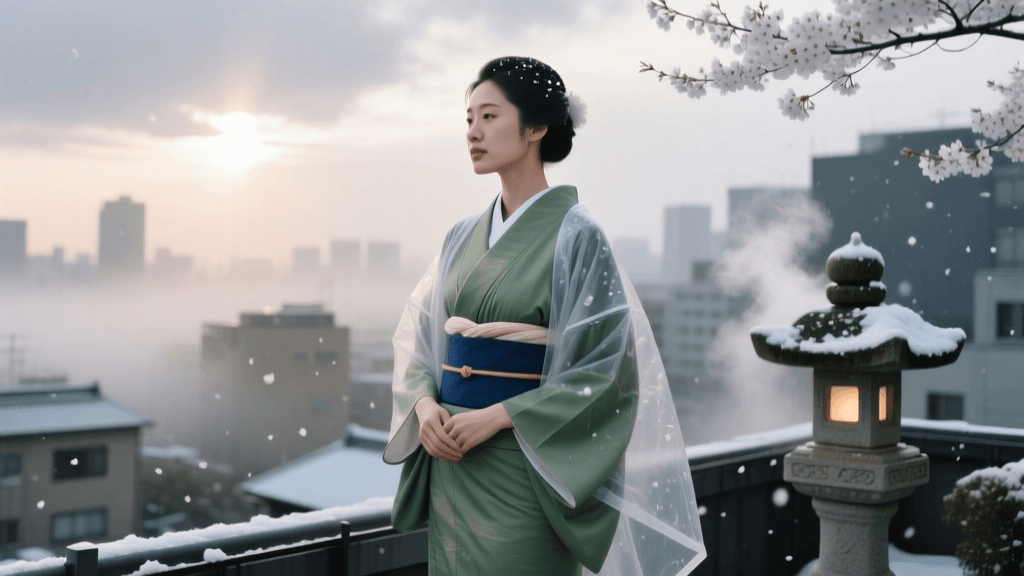
Winter kimono styling is all about trapping heat while maintaining the straight, columnar silhouette that defines the garment. The challenge in 2026 is avoiding the bulk that ruins the drape of the silk.
Strategic Layering and Thermal Innerwear
The foundation of winter warmth is the hadajuban (undergarment) and nagajuban (full-length under-robe). Historically, multiple layers of cotton were used. Today, practitioners rely heavily on advanced thermal mesh. As noted by experts in functional apparel, technologies like Uniqlo AIRism and specialized kimono-specific thermal innerwear wick moisture away from the body while trapping heat. These ultra-thin, fleece-lined synthetic layers provide the warmth of three cotton robes with the thickness of one, preserving the clean lines of the outer kimono.
Outer Coats and Accessories
Over the kimono, a hanten or a heavy wool haori provides essential core insulation. For the neck, a plush silk or faux-fur eri-maki (scarf) is wrapped snugly, preventing cold drafts from entering the collar gap. To protect the feet, modern insulated tabi boots with rubber soles have become standard for outdoor travel, swapped for traditional zori only upon entering heated indoor venues.
Surviving the Heat: Summer Kimono (Natsugi) Strategies
The Japanese summer is notoriously hot and humid. Wearing a multi-layered silk garment in August requires specialized fabrics and modern cooling integrations.
Breathable Fabrics: Ro and Sha
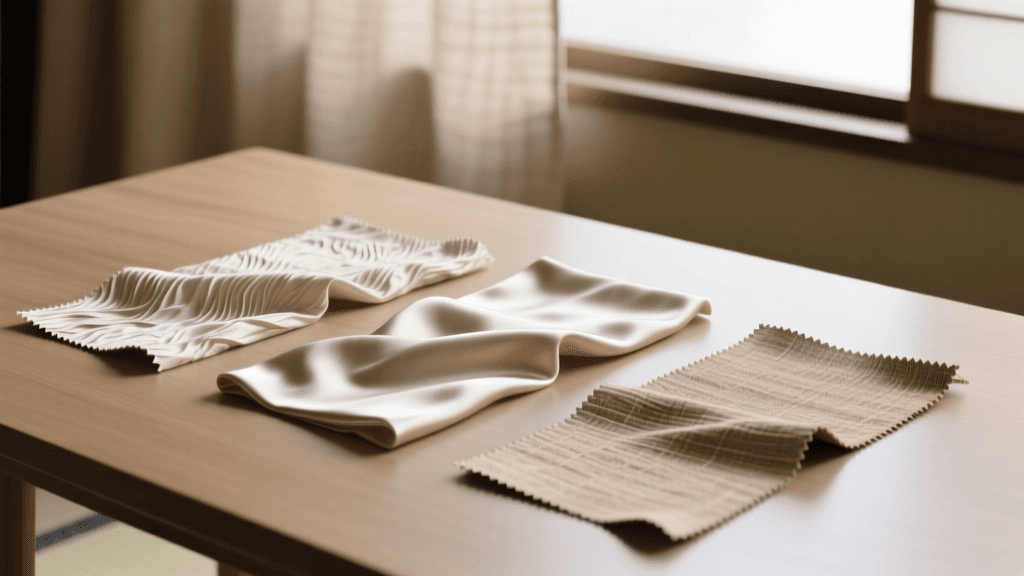
Summer kimonos (natsugi) are constructed from ro (leno weave) and sha (gauze). These fabrics feature deliberate gaps in the weaving structure, allowing air to circulate directly against the skin. The Victoria and Albert Museum highlights how these sheer textiles have been a staple of Japanese summer luxury for centuries, offering a cooling effect through airflow while maintaining structural elegance.
Modern Cooling Integrations
In 2026, surviving the heat goes beyond fabric choice. Kimono wearers frequently utilize phase-change material (PCM) cooling neck rings. These rings, which freeze at 28°C (82°F), are worn discreetly beneath the han-eri (collar) to cool the carotid arteries and lower perceived body temperature. Additionally, the hadajuban is often swapped for specialized bamboo-rayon blends that offer a cool-to-the-touch sensation and rapid sweat evaporation, preventing the dreaded "silk cling" that occurs when humidity traps moisture against the body.
2026 Weather Adaptation Comparison Chart
| Weather Condition | Traditional Method | 2026 Modern Adaptation | Primary Benefit |
|---|---|---|---|
| Heavy Rain | Oiled paper umbrellas, wooden ame-geta | Reinforced vinyl umbrellas, silicone zori covers | Wind resistance, slip prevention on asphalt |
| Snow / Freezing | Multiple cotton juban layers, wool hanten | Thermal mesh innerwear, insulated tabi boots | Retains slim silhouette, prevents frostbite |
| Extreme Heat | Ro/Sha weaves, bamboo fans | PCM cooling neck rings, bamboo-rayon hadajuban | Active core cooling, rapid moisture wicking |
Emergency Weather Kit for Kimono Travelers
If you are traveling or attending an outdoor event in 2026, always carry a dedicated kimono weather emergency kit. This small pouch should include:
- Microfiber Hem Towel: A dark-colored, highly absorbent towel to gently dab (never rub) water or mud from the hemline.
- Silicone Footwear Covers: Compact, stretchable covers that can be slipped over zori in under ten seconds when the sky opens up.
- Kimono Clips (Korin Belts/Clips):strong> For emergency hashi-ori (hem shortening) to keep silk out of deep puddles.
- Stain Remover Wipes (Silk Safe): Specialized, pH-neutral wipes designed for delicate protein fibers to treat immediate splashes.
Essential Maintenance After Extreme Exposure
Even with the best precautions, extreme weather takes a toll on traditional garments. If your silk kimono gets wet, never apply direct heat or rub the fabric, as this will permanently distort the fibers and cause dye migration. Instead, hang the garment on a wide, padded emongi (kimono hanger) in a well-ventilated, shaded room until completely dry.
Following the winter season, or after a humid summer, it is crucial to perform mushiboshi—the traditional airing out of the kimono. In 2026, this involves hanging the garment in a climate-controlled room with a dehumidifier for 24 hours before folding it back into its tatou (storage paper) with fresh camphor or cedar blocks. If water spots or mud stains persist, the garment must be sent to a professional arai-hari specialist, who will meticulously unpick the seams, wash the flat fabric panels, and re-tailor the garment to its pristine state.
Conclusion
Wearing a kimono in extreme weather is no longer about enduring discomfort for the sake of tradition. By respecting the historical foundations of Japanese textile design and embracing the functional apparel innovations of 2026, enthusiasts can confidently wear their garments through rain, snow, and heat. The kimono remains a living, breathing tradition, adaptable to the modern world without losing an ounce of its timeless elegance.