Guide to Everyday Japanese Casual Wear: Yukata and Samue
The Shift Toward Everyday Traditional Japanese Wear
When discussing traditional Japanese clothing, the formal silk kimono often dominates the global imagination. However, the true heartbeat of Japanese sartorial culture lies in its everyday, casual garments. For centuries, commoners, artisans, and merchants have relied on practical, breathable, and highly functional clothing to navigate daily life. Today, as global interest in sustainable fashion and mindful loungewear grows, traditional Japanese casual wear—specifically the yukata and the samue—is experiencing a renaissance. These garments are no longer confined to summer festivals or Zen monasteries; they are being integrated into modern wardrobes as stylish, comfortable alternatives to Western loungewear and remote-work attire.
According to the Victoria and Albert Museum's extensive textile archives, the evolution of Japanese dress has always been deeply tied to practicality and social shifts. The transition of certain garments from strict utility to everyday casual fashion reflects a broader appreciation for craftsmanship, natural fibers, and adaptable design. In this guide, we explore how to select, size, style, and care for yukata and samue in a contemporary, everyday context.
Yukata: Beyond the Summer Festival
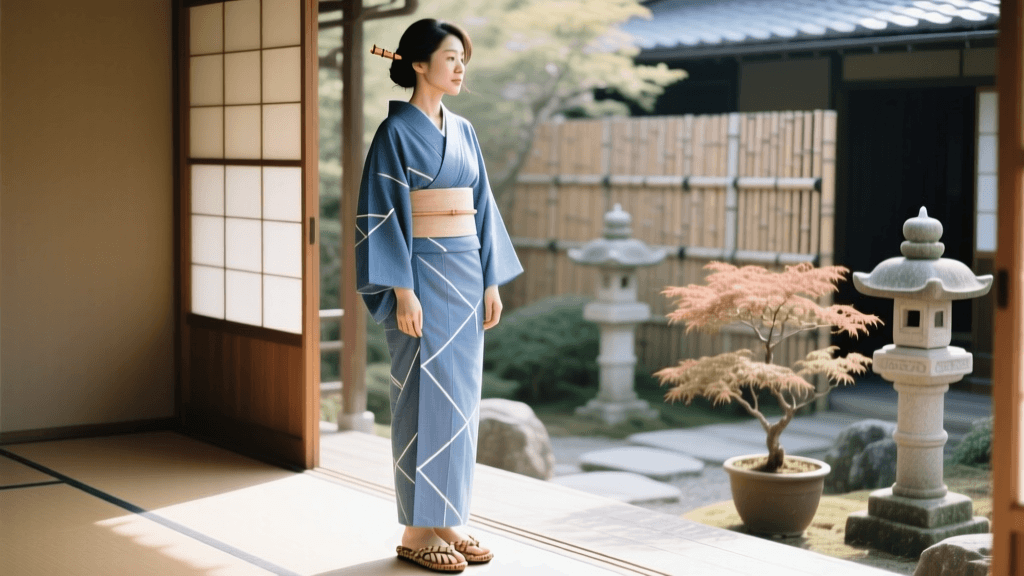
The yukata is a lightweight, unlined robe traditionally made from cotton or hemp. Historically worn as a bathrobe by the nobility during the Heian period, it eventually became the standard summer garment for all classes. While most foreigners associate the yukata with July and August fireworks festivals (hanabi taikai), its utility as an everyday indoor robe or casual summer dress is highly underrated.
Modern yukata are often crafted from a cotton-polyester blend for wrinkle resistance, though purists and sustainable fashion advocates prefer 100% cotton or traditional tenugui-style woven fabrics. For everyday home wear or casual neighborhood strolls, a yukata offers unparalleled breathability. The open weave of the fabric allows for maximum air circulation, making it an ideal choice for humid climates or poorly air-conditioned spaces.
Cost and Accessibility: A high-quality, everyday cotton yukata typically costs between 4,000 and 12,000 JPY ($25 to $80 USD). Brands like Yamato and Fujiya offer pre-washed cotton options that soften beautifully over time, functioning much like a premium linen robe in Western contexts.
Samue: The Artisan’s Answer to Modern Loungewear
If the yukata is the quintessential summer robe, the samue is the ultimate year-round casual workwear. Originating as the "working clothes" (samue) of Zen Buddhist monks for chores like sweeping and chopping wood, the samue consists of a loose-fitting jacket and matching drawstring trousers. Today, it is the uniform of choice for potters, calligraphers, chefs, and increasingly, remote workers seeking comfort without sacrificing a put-together appearance.
As noted by Japan Experience, the samue's genius lies in its functional design. The jacket features a simple tie closure and deep sleeves, while the trousers have an elastic or drawstring waist and tapered ankles to prevent fabric from catching on tools or furniture. Modern samue are frequently made from tsumugi (slubbed cotton) or lightweight denim, offering durability that standard loungewear lacks.
Cost and Accessibility: A durable, artisan-made samue set ranges from 8,000 to 20,000 JPY ($55 to $135 USD). Investing in a set made from Kurume cotton (a traditional textile from Fukuoka) ensures the garment will last for years, softening with every wash while retaining its structural integrity.
Structured Comparison: Yukata vs. Samue vs. Jinbei
To choose the right garment for your daily routine, it is essential to understand the functional differences between Japan's primary casual garments. The following table breaks down their best use cases, seasonal timing, and practical features.
| Garment | Best Season | Primary Everyday Use | Average Cost (USD) | Key Feature |
|---|---|---|---|---|
| Yukata | Summer / Indoor Year-Round | Lounging, casual outdoor strolls, hosting | $25 - $80 | Unlined, single-piece wrap robe |
| Samue | Spring / Autumn / Winter | Remote work, artisan crafts, gardening | $55 - $135 | Two-piece jacket and trouser set |
| Jinbei | High Summer | Sleepwear, quick errands, beachwear | $20 - $50 | Short-sleeve top and shorts, side slits |
Actionable Sizing and Measurement Guide
Purchasing traditional Japanese clothing online requires a shift in how you think about sizing. Western clothing relies on chest, waist, and hip measurements. Japanese casual wear, however, is predominantly sized by height and garment length.
- For Yukata (Women): The most critical measurement is the mitake (garment length). To achieve the traditional ohashori (the waist fold that allows for height adjustment), the mitake should ideally be equal to your height. However, for modern, casual indoor wear where an ohashori is skipped in favor of a belt-like wrap, you can opt for a mitake that is 10-15 cm shorter than your total height.
- For Yukata (Men): Men do not fold the waist. The mitake should be exactly your height minus 25 to 30 cm. This ensures the hem rests cleanly at the ankle bone without dragging on the floor.
- For Samue: Samue sizing is more aligned with Western standards (S, M, L, LL) but relies heavily on the shitake (height recommendation) and inseam. Always check the inseam measurement; a standard men's Medium samue usually features an inseam of roughly 65-70 cm. If you are taller than 175 cm (5'9"), look specifically for brands offering "tall" or LL sizes to avoid high-water trousers.
Modern Styling: Footwear and Accessories
Integrating these garments into a modern wardrobe requires thoughtful styling, particularly regarding footwear and belts. According to MATCHA, a leading Japan travel and culture publication, the way you tie your obi (belt) and choose your footwear dictates whether your outfit reads as a bathrobe or a deliberate fashion statement.
The Obi and Belts: For everyday yukata wear, skip the formal, stiff brocade obi. Instead, opt for a heko obi (a soft, scarved sash) or a modern leather belt. A thin leather belt worn over a yukata instantly bridges the gap between traditional Japanese silhouette and contemporary Western minimalism. For the samue, the jacket's built-in ties are usually sufficient, but adding a subtle woven fabric belt can elevate the look for a casual dinner.
Footwear: Traditional geta (wooden clogs) are beautiful but impractical for daily neighborhood walks or indoor hardwood floors. For yukata, pair the garment with modern leather sandals or even clean, minimalist canvas sneakers to create a striking streetwear contrast. For the samue, traditional setta (bamboo-woven sandals with a leather sole) offer a quiet, refined look that works beautifully in a home office or studio environment.
Care, Washing, and Maintenance
One of the greatest advantages of casual Japanese wear over formal silk kimono is its ease of maintenance. Both yukata and samue are designed to be washed frequently, aligning perfectly with modern hygiene standards and active lifestyles.
- Washing: Always use a neutral, pH-balanced detergent. Avoid bleach or heavy enzymatic cleaners, especially if your garment is dyed with natural indigo (aizome). Wash in cold or lukewarm water (maximum 30°C / 86°F) on a gentle cycle.
- Protection: Fold the garment using the traditional hon-datami method (folding along the seams so the panels stack neatly) and place it inside a fine mesh laundry net. This prevents the sleeves and ties from tangling and stretching in the washing machine.
- Drying: Never use a tumble dryer, as the high heat will warp the cotton fibers and cause severe shrinkage. Smooth out the seams by hand while the garment is wet and hang it to dry in the shade. Direct sunlight will rapidly fade natural dyes and weaken cotton fibers over time.
- Ironing: If ironing is necessary, use a low-to-medium heat setting and iron along the vertical seams to maintain the garment's structural geometry. The beauty of a well-worn samue or cotton yukata lies in its natural drape, so a few wrinkles are not only acceptable but expected.
By understanding the history, proper sizing, and care requirements of the yukata and samue, you can seamlessly integrate these masterpieces of Japanese functional design into your everyday life, embracing a lifestyle that values comfort, sustainability, and quiet elegance.