Kimono Weather Adaptations 2026: Rain, Snow & Heat Survival
The Resilience of the Kimono in a Changing Climate
The traditional Japanese kimono is frequently misunderstood by global observers as a fragile, indoor-only garment reserved for pristine tea ceremonies or mild spring cherry blossom viewings. In reality, the kimono is a marvel of textile engineering that has protected its wearers from Japan’s notoriously volatile climate for centuries. From the torrential monsoons of the *tsuyu* season to the freezing, snow-laden winters of Hokkaido and the oppressive, humid scorch of Kyoto summers, traditional Japanese clothing has always demanded sophisticated weather adaptations.
As we navigate the climate realities of 2026, characterized by more intense heatwaves and unpredictable precipitation, the intersection of Edo-period wisdom and modern textile innovation has never been more vital. Today’s kimono enthusiasts and practitioners are blending ancestral layering techniques with cutting-edge, eco-conscious smart fabrics. This comprehensive guide explores exactly how to adapt your kimono wardrobe for extreme rain, deep snow, and severe heat, ensuring both the preservation of your silk garments and your personal comfort.
Conquering the Monsoon: Kimono in Heavy Rain
Water is the natural enemy of silk. A sudden downpour can cause dyes to bleed, fabric to warp, and the stiffening agents in the collar to dissolve. Historically, commoners and samurai alike relied on the amagappa, a raincoat made from oiled paper or woven grass, to shield their garments. While beautiful, traditional oiled paper is heavy, lacks breathability, and is impractical for modern urban commuting.
In 2026, the focus has shifted toward advanced, non-destructive surface treatments and specialized rain-gear accessories. The most significant breakthrough in recent years is the widespread availability of PFC-free (perfluorocarbon-free) nano-ceramic waterproofing sprays. Unlike older fluorine-based sprays that degraded silk fibers and left a chalky residue, 2026’s eco-friendly nano-sprays create a microscopic hydrophobic barrier on the surface of tsumugi (pongee silk) and synthetic blends without altering the fabric’s drape or luster. Applying this spray to the lower hem (suso) and sleeves (sode) of a casual kimono provides a critical 20-minute window to seek shelter during a sudden squall.
Footwear requires equal attention. Traditional geta (wooden clogs) can become dangerously slippery on wet asphalt. The modern adaptation is the shigure-geta, featuring lacquered wood bases and removable, waterproof toe-straps (hanao). For those wearing zori (flat sandals), 2026 has seen the popularization of custom-molded silicone rain covers that slip over the entire sandal, providing grip and total water resistance while mimicking the sleek profile of the original footwear.
Braving the Freeze: Kimono in Deep Snow
Winter in northern Japan demands serious insulation, but the fundamental rule of kimono styling is to maintain the tsutsu-gata—a smooth, cylindrical silhouette. Bulky winter coats ruin this line, requiring a strategic approach to under-layering and fabric selection.
Historically, warmth was achieved through sheer volume: layering multiple nagajuban (under-kimonos) and wearing a thick, padded hanten or haori (jacket) over the top. According to the Metropolitan Museum of Art’s extensive archives on Japanese textiles, rural populations also relied heavily on hemp and ramie layered with raw cotton wadding for insulation. Today, we have access to high-performance thermal meshes that revolutionize winter kimono wear without adding bulk.
The 2026 standard for winter kimono layering involves ultra-thin, heat-generating base layers (such as advanced iterations of Uniqlo’s Heattech or specialized kimono-brand thermal meshes) worn beneath a silk or wool-blend hadajuban (the innermost undergarment). These modern base layers trap body heat using moisture-activated fibers while remaining less than a millimeter thick, perfectly preserving the kimono’s elegant drape.
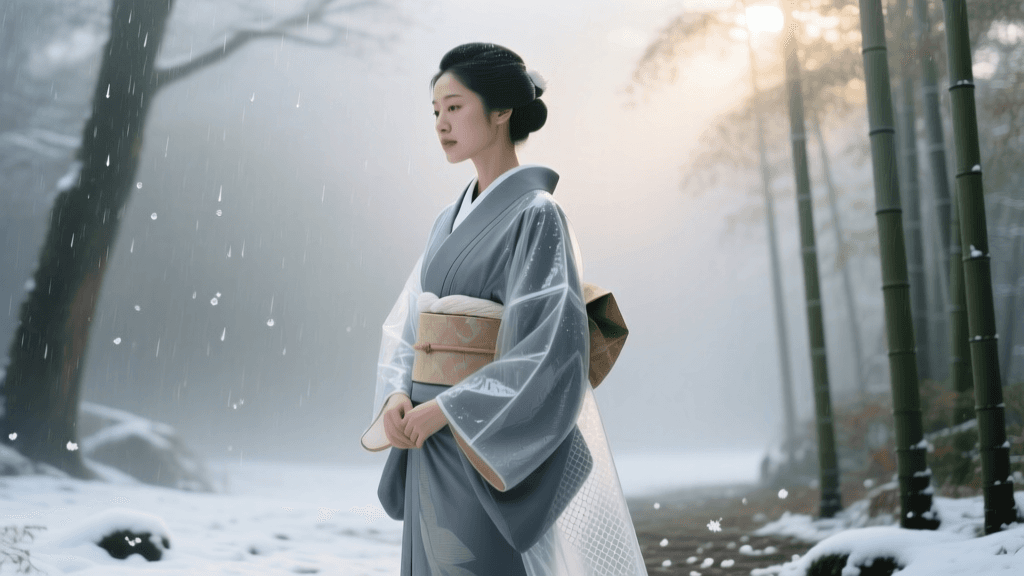
For the outer garment, Oshima Tsumugi remains the premier choice for winter. This mud-dyed silk from Amami Oshima is renowned not just for its intricate patterns, but for its exceptional density and wind resistance. The mud-dyeing process, which involves binding the silk with iron-rich mud, naturally creates a tighter weave that blocks icy drafts far better than standard dyed silks. To protect the hem from snow and slush, modern practitioners use transparent, flexible TPU (thermoplastic polyurethane) hem guards that can be easily wiped clean and removed upon entering a heated indoor space.
Surviving the Scorch: Kimono in Extreme Heat
Japanese summers are infamous for their suffocating humidity, with heat indexes frequently exceeding 40°C (104°F) in urban centers like Tokyo and Kyoto. Wearing a multi-layered silk garment in these conditions requires a profound understanding of textile weaves and modern cooling technology.
The traditional defense against summer heat relies on Ro and Sha. As detailed by Britannica’s definitive guide on the kimono, these are specialized leno and gauze weaves that introduce deliberate, microscopic gaps into the fabric. Ro features horizontal lines of gaps, while Sha has a more uniform, net-like structure. These gaps allow for continuous cross-ventilation, turning the wearer’s natural movements into a bellows effect that pushes hot air out and draws cooler air in.
For casual wear, Shijira-ori (a traditional seersucker cotton from the Awa region) is highly prized. Its puckered texture prevents the fabric from clinging to sweaty skin, promoting airflow. In 2026, the evolution of the summer juban (under-kimono) has been a game-changer. Modern summer juban are now frequently woven from bamboo-charcoal-infused fibers. Bamboo fabric is naturally highly absorbent, wicking moisture away from the skin at a rate three times faster than cotton, while the charcoal infusion actively neutralizes odor-causing bacteria—a crucial feature for crowded summer festivals.
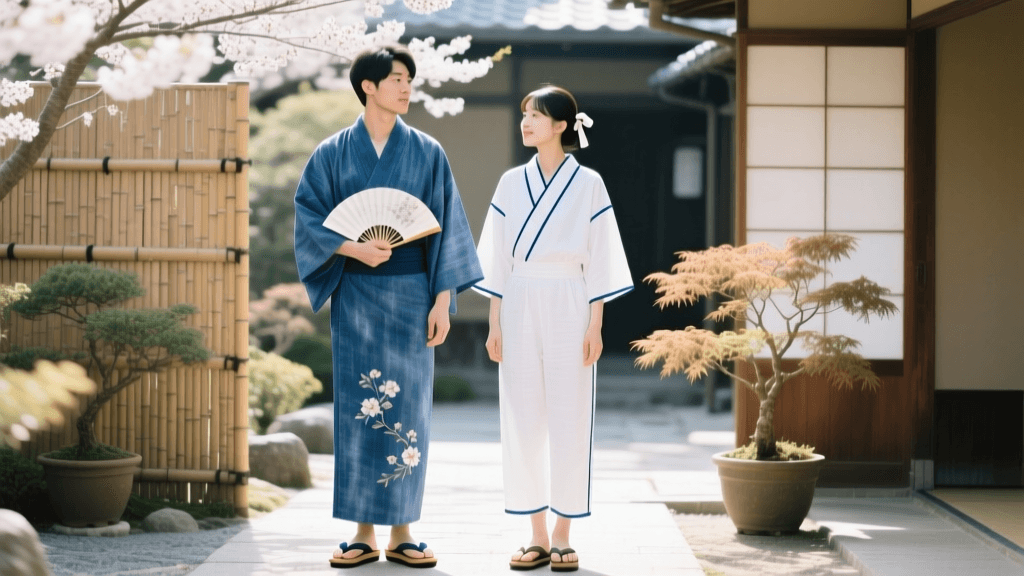
Accessorizing for the sun has also seen a high-tech upgrade. The traditional wagasa (paper umbrella) is now often treated with transparent, UV-blocking bio-resins, transforming a beautiful cultural artifact into a highly effective shield against intense ultraviolet radiation. Paired with a sensu (folding fan) crafted from sustainably harvested, fast-drying rattan, the modern kimono wearer can navigate a scorching summer day with grace and physiological comfort.
2026 Weather Adaptation Gear Comparison
To help you budget and prepare your wardrobe for the year, here is a breakdown of traditional versus modern weather-adaptive gear, including estimated market costs for 2026.
| Weather Condition | Traditional Solution | 2026 Modern Adaptation | Estimated Cost (USD) |
|---|---|---|---|
| Heavy Rain | Oiled paper Amagappa | PFC-Free Nano-Silk Spray & Silicone Zori Covers | $35 - $60 |
| Deep Snow | Padded cotton Hanten & Layering | Ultra-Thin Thermal Mesh & TPU Hem Guards | $45 - $95 |
| Extreme Heat | Ro/Sha Silk Gauze | Bamboo-Charcoal Juban & UV-Resin Wagasa | $60 - $150 |
Post-Exposure Care and Maintenance
Surviving extreme weather is only half the battle; proper post-exposure care dictates the lifespan of your garments. If your kimono is exposed to rain or snow, never use direct heat sources like hair dryers or radiators, as this will bake moisture into the silk and cause permanent shrinkage or water-spotting. Instead, use a specialized, wide-shouldered emono-kake (kimono hanger) and allow the garment to air-dry in a well-ventilated, shaded room.
For sweat-soaked summer garments, prompt action is required to prevent the oxidation of sweat, which leads to stubborn yellow stains on the underarms and collar. In 2026, professional kimono cleaners utilize enzymatic, waterless cleaning foams that lift organic salts and oils from delicate Ro and Sha weaves without requiring the garment to be fully disassembled and re-tailored (arai-hari), saving both time and significant expense.
Conclusion
The kimono is not a relic trapped in the past; it is a living, breathing garment system that continues to evolve. By respecting the foundational principles of traditional Japanese textile arts while embracing the sustainable, high-performance innovations of 2026, wearers can confidently step out into any storm, blizzard, or heatwave. Whether you are attending a snowy winter tea ceremony in Kanazawa or a sweltering summer Bon Odori festival in Tokyo, the right adaptations ensure that your attire remains as resilient and breathtaking as the culture it represents.