Kimono Extreme Weather Guide 2026: Rain, Snow & Heat
Navigating Climate Extremes in Traditional Japanese Garments
As global climate patterns shift, the intersection of traditional Japanese clothing and modern weather extremes has become a critical topic for kimono enthusiasts, historians, and everyday wearers alike. In 2026, weather patterns in Japan and across the globe have become increasingly unpredictable, featuring more intense monsoon downpours, deeper winter freezes, and prolonged summer heatwaves. According to the Japan Meteorological Agency, the frequency of localized torrential rains and record-breaking summer temperatures has necessitated a reevaluation of how we protect and wear delicate silk and cotton garments. Fortunately, the kimono is inherently adaptable. By combining centuries-old sartorial wisdom with cutting-edge 2026 textile technology, wearers can confidently navigate any meteorological challenge without compromising the elegance or integrity of their garments.
The Victoria and Albert Museum notes that historical kimono were highly adaptable to seasonal changes, utilizing specific weaves, linings, and motifs to reflect and respond to the environment. Today, that tradition of adaptation continues, but with the added benefit of modern material science. This comprehensive guide explores the essential strategies, traditional gear, and 2026 technological innovations required to wear kimono in extreme rain, snow, and heat.
Rain Adaptations: Surviving the Modern Monsoon
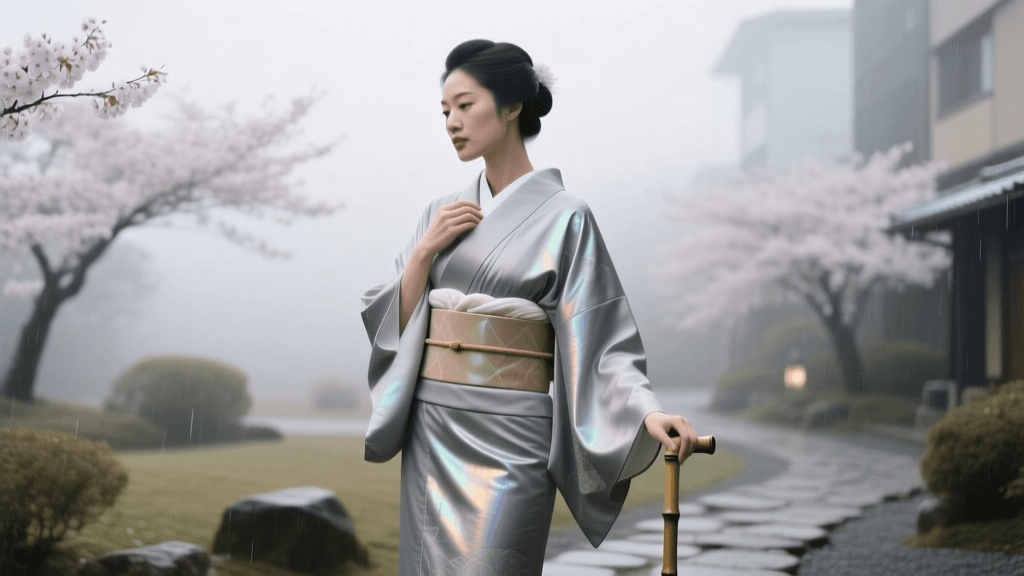
Heavy rain poses the most immediate threat to silk kimono, as water spots can permanently alter the dye and cause the fabric to shrink or warp. Traditionally, kimono wearers relied on the shigure-gasa (an oiled paper umbrella) and the michiyuki (a specialized raincoat worn over the kimono). The michiyuki typically features a square neckline and is made from water-resistant silk crepe or woven hemp.
2026 Rain Gear Innovations
In 2026, the market has seen a surge in bio-based hydrophobic nano-sprays specifically formulated for protein fibers like silk. Unlike older silicone-based waterproofing sprays that trapped moisture and degraded silk over time, these new 2026 enzymatic coatings create a microscopic breathable barrier that causes water to bead and roll off without altering the fabric's drape or sheen. For the outer layer, modern michiyuki are now frequently crafted from recycled marine polymers that perfectly mimic the texture of traditional chirimen (crepe silk) while offering complete waterproofing.
- Footwear: Traditional ame-geta (rain clogs) with elevated wooden bases have been updated with 2026 vulcanized rubber treads and hidden silicone grips, preventing slips on wet asphalt while maintaining the traditional silhouette.
- Umbrellas: While the aesthetic of the wagasa (bamboo and paper umbrella) remains beloved, modern iterations now utilize carbon-fiber ribs and translucent, UV-blocking hydrophobic canopies that withstand 2026's high-velocity wind shears during sudden squalls.
- Hem Protection: The karakuri-ito (hidden hem-cord) technique allows wearers to temporarily hike up the back hem of the kimono and secure it inside the obi, preventing the trailing fabric from dragging through puddles.
Snow Adaptations: Insulation and Traction in Deep Freezes
Winter in regions like Hokkaido or the Japanese Alps demands rigorous thermal management. The kimono layering system is naturally insulating, but extreme cold requires specialized undergarments and outerwear. Traditional winter kimono often feature yukitake (snow-laden bamboo) or tsuru (crane) motifs, lined with thick cotton or wool wadding (iwata) for warmth.
Modern Thermal Layering for 2026
The foundation of winter kimono dressing is the nagajuban (under-kimono). In 2026, thermal mesh undergarments infused with graphene-infused threads have become the gold standard. These ultra-thin hadajuban (undershirts) and leggings trap body heat far more efficiently than the bulky cotton layers of the past, allowing the outer kimono to drape beautifully without the wearer looking overly padded. Furthermore, battery-operated, flexible heating pads designed specifically to adhere to the lower back beneath the obi provide up to 12 hours of targeted warmth.
For outerwear, the haori (jacket) and dochu-gi (travel coat) are essential. Modern 2026 dochu-gi often feature hidden storm cuffs and windproof inner linings made from aerospace-grade thermal foils. To protect the feet, traditional tabi socks are now available with integrated Thinsulate lining, paired with setta (sandals) that feature weather-sealed leather uppers and insulated, slip-resistant rubber soles designed for icy pavement.
Heat Adaptations: Beating the Summer Heatwave
Summer heatwaves in 2026 regularly push temperatures and humidity to oppressive levels, making the traditional multi-layered kimono a potential health hazard if not properly adapted. The transition from standard silk to open-weave fabrics is the most critical defense against the heat.
Ro, Sha, and the Art of Summer Weaves
For formal summer wear, ro (leno weave) and sha (gauze weave) silks are mandatory. These weaves feature intentional gaps in the fabric structure, allowing air to circulate directly against the skin. The ro weave alternates rows of plain weave with rows of twisted warp threads, creating a durable yet highly breathable textile. For casual wear, the yukata (unlined cotton kimono) and jinbei (a two-piece cotton loungewear set) remain the undisputed champions of summer comfort. While the yukata offers a full-length, elegant silhouette suitable for festivals, the jinbei provides superior ventilation and mobility, making it the preferred choice for navigating crowded, sweltering summer events in 2026.
2026 Cooling Technologies
To combat extreme humidity, modern kimono dressers have integrated Phase Change Material (PCM) cooling neck rings. Unlike ice packs that cause condensation and water damage to the delicate han-eri (collar cover), 2026 PCM rings maintain a steady 28°C (82°F) surface temperature, safely cooling the carotid arteries without producing moisture. Additionally, UV-protective, sheer haori made from advanced cooling yarns that reflect infrared radiation are now widely worn over yukata to prevent sunburn and reduce thermal load during outdoor daytime events.
Comparative Guide: Kimono Weather Gear & Fabrics (2026)
| Weather Condition | Traditional Garment / Gear | 2026 Modern Adaptation | Est. 2026 Cost (USD) |
|---|---|---|---|
| Heavy Rain | Silk Michiyuki, Oiled Wagasa | Recycled Polymer Michiyuki, Nano-Coating Sprays | $180 - $350 |
| Deep Snow / Ice | Wool-lined Haori, Hanto (leggings) | Graphene-infused Nagajuban, Heated Obi Pads | $120 - $250 |
| Extreme Heat | Ro / Sha Silk, Yukata, Jinbei | PCM Cooling Neck Rings, IR-Reflective Sheer Haori | $60 - $150 |
| High Wind | Heavy Crepe Silk, Koshi-himo (ties) | Weighted Hem Clips, Magnetic Obi-dome Anchors | $25 - $45 |
Post-Weather Kimono Care Protocol
Exposing your garments to extreme weather requires immediate and careful post-wear maintenance to ensure their longevity. If your kimono is exposed to high humidity or light rain, never fold it immediately. Hang it on a specialized wide-shouldered kimono hanger in a well-ventilated, climate-controlled room for at least 24 hours to allow trapped moisture to evaporate. Avoid direct sunlight, which will fade the dyes.
For snow exposure, gently brush off any ice crystals with a soft, dry silk brush before bringing the garment into a heated room, as melting snow can cause localized water spotting. If a silk kimono becomes heavily soiled or saturated due to an unexpected 2026 flash flood, do not attempt to wash it at home. Seek a professional maru-arai (full garment washing) service that utilizes modern, eco-friendly solvent baths designed to preserve the structural integrity of vintage and modern silks alike. By respecting both the traditional craftsmanship and the modern environmental realities, the kimono will continue to thrive as a living, breathing garment for generations to come.