Kimono Extreme Weather Guide 2026: Rain, Snow & Heat Adaptations
Navigating the Elements in Traditional Japanese Dress
Wearing a kimono in 2026 requires navigating increasingly volatile global weather patterns. From the sweltering, humid heatwaves of July to the sudden, torrential downpours of the tsuyu (monsoon) season, and the biting, snowy winds of January in regions like Hokkaido or the Japanese Alps, traditional garments face severe environmental stress. Silk, the lifeblood of formal kimono, is notoriously vulnerable to water spots, heat-induced sweat stains, and freezing temperatures. Yet, the kimono is not merely a fragile museum piece; it is a living, evolving garment that has survived centuries of climatic shifts.
In 2026, practitioners and fashion enthusiasts blend centuries-old sartorial wisdom with cutting-edge textile technology to wear kimono comfortably and safely year-round. According to the Metropolitan Museum of Art's Heilbrunn Timeline of Art History, the kimono's T-shaped structure was inherently designed for modular layering, a feature that remains its greatest asset in extreme climates. By understanding how to manipulate layers, select appropriate weaves, and integrate modern weatherproofing, you can protect your garments while maintaining elegance in any condition.
Beating the Summer Heat: Ro, Sha, and 2026 Cooling Tech
Japanese summers are characterized by oppressive humidity and intense solar radiation. Wearing standard lined silk (awase) during these months is not only uncomfortable but can lead to heat exhaustion and permanent sweat damage to the fabric. The traditional answer to summer heat lies in specialized unlined weaves known as hitoe, specifically ro and sha.
Ro features a leno weave where warp threads are twisted around each other, creating tiny, uniform gaps that allow air to circulate directly against the skin. Sha is a lighter, more sheer gauze weave with a slightly rougher texture that prevents the fabric from clinging to the body. In 2026, these traditional weaves are being paired with advanced undergarments. The nagajuban (under-kimono) has seen a technological revolution. Modern cooling juban now incorporate Phase Change Material (PCM) threads, which actively absorb and dissipate body heat, dropping the microclimate temperature between the skin and the outer silk layer by up to 3°C.
For casual wear, the yukata remains the undisputed champion of summer festivals. However, contemporary 2026 yukata are frequently woven with seersucker-style cotton blends or bamboo-rayon mixes that wick moisture away from the body far faster than traditional indigo-dyed cotton. To maximize airflow, practitioners are taught to tie their koshihimo (waist ties) slightly looser around the ribs and utilize a koshimaki (slip) made of contact-cooling synthetic mesh to prevent the outer garment from absorbing perspiration.
Surviving Monsoon Rains: Hydrophobic Silks and Shigure Gear
Water is the natural enemy of silk. A single drop of rain can leave a permanent ring on a vintage yuzen-dyed kimono by displacing the water-soluble sizing agents used in the dyeing process. Historically, rainy days meant relying on shigure-gasa (oiled paper umbrellas) and heavy, stiff raincoats. Today, navigating the monsoon season requires a blend of traditional accessories and modern chemistry.
The most significant breakthrough for kimono wearers in 2026 is the availability of protein-safe hydrophobic nano-sprays. Unlike older silicone-based waterproofing agents that suffocated silk fibers and altered their drape, modern nano-coatings bond at the molecular level to create an invisible, breathable barrier. When applied, water simply beads up and rolls off the silk without penetrating the weave. Despite these sprays, physical barriers remain essential for heavy downpours.
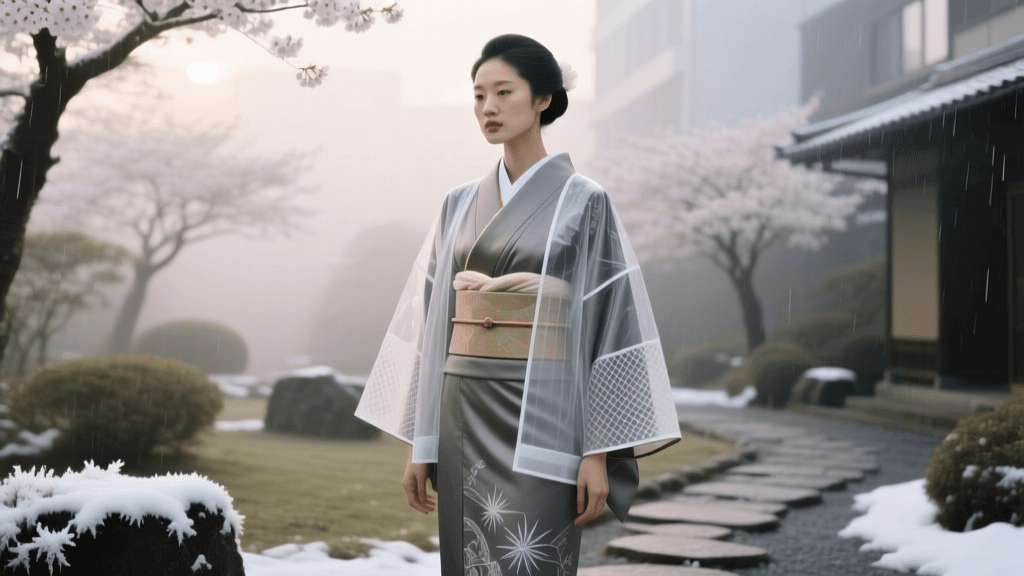
For footwear, standard zori sandals become hazardous and easily ruined in wet conditions. The traditional ame-geta (rain clogs) feature elevated wooden teeth to keep the kimono hem above puddles. Modern 2026 iterations of ame-geta are fitted with micro-textured rubber caps on the wooden teeth to prevent slipping on wet asphalt. To protect the hem itself, wearers utilize a karakasa (modernized wagasa umbrella) or a stylish, translucent vinyl shigure-kappa (raincoat) that mimics the flowing silhouette of a haori while offering Gore-Tex-level impermeability. The preservation of these traditional rain accessories is heavily supported by organizations documented on the Japanese Ministry of Economy, Trade and Industry's traditional crafts portal, which highlights how artisanal lacquerware and oiled paper crafts are adapting to modern urban environments.
Enduring Winter Snow: Strategic Layering and Insulated Footwear
Winter in northern Japan or high-altitude regions presents the challenge of retaining heat without adding excessive bulk that ruins the kimono's elegant, columnar silhouette. The secret to winter kimono styling is trapped air and strategic insulation, beginning from the inside out.
The base layer in 2026 often consists of ultra-thin, high-density thermal wear (similar to advanced Heattech fabrics) worn beneath a lined silk nagajuban. Over the main kimono, the michiyuki—a traditional overcoat characterized by its square neckline and concealed fasteners—acts as a primary windbreak. For extreme cold, a haori (jacket) padded with wata (silk floss wadding) provides exceptional insulation. Silk floss is incredibly lightweight yet traps heat efficiently, allowing the wearer to stay warm without looking bulky.
Extremities require special attention. Standard tabi (split-toe socks) offer no thermal protection against snow. Winter adaptations include thick, quilted nuno-tabi or fleece-lined waterproof tabi boots that maintain the traditional split-toe aesthetic while functioning like modern snow boots. Footwear shifts from flat zori to yuki-geta (snow clogs) or specialized rubber-soled setsu-gutsu (snow shoes) designed with deep treads to grip icy surfaces. A plush, fur-lined hand-warmer pocket, often integrated into the sleeves of a casual hanten coat, completes the winter ensemble.
Post-Exposure Care: Drying and Maintenance
Even with the best precautions, extreme weather exposure happens. If a silk kimono gets damp from snow or rain, it must never be subjected to direct heat, such as a radiator or hair dryer, which will bake the moisture into the fibers and cause shrinkage or color bleeding. In 2026, professional kimono care involves using specialized cedar-wood drying racks placed in climate-controlled rooms with gentle dehumidifiers. The garment is carefully unpinned and hung flat to allow the moisture to evaporate evenly. Once dry, a professional shinshi (stretching) treatment may be required to restore the fabric's original tension and luster.
2026 Kimono Weather Adaptation Matrix
| Season | Primary Threat | Traditional Solution | 2026 Modern Adaptation |
|---|---|---|---|
| Summer | Humidity & Sweat | Ro and Sha leno/gauze weaves | PCM cooling juban underlayers and bamboo-rayon yukata |
| Monsoon | Water Stains & Slipping | Oiled paper shigure-gasa and wooden ame-geta | Protein-safe nano-sprays and micro-textured rubber geta caps |
| Winter | Freezing Winds & Ice | Silk floss wata padding and layered michiyuki | Thermal mesh base layers and fleece-lined waterproof tabi |
Conclusion
The kimono is a testament to human ingenuity and aesthetic endurance. As climate patterns shift and urban environments evolve, the way we interact with these garments must also adapt. By respecting the foundational rules of traditional layering and embracing the textile innovations of 2026, wearers can ensure their silk garments remain pristine while enjoying the beauty of every season. For those looking to study the historical resilience of these garments, the Victoria and Albert Museum's extensive Kimono collection archives provide a stunning visual record of how Japanese dress has continually evolved to meet the demands of both nature and society. Whether you are braving a July heatwave or a January snowstorm, the right preparation ensures your kimono remains a source of joy, not anxiety.