Hanfu on Global Runways: 2026 Couture Week Trends
The 2026 Couture Shift: Beyond Cultural Costume
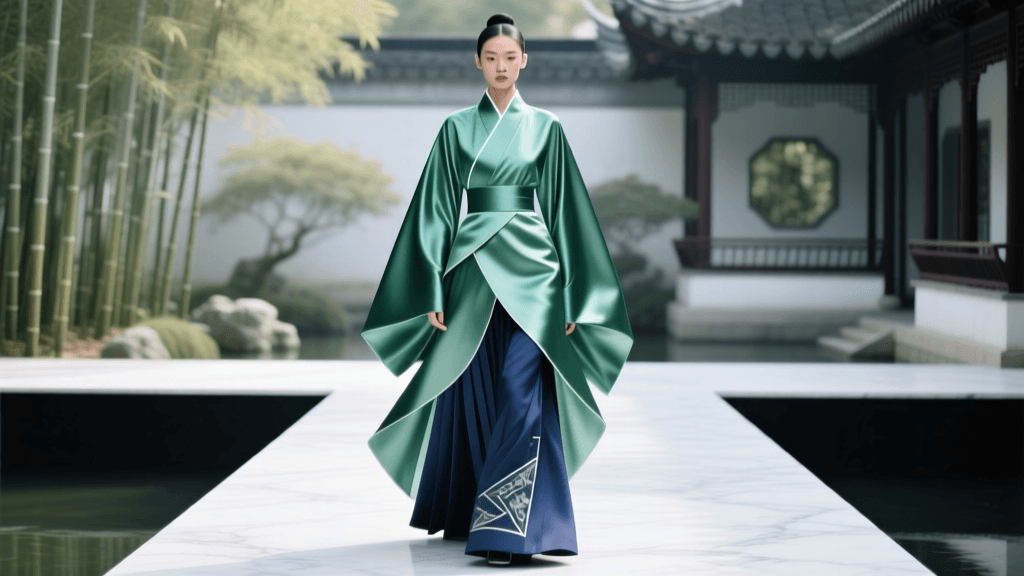
The global fashion landscape in 2026 has witnessed a profound structural shift, with traditional Chinese Hanfu moving far beyond its grassroots streetwear revival to become a dominant force on the elite runways of Paris, Milan, and New York. No longer treated as mere historical costume or seasonal novelty, Hanfu silhouettes are now being deconstructed, re-engineered, and integrated into high fashion and haute couture. Top-tier design houses are recognizing the sophisticated tailoring, zero-waste cutting techniques, and fluid drapery inherent in traditional Asian garments, utilizing them to answer the modern consumer's demand for both sustainability and architectural elegance.
Historically, the integration of Asian traditional garments into Western fashion was often marred by superficial appropriation. However, the 2026 runway season marks a definitive turning point. Designers are now engaging deeply with the structural engineering of ancient garments. As noted by the Victoria and Albert Museum's archives on Chinese dress, the historical evolution of Chinese tailoring relies heavily on flat-pattern cutting and the preservation of the textile's integrity, a philosophy that perfectly aligns with 2026's zero-waste couture mandates. By respecting the original geometry of the garments, modern designers are creating pieces that are both historically resonant and fiercely avant-garde.
Key Hanfu Silhouettes Dominating 2026 Runways
The Modernized Mamianqun (Horse-Face Skirt)
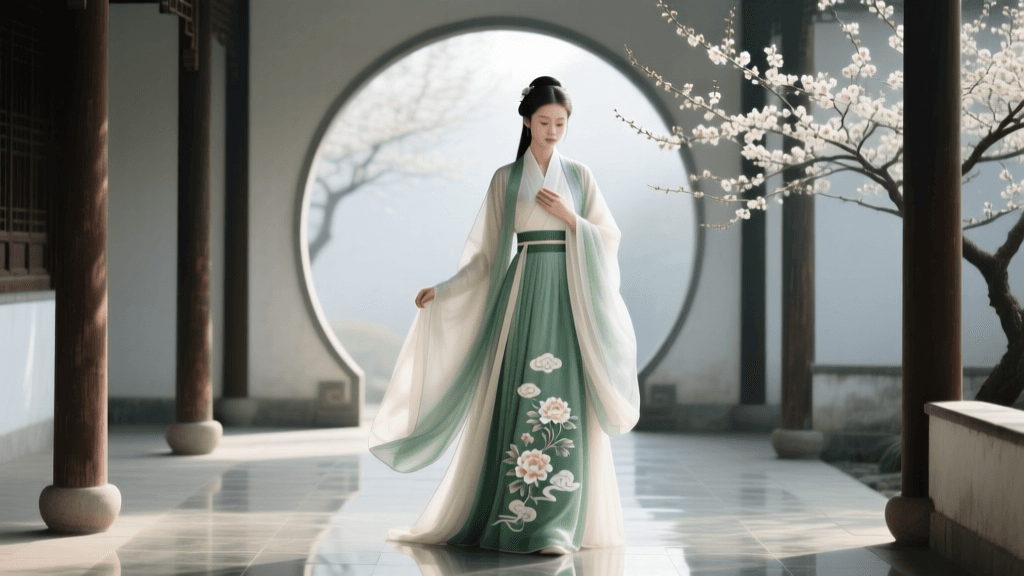
The Mamianqun, characterized by its flat front and back panels (guangmian) and intricately pleated sides (zhe), has become the most exported Hanfu silhouette of the decade. On the Spring/Summer 2026 runways, we are seeing the traditional 13-pleat structure adapted into heavyweight wool-silk blends and even laser-cut vegan leathers. Designers are maintaining the structural integrity of the flat front panels—often inserting hidden, seamless pockets for modern utility—while replacing the traditional tie-waistband (yaotou) with internal corsetry or elasticized smocking to ensure a flush fit against the modern silhouette. The kinetic movement of the side pleats provides a dramatic, sweeping volume that has made it a staple for 2026 evening wear.
The Song Dynasty Beizi (Minimalist Duster)
Replacing the traditional Western trench coat in many Fall/Winter 2026 ready-to-wear collections is the Beizi. Originating from the Song Dynasty, this straight-collared (zhiling), side-slit (kaicha) duster is celebrated for its minimalist, elongating lines. Modern interpretations feature exaggerated side slits that begin at the waist rather than the hip, allowing for dynamic layering over slip dresses or wide-leg trousers. The absence of buttons or zippers, relying instead on subtle internal ties or magnetic closures, offers a sleek, uninterrupted exterior that appeals to the luxury market's preference for quiet, understated elegance.
Jiaoling Youren (Cross-Collared Lapels) in Tailoring
The Jiaoling Youren, or the cross-collared right-over-left lapel, is a foundational element of Hanfu that has heavily influenced 2026 asymmetrical blazer and outerwear designs. High-fashion tailors are utilizing the deep V-neckline created by the cross-collar to frame the collarbone, while extending the lapel to wrap entirely around the torso, securing at the waist with a structured, integrated obi-inspired belt. This creates a sculptural, wrap-around effect that provides both warmth and a striking visual asymmetry, challenging the rigid, symmetrical conventions of traditional Western suiting.
Data Table: Traditional Hanfu vs. 2026 Runway Adaptations
| Garment Element | Traditional Hanfu Form | 2026 Runway Adaptation | Key Measurement & Material Shift |
|---|---|---|---|
| Mamianqun (Skirt) | 100% Silk/Satin, tie-waist, floor-length | Wool-crepe blends, corseted waist, midi-length | Waistband reduced from 8cm to 4cm; hidden hook-and-eye closures |
| Beizi (Duster) | Straight sleeves, calf-length, open front | Drop-shoulder, floor-sweeping, magnetic closures | Sleeve width narrowed from 45cm to 25cm for practical layering |
| Jiaoling Youren (Collar) | Soft fabric, tied with internal sashes | Structured canvas interfacing, asymmetrical wrap | Lapel overlap extended by 15cm to create a defined waist cinch |
| Pibo (Silk Shawl) | Sheer gauze, draped over arms | Heavyweight velvet, integrated into gown shoulders | Length reduced from 250cm to 120cm; attached via hidden shoulder seams |
Actionable Guide: Sourcing Authentic Heritage Textiles in 2026
For independent designers and fashion houses looking to incorporate authentic Hanfu textiles into their 2026 collections, sourcing requires navigating specialized heritage hubs in China. The demand for Intangible Cultural Heritage (ICH) certified fabrics has surged, leading to longer lead times but unparalleled quality.
Xiangyunsha (Gambiered Canton Gauze)
Known as 'soft gold,' Xiangyunsha is a silk dyed with yam juice and sealed with river mud, resulting in a dark, lustrous, and water-resistant fabric. According to The Metropolitan Museum of Art's overview of Chinese textile history, the complex dyeing processes of southern China have long been prized for their durability and unique patina. In 2026, authentic ICH-certified Xiangyunsha from Foshan costs between $280 and $350 per meter. Designers must account for a 4-to-6-month lead time, as the mud-dyeing process is entirely dependent on specific seasonal weather conditions (typically requiring high heat and strong sunlight). Minimum Order Quantities (MOQs) for custom runway yardage usually start at 50 meters.
Song Brocade (Song Jin)
For evening wear and structured outerwear, Song Brocade offers a subtle, matte elegance compared to the high-shine of later Ming or Qing brocades. Woven in Suzhou, modern 2026 iterations often incorporate metallic threads of recycled copper or silver. Pricing averages $150 to $220 per meter. Because the weave is incredibly dense (often exceeding 120 GSM), designers must use specialized heavy-duty needles and adjust their pattern grading to account for the fabric's lack of bias stretch.
Proportion Rules: Translating Runway to Ready-to-Wear
Adapting the voluminous proportions of traditional Hanfu for the commercial ready-to-wear market requires strict adherence to the 'Rule of Thirds' in styling. Traditional Hanfu often obscures the natural waist, favoring a continuous, flowing line from shoulder to hem. However, 2026 retail consumers require defined proportions.
To adapt the runway looks for commercial viability, designers are employing the '3:5 ratio.' If the top garment (such as a cross-collared Ru or Ao) ends at the 3/8 mark of the body's total height, the bottom garment (the skirt or trousers) must occupy the remaining 5/8. Furthermore, the dramatic 'Pipa sleeves' (curved and voluminous at the armhole, tapering at the wrist) seen on 2026 runways are being modified for retail by reducing the armhole drop from a traditional 25cm to a more manageable 12cm, ensuring the garment can be comfortably worn under modern outerwear without excessive bunching.
Conclusion: The Future of Asian Traditions in High Fashion
The presence of Hanfu on the 2026 global runways is not a fleeting trend; it is a permanent recalibration of how the fashion industry views historical Asian dress. By treating traditional silhouettes like the Mamianqun and Beizi with the same structural reverence as the Western corset or the tailored blazer, designers are unlocking a new vocabulary of sustainable, elegant, and deeply meaningful fashion. As textile sourcing becomes more accessible and design adaptations more refined, the boundary between 'traditional garment' and 'modern luxury' will continue to beautifully dissolve.