Japanese Wedding Kimono Guide: Shiromuku and Irouchikake
The Timeless Elegance of Japanese Bridal Fashion
Traditional Japanese weddings are a masterclass in symbolism, ritual, and breathtaking aesthetics. At the heart of these ceremonies is the bridal kimono, a garment that transcends mere clothing to become a wearable work of art. Unlike Western bridal fashion, which often focuses on a single dress, a traditional Japanese bride may change outfits multiple times throughout her wedding day, with each garment signifying a different phase of the ritual. From the blinding purity of the shiromuku to the vibrant opulence of the irouchikake, understanding these garments is essential for anyone planning a traditional Japanese wedding or studying Asian textile traditions.
According to the Victoria and Albert Museum, the evolution of the kimono from everyday wear to highly specialized ceremonial attire reflects centuries of shifting social norms and artistic developments in Japan. Today, the bridal kimono remains one of the most complex and expensive garments produced in the Japanese textile industry, requiring the collaborative efforts of weavers, dyers, and embroiderers.
The Shiromuku: The Pinnacle of Purity
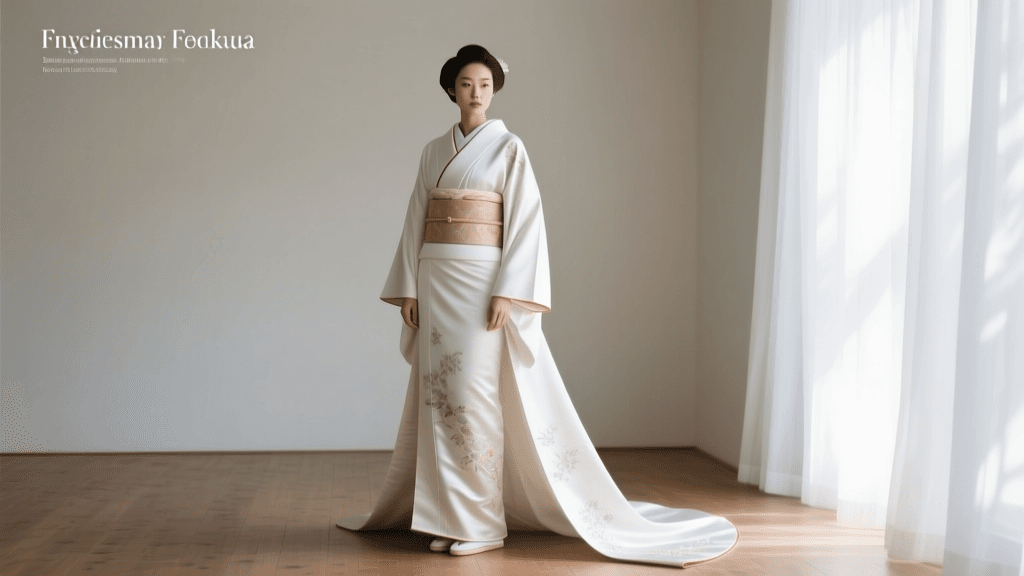
The shiromuku is the most formal and traditional bridal garment, worn exclusively during the Shinto wedding ceremony. The term translates literally to 'pure white,' and the ensemble consists of several layers of pristine white silk. The color white holds profound symbolism in Shinto tradition, representing purity, maidenhood, and the bride's willingness to be 'dyed' in the colors and traditions of her new family.
A complete shiromuku ensemble includes the kakeshita (the main kimono), the uchikake (the heavily padded outer coat), and the nagajuban (the under-robe). The hem of the uchikake is padded with cotton or silk wadding, known as fukige, which allows the garment to trail beautifully on the floor and gives the bride a dignified, gliding posture. Because the shiromuku lacks color, the artistry is found in the subtle, tone-on-tone woven patterns (such as cranes, pine, or plum blossoms) and the exquisite texture of the silk.
The shiromuku is paired with specific headpieces. The wataboshi is a large, white, padded hood that acts as a veil, shielding the bride's face from everyone except the groom until the ceremony concludes. Alternatively, some brides opt for the tsunokakushi, a smaller white silk band that translates to 'horn-hiding,' symbolizing the bride's resolve to hide any 'horns' of jealousy or ego as she enters her new household.
The Irouchikake: A Canvas of Color and Auspicious Motifs
While the shiromuku is reserved for the solemnity of the ceremony, the irouchikake is the vibrant, colorful overcoat worn during the wedding reception or for the ironaoshi (the ceremonial outfit change). The irouchikake is a celebration of life, prosperity, and joy. It is typically crafted from richly dyed silk crepe or brocade and features lavish embroidery, gold leaf application (surihaku), and intricate weaving techniques like Kyoto's famous Nishijin-ori.
The motifs adorning an irouchikake are never arbitrary; they are deeply auspicious. The tsuru (crane) represents longevity and fidelity, as cranes are believed to mate for life. The shochikubai motif—a combination of pine (matsu), bamboo (take), and plum (ume)—symbolizes resilience, prosperity, and endurance through harsh winters. The Kyoto National Museum houses exquisite historical examples of these garments, showcasing how Edo-period sumptuary laws once restricted such opulent displays to the samurai and aristocratic classes, before they became accessible to wealthy merchants and eventually the general public.
The Hikizuri: Elegance for the Reception
The hikizuri, often referred to as an ohikizuri in bridal contexts, is a trailing kimono characterized by its long, flowing skirt that sweeps the floor. Historically worn by aristocratic women of the Heian period and later by geisha, the hikizuri has been adapted for modern brides who desire a dramatic, elegant silhouette for their reception or evening after-party. Unlike the heavily padded uchikake, the hikizuri relies on the natural drape of the silk and the elegant manipulation of the long sleeves (furisode) to create a striking visual impact.
Comparison Chart: Bridal Kimono Styles
| Garment | Primary Use | Key Features | Average Rental Cost (USD) | Weight |
|---|---|---|---|---|
| Shiromuku | Shinto Ceremony | All white, subtle woven patterns, wataboshi hood | $1,200 - $2,500 | 15 - 20 kg |
| Irouchikake | Reception / Ironaoshi | Vibrant colors, heavy embroidery, padded hem | $1,500 - $3,000 | 15 - 22 kg |
| Hikizuri | Reception / After-party | Trailing skirt, long furisode sleeves, dynamic drape | $800 - $1,800 | 10 - 15 kg |
Practical Guide: Costs, Timelines, and Rentals
Planning a traditional Japanese wedding requires meticulous preparation, especially when sourcing bridal kimono. The Japan National Tourism Organization notes that traditional arts and crafts, including kimono rental and styling, are a major pillar of cultural tourism and domestic weddings. Here is an actionable timeline and budget guide for prospective brides.
Budgeting for Bridal Kimono
- Rental Packages: Most brides in Japan rent their garments. A comprehensive rental package (including the kimono, obi, undergarments, accessories, and professional dressing services) typically ranges from 250,000 JPY to 500,000 JPY ($1,700 to $3,400 USD).
- Purchasing New: A custom-made, hand-embroidered shiromuku or irouchikake from a prestigious Kyoto atelier can easily exceed 2,000,000 JPY ($13,500 USD) and take up to a year to complete.
- Vintage and Second-hand: For budget-conscious brides, purchasing a vintage kimono from specialized recycle shops in Tokyo or Kyoto can cost between 50,000 JPY and 150,000 JPY ($340 to $1,000 USD). However, you will need to budget an additional 50,000 JPY for professional cleaning and tailoring.
The Booking and Fitting Timeline
- 8 to 12 Months Prior: Begin researching bridal kimono salons. If you are getting married during peak seasons (Spring/Autumn), book your salon and reserve your specific garments immediately.
- 6 Months Prior: Attend your first consultation and fitting. The stylist will take over a dozen measurements, including your torso length, hip width, and shoulder drop, to select the correct base kimono (koshita).
- 3 Months Prior: Second fitting. You will try on the actual garments, along with the obi and accessories. This is the time to finalize your color palette and ensure the hem length is perfectly adjusted to your height and chosen footwear.
- 1 Month Prior: Final consultation to discuss the kitsuke (dressing) schedule on the wedding day.
The Art of Kitsuke: Dressing the Bride
Putting on a bridal kimono is not a task one can accomplish alone; it requires a licensed kitsuke (kimono dressing) stylist. The process takes between 45 and 60 minutes and is physically demanding. The stylist will use a series of towels and specialized padding to create a smooth, cylindrical body shape, which is the traditional ideal for kimono silhouettes. This padding ensures the heavy silk drapes correctly and prevents the obi from slipping.
The obi itself is a masterpiece of weaving, often made of gold and silver threads, and is tied in elaborate knots such as the fukurasuzume (puffed sparrow) or the bunko (butterfly). Because the complete ensemble can weigh up to 20 kilograms (44 pounds), brides are advised to eat a light, high-energy meal before dressing and to practice walking in the restrictive hemline prior to the wedding day.
Essential Bridal Accessories
No bridal kimono is complete without its accompanying accessories, each carrying its own cultural weight:
- Kanzashi: Ornate hairpins, often featuring tortoiseshell, pearls, or silk flowers, used to secure the traditional bridal updo.
- Hakoseko: A small, decorative mirror case tucked into the front of the obi. Historically used to carry cosmetics, it is now a purely symbolic accessory representing the bride's readiness to present her best self.
- Sensu: A folding fan, usually featuring gold leaf and auspicious motifs, held by the bride during photographs and formal greetings.
- Zori and Tabi: The bride wears pristine white tabi (split-toe socks) and formal zori sandals with thick, brocade straps. The heel height of the zori must be factored into the hem length during the final fitting.
Conclusion
The Japanese bridal kimono is far more than a wedding dress; it is a profound expression of cultural heritage, familial blessing, and artistic mastery. Whether you are drawn to the serene purity of the shiromuku or the vibrant storytelling of the irouchikake, understanding the history, symbolism, and practicalities of these garments ensures a wedding day that is as seamless as it is spectacular. By respecting the timelines, investing in professional kitsuke, and appreciating the centuries of textile artistry woven into every thread, brides can honor the rich tapestry of Asian traditions on their most important day.