Hanfu for Family Ceremonies 2026: Birth, Wedding & Rites Guide
The Resurgence of Hanfu in Modern Family Milestones
As we navigate through 2026, the Hanfu movement has evolved far beyond a niche internet subculture or occasional streetwear trend. Today, traditional Han clothing is deeply embedded in the fabric of major familial rites of passage. Families across the globe are increasingly turning to historically grounded garments to celebrate births, solemnize marriages, and honor ancestors. This shift reflects a broader cultural desire to connect with heritage through tangible, wearable art. As noted by BBC Travel, the modern Hanfu revival is driven by a generation seeking to reclaim and redefine their cultural identity through traditional aesthetics. This comprehensive guide explores how to select, style, and source the perfect Hanfu for your family’s most sacred ceremonies in 2026.
Birth and Childhood: Zhuazhou and Coming of Age
The earliest family milestones are steeped in symbolism, and dressing children in traditional garments amplifies the cultural weight of these events. The Zhuazhou (first birthday grab) is a beloved tradition where a toddler is surrounded by various objects to predict their future inclinations. In 2026, the trend for Zhuazhou attire leans heavily toward Song Dynasty-inspired beizi (lightweight outer jackets) paired with soft, breathable cotton-linen blends. Toddlers are often adorned with traditional tiger-head shoes and embroidered bibs featuring the 'Five Poisons' motif, designed to ward off evil spirits and ensure robust health.
As children grow, the coming-of-age ceremonies—Guan Li (capping ceremony for young men at 20) and Ji Li (hair-pinning ceremony for young women at 15)—demand a more mature and structured wardrobe. For these pivotal transitions, the shenyi (deep robe) remains the gold standard. The shenyi wraps the body entirely, symbolizing moral integrity and the wrapping of virtue. In 2026, bespoke tailors are utilizing advanced 3D body scanning to ensure the shenyi drapes perfectly without restricting movement, blending ancient silhouettes with modern ergonomic precision. Parents often gift their children a custom-embroidered ruqun or lanpao, featuring family crests or auspicious motifs like the white crane for longevity and the carp for academic success.
Traditional Weddings: Ming and Song Dynasty Elegance
Weddings represent the zenith of Hanfu formality. While Western white gowns dominated the early 2000s, the 2026 bridal market is overwhelmingly dominated by traditional Chinese wedding attire, specifically drawing from the Ming and Song dynasties. The most iconic and highly sought-after ensemble is the Ming-style fengguan xiapei (phoenix crown and cloud shoulders). This regal outfit features a heavily embroidered red or blue yuanlingpao (round-collar robe) and a mamianqun (horse-face skirt) woven with real gold and silver peacock threads.
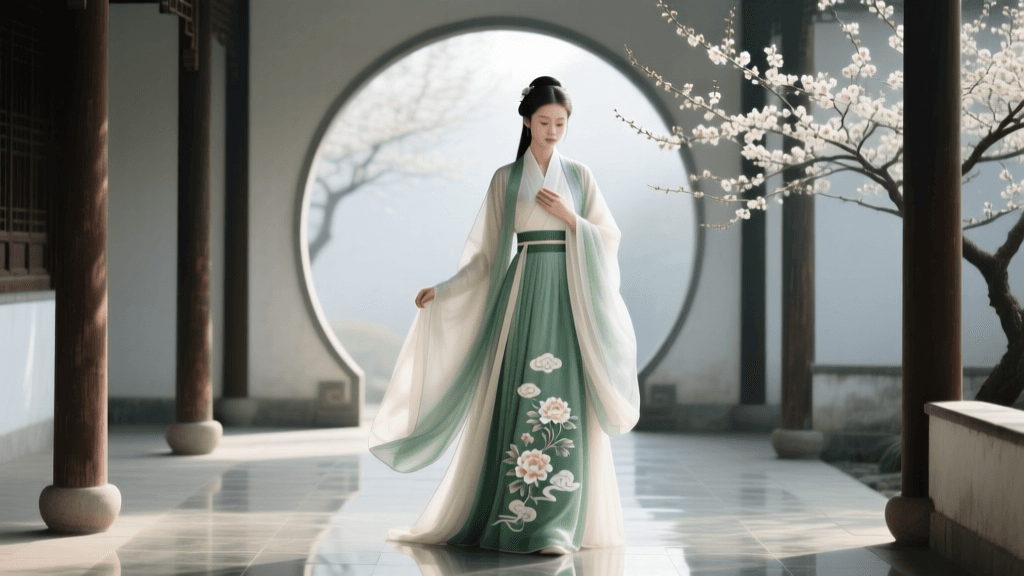
However, for summer weddings or destination ceremonies, the heavier Ming brocades are being swapped for Song Dynasty elegance. Song-style wedding Hanfu utilizes lighter silks, sheer luo (gauze) overlays, and a more restrained, pastel color palette featuring celadon greens, pearl whites, and soft blush pinks. A major innovation in the 2026 market is the use of Xiangyunsha (gambiered Canton silk). This heritage fabric, dyed with plant extracts and river mud, is naturally cooling, antibacterial, and boasts a unique, rustling texture that makes it highly prized for luxury summer wedding skirts.
When planning a traditional Hanfu wedding, couples must budget not only for the garments but also for the intricate hairpieces and jewelry. The fengguan (phoenix crown) alone can take master artisans up to three months to construct using traditional kingfisher feather techniques (now ethically replicated with dyed goose feathers and silk threads). Grooms typically wear a dark, formal shenyi or a red Ming-style official robe with a wushamao (winged hat), symbolizing a promotion to the 'scholar-official' class of marriage.
Ancestral Rites: Modesty and Respect for Qingming
When honoring the departed during the Qingming Festival (Tomb-Sweeping Day) or the Zhongyuan Festival (Ghost Festival), the sartorial rules shift dramatically from celebration to solemnity. The core principles of ancestral veneration dictate modesty, restraint, and harmony with nature. Flashy metallic threads, vibrant reds, and overly voluminous sleeves are strictly avoided.
For Qingming in 2026, families are favoring the jiaoling ruqun (cross-collar top and skirt) in muted, earthy tones. Colors such as slate gray, indigo, pale willow green, and unbleached hemp white are considered highly appropriate. The fabrics of choice are natural and unpretentious: raw silk, heavy linen, and matte cotton. The yuanlingpao is also acceptable for male elders leading the ancestral prayers, usually in deep navy or charcoal. The emphasis is on cleanliness, neatness, and a respectful silhouette that does not draw undue attention to the wearer, allowing the focus to remain entirely on the ancestors being honored.
2026 Buyer’s Guide: Top Brands, Pricing, and Lead Times
Sourcing authentic, high-quality Hanfu requires navigating a bustling market of heritage brands and modern studios. Below is a curated comparison of the most reputable brands in 2026 for ceremonial garments, detailing their specialties, current pricing, and production lead times.
| Brand Name | Dynasty Specialty | Best For | Price Range (USD) | 2026 Lead Time |
|---|---|---|---|---|
| Minghuatang | Ming Dynasty | Luxury Weddings, Formal Rites | $400 - $2,500 | 60 - 90 Days |
| Shisanyu | Song / Tang | Zhuazhou, Daily Ceremonial | $80 - $300 | 7 - 14 Days |
| Zhongling | Ming / Wei-Jin | Bespoke Bridal, Fengguan | $600 - $3,500 | 90 - 120 Days |
| Tingyueju | Song / Ming | Qingming, Coming of Age | $150 - $600 | 15 - 30 Days |
Note: Prices reflect the 2026 market average for authentic materials. Bespoke sizing and rare heritage fabrics like genuine Xiangyunsha will push costs toward the higher end of the spectrum.
Styling, Grooming, and Modern Adaptations
Wearing Hanfu correctly is just as important as selecting the right garment. The most critical rule in Hanfu etiquette is the youren (right lapel) rule. The left side of the collar must always cross over the right side, forming a 'y' shape. As documented in historical textile archives, reversing this (right over left, or zuoren) is strictly reserved for dressing the deceased in funerary rites and is considered highly inauspicious for the living. This is a common pitfall for beginners and must be meticulously checked before any family ceremony.
Grooming in 2026 balances historical accuracy with modern practicality. While traditional topknots are still favored for weddings and coming-of-age ceremonies, many opt for elegant, period-inspired half-up hairstyles secured with jade, wood, or silver hairpins (zan and chai). For men, modern interpretations of the guan (topknot cover) made from lightweight carved wood or 3D-printed resin offer a comfortable alternative to heavy historical metals. Footwear has also seen modern adaptations; traditional cloud-toe shoes are now frequently fitted with memory foam insoles and rubberized, non-slip soles to accommodate long hours of standing during ancestral prayers or wedding banquets.
Preserving Heritage Through Every Thread
The integration of Hanfu into family ceremonies is more than a fleeting fashion statement; it is a profound act of cultural continuity. Whether wrapping a toddler in a tiger-head bib, exchanging vows beneath a phoenix crown, or bowing in humble linen before ancestral tablets, the garments we choose carry the weight of history. For those seeking deeper historical context on the evolution of these textiles, institutions like The Metropolitan Museum of Art offer extensive resources on Chinese dress and textile preservation. By understanding the nuances of dynasty-specific silhouettes, fabric symbolism, and ceremonial etiquette, families in 2026 can ensure their milestones are celebrated with authenticity, respect, and breathtaking beauty.