Kimono Extreme Weather 2026: Rain, Snow & Heat Adaptations
Navigating the Elements: The Kimono in 2026
Wearing a traditional kimono is an exercise in elegance, cultural preservation, and meticulous attention to detail. However, the Japanese archipelago is defined by its dramatic seasonal shifts, from the sweltering, high-humidity heatwaves of mid-summer to the torrential monsoon rains and the biting, snow-laden winds of winter. As global climate patterns shift, the Japan Meteorological Agency (JMA) has noted increasingly volatile weather extremes extending into 2026, making the traditional silk garment more challenging to wear outdoors than ever before. Yet, the kimono remains a living tradition. Rather than abandoning these exquisite garments to the safety of climate-controlled indoors, modern wearers and traditional artisans have collaborated to create ingenious adaptations. By blending centuries-old textile wisdom with cutting-edge 2026 material science, enthusiasts can now wear kimono comfortably and safely through rain, snow, and extreme heat.
Beating the Summer Heat: Ro, Sha, and Modern Cooling Tech
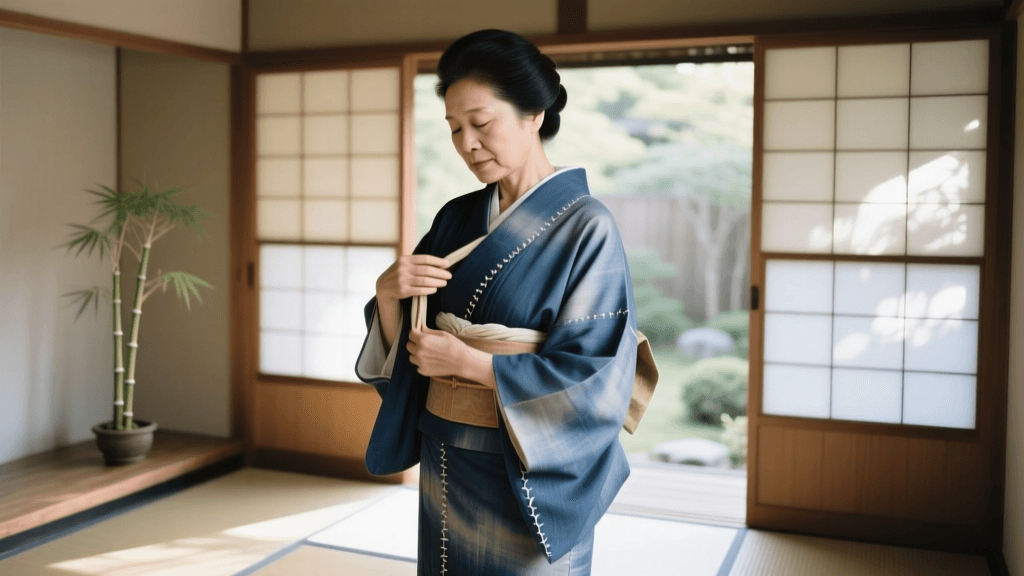
Summer in Japan is notoriously brutal, characterized by oppressive humidity that can quickly turn a multi-layered silk garment into a sauna. Historically, the solution to this was the transition to natsumono (summer garments) made from Ro and Sha silks. According to the Kogei Japan Traditional Crafts portal, these fabrics utilize a complex leno weave structure that creates tiny, uniform gaps in the textile. This allows air to circulate freely against the skin while maintaining the structural integrity required for the garment's drape. Ro features a distinct striped pattern of woven gaps, while Sha offers a more uniform, gauze-like transparency.
While Ro and Sha remain the gold standard for the outer kimono in 2026, the true revolution in summer heat adaptation lies beneath the surface. The juban (undergarment) and hadajuban (undershirt) have been radically upgraded. In 2026, leading Kyoto-based kimono outfitters have widely adopted Phase Change Material (PCM) yarns integrated into traditional cotton and hemp blends. Originally developed for aerospace applications, PCM microcapsules absorb and store excess body heat when the skin temperature rises, and release it when the temperature drops. A modern PCM-infused juban can lower the perceived skin temperature by up to 3°C, providing a vital buffer against heat exhaustion during outdoor summer festivals like Gion Matsuri.
Furthermore, UV-blocking han-eri (decorative collars) made from specialized titanium-dioxide coated fibers are now standard in 2026 summer kits, protecting the delicate nape of the neck from severe sunburn without compromising the crisp, white aesthetic required for formal wear. When pairing these modern undergarments with a lightweight, unlined hitoe or sheer usumono kimono, wearers can maintain perfect etiquette while surviving 35°C (95°F) afternoons.
Navigating the Monsoon: Rain Protection for Silk
Water is the natural enemy of silk. A single drop of rain on an untreated vintage kimono can cause mizu-shimi (water spots), where the water pushes the sizing and dyes to the edges of the wet area, leaving a permanent, stark ring. During the tsuyu (plum rain) monsoon season and the sudden typhoon squalls of late summer, protecting the garment is paramount.
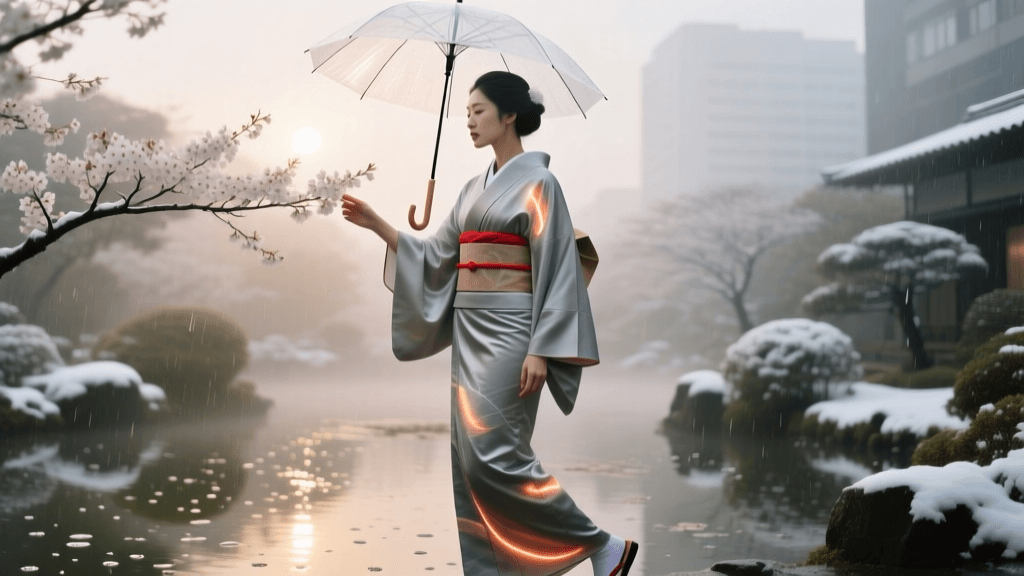
Traditionally, this was achieved using an amagappa (a specialized raincoat worn over the kimono) and a shigure-gasa (a waxed paper or oiled silk umbrella). While beautiful, traditional oiled paper umbrellas are heavy, fragile, and impractical for modern urban commuting. In 2026, the focus has shifted to advanced textile treatments and modernized accessories. The breakthrough this year is the widespread availability of fluorine-free hydrophobic nano-sprays specifically formulated for antique and delicate silks. Unlike older waterproofing sprays that left a stiff, yellowing residue and trapped moisture, these 2026 eco-friendly nano-coatings create a microscopic, breathable lattice on the fabric's surface. Water simply beads up and rolls off, preventing mizu-shimi without altering the silk's hand-feel or drape.
Footwear also requires immediate adaptation. Traditional zori and geta are easily ruined by puddles, and wet tabi socks are intensely uncomfortable. Modern wearers now utilize silicone zori covers—stretchable, waterproof sheaths that slip over the footwear, providing grip on wet pavement while keeping the straw or wood base completely dry. For heavier downpours, the ashinaka (a traditional half-boot made of woven straw or modern waterproof synthetic leather) has seen a massive resurgence, often paired with a stylish, translucent vinyl amagappa that allows the kimono's vibrant patterns to remain visible while shedding torrential rain.
Surviving the Snow: Winter Layering and Footwear
Winter presents a different set of challenges, particularly in snow-heavy regions like Hokkaido, Kanazawa, and the Japanese Alps. The kimono's open neck and relatively loose fit can let in freezing drafts, while the standard cotton tabi offers virtually no insulation against snow-covered ground. The traditional approach to winter kimono relies heavily on the art of layering.
The base layer begins with a thick, quilted hadajuban or a modern thermal undershirt made from merino wool blends, which provides exceptional warmth without adding the bulk that would ruin the kimono's silhouette. Over this, a standard nagajuban is worn, followed by the kimono itself. In 2026, the michiyuki (a traditional kimono overcoat with a distinctive square neckline) and the haori (a shorter jacket) are frequently lined with ultra-thin, synthetic down insulation. This provides the thermal retention of a heavy winter parka while maintaining the sleek, elegant lines expected of formal winter attire.
The most significant 2026 innovation for winter kimono wear is the smart-heated tabi. Powered by flexible, paper-thin lithium-polymer battery packs that sit discreetly inside the heel or ankle, these heated socks maintain a constant, comfortable temperature for up to eight hours. This prevents the numb toes that traditionally plagued winter festival attendees. For navigating snowy streets, the yukita—a traditional woven straw cover that slips over the zori to provide traction and height above the snow—has been modernized with vulcanized rubber treads on the sole, merging Edo-period aesthetics with modern slip-resistance.
Comparison Chart: Traditional vs. Modern Weather Gear
To help you build your 2026 kimono weather-survival kit, here is a breakdown of how traditional garments compare to their modern adaptations, including estimated costs for high-quality pieces.
| Weather Condition | Traditional Garment / Method | 2026 Modern Adaptation | Est. Cost (USD) |
|---|---|---|---|
| Extreme Heat | Ro / Sha Silk Kimono | PCM Cooling Juban & UV Han-eri | $85 - $140 |
| Heavy Rain | Oiled Paper Shigure-gasa | Hydrophobic Nano-Spray & Vinyl Amagappa | $25 - $60 |
| Deep Snow | Quilted Cotton Layering | Merino Base & Battery-Heated Tabi | $70 - $120 |
| Slippery Ice | Straw Yukita Covers | Rubber-Treaded Synthetic Yukita | $40 - $80 |
Sourcing Authentic and Modern Gear
Whether you are seeking a vintage Ro silk kimono or the latest PCM cooling undergarments, sourcing the right gear is essential. The Victoria and Albert Museum (V&A) highlights the incredible structural ingenuity of the kimono, noting that its flat, uncut construction is what allows for such versatile layering and adaptation across seasons. When shopping in 2026, look for specialized retailers in Tokyo's Nihonbashi district or Kyoto's Nishijin weaving center, which now stock these hybrid traditional-tech garments. Online, certified kimono recycling shops and modern outfitters offer detailed measurements and material breakdowns, ensuring you can find the exact weather-appropriate gear you need.
Ultimately, the kimono is not a fragile relic to be kept in a cedar box; it is a dynamic, adaptable garment. By respecting the traditional wisdom of leno weaves and strategic layering, and embracing the material science of 2026, you can confidently step out into the rain, snow, and sun, keeping the tradition beautifully alive.