Kimono Extreme Weather Guide 2026: Rain, Snow & Heat
Navigating the Elements: Kimono Adaptations for 2026 Climate Extremes
As global weather patterns shift, 2026 has brought more frequent and intense climate extremes, from unprecedented summer heatwaves to sudden, torrential downpours and heavy winter snowfalls. For enthusiasts of traditional Japanese clothing, these environmental shifts present unique challenges. Silk, cotton, and hemp are deeply sensitive to moisture and temperature fluctuations. However, the kimono is not a static relic; it is a highly adaptable garment system. By combining centuries-old textile engineering with modern 2026 material science, wearers can comfortably and safely navigate any meteorological extreme. This comprehensive guide explores the specific adaptations, gear, and layering techniques required to wear kimono in severe rain, snow, and heat.
Beating the Heat: Summer Kimono (Natsugi) and Cooling Tech
Summer in Japan and many parts of the world now regularly exceeds 35°C (95°F) with oppressive humidity. Wearing multiple layers of traditional silk in these conditions requires strategic textile choices and modern undergarment integration. The foundation of summer kimono dressing lies in the weave structure of the outer garment.
Ro and Sha: The Physics of Leno Weaving
For high summer, the traditional choices are ro and sha silk weaves. Both utilize a leno weaving technique, where warp threads are twisted around each other to create a stable, sheer fabric with built-in ventilation gaps. According to textile historians at the Metropolitan Museum of Art, these open-weave structures have been essential for Japanese summer dress since the Edo period. In 2026, weavers in regions like Kiryu and Hachioji have introduced hybrid threads, blending traditional raw silk with ultra-fine cupro fibers to enhance moisture-wicking properties without sacrificing the structural integrity required for formal tsukesage or komon patterns.
Modern Innerwear: The 2026 AIRism Integration
The most significant modern adaptation for extreme heat is the replacement of the traditional cotton hadajuban (under-kimono) with advanced synthetic cooling meshes. In 2026, the latest iterations of Uniqlo AIRism ultra-thin mesh garments have become the gold standard for kimono wearers. These garments utilize micro-fiber technology that actively pulls sweat away from the skin and evaporates it rapidly. When worn beneath a ro kimono, the AIRism mesh prevents the outer silk from clinging to the body, maintaining the elegant, cylindrical silhouette while dropping the wearer's perceived body temperature by several degrees.
Summer Footwear: Igusa and Bamboo
Footwear must also breathe. Traditional zori sandals featuring igusa (rush grass) or woven bamboo bases are essential. The natural porosity of igusa absorbs foot perspiration and allows air circulation, preventing the discomfort and slipping associated with synthetic vinyl zori in high humidity.
Navigating Heavy Rain: Waterproofing and Michiyuki
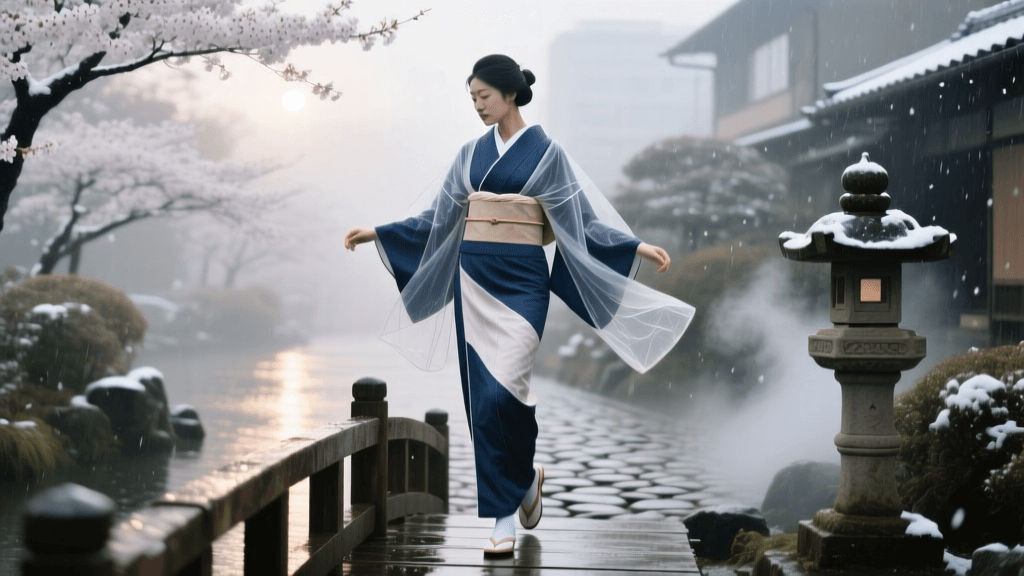
Rain is the natural enemy of silk. Water spots can permanently stain vintage textiles, and wet silk loses up to 20% of its tensile strength, making it prone to tearing under the tension of the obi. Adapting to heavy rain in 2026 involves a mix of traditional overcoats and cutting-edge nano-coatings.
Traditional Rain Gear: Amagappa and Michiyuki
The michiyuki is a traditional overcoat characterized by a square neckline, worn over the kimono to protect it from dust and light drizzle. For heavier rain, the amagappa (raincoat) is utilized. Historically made from oiled paper or treated silk, modern 2026 amagappa are constructed from lightweight, breathable polyurethane blends that mimic the drape of silk while offering complete waterproofing. Paired with a kasa (waxed paper or modern fiberglass umbrella), this creates a comprehensive shield against the elements.
2026 Nano-Coating Solutions for Vintage Silk
For those who prefer not to wear an overcoat, the 2026 market offers advanced fluorocarbon-free water-repellent sprays specifically formulated for delicate protein fibers. Unlike older silicone sprays that stiffened the fabric and blocked the weave's breathability, modern nano-ceramic sprays create a microscopic hydrophobic barrier. When applied to the lower half of a kimono (the area most susceptible to splashing), these treatments cause water to bead and roll off the silk without altering its hand-feel or drape.
Footwear Protection: Silicone Zori Covers
Wet feet ruin the kimono experience. While traditional lacquered wooden geta elevate the foot above puddles, they can be slippery on wet modern asphalt. The 2026 solution is the tailored silicone zori cover. These stretchable, textured silicone sheaths slip over standard zori, providing waterproofing and high-traction grip on wet surfaces, ensuring safe transit from transit stations to indoor venues.
Conquering Snow and Cold: Layering and Yukigeta
Winter kimono dressing (fuyugi) relies on the principle of trapped air for insulation. As winters in 2026 see more erratic freeze-thaw cycles, managing both extreme cold and wet slush is paramount.
Strategic Layering: Hanten and Kaikan
The base layer in winter begins with a thick, quilted cotton hadajuban. Over the kimono, a haori (jacket) is worn. For extreme cold, a hanten (a heavily padded, short winter coat) or a michiyuki lined with down-alternative synthetic insulation provides core warmth. Historically, samurai and nobles used kaikan—thick, paper-like garments worn against the skin for windproofing. Today, ultra-thin Gore-Tex windbreaker liners are discreetly worn beneath the nagajuban (under-kimono) to block freezing winds without adding visible bulk to the silhouette.
Winter Footwear: Yukigeta and Thermal Tabi
Standard tabi socks offer zero thermal retention. In 2026, thermal tabi woven with merino wool blends and far-infrared reflective inner linings are widely available, keeping toes warm in sub-zero temperatures. For navigating snow and ice, yukigeta (snow clogs) are mandatory. Unlike standard geta, yukigeta feature a solid, enclosed wooden or high-density EVA foam base with deep metal cleats or aggressive rubber treads on the bottom. The elevated base (often 5 to 7 centimeters high) keeps the kimono hem completely clear of deep snow and icy slush.
2026 Extreme Weather Adaptation Chart
The following table summarizes the essential gear and adaptations for kimono wearers facing severe weather conditions in 2026.
| Weather Condition | Traditional Adaptation | 2026 Modern Integration | Crucial Footwear |
|---|---|---|---|
| Extreme Heat (>35°C) | Ro/Sha leno-weave silk, Igusa grass Zori | AIRism ultra-mesh Hadajuban, Cupro-blend threads | Bamboo or Igusa Zori |
| Heavy Rain / Torrential | Oiled paper Amagappa, Lacquered Geta | Fluorocarbon-free nano-sprays, Polyurethane Michiyuki | Silicone Zori covers, High-traction Geta |
| Deep Snow / Sub-Zero | Quilted cotton layers, Wool Haori | Gore-Tex under-liners, Far-infrared thermal Tabi | Yukigeta with metal cleats (5-7cm base) |
Preserving the Garment Post-Exposure
Adapting to the weather is only half the battle; post-wear care in 2026 is equally critical. After exposure to high humidity or freezing dampness, a kimono must never be folded immediately. It should be hung on a specialized, wide-shouldered emonkake (kimono hanger) in a climate-controlled room with a dehumidifier set to 50% relative humidity. This prevents the growth of mold on silk protein fibers and ensures that any residual moisture trapped in the obi or lining evaporates safely. By respecting both the historical wisdom of Japanese textile artisans and the innovations of modern material science, the kimono remains a resilient, living garment capable of weathering any storm the 2026 climate presents.