Decoding Kimono Patterns and Status in Ukiyo-e Art
The Floating World and the Kosode
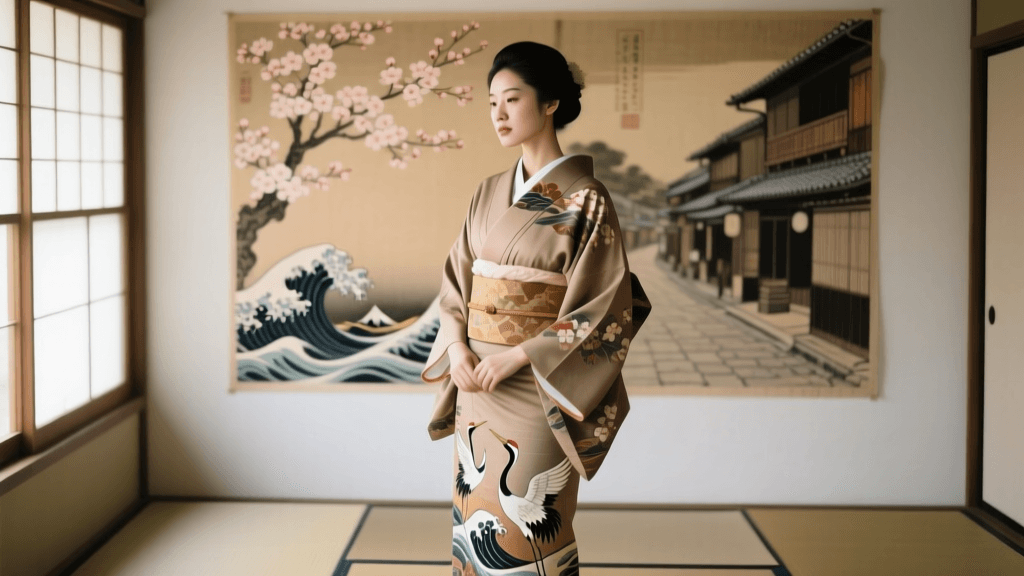
Ukiyo-e, translating to pictures of the floating world, emerged during the Edo period (1615–1868) as a vibrant celebration of urban culture, theater, and beauty. At the heart of this artistic movement was the kosode, the direct predecessor to the modern kimono. Unlike Western fashion, which relied heavily on tailoring and silhouette changes, Japanese fashion expressed its evolution entirely through the flat, two-dimensional canvas of the textile. Woodblock print masters like Kitagawa Utamaro, Utagawa Hiroshige, and Katsushika Hokusai did not merely illustrate clothing; they documented the complex socio-economic and aesthetic codes woven into every thread. According to the Metropolitan Museum of Art's Heilbrunn Timeline of Art History, ukiyo-e served as a vital medium for disseminating fashion trends across Japan, acting as the era's equivalent to modern fashion magazines. For collectors and enthusiasts today, understanding the kimono depicted in these prints requires a deep dive into the visual language of motifs, the strictures of sumptuary laws, and the subtle aesthetics of the merchant class.
The Visual Language of Kimono Motifs
In ukiyo-e, a kimono's pattern was never arbitrary. Motifs served as a sophisticated communication system, conveying the wearer’s age, marital status, occupation, and even their literary or poetic knowledge. Artists meticulously carved intricate patterns into wooden blocks, requiring immense technical skill to register multiple colors (a process known as nishiki-e or brocade pictures). For the geisha and high-ranking courtesans (oiran) depicted in the pleasure quarters of Yoshiwara, kimono motifs were bold, lavish, and heavily layered. A courtesan’s obi was tied in the front, and her garments featured sprawling, asymmetrical designs that crossed seams, demonstrating the vast wealth of her patron. Conversely, the wives of wealthy merchants were depicted with more restrained, albeit incredibly refined, patterns.
Seasonal Motifs and the Concept of Iki
A cornerstone of Japanese aesthetic philosophy is the acute awareness of the seasons, a concept vividly preserved in ukiyo-e. Wearing a motif out of season was considered a severe sartorial faux pas. Cherry blossoms (sakura) were worn in early spring, while maple leaves (momiji) and autumn grasses signaled the fall. However, the true mark of sophistication was the concept of iki—a refined, understated elegance that avoided overt display. Actionable Advice for Modern Wearers: If you are wearing a modern kimono or yukata inspired by ukiyo-e aesthetics, always anticipate the season. Wear autumn motifs in late summer to express a longing for the cool weather, but never wear cherry blossoms after the petals have fallen in real life. This rule of anticipation remains a strict guideline in contemporary kimono etiquette.
Navigating Sumptuary Laws Through Art
The Tokugawa shogunate enforced strict sumptuary laws to maintain the social hierarchy, explicitly forbidding the merchant class (chonin) from wearing luxurious silks, vibrant crimson dyes, or ostentatious gold leaf. However, the wealthy merchants circumvented these restrictions through iki. As noted by the Victoria and Albert Museum, this led to the development of subtle, muted exterior colors like nezu-iro (rat gray) and brown, paired with exquisitely dyed, hidden linings and undergarments. In ukiyo-e prints, artists highlighted this rebellion by drawing attention to the inner layers of a merchant's wife's kimono as it swept open, revealing flashes of forbidden crimson or intricate tie-dye (shibori) that only those in the know could appreciate.
The Role of the Obi and Accessories in Ukiyo-e
While the kosode provided the primary canvas, the obi (sash) and accessories were critical in completing the visual narrative. In early Edo ukiyo-e, the obi was relatively narrow and tied in the front or side. As the period progressed and the pleasure quarters flourished, the obi widened dramatically. Courtesans in prints by Utamaro are frequently depicted with massive, heavily brocaded obi tied in elaborate front knots, which served both as a status symbol and a practical necessity, as a rear knot would be impossible to manage in the confined spaces of the teahouses. Furthermore, artists paid meticulous attention to kanzashi (hair ornaments) and tabi (split-toe socks), using these accessories to frame the face and ground the sweeping lines of the kimono. Collectors should note that prints featuring highly detailed, metallic-printed obi patterns (a technique using glue and metallic dust) are particularly prized, as the metallic elements often oxidize or flake off over time.
Data Table: Decoding Common Ukiyo-e Kimono Motifs
| Motif | Season | Social Context | Ukiyo-e Application |
|---|---|---|---|
| Sakura (Cherry Blossom) | Early Spring | Youth, fleeting beauty | Worn by young geisha and unmarried women to signify vitality. |
| Momiji (Maple Leaf) | Autumn | Maturity, elegance | Often depicted on the kosode of older, established courtesans. |
| Sho Chiku Bai (Pine, Bamboo, Plum) | Winter/New Year | Resilience, auspiciousness | Used in formal garments for both merchants and samurai classes. |
| Seigaiha (Ocean Waves) | All Seasons | Peace, good fortune | Frequently used as a subtle background pattern (jimon) for men. |
| Tachibana (Citrus Blossom) | Summer | Longevity, nobility | Reserved for high-ranking women and formal summer wear. |
Practical Guide: Collecting and Viewing Ukiyo-e Kimono Art
For art collectors and textile historians, acquiring antique ukiyo-e prints featuring detailed kimono designs is a rewarding pursuit. However, the market requires a discerning eye. When evaluating a print, pay close attention to the condition of the organic dyes. The vibrant reds, derived from safflower (beni), and purples, derived from dayflower (tsuyukusa), are notoriously fugitive and fade quickly when exposed to light. A print featuring deep, unfaded beni red is exceptionally rare and commands a premium.
Authentication and Condition Checks
- Examine the Margins: Original Edo-period prints were often trimmed by early collectors to fit standard frames. A print with intact margins, especially one showing the publisher's seal and the censor's stamps (kiwame), is highly desirable.
- Check the Registration: Early impressions feature crisp, perfectly aligned color blocks. Later print runs, especially those produced after the artist's death, often show misregistration and worn-out woodblocks where fine kimono patterns become muddy.
- Assess the Backing: Avoid prints that have been heavily backed with acidic paper or glued to cardboard, as this causes irreversible foxing and degradation to the delicate washi paper.
Pricing and Market Entry
Entry-level late Edo and Meiji-era prints (1850s–1900s) featuring standard geisha or actor portraits can be acquired from reputable dealers for $150 to $400. Mid-tier prints from the golden age of ukiyo-e (1780s–1830s) by renowned schools like the Utagawa school typically range from $800 to $2,500, depending on condition and subject matter. Masterworks by Utamaro or Sharaku, featuring groundbreaking kimono textiles and pristine impressions, routinely exceed $15,000 at auction. For those looking to study these textiles in person without purchasing, institutions like the Tokyo National Museum and the Art Institute of Chicago offer extensive digital archives and rotating physical exhibitions of ukiyo-e masterpieces.
Conclusion
The kimono depicted in ukiyo-e woodblock prints are far more than historical garments; they are complex texts that reveal the desires, restrictions, and artistic triumphs of Edo-period Japan. By learning to decode these motifs and understand the socio-political climate that shaped them, collectors and enthusiasts can unlock a deeper appreciation for the intersection of Japanese fine art and traditional fashion.