Kimono Travel Essentials 2026: What to Pack & Where to Wear
The Shift to Personal Kimono Travel in 2026
As global travel continues to evolve in 2026, the concept of 'slow travel' and deep cultural immersion has taken center stage. For enthusiasts of traditional Japanese garments, this means moving beyond the standard tourist rental experience and bringing personal kimono collections on the road. While rental shops in cities like Kyoto and Tokyo offer convenience, they often limit your choices to synthetic, mass-produced garments that lack the nuanced beauty of vintage or high-quality modern pieces. Bringing your own kimono allows for a deeply personal connection to the culture, ensuring a perfect fit, superior fabric comfort, and the ability to explore off-the-beaten-path locations where rental return times are not a constraint.
However, traveling with traditional Japanese clothing requires meticulous planning. The intricate layers, delicate fabrics, and specific accessories demand a specialized packing strategy. Whether you are a seasoned kitsuke (dressing) practitioner or a beginner relying on modern travel-friendly adaptations, this comprehensive 2026 guide will equip you with the exact packing essentials, fabric recommendations, and destination itineraries needed for a flawless kimono travel experience in Japan.
Why Bring Your Own Kimono?
The decision to pack your own garment is rooted in both aesthetics and practicality. According to the Japan National Tourism Organization, 2026 has seen a massive surge in travelers seeking authentic, localized experiences outside of major metropolitan hubs. In rural towns or smaller historical districts, kimono rental infrastructure is virtually nonexistent. By packing your own wardrobe, you unlock the ability to wear traditional attire in serene, uncrowded environments. Furthermore, hygiene and comfort are paramount. Personal undergarments (hadajuban) and tailored tabi socks ensure that you remain comfortable during long days of walking, avoiding the stiff, generic footwear often provided by high-volume rental shops.
The Ultimate 2026 Kimono Packing Checklist
Packing a kimono is not as simple as folding a dress and placing it in a suitcase. The garments must be protected from moisture, friction, and deep creasing. Below is the essential packing list for the modern kimono traveler, featuring 2026's most popular travel-friendly adaptations.
| Item Category | 2026 Travel Recommendation | Purpose & Travel Benefit |
|---|---|---|
| Main Garment | Washable Polyester Komon or Linen Yukata | Resists deep wrinkles; can be hand-washed in hotel sinks if stained. |
| Undergarment (Nagajuban) | Cool-touch tech-fabric hadajuban | Wicks sweat during humid Japanese summers; dries overnight in a hotel room. |
| Belt (Obi) | Pre-tied Tsuke-obi with clip | Saves 30 minutes of dressing time; eliminates the need for bulky obi padding. |
| Tying Cords (Koshihimo) | Elastic silicone koshihimo | Prevents slipping without requiring painful, tight tying around the ribs. |
| Footwear | Stretch-toe Tabi & EVA foam Zori | Provides arch support and toe flexibility for 10,000+ daily steps on cobblestone. |
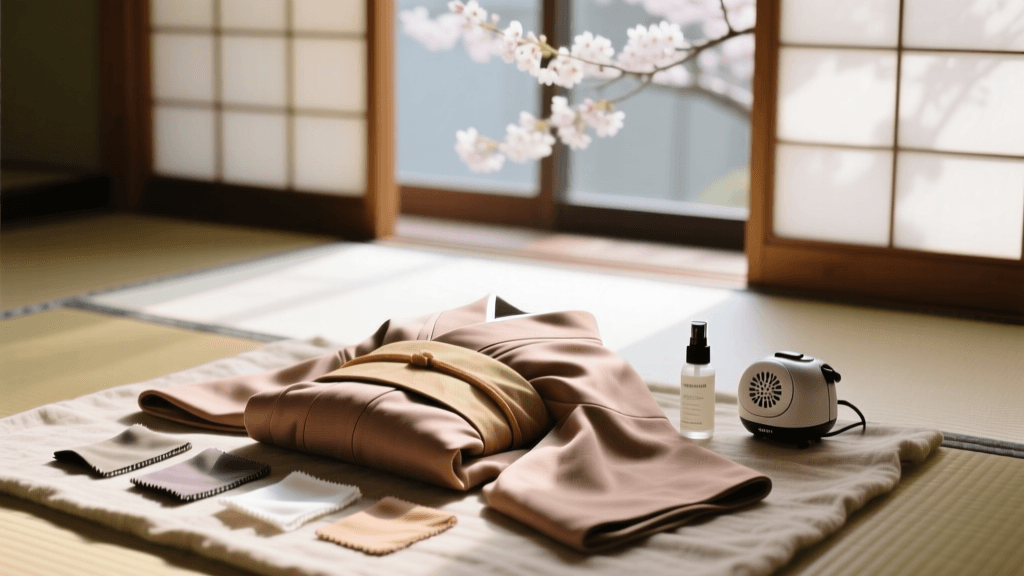
| Garment Care | Botanical wrinkle-release spray | Refreshes silk and poly-blends in hotels without the need for an iron. |
| Storage | Non-woven fabric kimono tote | Allows the fabric to breathe in transit, preventing mildew and trapped odors. |
Fabric Technology: What to Wear in 2026
The landscape of kimono textiles has shifted dramatically over the last few years. While vintage silk (shioze or chirimen) remains the gold standard for formal occasions, it is notoriously difficult to maintain while traveling. A single drop of rain or a splash of soy sauce can ruin an untreated silk komon. In 2026, the market is dominated by high-tech washable silks and premium polyesters that mimic the drape and texture of traditional weaves but can be safely cleaned with mild detergent.
For summer travel, linen-blend yukata have become the preferred choice among international travelers. Linen offers exceptional breathability and naturally resists the heavy, clinging wrinkles that plague cotton yukata. When packing these garments, utilize the 'roll and fold' method: fold the kimono along its natural seam lines (the straight, T-shaped construction makes this easy), and then loosely roll it to prevent hard creases from forming in your luggage.
Top Destinations for Kimono Wearing in 2026
Choosing where to wear your kimono is just as important as what you pack. While Kyoto remains the cultural heart of Japan, shifting tourism dynamics and local ordinances mean travelers must be strategic. Here are the top three destinations for a kimono-clad itinerary in 2026.
1. Kyoto: Navigating the New Etiquette
Kyoto is synonymous with kimono culture, but the city has implemented strict measures to manage overtourism and protect the privacy of its residents. The Kyoto City Tourism Association strongly advises visitors to respect the updated photography bans in the Gion district's private alleys. In 2026, the best strategy for Kyoto is to wake up early. Dress in your hotel and head to the Higashiyama preservation district or the serene grounds of Daigo-ji temple before 9:00 AM. Not only will you avoid the midday crowds, but the morning light filtering through the bamboo and wooden machiya townhouses provides unparalleled photographic conditions. Remember to walk carefully; the traditional zori sandal requires a flat-footed, gliding step that is perfectly suited for Kyoto's paved stone paths but demands mindfulness on steep temple stairs.
2. Kanazawa: The Uncrowded Cultural Gem
Often referred to as 'Little Kyoto,' Kanazawa offers a spectacular backdrop for traditional garments without the overwhelming congestion of the Kansai region. The Kanazawa Tourism Board highlights the Higashi Chaya District as a premier location for cultural immersion. Here, you can stroll past latticed wooden teahouses and visit gold-leaf workshops while dressed in a vibrant, seasonally appropriate komon. Kanazawa's weather can be unpredictable, particularly during the transition from spring to summer, so packing a lightweight, water-resistant michiyuki (kimono coat) is highly recommended to protect your main garment from sudden coastal drizzles.
3. Kawagoe: Edo-Period Charm Near Tokyo
For travelers who want to experience traditional aesthetics without traveling far from the capital, Kawagoe in Saitama Prefecture is the ideal day-trip destination. Known for its Kurazukuri (warehouse-style) streets, Kawagoe provides a dramatic, dark-plaster backdrop that makes brightly colored kimono patterns pop. Because it is a shorter excursion, you can easily pack your garment in a specialized tote bag, take the train from Ikebukuro, and utilize the town's numerous dressing rooms and traditional cafes that welcome patrons in traditional attire.
Hotel Room Dressing (Kitsuke) Hacks
Dressing yourself in a hotel room presents unique challenges, primarily the lack of a full-length, wall-mounted mirror and adequate hanging space. To overcome this, pack a lightweight, shatterproof acrylic mirror that can be propped against a desk chair. When tying your obi, the modern silicone koshihimo is a game-changer. Unlike traditional cotton cords that must be pulled painfully tight to hold the heavy fabric in place, the silicone grips the kimono material securely with minimal tension, allowing you to breathe comfortably and eat local cuisine without restriction.
Additionally, utilize the hotel's luggage rack. Unfold your luggage rack, place your folded obi and accessories on it in the exact order you will need them (hadajuban, nagajuban, kimono, koshihimo, obi, obijime), and treat it as your personal dressing station. This systematic approach prevents you from having to bend over or search through your suitcase while half-dressed in delicate layers.
Post-Wear Care and Storage on the Go
After a long day of exploring, proper garment care is essential to ensure your kimono remains pristine for the next outing. Never immediately fold a worn kimono back into your suitcase, as trapped body heat and ambient humidity will breed mildew and set in odors. Instead, bring a portable, collapsible wooden kimono hanger (emono-kake). Upon returning to your room, hang the kimono, nagajuban, and haori in a well-ventilated area away from direct sunlight for at least two hours.
If you are wearing a washable polyester or linen garment and encounter a stain, use a small amount of hotel hand soap and cold water to spot-clean the area immediately. Blot—do not rub—the fabric with a clean, white cotton towel. For silk garments, rely on your botanical wrinkle-release spray to freshen the fibers, and use a soft-bristled kimono brush to gently sweep away dust and pollen from the hemline before storing it in your breathable non-woven tote. By treating your garments with respect and utilizing these 2026 travel innovations, your kimono journey will be as elegant and seamless as the traditions you are celebrating.