Decoding Japanese Kimono Motifs and Color Symbolism
The Silent Language of the Kimono
In the rich tapestry of Asian traditions, the Japanese kimono stands out not merely as a garment, but as a profound communicative canvas. Long before the advent of modern fashion, the kimono served as a visual autobiography, conveying the wearer’s age, marital status, social standing, and even their philosophical outlook through intricate patterns and deliberate color choices. According to the Metropolitan Museum of Art, the evolution of the kosode (the precursor to the modern kimono) transformed it from a simple undergarment into a highly codified outer robe laden with symbolic weight during the Edo period (1615–1868).
For modern enthusiasts, collectors, and travelers looking to participate in traditional Japanese events, understanding this visual lexicon is essential. Wearing a motif out of season or choosing an inappropriate color for a specific ceremony can be seen as a faux pas. This comprehensive guide decodes the pattern color and motif symbolism of traditional Japanese garments, providing you with actionable advice on how to select, rent, and wear these masterpieces with cultural authenticity.
The Language of Colors in Japanese Garments
Color in Japanese dress is deeply tied to nature, spirituality, and social hierarchy. The dyes used historically were derived from plants, minerals, and insects, each carrying its own energetic and symbolic properties.
Red (Kurenai and Aka)
Red is arguably the most dynamic color in the kimono palette. Historically derived from the safflower (benibana), red symbolizes youth, passion, and the vibrant energy of early adulthood. It is the quintessential color for the furisode—the long-sleeved kimono worn by unmarried young women. A bright red furisode adorned with cranes or flowers signals that the wearer is of marriageable age and full of life. In contrast, deeper, oxidized reds or burgundy are often worn by older, married women as a sophisticated accent in the obi (sash) or the lining of a more subdued homongi (visiting kimono).
White (Shiro)
White represents absolute purity, divine connection, and new beginnings. In the context of weddings, the shiromuku is a completely white silk kimono ensemble worn by the bride, symbolizing her willingness to be "dyed" in the colors of her new husband's family. However, white also has historical ties to mourning and the transition to the afterlife, which is why everyday casual kimono rarely feature stark white as a dominant base color outside of summer yukata or specific festival garments.
Indigo (Ai) and Black (Kuro)
Indigo, derived from the polygonum tinctorium plant, was the color of the common people during the Edo period when sumptuary laws restricted the lower classes from wearing bright silks. Indigo is prized for its practical benefits—it naturally repels insects and masks dirt—making it a staple for workwear and casual cotton kimono. Black, on the other hand, represents the pinnacle of formality. The kurotomesode, a black silk kimono with family crests (kamon) and motifs only below the waist, is the most formal attire for married women, traditionally worn by the mothers of the bride and groom at weddings.
Seasonal Motifs: The "One Step Ahead" Rule
As noted in cultural analyses by Smithsonian Magazine, the kimono is intimately connected to the natural world and the changing of the seasons. The most critical rule in Japanese garment styling is the concept of being "one step ahead of nature." You must wear a seasonal motif just before or at the very beginning of the season, never after the natural event has passed.
Spring (Haru)
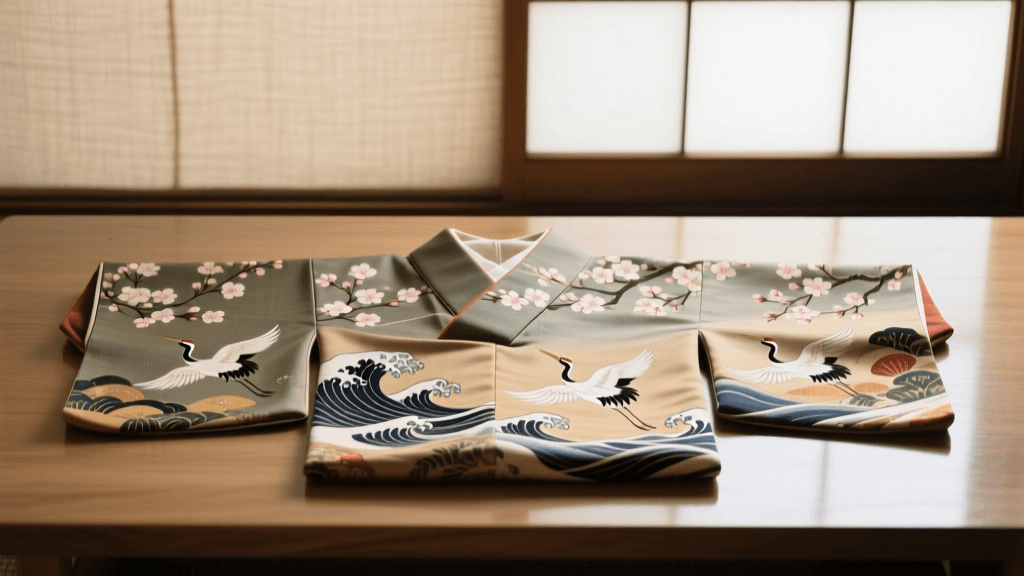
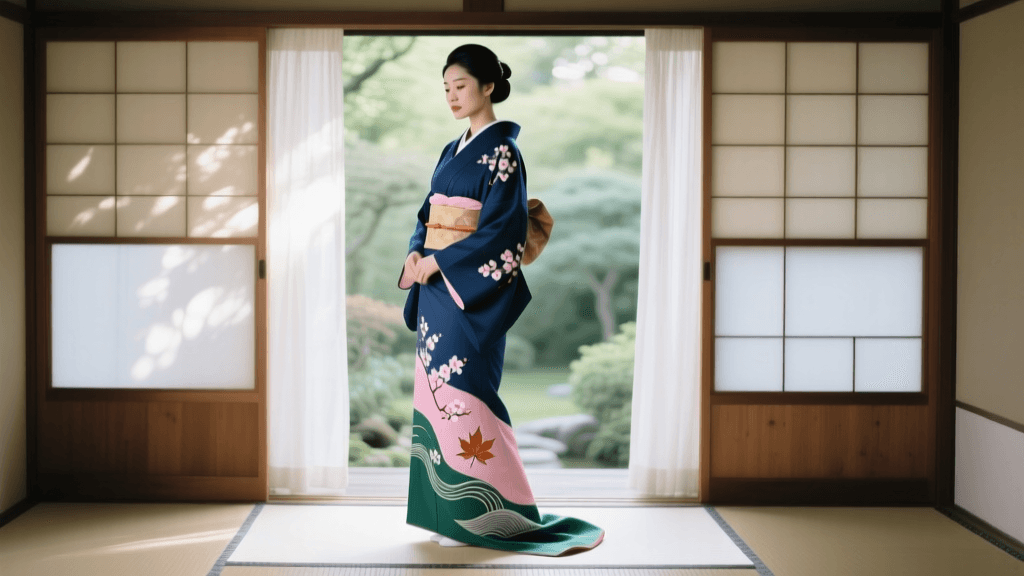
- Sakura (Cherry Blossom): The most iconic Japanese motif. Wear sakura motifs from late February through early March. Once the actual cherry blossoms begin to fall in April, wearing the motif is considered late and aesthetically melancholic.
- Wisteria (Fuji): Worn in April and early May, representing the transition into late spring.
Summer (Natsu)
- Morning Glory (Asagao) and Water Motifs: To evoke a sense of coolness during Japan's humid summers, motifs of flowing water, koi fish, and morning glories are worn in June and July.
- Fireflies (Hotaru): A highly poetic motif worn exclusively in early summer evenings.
Autumn (Aki)
- Momiji (Maple Leaves): Worn in September and October. Red and gold maple leaves scattered across the shoulder and hem symbolize the fleeting beauty of life.
- Chrysanthemum (Kiku): The imperial flower, representing longevity and rejuvenation, worn heavily in November.
Winter (Fuyu)
- Shochikubai (Pine, Bamboo, and Plum): This triumvirate of plants remains green or blooms in the dead of winter, symbolizing resilience, steadfastness, and auspicious beginnings. Perfect for New Year celebrations.
- Camellia (Tsubaki): A winter-blooming flower, though care must be taken as falling camellia heads were historically associated with samurai beheadings, making them sometimes avoided in samurai households, yet beloved in modern tea ceremony circles.
Auspicious Motifs for Weddings and Celebrations
When attending a wedding or a Seijin Shiki (Coming of Age Day), auspicious motifs (kissho-moyo) are mandatory. The Victoria and Albert Museum highlights how these motifs are deeply rooted in East Asian mythology and folklore.
"The crane and the turtle are the ultimate symbols of longevity in Japanese textile art. To wear them is to invite a thousand years of happiness and ten thousand years of health into one's life."
- Tsuru (Crane): Believed to live for a thousand years, the crane is a staple on wedding uchikake (over-robes) and formal furisode. They are often depicted in pairs, symbolizing marital fidelity.
- Kame (Turtle): Often paired with the crane, the turtle represents ten thousand years of life. The hexagonal pattern of the turtle shell (kikko) is also used as a geometric background motif for good fortune.
- Oshidori (Mandarin Ducks): Always depicted in pairs, these ducks are believed to mate for life, making them a powerful symbol of a happy, enduring marriage.
Actionable Guide: Selecting and Renting Your Kimono
If you are planning to attend a formal event, a traditional tea ceremony, or a wedding in Japan, renting is the most practical and cost-effective option. Traditional kimono are constructed from a single bolt of fabric called a tanmono, which measures exactly 36 centimeters in width and 12 meters in length. Because they are tailored to the individual's height and arm span, buying a new, hand-painted silk kimono can cost anywhere from $3,000 to over $20,000 USD. Renting allows you to wear high-end, seasonally accurate silk garments for a fraction of the cost.
Sizing and Fitting Advice
When booking a rental, you will need to provide your height, hip measurement, and shoe size. The standard kimono length is adjusted by folding the excess fabric at the waist (the ohashori). If you are taller than 175 cm (5'9"), you must inform the rental shop in advance, as they will need to source a specialized long-length kimono or adjust the styling to hide a shorter hemline with a longer haori (jacket).
Cost and Timing Breakdown
Below is a practical comparison chart to help you plan your kimono rental based on your specific event, including estimated costs in USD and the strict timing rules for booking and wearing.
| Event Type | Recommended Garment & Motif | Color Guidelines | Est. Rental Cost (USD) | Timing & Booking Advice |
|---|---|---|---|---|
| Wedding Guest | Homongi or Tsukesage with flowing auspicious motifs (cranes, fans) | Pastels, soft golds; avoid stark white (reserved for bride) and solid black | $100 - $180 | Book 6-8 weeks ahead. Ensure motifs match the wedding season. |
| Coming of Age Day (Seijin Shiki) | Furisode (long sleeves) with bold, all-over patterns (yuzen dyeing) | Vibrant reds, purples, and multi-colored floral arrangements | $150 - $350 | Book 6+ months ahead. Shops sell out quickly for this January holiday. |
| Tea Ceremony (Chaji) | Komon or subdued Tsumugi (silk pongee) with subtle geometric or nature motifs | Muted earth tones, indigo, soft greens. Avoid flashy gold leaf. | $60 - $100 | Book 2-3 weeks ahead. Motifs must strictly precede the current month's nature. |
| Summer Festival (Matsuri) | Yukata (cotton) with water, morning glory, or firefly motifs | Indigo and white, or bright primary colors for a festive pop | $30 - $50 | Walk-ins often accepted, but book 1 week ahead for guaranteed sizing. |
| Formal Mourning | Mofuku (solid black silk with 5 family crests) | Matte black only. Obi and accessories must also be black. | $80 - $120 | Immediate rental available at specialized mourning shops; no motifs allowed. |
Essential Rental Tips for Foreign Visitors
- Undergarments Matter: Rental shops will provide a juban (under-kimono) and hadajuban (undershirt). However, you should bring your own modest, scoop-neck undershirt that will not show at the collarbone, as the kimono collar is worn open at the back of the neck.
- The Obi Knot: For formal events, request a taiko musubi (drum knot), which is elegant and appropriate for married women or older guests. Younger, unmarried women may opt for a fukura suzume (sparrow knot) or a decorative butterfly knot on their furisode.
- Footwear: You will be fitted with zori (formal sandals) or geta (wooden clogs for yukata). They are sized by the rental shop to be slightly smaller than your actual foot, allowing the heel to overhang slightly, which is the correct traditional aesthetic.
Conclusion
The Japanese kimono is a masterclass in wearable art, where every thread, dye, and embroidered motif carries centuries of cultural philosophy. By understanding the strict seasonal rules, the social implications of color, and the auspicious meanings behind traditional patterns, you do more than just wear a beautiful garment—you participate in a living, breathing tradition. Whether you are selecting a vibrant red furisode for a winter celebration or a cool indigo yukata for a summer festival, respecting the silent language of the kimono ensures you honor the profound heritage of Japanese textile arts.