Decoding Kimono Motifs: Color and Pattern Symbolism
The Language of Threads: Introduction to Kimono Symbolism
Traditional Japanese garments are far more than mere clothing; they are intricate canvases that communicate the wearer's age, marital status, social standing, and the precise time of year. Unlike Western fashion, which often prioritizes fleeting trends, the aesthetics of the kimono, yukata, and obi are governed by centuries-old rules of pattern color and motif symbolism. According to the Victoria and Albert Museum, the evolution of the kimono from the Heian period to the modern era reflects a deep-seated cultural reverence for nature, poetry, and social harmony. Understanding this visual language is essential for collectors, enthusiasts, and anyone looking to wear traditional Japanese garments with authenticity and respect.
Seasonal Motifs: Timing Your Wardrobe
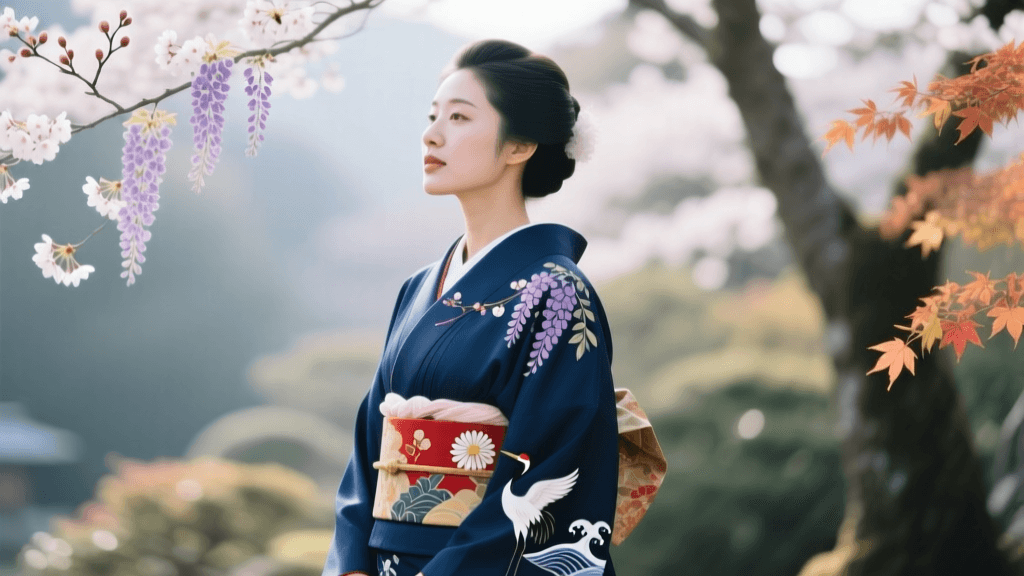
In Japanese culture, the concept of shiki (the four seasons) dictates not just what you eat or how you decorate your home, but what you wear. A fundamental rule of kimono dressing is that seasonal motifs should be worn slightly before the season actually begins, anticipating the change in nature rather than reacting to it. For example, cherry blossom (sakura) motifs are worn in late February and March, while the flowers are still in bud. Wearing a fully bloomed cherry blossom motif in April, when the petals are falling, is considered a fashion faux pas, as it implies the season has already passed.
Below is a practical guide to seasonal motifs, color palettes, and the appropriate wearing windows for traditional garments.
| Season | Primary Motifs | Traditional Color Palette | Wearing Window |
|---|---|---|---|
| Spring | Sakura (Cherry Blossom), Ume (Plum), Botan (Peony) | Soft Pinks, Pale Greens, Cream | February to April |
| Summer | Asagao (Morning Glory), Ayu (Sweetfish), Uchiwa (Fans) | Indigo, Aqua, White, Cool Blue | May to August |
| Autumn | Momiji (Maple), Kiku (Chrysanthemum), Susuki (Pampas Grass) | Crimson, Gold, Ochre, Deep Brown | September to November |
| Winter | Tsubaki (Camellia), Yukiwa (Snowflakes), Shou-Chiku-Bai | Deep Red, Navy, White, Charcoal | December to January |
During the sweltering summer months, the unlined cotton yukata takes precedence. Yukata patterns often feature cooling motifs like flowing water, snowflakes, or morning glories, providing a visual sense of coolness to both the wearer and the observer.
Color Symbolism and Social Signifiers
Color in Japanese traditional dress carries profound historical and social weight. During the Heian period (794–1185), the aristocracy developed Kasane no Irome, a complex system of layered color combinations that conveyed poetic meanings and seasonal awareness. The Kyoto National Museum houses numerous textiles demonstrating how the subtle shift of a sleeve's lining color could indicate a change in the season or a shift in the wearer's mood.
By the Edo period (1603–1867), sumptuary laws restricted the merchant class from wearing overtly luxurious fabrics or bright colors. As highlighted by the Metropolitan Museum of Art, this led to the development of Edo Komon—micro-patterns that appeared solid from a distance but revealed intricate, auspicious designs upon close inspection. Colors also became strictly codified:
- Kurenai (Deep Red): Traditionally reserved for young, unmarried women. The vibrant furisode (long-sleeved kimono) worn during Coming of Age Day relies heavily on red to symbolize youth and vitality.
- Murasaki (Purple): Historically the color of the imperial court and high-ranking aristocracy, symbolizing longevity and spiritual elevation.
- Ai (Indigo): The color of the common people. Indigo dye was prized not only for its beauty but for its practical properties, including insect repellency and odor neutralization.
- Kuro (Black): Used in kurotomesode, the most formal kimono for married women, featuring black silk with family crests (kamon) and motifs restricted to the lower half of the garment.
Regional Variations: Ryukyuan Bingata and Ainu Motifs
While mainland Japan's symbolism is heavily tied to the temperate four seasons, Japan's ethnic minorities and regional cultures boast distinct motif traditions. In the Ryukyu Kingdom (modern-day Okinawa), the traditional resist-dyeing technique known as Bingata emerged. Unlike the subdued Edo aesthetics, Bingata utilizes vibrant yellows, reds, and blues to depict tropical flora, fauna, and ocean waves. These bold colors and motifs were historically reserved for royalty and the warrior class, symbolizing the island's unique subtropical environment and its historical trade relations with China and Southeast Asia.
Conversely, the indigenous Ainu people of Hokkaido created garments from attus (elm bark fiber) and cotton, adorned with intricate appliqué and embroidery motifs. The most prominent Ainu motif is the moreu (swirl) and aiushi (thorn-like patterns). These motifs are not merely decorative; they are deeply spiritual, placed at the openings of garments (neck, cuffs, hem) to trap and ward off evil spirits, protecting the wearer's soul.
Auspicious Patterns (Kissho-moyo)
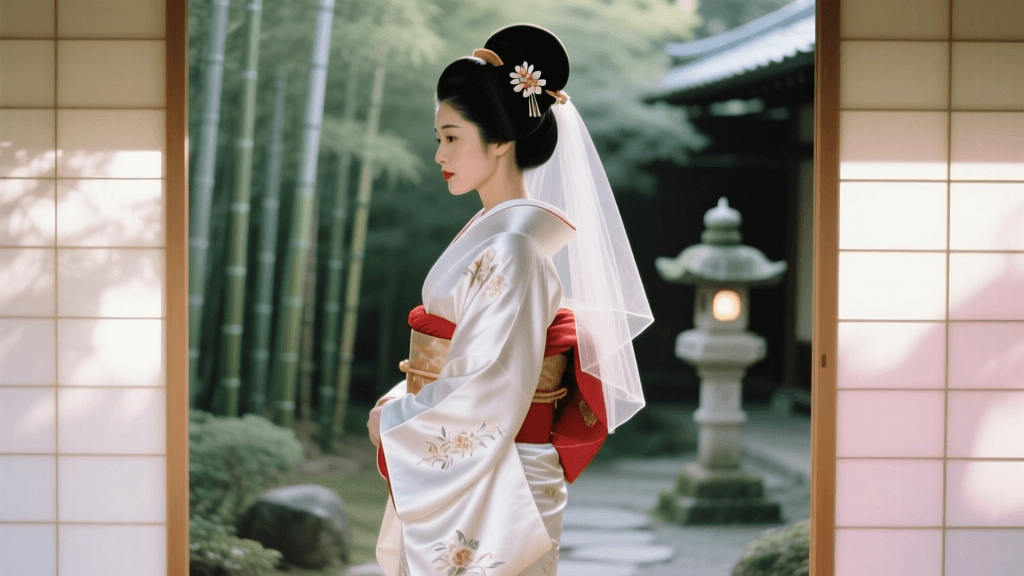
For weddings, tea ceremonies, and New Year celebrations, garments feature kissho-moyo (auspicious patterns) designed to invite good fortune. The most famous is Sho-Chiku-Bai (Pine, Bamboo, and Plum). Pine represents longevity and endurance, bamboo signifies resilience and flexibility, and plum blossoms symbolize perseverance and the arrival of spring. Another highly revered motif is the tsuru (crane) and kame (tortoise), which together represent a thousand years of good luck and ten thousand years of longevity, making them the ultimate motifs for bridal uchikake and formal obi.
Practical Guide: Buying, Sizing, and Styling
Transitioning from an appreciation of kimono symbolism to actually purchasing and wearing these garments requires practical knowledge of sizing, costs, and styling.
Measurements and Fit
Unlike Western clothing, kimono are not sized by small, medium, or large. They are tailored to specific body measurements. When buying vintage or modern kimono, you must check two critical measurements:
- Mitake (Back Length): The ideal kimono length is roughly your height minus 10 inches (or height x 0.7 in centimeters). For a person who is 160 cm (5'3") tall, the ideal mitake is approximately 112 cm. Vintage kimono often run short, as historical Japanese heights were lower; a mitake under 100 cm will be difficult to wear with proper ohashori (the waist fold).
- Yuki (Sleeve Span): Measured from the center of the back neck, across the shoulder, to the wrist. An ideal yuki is roughly your arm span divided by two, plus a few centimeters for ease. A standard modern yuki is around 64-66 cm.
Cost and Sourcing
The cost of traditional garments varies wildly based on age, material, and motif complexity:
- Vintage Silk Komon (Everyday wear): $50 – $150 USD. Excellent for beginners to practice dressing. Look for seasonal motifs that match your current wardrobe needs.
- Vintage Fukuro Obi (Formal sash): $100 – $300 USD. A high-quality vintage obi with gold thread (kinran) and auspicious motifs can elevate a simple modern kimono.
- New Silk Furisode (Unmarried women's formal wear): $2,000 – $8,000+ USD. Custom-dyed using Yuzen-zome (paste-resist dyeing), featuring elaborate, hand-painted seasonal landscapes.
Styling and Obi Pairing
The golden rule of kimono styling is balance. If your kimono features a loud, vibrant, all-over pattern (like a summer yukata with large morning glories), pair it with a subdued, solid-colored hanhaba obi (half-width sash). Conversely, if you are wearing a subdued Edo Komon with micro-patterns, you can tie a luxurious Nagoya obi featuring a bold, singular autumn motif, such as a golden maple leaf, to serve as the focal point of the outfit.
When wearing traditional Japanese garments, remember that you are participating in a living dialogue with nature and history. The motifs you choose to drape over your shoulders tell a story of the season, your intentions, and your respect for the artisans who wove the symbolism into the very fabric of the garment.