Kimono Kitsuke Mindfulness: Slow Fashion Wellness in 2026
The Intersection of Traditional Garments and Modern Wellness
As we navigate the hyper-connected, algorithm-driven landscape of 2026, digital fatigue and burnout have reached unprecedented levels. In response, a growing movement of individuals are turning to analog, tactile practices to ground their nervous systems. Among the most profound of these practices is kitsuke—the traditional Japanese art of wearing a kimono. Far from being merely a historical costume or a relic of the past, the kimono has emerged in 2026 as a powerful tool for somatic mindfulness, mental wellness, and a radical commitment to slow fashion.
The act of dressing in a kimono is inherently slow, deliberate, and deeply physical. It requires a level of presence and bodily awareness that stands in stark contrast to the rushed, thoughtless consumption of modern fast fashion. By engaging with the kimono, practitioners are not just putting on clothes; they are participating in a moving meditation that bridges centuries of Asian tradition with contemporary psychological well-being.
Kitsuke as a Somatic Mindfulness Practice
Somatic psychology emphasizes the connection between the mind and the physical sensations of the body. The process of kitsuke is a masterclass in somatic grounding. When you wrap yourself in the layers of a kimono, you engage in a form of deep pressure therapy. The snug wrapping of the datejime (under-sash) and the structured tying of the obi (outer sash) provide gentle, continuous compression to the torso. This physical sensation has been shown to stimulate the vagus nerve, promoting a shift from the sympathetic nervous system (fight or flight) to the parasympathetic nervous system (rest and digest).
According to research highlighted by Harvard Health Publishing, mindfulness practices that incorporate physical awareness can significantly reduce cortisol levels and alleviate symptoms of anxiety. Kitsuke demands total focus; you must align the collar perfectly, adjust the ohashori (the fold at the waist), and ensure the hem falls at the exact right angle. This meticulous attention to detail forces the mind to abandon ruminative thoughts about the past or future, anchoring it firmly in the present moment. The rustle of the silk, the scent of the camphor wood from the storage chest, and the tactile feedback of the woven textiles create a multi-sensory experience that pulls the practitioner out of digital abstraction and into physical reality.
The Slow Fashion Philosophy: Kimono in 2026
In 2026, the environmental and ethical toll of fast fashion is impossible to ignore. The global push toward circularity has brought the traditional Japanese approach to garment care and longevity into sharp focus. A kimono is the antithesis of planned obsolescence. It is constructed from straight cuts of fabric, meaning it can be entirely disassembled, washed, re-dyed, and sewn back together—a process known as arai-hari. This zero-waste design philosophy allows a single kimono to span multiple generations, adapting to different body types and sizes without ever losing its structural integrity.
The Ellen MacArthur Foundation has long championed the transition to a circular fashion economy, where garments are kept in use for as long as possible. The vintage kimono market in 2026 is a thriving ecosystem of upcycling and reuse. Young practitioners are increasingly sourcing pre-loved kimono from antique markets in Kyoto, online vintage exchanges, and family tansu (storage chests). By choosing to wear and care for vintage silk and hemp garments, enthusiasts are actively rejecting the micro-trend cycle. They are embracing a wardrobe that requires stewardship, respect, and an understanding of natural textile lifecycles.
Fast Fashion vs. Mindful Kitsuke: A 2026 Comparison
To understand the profound shift in mindset that kitsuke offers, it is helpful to contrast it with the standard modern dressing routine. The table below illustrates the divergent impacts on personal wellness and environmental sustainability.
| Metric | Standard Fast Fashion Routine | Mindful Kimono Kitsuke |
|---|---|---|
| Time Investment | 3 to 5 minutes | 20 to 45 minutes |
| Mental State | Rushed, distracted, often stressful | Grounded, focused, meditative |
| Garment Lifespan | 1 to 3 years (average) | 50 to 100+ years (with care) |
| Material Impact | High microplastic shedding, synthetic | Biodegradable natural fibers (silk, hemp, cotton) |
| Body Relationship | Garment conforms to fleeting trends | Garment honors and wraps the natural form |
A Step-by-Step Mindful Dressing Routine
Integrating kitsuke into your wellness routine does not require a formal event. In 2026, many practitioners utilize a casual komon (everyday kimono) or a cotton yukata for morning meditation, journaling, or simply enjoying a slow cup of matcha at home. Below is a structured routine to transform dressing into a mindfulness practice.
1. Preparation and Centering (5 Minutes)
Begin by laying out your garments in the order they will be worn: hadajuban (underwear), nagajuban (under-kimono), the main kimono, koshihimo (tying cords), and the obi. Sit in seiza (kneeling position) or cross-legged on the floor. Take ten deep, diaphragmatic breaths. Acknowledge the artisans who wove the silk, dyed the threads, and sewed the garment. This builds a sense of gratitude and connection to human labor, a core tenet of slow fashion.
2. The Foundation Layer (5 Minutes)
Put on the hadajuban and nagajuban. As you smooth the cotton or silk against your skin, pay attention to the temperature and texture. The undergarments protect the outer kimono from body oils, representing the boundary between the self and the outside world. Tie the first koshihimo just under the bust, ensuring it is firm but allows for full, unrestricted breathing.
3. Wrapping the Kimono (10 Minutes)
Drape the kimono over your shoulders. As noted by the Victoria and Albert Museum, the kimono's structure relies on precise alignment rather than complex tailoring. Hold the collar edges and bring the left side over the right side (the right-over-left configuration is strictly reserved for dressing the deceased). Pull the fabric taut across your back to eliminate wrinkles. Wrap the second koshihimo around your waist. This step requires physical effort and spatial awareness, engaging your core and proprioceptive senses.
4. The Ohashori and Obi (15 Minutes)
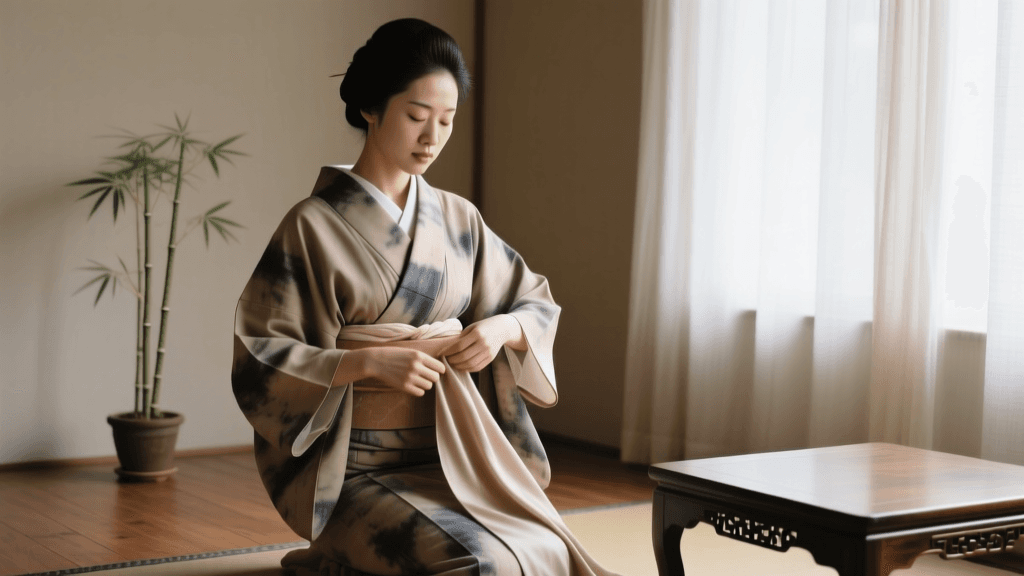
Adjust the ohashori (the excess fabric folded at the waist) so it is even and level. This fold allows the kimono to fit various heights and provides a cushion for the obi. Finally, tie the obi. Whether you are tying a simple bunko (bow) or using a pre-tied tsuke-obi, focus on the geometry of the knot. The obi acts as the physical and energetic anchor of the garment. When the final tie is secured, stand before the mirror, roll your shoulders back, and take a moment to feel the supportive embrace of the garments.
Extending the Practice into Daily Life
The wellness benefits of kitsuke extend far beyond the mirror. Once dressed, the physical restrictions of the kimono naturally encourage better posture, slower movements, and a more deliberate way of interacting with your environment. You cannot rush down a flight of stairs or slouch over a smartphone while properly dressed in a kimono. The garment dictates a graceful, measured pace.
In 2026, wellness advocates recommend pairing your mindful kitsuke practice with other analog rituals. Spend thirty minutes practicing calligraphy, engaging in a traditional tea ceremony, or simply walking through a local garden to practice shinrin-yoku (forest bathing). By reclaiming the kimono as a living, breathing tool for mental health and sustainable living, we honor the deep wisdom of Asian traditions while actively nurturing our own well-being in an increasingly frantic world.