Kimono Kitsuke Dressing: A Mindful Slow Fashion Ritual for 2026
The Rise of Somatic Dressing in 2026
In the rapidly evolving wellness landscape of 2026, the concept of "somatic dressing" has moved from niche psychological circles into mainstream holistic health. As digital fatigue and AI-generated micro-trends dominate our daily lives, individuals are increasingly seeking tactile, grounding practices that reconnect them with their physical bodies and the material world. At the intersection of this movement and ancient Asian traditions lies kitsuke—the traditional Japanese art of kimono dressing. Far from being a mere sartorial choice, kitsuke is emerging as a profound mindfulness ritual and a cornerstone of the slow fashion movement, offering a powerful antidote to modern wardrobe burnout and sensory overload.
The Philosophy of Kitsuke as Moving Meditation
Unlike Western clothing, which is often designed for rapid consumption and effortless wear, the kimono requires intentional, methodical engagement. The process of kitsuke involves multiple layers and precise bindings: the hadajuban (undergarment), the nagajuban (inner robe), the main kimono, and the complex tying of the obi (sash) using koshihimo (tying cords) and datejime (stiffening belts).
This intricate layering demands absolute presence. You cannot rush the alignment of the eri (collar) or the precise tension of the obi knot without compromising the garment's structure. Psychologists and wellness coaches in 2026 frequently recommend kitsuke as a form of "moving meditation." The repetitive, deliberate hand movements, combined with the deep, diaphragmatic breathing required to properly secure the waist ties, naturally shift the nervous system from a sympathetic (fight-or-flight) state into a parasympathetic (rest-and-digest) state. The physical weight and structured drape of the kimono also provide deep pressure stimulation, akin to a weighted blanket, which has been shown to lower cortisol levels and promote emotional regulation.
Slow Fashion: The Antidote to 2026 Wardrobe Burnout
The global fashion industry's environmental and psychological toll is well-documented. According to Fashion Revolution, the push for transparency and sustainable practices is no longer just about eco-friendly materials; it is about fundamentally changing our relationship with the garments we wear. The kimono embodies the ultimate slow fashion philosophy through its structural design and lifecycle.
Traditionally, a kimono is constructed from a single bolt of fabric called a tanmono, which is cut in straight lines. This zero-waste pattern cutting means that the garment can be entirely unpicked, washed, and re-tailored (shitate) to fit different body types across multiple generations. In an era where the average lifespan of a fast-fashion garment is measured in mere weeks, a well-maintained silk or hemp kimono is an heirloom. Engaging with a garment that carries the history of previous wearers fosters a sense of continuity and respect, directly countering the disposable mindset that fuels modern consumer anxiety.
Tactile Grounding: Natural Fibers and the Nervous System
The sensory experience of wearing a kimono is deeply tied to its material composition. In 2026, wellness practitioners emphasize the importance of "sensory diet"—the deliberate selection of tactile inputs to regulate the nervous system. Synthetic fabrics, which trap heat and generate static electricity, can subtly agitate the nervous system. In contrast, traditional Japanese textiles offer profound grounding benefits.
Organizations dedicated to preserving heritage techniques, such as the Japan Traditional Crafts association, highlight how natural dyes and fibers interact with the human body. Below is a comparison of how different traditional kimono fabrics impact somatic wellness:
| Fabric Type | Japanese Term | Sensory & Wellness Benefits | Best Season for Mindful Wear |
|---|---|---|---|
| Silk | Kinu | Provides a smooth, cooling tactile glide; regulates body temperature; the subtle rustling sound (kinu-gasure) offers auditory grounding. | Spring / Autumn |
| Hemp | Asa | Highly breathable with a crisp, textured friction against the skin; stimulates gentle sensory awakening; naturally antibacterial. | Summer |
| Cotton | Momen | Offers a soft, weighted, and comforting embrace; excellent for deep-pressure grounding; absorbs moisture to maintain physical equilibrium. | Winter / Year-round |
Furthermore, traditional natural dyes like ai-zome (indigo) and beni-bana (safflower) are not only environmentally benign but also possess subtle aromatherapeutic properties. The faint, earthy scent of genuine indigo-dyed cotton has been noted in holistic aromatherapy to promote mental clarity and calm.
Your 20-Minute Mindful Kitsuke Routine
Integrating kitsuke into your wellness routine does not require attending a formal tea ceremony or a festival. You can practice a simplified, mindful dressing ritual at home to center yourself before a demanding day or to decompress in the evening. Follow this 2026-adapted somatic routine:
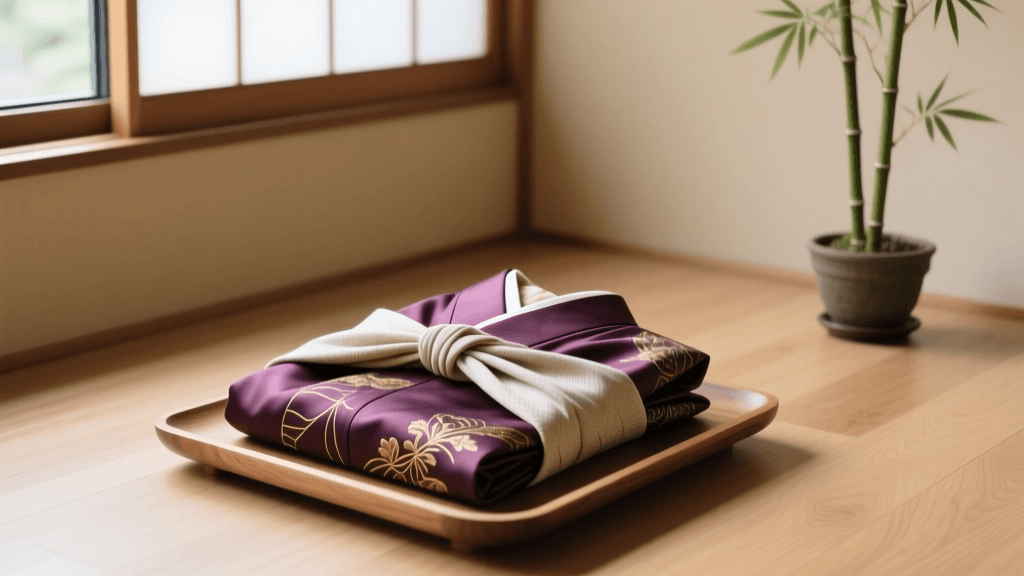
- Grounding and Breath (Minutes 1-3): Stand barefoot on a natural surface (wood or tatami). Hold the folded yukata or casual kimono against your chest. Close your eyes and take five deep, diaphragmatic breaths, feeling the weight and texture of the fabric.
- Intentional Layering (Minutes 4-10): Slip into the garment slowly. As you align the back seam (senaka) with your spine, visualize your own posture aligning with your inner center of gravity. The physical act of straightening the collar is a metaphor for organizing your thoughts.
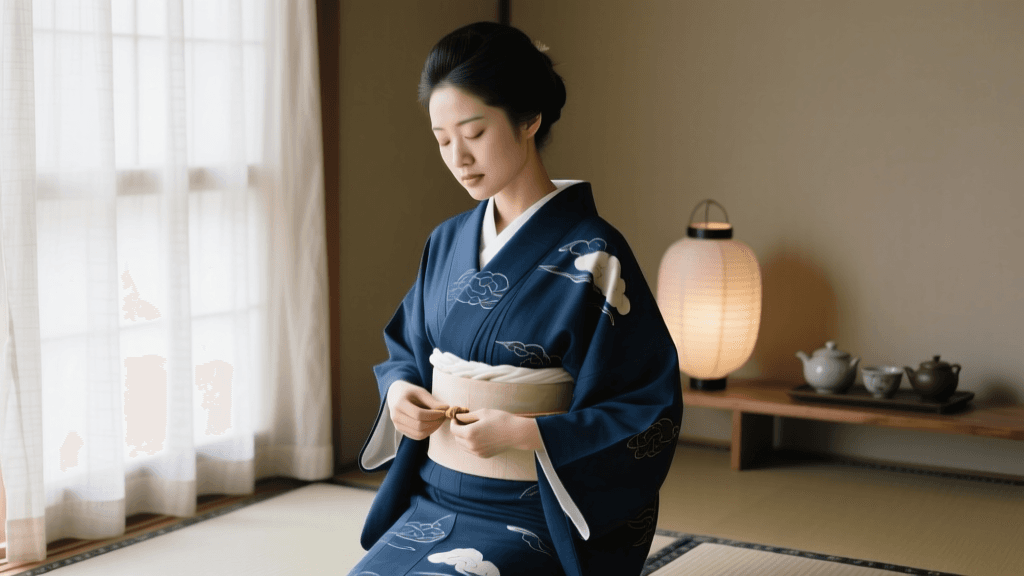
- The Binding of the Koshihimo (Minutes 11-15): Wrap the cotton tying cords around your waist. Apply firm, even pressure. This deep pressure stimulation around the core acts as a physical anchor, signaling safety and stability to your vagus nerve.
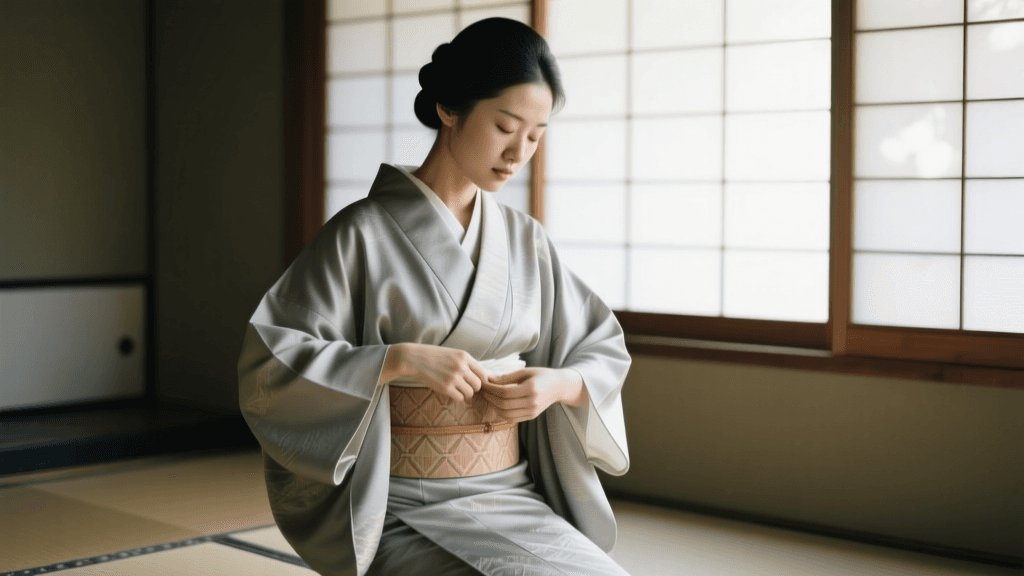
- The Obi Knot and Final Alignment (Minutes 16-19): Tie your hanhaba obi (half-width sash). Focus entirely on the geometry of the knot. If your mind wanders to daily stressors, gently redirect your attention back to the tension of the fabric in your hands.
- Seated Reflection (Minute 20): Sit in seiza (kneeling) or comfortably on a cushion. Rest your hands on your thighs. Observe the restriction and support the garment provides, allowing it to hold you physically so you may hold yourself mentally.
Curating a Mindful Kimono Wardrobe
To fully embrace the slow fashion ethos, sourcing your garments mindfully is paramount. The Victoria and Albert Museum's extensive research on the structural longevity and cultural evolution of the kimono underscores its value as a lasting artifact rather than a fleeting trend. In 2026, the most sustainable and spiritually rewarding way to acquire a kimono is through the secondhand and vintage market.
Platforms specializing in Japanese vintage textiles, as well as local antique markets, offer thousands of rescued garments. Purchasing a vintage silk komon (everyday patterned kimono) or a sturdy cotton yukata saves the garment from landfills and connects you to the artisan who wove the fabric decades ago. When caring for these pieces, embrace the traditional concept of mottainai (a sense of regret concerning waste). Learn basic visible mending techniques, or partner with local tailors who understand traditional straight-line stitching, ensuring your garment continues to age gracefully alongside you.
Conclusion: Weaving Wellness into the Fabric of Life
As we navigate the complexities of 2026, the ancient practice of kitsuke offers a sanctuary of slowness. It is a rebellion against the frictionless, disposable nature of modern consumerism. By engaging deeply with the layers, textures, and history of the kimono, we do more than dress our bodies; we anchor our minds. Whether you are tying a simple cotton yukata on a quiet Sunday morning or carefully folding a heritage silk robe, the mindfulness cultivated through kitsuke proves that true wellness is not just something we consume—it is something we wear, feel, and honor every single day.