Kimono Kitsuke Rituals: Mindful Slow Fashion Guide 2026
Embracing Kitsuke in 2026: The Intersection of Garment and Mind
In an era defined by digital saturation and the relentless pace of ultra-fast fashion, a profound shift is occurring within the global wellness community. As we navigate the fashion landscape of 2026, consumers are increasingly seeking antidotes to decision fatigue, eco-anxiety, and the disposable nature of modern wardrobes. Enter kitsuke—the traditional Japanese art of wearing a kimono. Far from being a mere historical costume, the kimono and its intricate dressing ritual have emerged as a powerful tool for mindfulness, grounding, and slow fashion advocacy.
The act of putting on a kimono is not a quick, thoughtless morning routine. It is a deliberate, multi-layered process that demands presence, breath control, and physical awareness. According to the American Psychological Association, engaging in structured, intentional rituals can significantly lower cortisol levels and anchor the mind in the present moment. In 2026, wellness practitioners and slow fashion advocates alike are turning to kitsuke as a moving meditation, transforming the simple act of getting dressed into a daily sanctuary of mental wellbeing.
The Psychology of Kitsuke: Dressing as Meditation
Unlike Western garments that are often pulled on in a rush, the kimono requires a systematic approach. The wearer must engage with multiple components: the hadajuban (undergarment), the nagajuban (inner robe), the main kimono, and the complex obi (sash) tying system. This multi-step process naturally slows down the nervous system.
When you engage in kitsuke, your focus narrows to the tactile sensations of the fabric. The cool glide of tsumugi (pongee silk) or the crisp texture of summer ro (gauze weave) provides immediate sensory grounding. Furthermore, the strict rules of kitsuke—such as ensuring the left panel always overlaps the right, or aligning the back seam perfectly with the spine—require a level of concentration that leaves no cognitive room for daily stressors. This intense focus mirrors the principles of mindfulness-based stress reduction (MBSR), where anchoring attention to physical sensations helps break cycles of rumination.
Slow Fashion and the Circular Kimono Economy
The wellness benefits of the kimono extend beyond the individual mind to encompass a broader sense of ecological and ethical wellbeing. The modern sustainable fashion movement often struggles with the reality of textile waste. However, the traditional kimono is the ultimate embodiment of the circular economy. According to the United Nations Environment Programme, transitioning to circular fashion models is critical for reducing the global environmental footprint of the apparel industry.
A kimono is constructed from straight cuts of fabric, meaning almost zero textile waste is generated during its initial creation. More remarkably, when a kimono becomes soiled or needs maintenance, it undergoes arai-hari. This traditional practice involves completely unpicking the garment's seams, washing the individual flat fabric panels, stretching them on bamboo boards to dry and remove wrinkles, and then sewing the garment back together.
In 2026, the philosophy of arai-hari serves as a profound metaphor for mental health. Just as the garment is taken apart, cleansed, and reassembled with care, the mindful practitioner uses the kitsuke ritual to mentally unpack their stressors, reset their intentions, and stitch their focus back together. By investing in vintage or artisan-crafted kimono, practitioners participate in a slow fashion ecosystem that values longevity, mending, and deep appreciation for materials over fleeting trends.
A 30-Minute Mindful Kitsuke Routine for Wellbeing
To harness the wellness benefits of traditional Japanese clothing, you do not need to be a certified kimono stylist. You can adapt the kitsuke process into a mindful morning or evening routine. Here is a step-by-step guide to dressing with intention:
- Minute 1-5: The Preparation (Junbi)
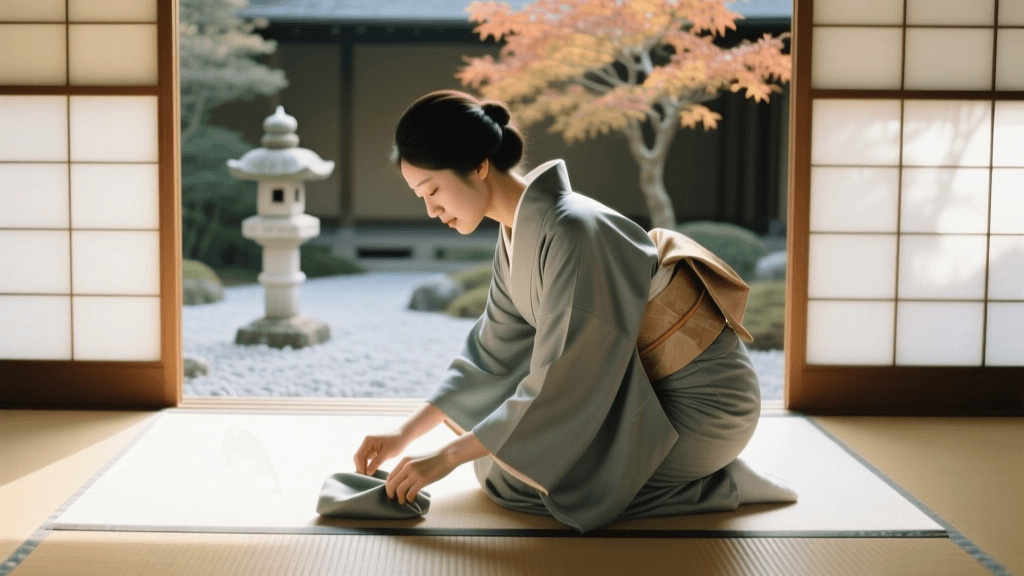
Clear your physical space. Lay out your kimono, undergarments, and accessories (koshihimo ties, datejime) on a clean surface or tatami mat. Stand before a mirror, take five deep diaphragmatic breaths, and set an intention for the day. Acknowledge the artisans who wove and dyed the fabric. - Minute 6-12: The Foundation (Juban)
Put on the hadajuban and nagajuban. Focus on the sensation of the fabric against your skin. As you tie the first koshihimo (waist tie) under the bust, ensure it is snug but allows for full, unobstructed breathing. This represents setting healthy boundaries for your day. - Minute 13-22: The Garment (Kimono)
Drape the main kimono over your shoulders. Align the back seam (se-ushi) precisely with your spine. This physical alignment encourages postural awareness and core engagement. Wrap the left side over the right, holding the fabric taut. As you tie the waist cords, visualize securing your mental energy and focus. - Minute 23-30: The Anchor (Obi)
The obi is the anchor of the kimono. Whether you are tying a simple bunko (bow) or a structured taiko musubi (drum knot), the wrapping of the sash requires bilateral coordination and physical stability. As you tighten the final obijime (decorative cord), take one final, deep breath, acknowledging your readiness to face the world with grace and resilience.
Physical Wellness: Posture and Core Engagement
The wellness benefits of wearing a kimono are not solely psychological; they are deeply physical. The structure of the kimono and the tension of the obi naturally discourage slouching. The wide sash provides gentle, continuous support to the lower back and lumbar region, acting similarly to a mild compression garment that promotes core awareness.
Furthermore, the straight, narrow cut of the kimono skirt restricts the stride, naturally shortening the wearer's steps and encouraging a gliding, deliberate gait. In a 2026 wellness landscape obsessed with high-intensity interval training and aggressive fitness metrics, the kimono offers a refreshing alternative: the practice of slow, graceful, and highly controlled movement. This physical restraint fosters a sense of bodily autonomy and elegance, significantly boosting self-esteem and bodily awareness throughout the day.
Comparative Analysis: Mindful Kitsuke vs. Modern Dressing
To understand the profound impact of integrating traditional garments into a modern wellness routine, consider the stark contrast between the standard contemporary dressing experience and the mindful kitsuke practice.
| Metric | Ultra-Fast Fashion Routine | Mindful Kitsuke Routine (2026) |
|---|---|---|
| Time Allocation | 3 to 5 minutes (rushed, multitasking) | 20 to 30 minutes (dedicated, single-tasking) |
| Mental State | Distracted, decision fatigue, high cortisol | Grounded, focused, parasympathetic activation |
| Garment Lifespan | 6 to 12 months (planned obsolescence) | Generations (heirloom quality, repairable) |
| Physical Impact | Slouching, restrictive synthetic fabrics | Postural alignment, natural breathable fibers |
| Ecological Footprint | High waste, microplastic shedding | Circular, zero-waste pattern cutting, biodegradable |
Sourcing Mindful Kimono Pieces in 2026
Building a wellness-focused kimono wardrobe does not require purchasing brand-new, expensive silk garments. In fact, the slow fashion ethos heavily favors the secondary market. The Victoria and Albert Museum notes that the historical construction of the kimono makes it uniquely suited for repurposing and generational hand-me-downs, as the standard width of the fabric bolts (tanmono) remains consistent regardless of the wearer's size.
In 2026, thriving online vintage markets and specialized recycling cooperatives in Japan make it easier than ever to source authentic, pre-loved kimono. When shopping for your mindful kitsuke practice, look for natural fibers such as silk, hemp, or cotton. Avoid modern synthetic blends, as they lack the breathability and the distinct, grounding acoustic properties—the gentle rustling sound known as kinu-zure—that make natural silk so integral to the sensory meditation of the ritual.
Additionally, consider exploring garments featuring sashiko (decorative reinforcement stitching) or boro (mended textiles). These pieces carry the visible history of repair and resilience, serving as powerful visual reminders that imperfection and mending are beautiful, necessary parts of both textile history and the human experience.
Conclusion: Wrapping Yourself in Intention
As the boundaries between fashion, mental health, and environmental stewardship continue to blur in 2026, the traditional Japanese kimono stands out as a beacon of holistic wellness. The ritual of kitsuke is an invitation to pause in a world that constantly demands speed. It is a daily practice of wrapping oneself in history, artistry, and intention. By adopting the mindful principles of traditional Asian garments, we do more than just clothe our bodies; we cultivate a resilient, grounded, and deeply connected state of mind.