Kimono Fabric Sound & Texture: Sensory Guide 2026
The Hidden Language of Kimono Textiles
When enthusiasts and scholars discuss the traditional Japanese kimono, the conversation almost exclusively revolves around its breathtaking visual aesthetics. We marvel at the intricate Yuzen dyeing techniques, the shimmering gold leaf of Nishijin brocade, and the delicate embroidery that maps out seasonal motifs. However, to truly understand the kimono is to engage with it beyond the visual. The garment is a masterclass in multi-sensory design, offering a profound tactile and auditory experience that grounds the wearer in the present moment. In 2026, as the global slow-fashion movement increasingly prioritizes the sensory and emotional connections we have with our clothing, the acoustic and textural properties of traditional Asian garments are receiving long-overdue recognition.
The experience of wearing a kimono is an immersive architectural endeavor. The layering of garments, the friction of silk against silk, and the weight of the obi (sash) create a physical boundary that alters how the wearer moves, breathes, and perceives their environment. This guide explores the hidden sensory language of kimono textiles, focusing on the phenomenon of fabric sound, the diverse tactile profiles of traditional weaves, and how modern preservation techniques in 2026 are keeping these sensory experiences alive for future generations.
Kinuzure: The Acoustic Signature of Silk
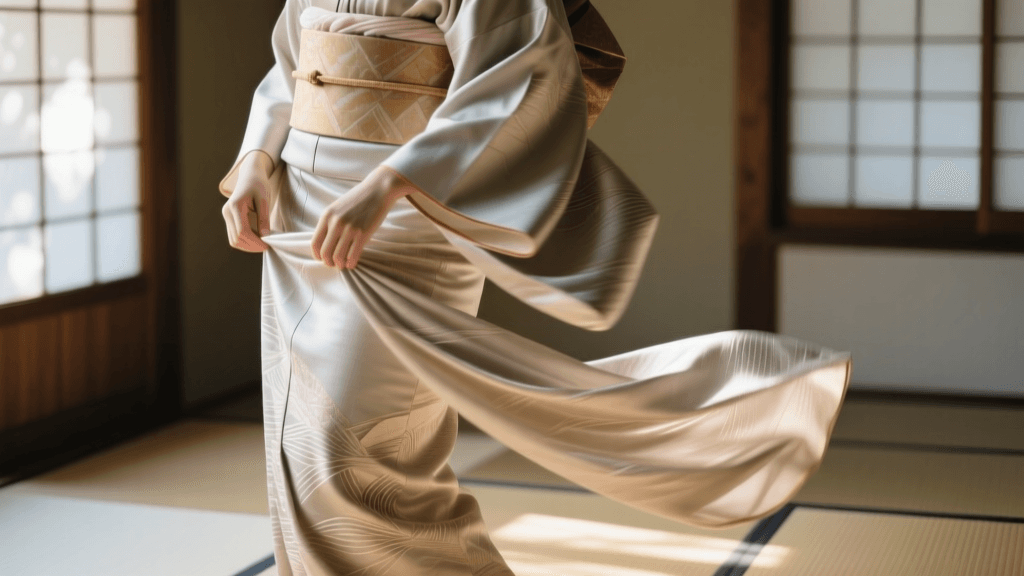
In Japanese, there is a specific word for the rustling sound of silk: kinuzure (衣擦れ). This auditory phenomenon is not merely a byproduct of movement; it is a celebrated acoustic signature that has been romanticized in literature, theater, and daily life for centuries. The sound of kinuzure is generated by the friction between layers of silk, particularly the outer kimono and the inner nagajuban (undergarment). The crisp, whispering rustle is a result of the physical properties of raw and processed silk fibers, specifically the presence of sericin, the natural gum that coats silk threads.
Historically, the acoustic footprint of a person's arrival was just as important as their visual entrance. In the pleasure quarters of Edo-period Kyoto, the kinuzure of a high-ranking courtesan or geiko announced her presence before she even turned the corner. The sound is deeply tied to the concept of iki (chic, understated elegance), where the subtle auditory cue of expensive, high-quality silk sliding against itself conveys status and refinement without ostentatious display.
According to conservation experts at the Victoria and Albert Museum, the structural integrity of silk and its acoustic properties degrade over time as the sericin breaks down and the fibers lose their natural stiffness. Recognizing this, a pioneering 2026 acoustic archiving initiative launched by the Kyoto Consortium for Textile Preservation has begun using high-fidelity directional microphones to record the exact frequencies and decibel levels of vintage Edo and Meiji-period silks in motion. This auditory preservation ensures that even as the physical garments become too fragile to wear, their unique acoustic signatures remain documented for historians and textile engineers.
Tactile Profiles: From Crisp Ramie to Heavy Brocade
While silk dominates the luxury kimono market, the traditional Japanese wardrobe encompasses a vast array of fibers, each offering a distinct tactile experience tailored to the extreme seasonal shifts of the Japanese archipelago. Understanding these textures is essential for anyone looking to cultivate a mindful dressing practice in 2026.
Chirimen (Crepe Silk)
Chirimen is characterized by its bumpy, textured surface, created by weaving tightly twisted weft threads that pucker the fabric. Tactilely, wearing chirimen feels like a gentle, continuous massage against the skin. The uneven surface prevents the fabric from clinging, allowing air to circulate between the garment and the body. It is a deeply comforting texture, offering a soft resistance that feels substantial and grounding.
Asa (Ramie and Hemp)
For the sweltering, humid Japanese summer, asa is the undisputed king of comfort. Unlike the soft drape of silk, high-quality ramie is remarkably crisp, stiff, and cool to the touch. When woven into ro or sha (leno weaves with intentional gaps in the fabric), the textile feels almost like a cool breeze against the skin. The stiffness of asa means it does not drape but rather stands away from the body, creating a microclimate of air that wicks moisture and prevents the garment from sticking to the skin.
Tsumugi (Pongee Silk)
Tsumugi is woven from spun silk noils (the shorter, leftover fibers from the reeling process). The result is a matte, nubby fabric that feels remarkably similar to raw cotton or fine wool, despite being 100% silk. It lacks the slippery, cool glide of satin weaves, offering instead a warm, dry, and slightly grippy texture. Tsumugi is highly prized for its rustic elegance and its ability to mold to the wearer's body over time, becoming softer and more personalized with years of use.
2026 Comparison Chart: Fabric Sound and Texture Profiles
To help collectors, practitioners, and textile enthusiasts navigate the sensory landscape of kimono fabrics, we have compiled a comprehensive profile of the most prominent textiles available in the 2026 market.
| Fabric Type | Tactile Sensation | Acoustic Profile (Kinuzure) | Seasonal Use | 2026 Avg. Retail Price (Yen) |
|---|---|---|---|---|
| Habutae (Plain Silk) | Ultra-smooth, cool, fluid drape | High-pitched, sharp, continuous rustle | All-season (Lining/Formal) | 80,000 - 150,000 |
| Chirimen (Crepe) | Textured, bumpy, soft resistance | Muted, soft, rhythmic swishing | Spring / Autumn | 120,000 - 250,000 |
| Oshima Tsumugi | Dry, nubby, warm, lightweight | Very low, almost silent friction | Autumn / Winter | 400,000 - 1,200,000 |
| Ro / Sha (Leno Weave) | Crisp, airy, structured, cool | Stiff, papery, rhythmic crinkling | High Summer | 90,000 - 180,000 |
| Nishijin-ori (Brocade) | Heavy, rigid, metallic, ornate | Dense, muffled, heavy sliding | Winter (Formal/Obi) | 300,000 - 800,000+ |
2026 Innovations in Sensory Textile Preservation
The preservation of traditional garments has historically focused on visual and structural integrity—controlling light exposure, humidity, and pest intrusion. However, as the appreciation for the holistic sensory experience grows, 2026 has seen a paradigm shift in how museums and cultural institutions archive these textiles. The British Museum's Asian Collection highlights how historical garments were designed not just for static display, but for dynamic movement, a concept that modern curation is now striving to replicate.
This year, several premier textile exhibitions in Kyoto and Tokyo have introduced haptic feedback technology. Visitors don specialized sensory gloves that simulate the exact weight, friction, and thermal conductivity of Edo-period kosode (early kimono). By pairing this haptic feedback with directional audio that plays the archived kinuzure of the specific garment on display, museums are offering a fully immersive, non-destructive way for the public to "wear" priceless cultural properties. Furthermore, smart-textile researchers in Osaka are currently developing synthetic sericin coatings that can be applied to modern, washable kimono fabrics, successfully replicating the acoustic rustle of vintage silk without the prohibitive maintenance costs.
The Architecture of Layers: Cultivating a Mindful Dressing Practice
The sensory magic of the kimono does not come from the outer garment alone; it is born from the friction and interaction between multiple layers. To truly experience the garment, one must approach the dressing process (kitsuke) as a mindful, meditative practice.
The Role of the Undergarments
The hadajuban (skin garment) and nagajuban (long undergarment) are the unsung heroes of the kimono's sensory profile. Traditionally made of lightweight cotton or smooth habutae silk, the nagajuban acts as the acoustic counterpart to the outer kimono. When dressing, paying attention to the alignment of the collar and the smoothness of the back panel ensures that the friction between the layers is even, producing a consistent, harmonious kinuzure with every step. If the layers are bunched or misaligned, the sound becomes erratic and the tactile experience turns uncomfortable.
The Weight of the Obi
The obi serves as the structural anchor of the garment. A stiff, heavily brocaded maru obi or fukuro obi provides a deep, grounding pressure around the core. This physical compression encourages an upright posture and restricts the stride, forcing the wearer to move with deliberate, gliding steps (suriashi). This altered gait not only protects the hem of the garment from dragging but also maximizes the rhythmic swishing of the silk. In 2026, ergonomic obi-pads made from memory foam and breathable bamboo charcoal mesh have become popular, allowing wearers to experience the comforting, hug-like pressure of a tightly tied obi without the restriction of breath that plagued historical wearers.
"To wear a kimono is to inhabit a sensory architecture. The fabric does not merely cover you; it converses with you through weight, temperature, and sound, demanding a physical mindfulness that modern clothing has largely forgotten."
— Dr. Arisawa Kenji, Textile Acoustics Researcher, Kyoto Institute of Technology, 2026
Conclusion
The kimono is far more than a beautiful canvas for traditional Japanese art; it is a sophisticated, multi-sensory interface between the human body and the natural world. From the crisp, cooling touch of summer ramie to the deeply comforting, whispering rustle of winter silk kinuzure, the garment demands a level of physical awareness that transforms the simple act of walking into a meditative practice. As we move through 2026, the integration of acoustic archiving and haptic preservation technologies ensures that the hidden language of these textiles will not be lost to time. By paying attention to the sound and feel of our garments, we connect with centuries of artisans who understood that true elegance is something you must feel, and hear, just as much as you see.