Kimono Silhouettes on Global Runways: 2026 Fashion Week Trends

The Intersection of Heritage and Haute Couture in 2026
The global fashion landscape in 2026 is witnessing a profound and respectful renaissance of traditional Japanese garments, with the kimono taking center stage across international runways. From the avant-garde presentations in Paris to the refined tailoring showcases in Milan, the structural brilliance and textile mastery of the kimono are being reimagined for the modern wardrobe. This is not merely a trend of superficial borrowing; rather, it represents a deep, collaborative dialogue between European haute couture houses and Japanese artisan guilds. As the fashion industry pivots toward sustainability and circularity in 2026, the zero-waste cutting techniques and modular styling of the kimono offer a masterclass in ecological design. Designers are moving past the costume-like interpretations of previous decades, focusing instead on the architectural silhouettes, the fluid draping of the T-shaped seam, and the intricate layering techniques that define traditional Japanese dress.
The Evolution of Kimono Silhouettes in 2026 Haute Couture
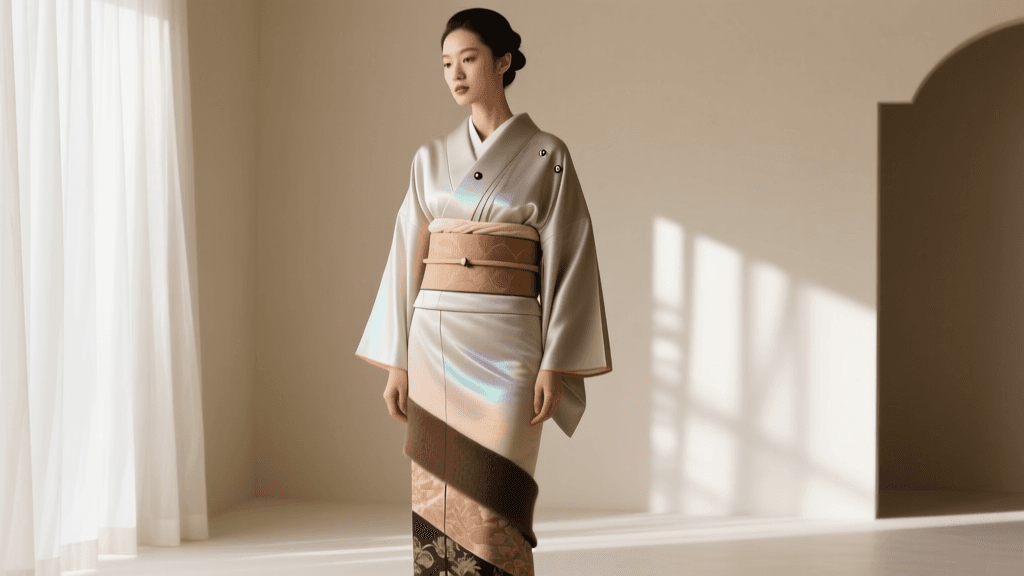
During the Spring/Summer 2026 and Fall/Winter 2026 fashion weeks, the runway was dominated by exaggerated sleeves, dropped shoulders, and wide, columnar skirts that echo the foundational geometry of the kimono. The traditional straight-line construction, which historically allowed garments to be easily folded, stored, and repurposed, is now being utilized by contemporary designers to create modular, multi-functional outerwear. The 'furisode' sleeve—characterized by its long, swinging drape—has been adapted into dramatic evening capes and structured trench coats. Meanwhile, the 'hakama' pleating technique is being integrated into wide-leg trousers and skirts, offering a sense of movement and volume that contrasts sharply with the restrictive tailoring of Western corsetry. This structural evolution highlights a broader 2026 industry shift toward gender-fluid, comfortable, yet highly architectural silhouettes that prioritize the wearer's relationship with space and fabric.
Key Designers Leading the Kimono-Runway Fusion
Several visionary design houses have championed this cross-cultural exchange in 2026. Thom Browne's recent collections continue to deconstruct and rebuild the traditional 'haori' jacket, merging its relaxed, open-front silhouette with sharp, hyper-tailored wool suiting. Maison Margiela has explored the concept of the 'obi' (the traditional sash), transforming it into oversized, sculptural corsetry that cinches the waist while maintaining the rigid, brocade-like textures of formal Japanese sashes. Furthermore, emerging Tokyo-based designers showing in Paris this year, such as Anrealage, are utilizing photochromic fabrics to mimic the seasonal color transitions found in 'kimonogata' (kimono patterns), bridging ancient aesthetic philosophies with cutting-edge 2026 textile technology. These designers are not just copying; they are translating the philosophical underpinnings of Japanese garments into a contemporary visual language.
Runway Adaptation vs. Traditional Kimono Elements
To understand the depth of this 2026 trend, it is essential to compare the original traditional elements with their modern runway adaptations. The following table outlines how core components of the kimono are being reinterpreted on the global stage.
| Traditional Element | 2026 Runway Adaptation | Styling Impact & Function |
|---|---|---|
| Obi (Sash) | Sculptural waist-cinching belts, corsetry, and structured harnesses | Defines the waist while adding architectural volume and texture |
| Furisode (Long Sleeves) | Draped evening capes, detachable sleeve extensions, and dramatic outerwear | Creates dynamic movement and theatricality in formal wear |
| Kasane (Layering) | Color-blocked slip dresses, sheer organza overlays, and modular inner-wear | Mimics seasonal color peeking through collars and hems |
| Eri (Collar) | Asymmetrical necklines, contrasting lapels, and detachable collar pieces | Frames the face and introduces subtle contrasting colors near the neckline |
Textiles and Techniques: Nishijin-ori and Shibori on the Global Stage
The true soul of the kimono lies in its textiles, and 2026 runways are celebrating Japanese craftsmanship with unprecedented reverence. 'Nishijin-ori', the luxurious, multi-layered brocade weaving technique originating from Kyoto, is being utilized in structured outerwear and evening gowns, providing a stiff, opulent texture that holds its shape beautifully under runway lighting. Simultaneously, 'Shibori' (intricate resist-dyeing) and 'Yuzen' (paste-resist painting) are being applied to fluid silk charmeuse and sustainable cupro fabrics, allowing for vibrant, narrative-driven patterns that flow with the body. According to the Kyoto Costume Institute Digital Archives, the preservation and modern application of these techniques are vital for the survival of regional artisan communities. In 2026, several European luxury conglomerates have established direct, fair-trade partnerships with weaving cooperatives in Nishijin and dyeing studios in Kanazawa, ensuring that the artisans are compensated equitably and credited explicitly in show notes and garment tags.
Navigating Cultural Appreciation in Global Fashion
As the kimono's influence expands globally, the fashion industry in 2026 is hyper-aware of the delicate line between cultural appreciation and appropriation. The missteps of the 2010s, where traditional garments were often reduced to Halloween costumes or mislabeled as generic 'robes,' have been replaced by a rigorous standard of cultural consultation. The Victoria and Albert Museum's extensive research on kimono history serves as a foundational text for many design studios today, emphasizing the garment's complex social signaling and historical weight. Furthermore, the Japan Foundation's traditional culture programs have actively facilitated residencies where European pattern-makers study under Japanese 'shokunin' (master artisans). This collaborative approach ensures that when a kimono silhouette is presented on a Parisian runway, it is accompanied by an understanding of its origins, its seasonal significance, and the immense labor required to produce its textiles.
Actionable Guide: Incorporating Runway-Inspired Kimono Styling in 2026
You do not need to attend a haute couture show to integrate these sophisticated, runway-approved kimono elements into your daily wardrobe. The 2026 street style landscape is heavily influenced by the modular and layered nature of traditional Japanese dress. Here are practical, actionable ways to adapt these trends for everyday wear:
- The Haori Duster: Swap your traditional wool overcoat for a modern, tailored 'haori' jacket. Look for pieces crafted from heavyweight linen or wool-blend crepe that feature the signature open front and straight sleeves. Layer it over a simple turtleneck and wide-leg trousers for an effortlessly elegant, architectural silhouette.
- Obi-Inspired Belt Styling: Take a wide, structured leather or brocade belt and tie it over an oversized blazer or a flowing maxi dress. Mimic the 'taiko musubi' (drum knot) by creating a rigid, geometric bow at the back or side, which instantly elevates a basic outfit into a high-fashion statement.
- Kasane Color Layering: Embrace the traditional art of 'kasane' (layering colors) by allowing the lining of your garments to peek out. Wear a slip skirt in a contrasting, vibrant color beneath a sheer or slit midi-skirt, or layer a brightly colored turtleneck beneath a deep-toned, wide-neck sweater to mimic the 'haneri' (decorative collar) effect.
- Yukata and Jinbei for Summer Lounging: For casual, warm-weather settings, the cotton 'yukata' and two-piece 'jinbei' have become global staples for resort wear and luxury lounging in 2026. Opt for modern, minimalist geometric prints rather than overly traditional motifs to keep the look contemporary and relaxed.
Conclusion: A Future Woven with Tradition
The presence of the kimono on the 2026 global runways is a testament to the timelessness of Japanese design philosophy. By focusing on zero-waste geometry, masterful textile production, and the poetry of layered silhouettes, contemporary fashion is finding sustainable and aesthetic salvation in ancient traditions. As consumers and enthusiasts, engaging with these trends requires a commitment to understanding the garment's history and supporting the artisans who keep these techniques alive. The kimono is no longer just a relic of the Edo period; it is a living, breathing blueprint for the future of global fashion.