2026 Kimono Runway Trends: Global Fashion Week Styling
The Kimono's Renaissance on the 2026 Global Runways
As the global fashion circuit concludes its Spring/Summer and Pre-Fall 2026 seasons across New York, London, Milan, and Paris, one traditional silhouette has undeniably dominated the creative direction of both heritage houses and avant-garde labels: the Japanese kimono. Far removed from the superficial 'Japonisme' or costume-like appropriations of previous decades, the 2026 runway landscape is defined by a profound, structural reverence for traditional Japanese garment engineering. Designers are no longer merely printing cherry blossoms onto Western cuts; they are deconstructing the fundamental geometry of the kimono, the haori, and the obi to create entirely new paradigms of modern luxury.
This shift represents a maturation in cross-cultural fashion design. According to the extensive archival research documented by the Victoria and Albert Museum's Kimono archive, the T-shaped seam construction and the linear, un-tailored drape of the kimono have historically challenged Western concepts of the fitted garment. In 2026, this challenge has been fully embraced. From the sweeping, floor-grazing sleeves seen at Thom Browne to the architectural, corseted obi belts featured in Parisian haute couture, the kimono is being reimagined as the ultimate symbol of fluid, genderless elegance.
Deconstructed Silhouettes and the 'Obi' Corset
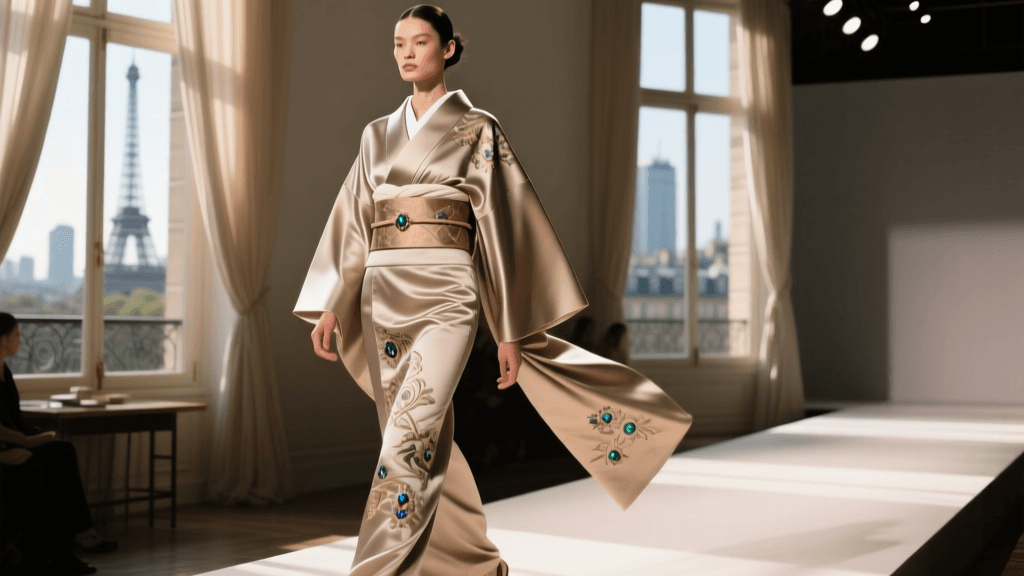
The most striking adaptation of the kimono on the 2026 runways is the manipulation of the 'obi' (the traditional sash). Historically, a formal maru obi measures roughly 30 centimeters (12 inches) in width and is woven from heavy silk brocade, requiring complex tying techniques to secure the kimono. This season, Parisian design houses have transformed the obi into a standalone piece of architectural corsetry. By scaling the width down to a more manageable 15 centimeters (6 inches) and integrating modern boning and eyelet lacing, designers are wrapping these hybrid obi-corsets over sharply tailored, oversized Western blazers and fluid silk slip dresses.
Furthermore, the 'furisode' (the long, swinging sleeves of an unmarried woman's kimono) has been adapted into outerwear. We are seeing trench coats and lightweight duster jackets featuring 80-centimeter drop sleeves that mimic the dramatic sway of the furisode, but crafted from weather-resistant, tech-infused organza rather than traditional crepe silk. This allows for the dramatic runway effect while remaining practical for the modern, urban consumer navigating unpredictable 2026 city climates.
Traditional vs. 2026 Runway Adaptations
To understand how to translate these high-fashion concepts into a wearable wardrobe, it is essential to compare the traditional garment with its contemporary runway counterpart. Below is a breakdown of the key elements dominating this year's fashion weeks.
| Garment Element | Traditional Function & Measurement | 2026 Runway Adaptation | Everyday Styling Tip |
|---|---|---|---|
| Obi (Sash) | 30cm wide; secures the kimono via complex knots (musubi). | 15cm wide; structured with corset boning, worn over tailoring. | Wear a wide, stiffened silk sash over an oversized linen blazer to cinch the waist without restricting movement. |
| Haori (Jacket) | Hip-length, open-front jacket with a straight hem and short ties. | Cropped to the ribcage or elongated to the calf; ties replaced by hidden magnetic closures. | Layer a vintage, mid-thigh silk haori over a simple white t-shirt and wide-leg denim for effortless evening wear. |
| Kosode (Sleeves) | Standard sleeve depth is roughly 50cm with a curved underarm pouch. | Exaggerated 80cm drop-sleeves on outerwear; underarm pouches used as hidden pockets. | Look for coats with deep, curved underarm seams to allow for bulky layering underneath during winter months. |
| Tabi (Footwear) | Split-toe cotton socks worn with wooden geta or zori sandals. | Leather and neoprene split-toe ankle boots and knee-high socks. | Pair leather split-toe derby shoes with tailored, cropped trousers to highlight the footwear's unique silhouette. |
Runway to Real Way: Sourcing and Styling in 2026
While the haute couture pieces seen in Milan and Paris often carry price tags exceeding $10,000, the core aesthetics of the 2026 kimono trend are highly accessible through the booming vintage and upcycled textile market. The current global push toward circular fashion has made authentic, vintage Japanese textiles highly sought after. According to the Business of Fashion Sustainability Index, the demand for upcycled heritage textiles has surged by 45% in the luxury sector over the past eighteen months, driven by consumers seeking unique, historically rich garments that bypass modern fast-fashion supply chains.
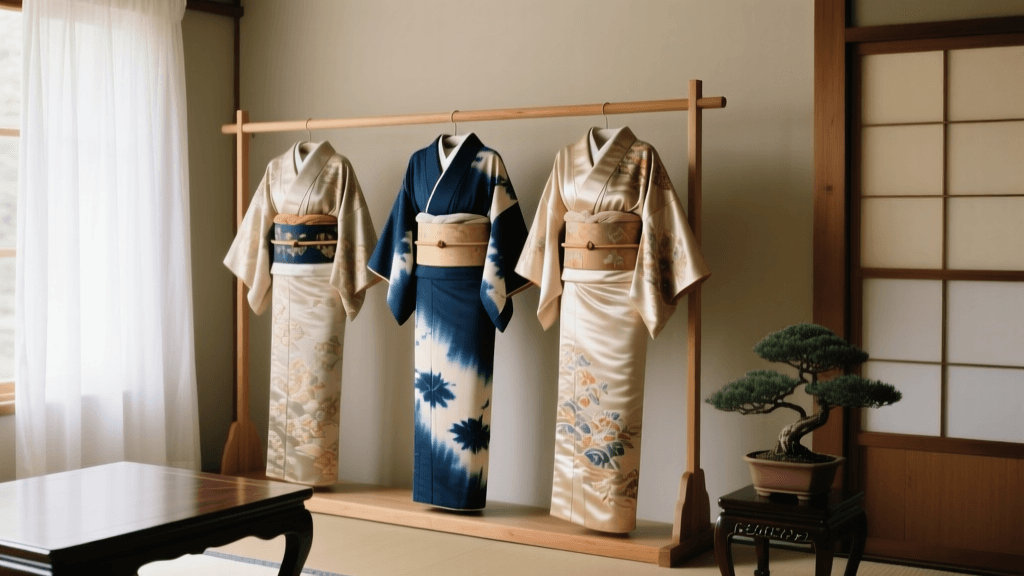
For the modern consumer looking to integrate these runway trends, sourcing authentic vintage pieces is both an ethical and stylish choice. A genuine, hand-painted 'yuzen' silk haori from the 1980s or 1990s can currently be sourced from specialized Tokyo-based exporters and global vintage curators for between $120 and $350, depending on the condition and the complexity of the gold-leaf (kinkoma) embroidery. When styling these pieces, the golden rule for 2026 is contrast. Avoid wearing a full traditional kit, which can appear costumey in a Western urban setting. Instead, treat the kimono element as a statement piece. Pair a heavily embroidered vintage obi with a minimalist, monochromatic column dress, or drape a lightweight, unlined 'hitoe' kimono over a sleek turtleneck and leather trousers for autumn.
The Evolution of Footwear: Tabi and Geta
No discussion of Japanese runway influence is complete without addressing footwear. The split-toe 'tabi' boot, famously introduced to the Western avant-garde by Martin Margiela in the late 1980s, has evolved significantly by 2026. This season's iterations feature ergonomic arch support, lightweight resin soles, and waterproof vegan leathers, making them viable for daily commuting rather than just editorial shoots. Furthermore, the traditional wooden 'geta' sandal is being reimagined by emerging Tokyo-based footwear designers who are utilizing carved, sustainable cork and recycled acrylic to create elevated, platform versions that provide the height and posture-altering tilt of the original, but with modern shock absorption.
Sustainability and the Natural Dye Movement
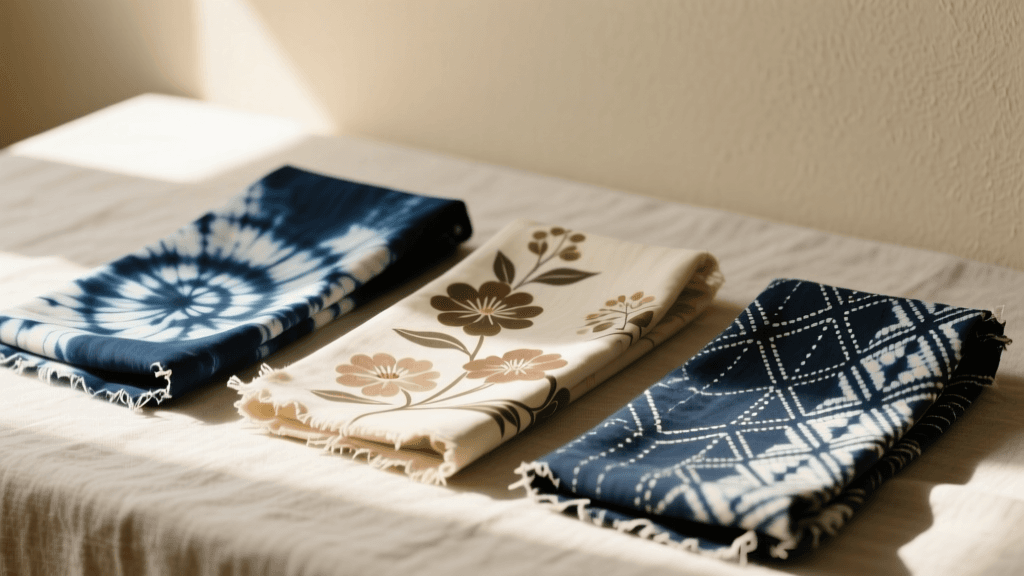
The final major takeaway from the 2026 fashion weeks is the industry's pivot toward traditional, natural dyeing techniques, specifically 'aizome' (Japanese indigo) and 'shibori' (resist dyeing). As the European Union enforces stricter digital product passport (DPP) regulations requiring total supply chain transparency, luxury brands are turning to the historic dyeing hubs of Kyoto and Tokushima. The deep, living blues of natural indigo, which continue to oxidize and shift in color over years of wear, are being presented as the ultimate antidote to synthetic, petroleum-based dyes. The Kyoto Costume Institute has frequently highlighted how historical Japanese garments were designed to be unraveled, re-dyed, and re-sewn into new garments over generations—a philosophy of 'zero-waste' that modern 2026 designers are now desperately trying to emulate.
Conclusion: A Lasting Sartorial Dialogue
The presence of the kimono on the 2026 global runways is not a fleeting seasonal trend; it is a lasting sartorial dialogue between Eastern heritage and Western tailoring. By understanding the structural genius of the T-shaped seam, the architectural potential of the obi, and the rich history of natural textile dyeing, fashion enthusiasts can build wardrobes that are not only visually striking but deeply rooted in global craftsmanship. Whether you are investing in a contemporary designer's deconstructed haori or carefully sourcing a vintage silk piece from a Kyoto archive, the kimono's influence in 2026 offers a masterclass in timeless, boundary-pushing elegance.