Kimono Couture on 2026 Runways: Global Fashion Week Trends
The Renaissance of Japanese Silhouettes on the 2026 Runways
The intersection of Edo-period craftsmanship and avant-garde modernism has reached a breathtaking zenith during the Spring/Summer and Fall/Winter 2026 global fashion weeks. From the grand pavilions of Paris to the industrial lofts of Milan, international design houses are no longer merely referencing traditional Japanese garments; they are deeply integrating the structural philosophy of the kimono into contemporary haute couture and ready-to-wear. In 2026, the global fashion narrative has shifted away from superficial cultural appropriation toward a profound, respectful collaboration with Japanese artisanal techniques, resulting in collections that honor the rich heritage of Asian traditions while pushing the boundaries of modern silhouette and form.
Historically, Western fashion's fascination with Japanese garments dates back to the late 19th century, but the 2026 runway season marks a distinct evolution. Designers are now focusing on the spatial relationship between the body and the fabric, a concept known in Japanese aesthetics as ma (negative space). According to the Victoria and Albert Museum's comprehensive archive on kimono history, the traditional kimono is fundamentally a two-dimensional garment that only achieves its three-dimensional sculptural form when worn and manipulated by the human body. This exact philosophy is the driving force behind the most celebrated outerwear and eveningwear collections of 2026.
The Haori Reimagined: 2026's Definitive Statement Outerwear
The haori, a traditional hip- or thigh-length kimono-style jacket, has emerged as the undisputed hero piece of 2026 outerwear. Originally worn over the kosode to protect the main garment from the elements and display family crests, the modern runway haori has been deconstructed and elevated. This season, Milanese tailoring houses have merged the relaxed, dropped-shoulder silhouette of the haori with the precise, structured lapels of classic European suiting.
Runway presentations in early 2026 showcased haori-inspired coats crafted from heavyweight bio-silk and recycled wool blends, featuring the signature open front and wide, flowing sleeves. Unlike the tailored Western blazer that restricts movement, the 2026 haori-coat prioritizes fluidity. Designers are utilizing hidden interior drawstrings and modular silk linings, allowing the wearer to adjust the volume and drape of the garment. Investment pieces for these contemporary silk-blend and wool haori coats currently range from $850 to $2,400 on the luxury market, reflecting the intensive labor required to maintain the garment's structural integrity without traditional darts or seams.
The Architectural Obi: From Waist Cincher to Corsetry
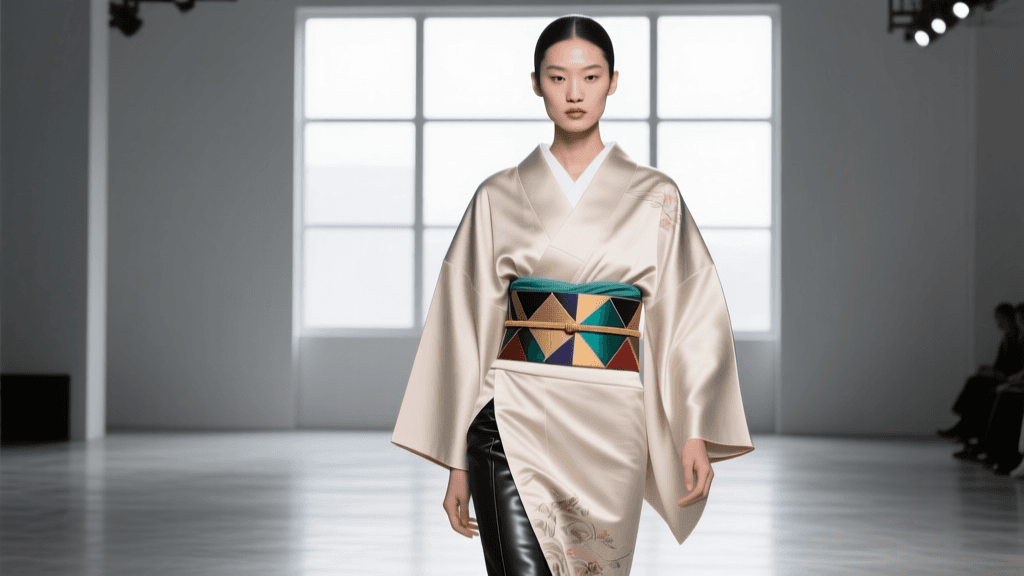
Perhaps the most dramatic transformation on the 2026 runways is the reinterpretation of the obi. Traditionally, the obi is a wide, elaborately woven sash used to secure the kimono, often tied in complex, decorative knots at the back. In 2026, the obi has been unmoored from its traditional anchoring function and reimagined as an architectural, standalone accessory that bridges the gap between corsetry and belt-making.
Parisian couture houses have introduced rigid, wide-band obi belts constructed from molded leather, stiffened jacquard, and even lightweight, flexible resins. These pieces mimic the formidable width of the fukuro obi (often measuring up to 12 inches in height) but are engineered with modern ergonomic boning to support the lower back and cinch the waist without the need for complex tying. Worn over oversized trench coats, flowing maxi dresses, and even tailored trousers, the 2026 runway obi serves as a focal point that commands attention and dramatically alters the wearer's proportions.
Furisode Sleeves and Drapery in Evening Couture
For eveningwear, the furisode—the formal kimono characterized by its long, swinging sleeves worn by unmarried women—has provided endless inspiration for 2026 red-carpet and gala collections. The dramatic drop-sleeve, which can traditionally measure up to 114 centimeters in length, has been adapted into breathtaking silk-crepe and liquid-organza gowns.
Rather than simply attaching long sleeves to a Western bodice, 2026 designers are employing the continuous, uncut fabric panels of the kimono to create gowns that wrap and drape organically. The trailing hems and deep, open underarm panels characteristic of the furisode allow for unprecedented movement and ventilation, creating a mesmerizing kinetic effect as the wearer walks. As noted by The Metropolitan Museum of Art's Heilbrunn Timeline of Art History, the elegance of the kimono lies in its surface design and the graceful flow of its uncut fabric, a principle that 2026 eveningwear has masterfully captured.
Traditional Elements vs. 2026 Runway Adaptations
| Traditional Element | Historical Function | 2026 Runway Adaptation | Key Materials in 2026 |
|---|---|---|---|
| Haori Jacket | Protective outerwear and crest display | Structured, open-front duster coats and modular blazers | Recycled wool, bio-peace silk, Nishijin-ori accents |
| Fukuro Obi | Securing the kimono with decorative knots | Wide, ergonomic corset-belts and architectural waist-cinchers | Molded leather, stiffened jacquard, flexible resin |
| Furisode Sleeves | Formal wear indicating youth and status | Dramatic drop-sleeve evening gowns with kinetic drapery | Liquid organza, silk-crepe, sustainable viscose |
| Yuki-Tsumugi Silk | Durable, matte-finish everyday kimono fabric | Textured, breathable suiting and lightweight summer tailoring | Hand-spun organic silk, matte-finish botanical dyes |
Heritage Textiles: Yuki-Tsumugi and Sustainable Silk
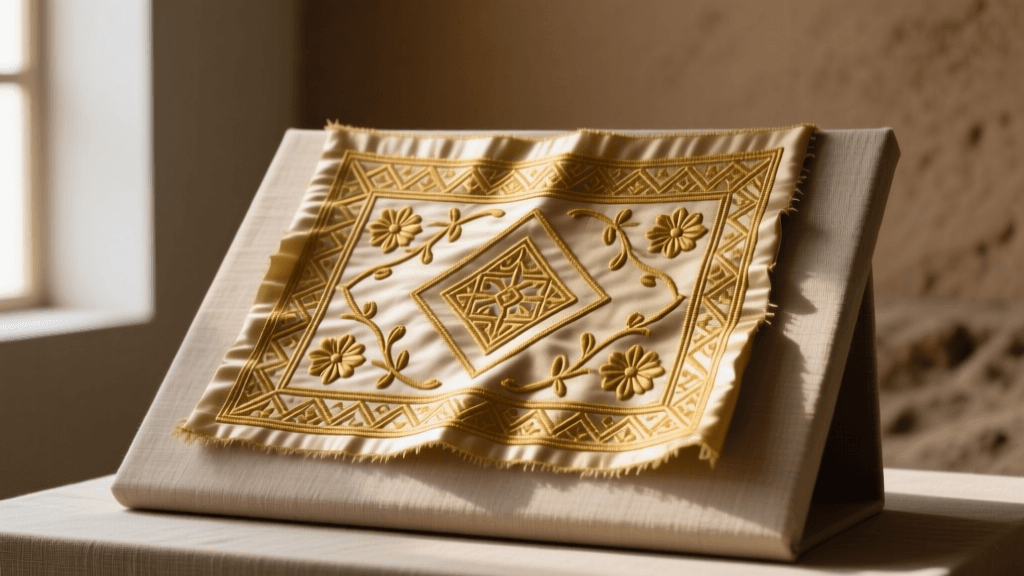
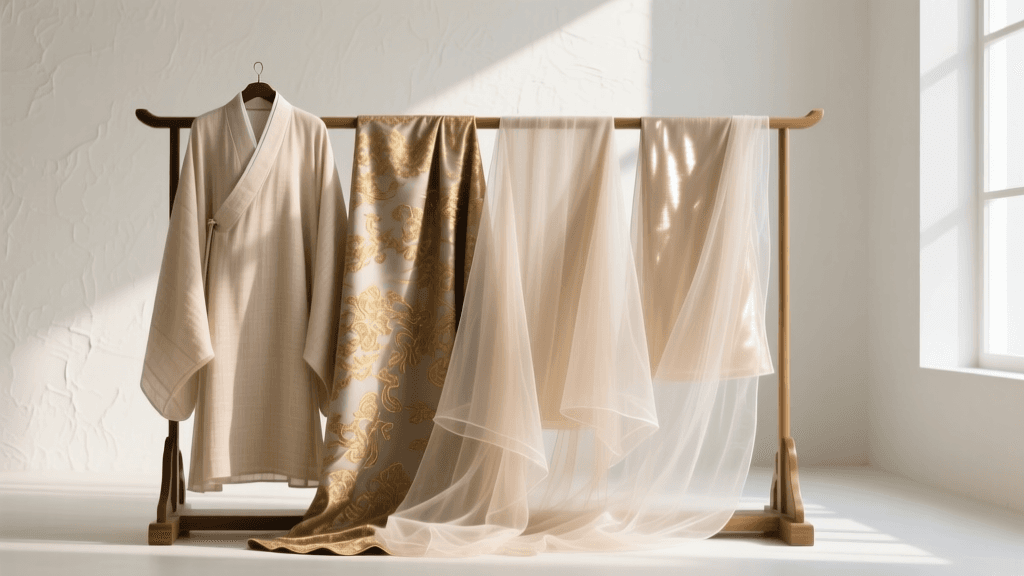
The 2026 fashion conversation is inextricably linked to sustainability, making traditional, low-impact Japanese textile production highly sought after by global luxury conglomerates. Yuki-tsumugi, a traditional silk-weaving technique recognized for its matte finish and incredible durability, has become a cornerstone for designers seeking eco-conscious alternatives to mass-produced, high-gloss silks. The Kyoto Costume Institute Digital Archives frequently highlights the meticulous, hand-spun nature of these heritage fabrics, which align perfectly with the 2026 luxury consumer's demand for transparency and artisanal authenticity.
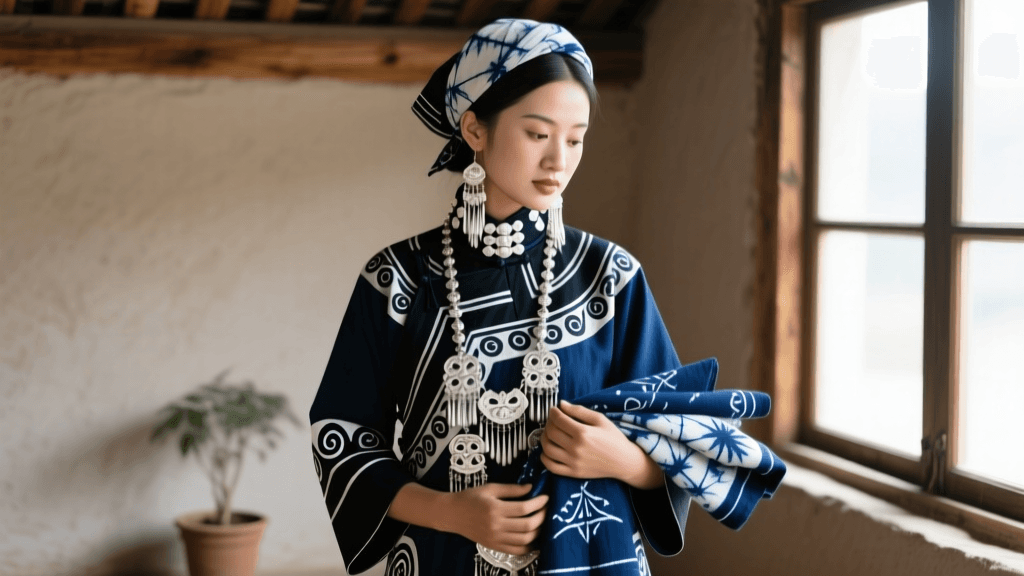
Furthermore, the integration of botanical dyeing techniques, such as shibori and yuzen, using naturally derived indigo, persimmon tannin, and safflower, has replaced toxic synthetic dyes in several high-profile runway collections. This commitment to heritage not only preserves ancient artisanal communities in rural Japan but also provides the modern fashion industry with a viable blueprint for sustainable, high-end textile production.
Actionable Styling: Bringing the 2026 Runway to the Street
While haute couture sets the tone, the true impact of the 2026 kimono-inspired runway trends lies in their adaptability for everyday, elevated wardrobes. Here is how you can integrate these Asian traditions into your contemporary style this year:
- The Haori over Tailoring: Swap your traditional wool overcoat for a mid-thigh, open-front haori jacket. Look for pieces with subtle Nishijin-ori (brocade) lining. Pair this with wide-leg, pleated trousers and a simple silk camisole to maintain the Japanese aesthetic of balanced volume and negative space.
- The Obi-Inspired Belt: You do not need a $1,500 runway corset to achieve this look. Source a wide, stiffened leather belt (at least 4 inches in height) and wear it over an oversized, unstructured blazer or a flowing midi-dress. This instantly creates the dramatic, cinched silhouette seen across Paris Fashion Week.
- Kimono-Sleeve Knitwear: For a more accessible entry point, seek out heavyweight knit cardigans featuring the deep, dropped armholes and wide sleeves of the kimono. In 2026, pairing these voluminous knits with sleek, straight-leg denim and pointed-toe boots provides a striking contrast in proportions.
- Heritage Scarf Styling: Utilize vintage or sustainably sourced silk kimono panels as oversized, structured scarves. Rather than draping them loosely, fold them sharply and secure them with minimalist metal clips, echoing the rigid, geometric folds of traditional formal wear.
Conclusion
The 2026 global runway season has definitively proven that the kimono is not a relic of the past, but a living, breathing blueprint for the future of fashion. By respecting the structural genius of the haori, the architectural power of the obi, and the sustainable wisdom of heritage silk weaving, international designers have forged a new sartorial language. As we move through 2026, the integration of these Asian traditions into global wardrobes offers a masterclass in how historical reverence and avant-garde innovation can seamlessly coexist, ultimately enriching the way we dress, move, and express ourselves in the modern world.