Kimono vs Hanbok vs Cheongsam: 2026 Styling & Cost Guide
The Renaissance of Asian Heritage Fashion in 2026
As we navigate the global fashion landscape in 2026, the appreciation for Asian traditional garments has evolved from mere ceremonial wear to a vibrant component of contemporary, sustainable wardrobes. The Japanese kimono, Korean hanbok, and Chinese cheongsam (qipao) represent three distinct philosophies of textile art, structural engineering, and cultural expression. For collectors, modern stylists, and heritage fashion enthusiasts, understanding the nuanced differences in their construction, 2026 market pricing, and styling applications is essential. This comprehensive guide breaks down the anatomy of these three iconic garments, providing actionable advice for buyers and wearers in the modern era.
Japanese Kimono: Linear Architecture and Textile Art
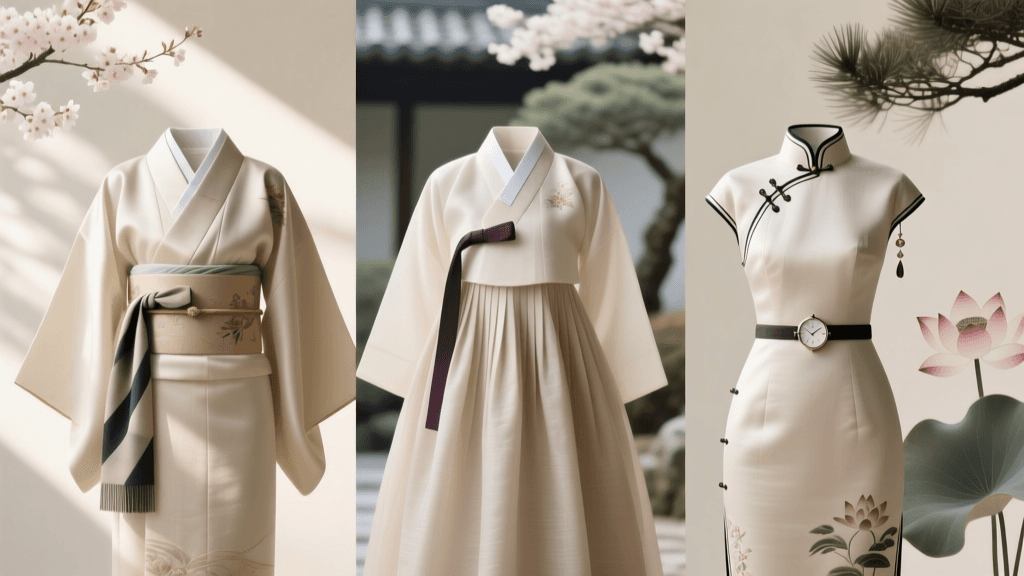
The kimono is fundamentally an exercise in linear geometry and zero-waste design. Unlike Western tailoring, which relies on darts and curved seams to contour the body, the kimono is constructed from straight strips of fabric cut from a single bolt known as a tanmono. According to the Victoria and Albert Museum's comprehensive guide to Kimono, this T-shaped structure allows the garment to be easily disassembled, washed, and re-sewn, a practice that aligns perfectly with the 2026 circular fashion movement.
Construction and 2026 Fabric Trends
A standard kimono requires approximately 12 to 14 meters of fabric, traditionally woven in a narrow 14-inch width. The sleeves are attached with deep, open pockets, and the collar crosses left over right. In 2026, the most significant trend in kimono textiles is the surge of upcycled meisen silk and machine-washable silk crepe de chine. Artisans in Gunma Prefecture have pioneered new eco-friendly sericulture methods, producing 16-momme silk that retains the luxurious drape of traditional chirimen (crepe) but can withstand gentle home laundering. The fastening method relies entirely on the obi (sash) and a series of silk ties (koshihimo), completely eliminating the need for buttons or zippers.
Korean Hanbok: Structural Volume and Fluidity
The hanbok is characterized by its striking contrast between a fitted upper garment and a voluminous lower half. For women, this consists of the jeogori (a cropped jacket) and the chima (a full, bell-shaped skirt). Men traditionally wear a jeogori paired with baji (roomy trousers). The Encyclopedia Britannica's historical overview of the Hanbok notes that the garment's design is deeply rooted in the nomadic origins of the Korean people, prioritizing ease of movement and structural volume without the restriction of tailored darts.
Construction and 2026 Fabric Trends
The hallmark of the hanbok is its use of natural curves and strategic gathering. The chima is gathered at the high waist and falls in sweeping, voluminous folds, while the jeogori features a gentle curve at the hem (baerae) and a crisp white detachable collar (dongjeong). Fastening is achieved via the goreum, a long, elegant ribbon tied at the chest. In 2026, the "saenghwal hanbok" (daily hanbok) movement has dominated the market. Designers are utilizing Tencel-linen blends and eco-ramie, offering the traditional architectural silhouette with the breathability and machine-washability required for modern urban commuting. The structural volume is now often achieved using lightweight, recycled organza under-layers rather than heavy traditional cotton.
Chinese Cheongsam (Qipao): The Sculpted Silhouette
Originating in the 1920s as a modernization of Manchu dress, the cheongsam (or qipao) is celebrated for its form-fitting, sculpted silhouette. It is a masterclass in tailoring, utilizing darts, bias cutting, and precise measurements to celebrate the natural contours of the body. The Encyclopedia Britannica's entry on the Qipao (Cheongsam) highlights its evolution into a symbol of modern femininity, blending traditional Chinese motifs with Western tailoring techniques.
Construction and 2026 Fabric Trends
Key construction elements include the high mandarin collar, the asymmetric front flap, side slits for mobility, and the intricate pankou (frog buttons). In 2026, bespoke cheongsam tailoring has been revolutionized by 3D body scanning technology in Shanghai and Hong Kong boutiques, allowing for micro-adjustments that ensure a flawless fit without the need for multiple physical fittings. The fabric of choice has also evolved; while traditional stiff brocades remain popular for weddings, the 2026 everyday market favors stretch-silk blends, laser-cut lace overlays, and digital-printed heavy crepes that offer comfort and dynamic movement.
Comparative Analysis: Kimono vs Hanbok vs Cheongsam
To visualize the distinct differences in construction, wearability, and market positioning, refer to the comparative table below.
| Feature | Japanese Kimono | Korean Hanbok | Chinese Cheongsam |
|---|---|---|---|
| Silhouette | T-shaped, linear, zero-waste | Voluminous skirt, cropped jacket | Form-fitting, sculpted, bias-cut |
| Primary Fastening | Obi sash, internal ties (no buttons) | Goreum (ribbon tie), no buttons | Pankou (frog buttons), hidden zips |
| 2026 Trend Fabric | Upcycled Meisen, washable crepe | Tencel-linen blends, eco-ramie | Stretch-silk brocade, laser-cut lace |
| Average Bespoke Cost | $800 - $1,500 USD | $400 - $900 USD | $500 - $1,800 USD |
| Time to Dress | 20-40 mins (requires kitsuke skills) | 5-10 minutes | 2-5 minutes |
2026 Buyer's Guide: Measurements and Bespoke Costs
If you are commissioning a custom garment in 2026, understanding the specific measurement requirements for each tradition will streamline your ordering process, especially when working with overseas artisans.
- Kimono Measurements: Tailors require the Yuki (measured from the center back of the neck, over the shoulder, down to the wrist bone) and the Mitake (back neck to desired hemline). Standard widths are fixed by the tanmono bolt, so weight fluctuations are accommodated by how tightly the obi is wrapped.
- Hanbok Measurements: Focus is on the bust and high-waist circumference for the chima, and the shoulder span and arm length for the jeogori. The length of the chima is measured from the high waist to the floor, factoring in the heel height of your traditional kkotsin or modern footwear.
- Cheongsam Measurements: This requires the most rigorous precision. A 4-point measurement system is standard: bust, natural waist, hips (at the widest point), and hollow-to-hem (from the base of the neck to the desired hemline). Sleeve length and slit height must also be specified to the exact centimeter.
Modern Styling Rules for the Contemporary Wardrobe
Integrating these garments into a 2026 wardrobe requires balancing heritage respect with modern practicality. Here are actionable styling rules for each:
Styling the Kimono
For a modern, casual look, pair a vintage cotton or washable silk komon (all-over pattern) kimono with a streamlined, solid-color hanhaba obi (half-width sash). In 2026, it is highly fashionable to pair kimono with leather ankle boots or structured loafers rather than traditional zori sandals, especially in autumn and winter. Layering with a fine-knit turtleneck underneath is both practical for cold weather and aesthetically striking.
Styling the Hanbok
The modern saenghwal hanbok is designed for daily wear. Pair a cropped, pastel jeogori with high-waisted, wide-leg linen trousers instead of the traditional skirt for a gender-neutral, avant-garde silhouette. For formal events, a floor-length chima in a muted, jewel-toned Tencel blend paired with minimalist metallic jewelry bridges the gap between traditional ceremony and contemporary red-carpet elegance.
Styling the Cheongsam
The cheongsam is inherently versatile. A sleeveless, knee-length stretch-silk cheongsam can be worn over a crisp white button-down shirt for a layered, intellectual aesthetic popular in 2026 creative industries. For evening wear, opt for a floor-length velvet or heavy brocade cheongsam with a thigh-high slit, styling it with a structured blazer draped over the shoulders to soften the formality and add architectural interest.
Conclusion
Whether you are drawn to the zero-waste linear geometry of the kimono, the sweeping, unrestrictive volume of the hanbok, or the sculpted, tailored precision of the cheongsam, 2026 offers unprecedented access to both authentic heritage pieces and innovative, sustainable modern adaptations. By understanding the unique construction, accurate measurement requirements, and contemporary styling potential of each garment, you can confidently invest in Asian traditional fashion that honors the past while functioning beautifully in the modern world.