Kimono vs Hanbok vs Cheongsam: 2026 Styling Comparison
The Renaissance of East Asian Heritage Garments in 2026
As we navigate the fashion landscape of 2026, the global appreciation for East Asian heritage garments has evolved far beyond ceremonial costume. Today, the kimono, hanbok, and cheongsam (qipao) are being reinterpreted through the lenses of sustainable fashion, modular wardrobes, and contemporary bespoke tailoring. For collectors, cultural enthusiasts, and modern dressers, understanding the structural, textile, and stylistic nuances of these three iconic garments is essential. Whether you are investing in a custom piece or integrating vintage finds into your daily rotation, this comprehensive comparison will guide you through the architectural elegance and practical wearability of East Asia's most celebrated traditional dress.
The Architecture of Elegance: Structural Silhouettes
The fundamental differences between the kimono, hanbok, and cheongsam lie in their cutting techniques and structural geometry. Each garment reflects a distinct cultural philosophy regarding the relationship between the body and the fabric.
The Kimono: Linear Geometry and Folded Volume
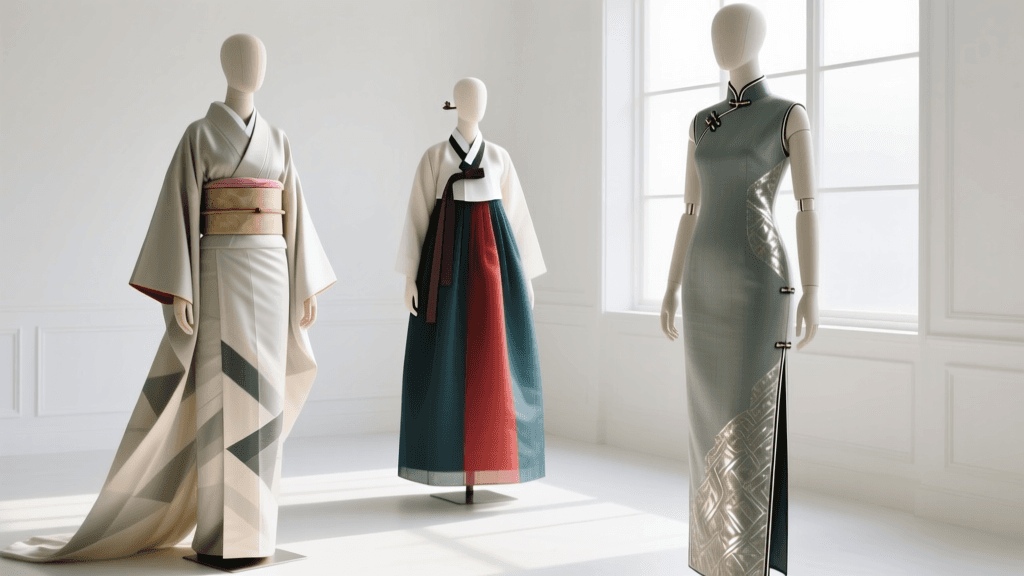
The Japanese kimono is constructed using a flat, linear cutting method. Woven in standard bolt widths known as a tan (approximately 14 inches wide), the fabric is cut into straight rectangular panels and sewn together with minimal waste. The kimono's iconic T-shape and oblong sleeves (tamoto) create a columnar silhouette that conceals the body's natural curves. The art of wearing the kimono (kitsuke) relies on folding, wrapping, and securing the garment with an obi sash, allowing the wearer to adjust the length and volume dynamically. In 2026, the structural integrity of the kimono remains a masterclass in zero-waste pattern making, a principle highly prized in modern sustainable design.
The Hanbok: Curved Lines and Volumetric Flow
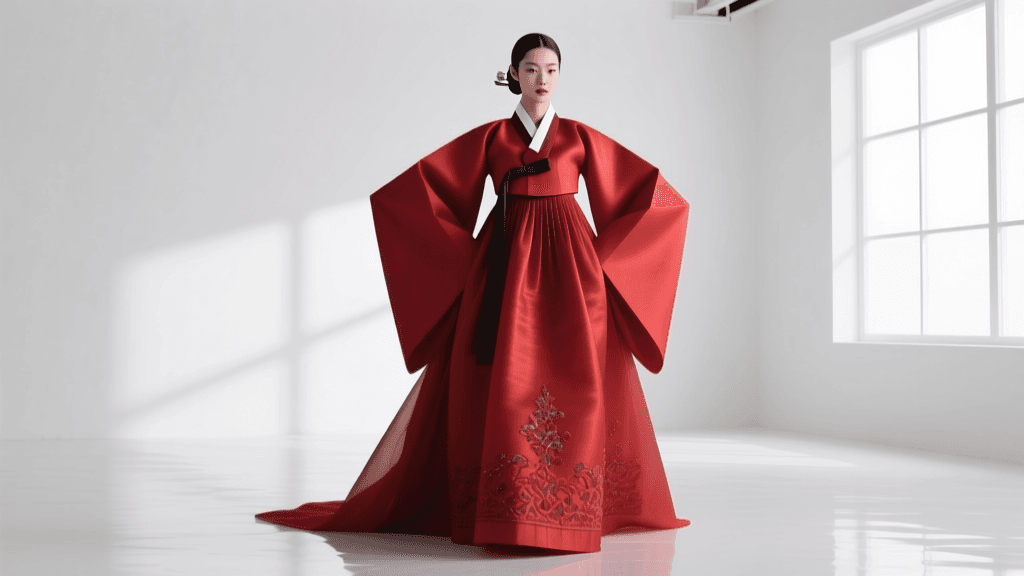
In stark contrast to the kimono's linear rigidity, the traditional Korean hanbok is defined by its sweeping curves and dramatic volume. The women's hanbok consists of the jeogori (a short, cropped jacket) and the chima (a full, high-waisted wrap skirt). The jeogori features the baerae, a beautifully curved sleeve line that mimics the gentle slope of traditional Korean temple eaves. The chima is gathered tightly at the bust, creating an A-line silhouette that flows freely over the lower body. This structural division emphasizes the upper chest and shoulders while allowing unrestricted movement below, making the hanbok inherently comfortable and adaptable to various body types.
The Cheongsam: Form-Fitting Sculptural Tailoring
The Chinese cheongsam, or qipao, represents a departure from the flat-cutting traditions of its neighbors. Originating in the 1920s and evolving through the mid-century, the modern cheongsam is celebrated for its form-fitting, S-curve silhouette. It incorporates Western tailoring techniques such as darts, set-in sleeves, and shaped side seams to contour closely to the wearer's body. Signature elements include the stiff mandarin collar (yuanling), the diagonal or symmetrical chest closures secured by intricate pankou (frog buttons), and the dramatic side slits (kaicha) that facilitate movement. The cheongsam is an exercise in sculptural precision, demanding exact measurements to achieve its signature sleek profile.
Textile Innovations and Climate Adaptability in 2026
The choice of textile dictates not only the drape and formality of these garments but also their viability in diverse modern climates. In 2026, the intersection of traditional weaving and next-generation sustainable fibers has expanded the wardrobe potential of all three garments.
For the kimono, traditional rinzu (silk damask) and ro (sheer summer silk) remain the gold standard for formal wear. However, 2026 has seen a massive surge in high-grade washable poly-crepes and Tencel-linen blends for casual komon (everyday kimono), offering breathability and easy maintenance without sacrificing the crisp drape required for proper folding. According to archival research on historical textile preservation and modern adaptations documented by the V&A Asian Collections, the evolution of East Asian silk weaving continues to heavily influence contemporary sustainable textile engineering.
The hanbok historically utilized mosi (ramie) for summer and padded silks for winter. Today, modern saenghwal hanbok (daily hanbok) frequently employs organic cotton-linen matrices and cupro blends. These fabrics provide the structural stiffness needed to support the chima's voluminous pleats while remaining lightweight enough for year-round urban wear.
The cheongsam is synonymous with heavy brocades and xiangyunsha (gambiered silk). In 2026, bespoke tailors are increasingly utilizing matte vegan peace silks and stretch-crepes. These modern textiles provide the necessary bias give to accommodate the cheongsam's tight tailoring while preventing the shoulder and seam stress common in vintage, non-stretch silk qipaos.
Data Table: 2026 Garment Comparison Matrix
| Feature | Kimono (Japan) | Hanbok (Korea) | Cheongsam / Qipao (China) |
|---|---|---|---|
| Silhouette | Columnar, T-shaped, linear | Voluminous, A-line, high-waisted | Form-fitting, S-curve, sculptural |
| Primary Fastening | Obi sash and koshihimo ties | Dongjeong knot and goreum ties | Pankou (frog buttons) and hidden zippers |
| Sleeve Style | Oblong, drop-shoulder (tamoto) | Curved underarm (baerae) | Set-in, cap or full-length |
| Ideal Climate | Highly adaptable via layering | Breezy and cool (summer chima) | Best for mild to warm climates |
| Tailoring Complexity | Moderate (flat cutting, complex wrapping) | Moderate (focus on gathering and curves) | High (requires precise 3D darting) |
Modern Styling: Integrating Heritage into 2026 Wardrobes
The most exciting development in 2026 is the modular styling of traditional garments. You no longer need to wear these pieces head-to-toe to honor their cultural significance; instead, they serve as statement anchors in contemporary wardrobes.
- Kimono Styling: The haori (kimono jacket) is a staple in 2026 transitional outerwear. Drape a vintage silk haori over a ribbed turtleneck and wide-leg denim for a sophisticated, textured look. For full kimono, consider wearing it open as a dramatic duster coat over a minimalist silk slip dress, cinched at the waist with a modern leather belt instead of a traditional obi.
- Hanbok Styling: The modernized chima skirt is incredibly versatile. Pair a high-waisted, ankle-length cotton chima with a cropped, fitted knit sweater to balance the skirt's volume. The jeogori can be styled as a chic, cropped bolero over high-waisted tailored trousers or a sleek midi dress, highlighting the beautiful curved sleeve lines.
- Cheongsam Styling: The qipao top is a hallmark of 2026 power dressing. A sleeveless, mandarin-collar cheongsam top crafted from matte crepe pairs flawlessly with high-waisted, wide-leg wool trousers and pointed-toe boots. For a subtle nod to the silhouette, layer a traditional cheongsam beneath an oversized, unstructured blazer, allowing the intricate pankou knots and collar to frame the neckline.
Sizing, Measurements, and Custom Tailoring Costs
Acquiring a properly fitted garment requires an understanding of how each culture approaches measurement. The precision of historical tailoring and its influence on modern bespoke pricing is well-documented by institutions like the Metropolitan Museum of Art's Asian Art Department, which highlights the exacting standards of East Asian textile artisans.
Kimono Sizing and Costs
Kimono are not sized by bust or waist, but rather by height and arm span. The critical measurement is the yuki (the distance from the center back of the neck, over the shoulder, to the wrist). Because the kimono is wrapped and folded, the waist and hips are largely irrelevant to the fit. In 2026, commissioning a custom, artisan-woven silk kimono from a certified atelier in Kyoto or Tokyo typically ranges from $2,500 to $6,000 USD, reflecting the intensive labor of traditional weaving and dyeing. High-quality, modern washable silk alternatives can be found between $400 and $900 USD.
Hanbok Sizing and Costs
Hanbok tailoring focuses heavily on the chest circumference and arm length for the jeogori, and the waist-to-floor measurement for the chima. Because the chima sits high on the bust and is secured with ties, it offers a forgiving fit across the hips and stomach. A bespoke, daily-wear saenghwal hanbok set crafted from premium organic blends costs between $350 and $800 USD in 2026. Formal, hand-embroidered silk hanbok designed for weddings or major ceremonies will easily exceed $1,500 USD.
Cheongsam Sizing and Costs
The cheongsam is the most unforgiving of the three regarding fit. A bespoke qipao requires over a dozen precise measurements, including exact bust, waist, hip, shoulder width, and the crucial nape-to-hem length. Because the garment lacks the drape of a kimono or the volume of a hanbok, even a half-inch discrepancy can alter the drape of the side slits or cause pulling at the pankou closures. In 2026, a custom-tailored cheongsam from a master tailor in Shanghai, Hong Kong, or a specialized Western boutique costs between $800 and $2,500 USD, depending on the complexity of the brocade and the intricacy of the hand-rolled hems and frog knots.
Care and Maintenance for Longevity
Preserving these garments requires specific care protocols. Kimono should be aired out after wearing and stored flat or folded along their original seams in acid-free paper; spot cleaning is preferred, though traditional araihari (taking the garment apart, washing the fabric bolts, and re-sewing) is still practiced by master artisans for heirloom pieces. Hanbok skirts must be hung on wide, padded hangers or stored rolled to maintain the crispness of the chima pleats, while the jeogori should be kept flat to preserve the curved baerae sleeves. The cheongsam should never be hung on wire hangers, as the weight of the silk will distort the shoulders; always use padded hangers and store in breathable cotton garment bags to protect the delicate frog buttons from snagging.
By understanding the distinct architectures, textiles, and styling potentials of the kimono, hanbok, and cheongsam, you can thoughtfully integrate these masterpieces of East Asian heritage into your 2026 wardrobe, ensuring they are worn with respect, precision, and contemporary flair.