Kimono vs Hanbok vs Cheongsam: 2026 Fit & Style Guide
The Ultimate 2026 Guide to Asian Traditional Garments
As global fashion continues to embrace heritage textiles and neo-traditional styling in 2026, the boundaries between historical dress and contemporary wardrobes have never been more fluid. For enthusiasts, collectors, and modern stylists, understanding the distinct architectural differences between East Asia’s most iconic garments—the Japanese kimono, the Korean hanbok, and the Chinese cheongsam (qipao)—is essential. Whether you are commissioning a bespoke piece for a wedding, attending a cultural festival, or integrating heritage elements into your everyday 2026 wardrobe, this comprehensive comparison will guide you through silhouette, tailoring, fabric innovations, and modern styling.
'Traditional Asian garments are not merely clothing; they are wearable architecture that reflects centuries of philosophical, social, and aesthetic evolution.' — Journal of Global Textile Heritage, 2026
The Kimono: Japan’s T-Shaped Masterpiece
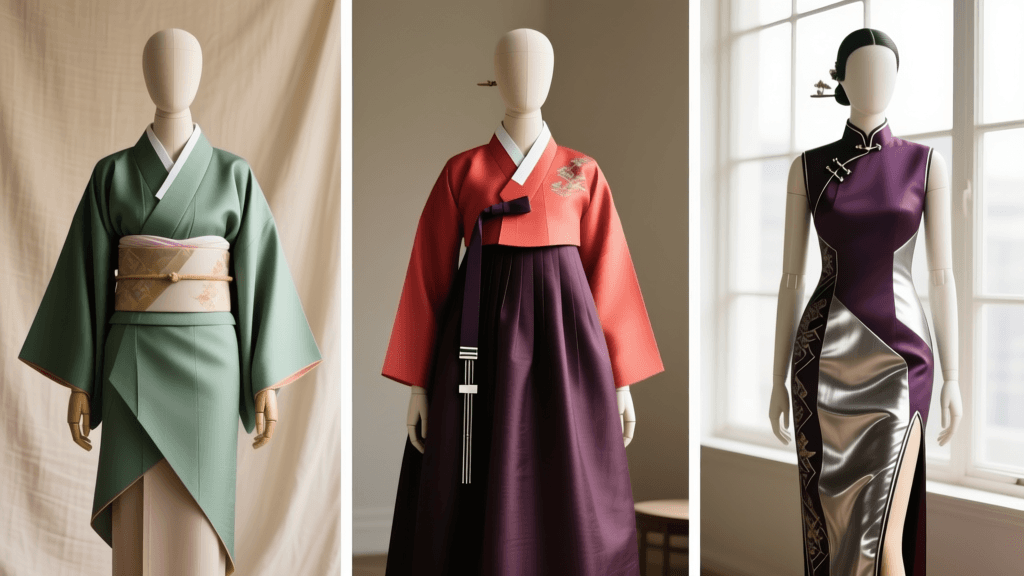
The kimono is defined by its straight-line construction and T-shaped silhouette. Unlike Western garments that are cut to follow the curves of the body, the kimono is designed to conceal the body's natural shape, creating a cylindrical, elegant form. According to the Encyclopaedia Britannica, the kimono's fundamental structure has remained remarkably consistent for centuries, relying on standard bolt widths of silk (tanmono) to minimize fabric waste.
Silhouette and Construction
The kimono is constructed from long, straight panels of fabric sewn together with minimal cutting. The shape is entirely dictated by how it is wrapped and secured. The obi (sash) is the structural anchor, transforming the flat garment into a sculptural masterpiece. In 2026, we are seeing a massive resurgence in minimalist obi knots, moving away from the overly bulky taiko musubi of the late 20th century toward sleek, architectural folds that complement modern, streamlined aesthetics.
2026 Fabric Trends and Styling
Sustainability is the driving force in 2026 kimono fashion. Lab-grown peace silk and digitally printed recycled polyesters are now standard for everyday wear, offering machine-washable convenience without sacrificing the luxurious drape of traditional silk. Modern stylists are increasingly pairing vintage silk kimono jackets (haori) with wide-leg tailored trousers and leather boots, creating a striking juxtaposition of Edo-period elegance and 2026 urban utility.
The Hanbok: Korea’s Voluminous Elegance
The hanbok is celebrated for its vibrant colors, sweeping curves, and dramatic volume. The traditional women's hanbok consists of the jeogori (a short, cropped jacket) and the chima (a high-waisted, full, bell-shaped skirt). For men, it comprises the jeogori and baji (roomy, tied trousers). The Britannica entry on the hanbok highlights how the garment's design was historically intended to allow for ease of movement while projecting a sense of dignified grace.
Silhouette and Construction
The defining feature of the hanbok is its A-line silhouette, created by the tight fit of the upper body contrasting with the immense volume of the lower half. The goreum (the long, flowing front ties of the jeogori) serves both as a functional fastener and a key decorative element. The curves of the hanbok are not achieved through darts, but through strategic gathering and the natural drape of the fabric over the body.
2026 Fabric Trends and Styling
The 'saenghwal hanbok' (everyday hanbok) movement has fully matured in 2026. Contemporary designers are utilizing lightweight, breathable linen blends and stretch-organza to reduce the traditional weight of the chima. Modern styling often involves wearing a cropped, modernized jeogori over a simple slip dress or pairing a minimalist, solid-color chima with a crisp white button-down shirt. The 2026 color palette leans heavily into muted, earthy tones—sage greens, dusty roses, and slate blues—departing from the highly saturated primary colors of historical court dress.
The Cheongsam (Qipao): China’s Form-Fitting Icon
The cheongsam, or qipao, is the epitome of tailored elegance. Originating in the 1920s as a modernization of Manchu dress, it evolved into a form-fitting garment that celebrates the natural contours of the body. The historical records on the qipao detail its evolution from a loose, modest robe to the sleek, high-collared, side-slit dress recognized globally today.
Silhouette and Construction
Unlike the kimono and hanbok, the cheongsam relies heavily on Western tailoring techniques, including darts, set-in sleeves, and structured seams to achieve its signature S-curve silhouette. Key identifying features include the mandarin collar, the asymmetrical front opening, and the intricate pankou (knotted frog closures). The side slits are both functional, allowing for ease of walking, and aesthetic, offering glimpses of movement.
2026 Fabric Trends and Styling
In 2026, the cheongsam is experiencing a renaissance of comfort. Tailors are integrating micro-stretch silk blends and lightweight crepes that allow for a skin-tight fit without restricting movement. Digital jacquard weaving has also become prominent, allowing for highly detailed, bespoke patterns that were previously impossible to achieve by hand. For modern evening wear, the 'cape cheongsam'—featuring a detachable, flowing sheer cape attached at the mandarin collar—has become a highly sought-after red-carpet staple in 2026.
Comparative Analysis: Kimono vs Hanbok vs Cheongsam
To help you make an informed decision for your next commission or purchase, here is a detailed comparison of the three garments based on 2026 market standards and tailoring practices.
| Feature | Kimono (Japan) | Hanbok (Korea) | Cheongsam / Qipao (China) |
|---|---|---|---|
| Primary Silhouette | Cylindrical, straight, T-shaped | A-line, voluminous lower half | Form-fitting, S-curve, tailored |
| Fastening Method | Obi (sash) and ties (himo) | Goreum (front ties), hooks | Pankou (frog closures), hidden zippers |
| Key 2026 Fabric Trend | Lab-grown peace silk, digital prints | Stretch-organza, breathable linens | Micro-stretch silk, digital jacquard |
| 2026 Avg Custom Cost (USD) | $1,200 - $3,500+ | $400 - $900 | $600 - $1,500 |
| Tailoring Time | 4 - 12 weeks | 2 - 4 weeks | 3 - 6 weeks |
| Best Modern Occasion | Tea ceremonies, formal galas, art events | Weddings, cultural festivals, holidays | Cocktail parties, red carpets, banquets |
Practical Buying and Tailoring Guide for 2026
Commissioning a traditional garment requires precise measurements and an understanding of how each culture approaches fit. Here is what you need to know before visiting a tailor in 2026.
Measuring for a Kimono
Kimono tailoring is unique because the garment is not fitted to the body's curves. The two most critical measurements are the yuki (measured from the center back of the neck, across the shoulder, and down to the wrist bone) and the mitake (the total length from the base of the neck to the ankle). Because the width of the fabric bolt is standard, individuals with broader shoulders or larger builds may require custom-woven fabric or the splicing of additional panels, which significantly increases the 2026 bespoke cost.
Measuring for a Hanbok
When ordering a hanbok, the fit of the jeogori is paramount. Tailors will measure your chest, waist, and the crucial shoulder-to-waist drop. If the jeogori is too long, it ruins the traditional high-waisted proportion of the chima. For the chima, the waist measurement is taken much higher than Western trousers—typically just below the bust line. Ensure your tailor knows whether you plan to wear traditional undergarments (like the sokchima), as this adds necessary volume and affects the final drape.
Measuring for a Cheongsam
The cheongsam is the most unforgiving of the three when it comes to fit. A master tailor will take up to 20 distinct measurements, including the often-overlooked 'back width' and 'armhole depth.' Because the cheongsam lacks the forgiving drape of a kimono or the volume of a hanbok, any fluctuation in weight will be immediately visible. In 2026, many tailors recommend opting for a micro-stretch lining and leaving a slightly larger seam allowance in the side panels to accommodate future alterations.
Final Thoughts on Heritage Styling
Navigating the world of Asian traditional garments in 2026 is an exercise in respecting historical craftsmanship while embracing modern innovation. Whether you are drawn to the structural poetry of the kimono, the sweeping grace of the hanbok, or the tailored allure of the cheongsam, understanding their distinct silhouettes and tailoring requirements ensures you will wear these cultural masterpieces with confidence, authenticity, and contemporary flair.