Traditional Hakama Guide: Martial Arts vs Tea Ceremony
The Enduring Legacy of the Hakama
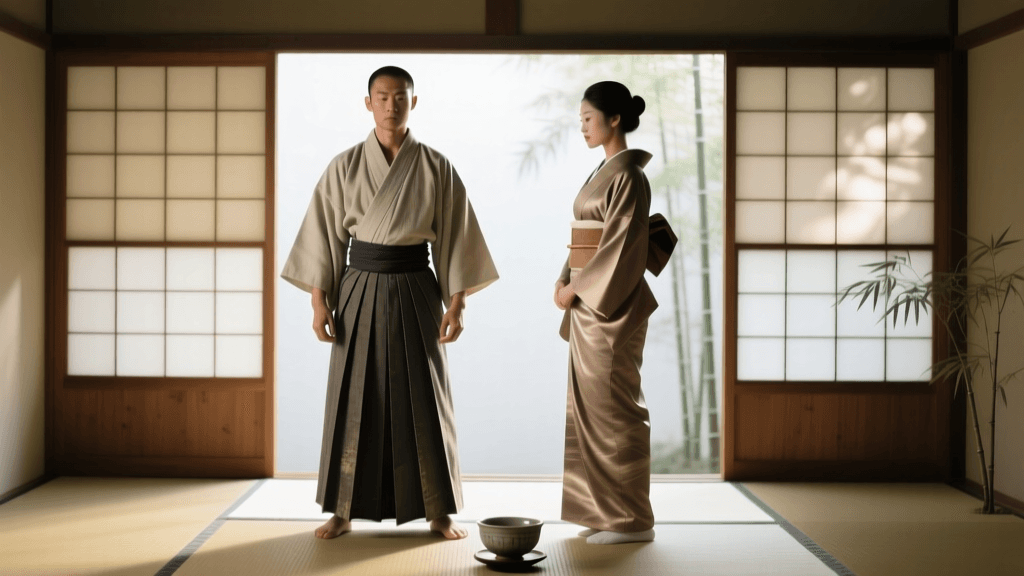
The hakama is one of the most recognizable and deeply symbolic garments in traditional Japanese culture. Originally worn by the aristocracy during the Heian period (794-1185) as a formal outer garment, it eventually evolved into the standard attire for samurai. Today, the hakama bridges the gap between rigorous physical discipline and serene spiritual practice, serving as the foundational uniform for both Japanese martial arts (Budo) and the traditional tea ceremony (Chado). While the silhouette remains largely unchanged, the fabrics, construction, and etiquette surrounding the hakama differ vastly depending on whether you are stepping onto the wooden floor of a dojo or the tatami mats of a tea room. Understanding these nuances is essential for practitioners, collectors, and enthusiasts of Asian traditional garments.
Martial Arts Hakama (Budo): Built for Movement and Discipline
In the realm of Japanese martial arts, the hakama is designed to withstand intense physical exertion, conceal footwork from opponents, and project an aura of unwavering discipline. The specific construction varies by discipline, most notably between Kendo, Aikido, and Iaido.
Kendo: Stiffness and Protection
Kendo practitioners require a hakama that holds a rigid, bell-like shape to create a commanding silhouette and obscure the movement of the feet. These are typically made from heavy, indigo-dyed cotton or a stiff polyester blend. The indigo dye (aizome) is not merely aesthetic; it possesses natural antibacterial properties that help manage odor during grueling summer practices. A high-quality, hand-dyed indigo cotton Kendo hakama can cost between $150 and $300, while a durable Tetron (polyester-rayon) blend costs around $50 to $80. According to the All Japan Kendo Federation, the proper care, folding, and wearing of the keikogi and hakama are considered fundamental to kendo etiquette and mental preparation before stepping onto the dojo floor.
Aikido and Iaido: Fluidity and Grace
Aikido and Iaido emphasize fluid, circular movements and precise sword drawing. Practitioners in these arts often prefer a softer, lighter hakama that drapes elegantly and moves seamlessly with the body. Aikido hakama are frequently made from a softer cotton sashiko weave or a lightweight Tetron blend, featuring a rubberized or flexible back plate (koshi-ita) that allows for deep kneeling (seiza) without discomfort. Iaido practitioners often opt for hakama with a slightly longer hem to accentuate the sliding footwork (suri-ashi) and may choose subtle pinstripes or solid black polyester for ease of maintenance.
Tea Ceremony Hakama (Chado): Elegance, Silk, and Stillness
Transitioning from the dynamic dojo to the serene tea room, the requirements for a hakama shift entirely from durability to aesthetic refinement and quiet elegance. In the world of Chado, particularly within the Urasenke and Omotesenke schools, the hakama is worn primarily by male practitioners during formal tea gatherings (chaji). It is important to note that female tea practitioners typically wear formal kimono (such as houmongi or tsukesage) without hakama, reserving hakama for specific Shinto rituals, graduation ceremonies, or when acting in specialized teaching capacities.
Fabrics of the Tea Room
Men attending a formal tea ceremony will wear a hakama made of high-quality silk. The most prestigious fabric for this occasion is Sendai-hira, a stiff, tightly woven silk originating from the Sendai region, characterized by its subtle, understated stripes. For summer tea ceremonies, practitioners switch to Ro or Sha, which are lightweight, breathable, and semi-transparent silks that convey a sense of coolness. Unlike martial arts hakama, which tie tightly to withstand grappling and striking, tea ceremony hakama are tied with a refined, flat bow that sits neatly against the lower back, ensuring the practitioner can sit in seiza for extended periods without the bulky knots digging into their spine. The evolution of these garments from court wear to ceremonial use is well-documented by institutions like the Victoria and Albert Museum, which highlights how the kimono and hakama adapted to reflect the shifting social and spiritual landscapes of Japan.
Feature Comparison: Budo vs. Chado Hakama
| Feature | Martial Arts (Kendo/Aikido) | Tea Ceremony (Men's Chado) |
|---|---|---|
| Primary Fabrics | Heavy Cotton, Indigo, Tetron (Polyester) | Silk (Sendai-hira, Ro, Sha) |
| Cost Estimate | $50 - $300 USD | $300 - $1,500+ USD |
| Back Plate (Koshi-ita) | Rigid plastic or rubber (Kendo); Flexible (Aikido) | Soft, padded, or absent for kneeling comfort |
| Tying Method | Complex, tight knots to secure during combat | Flat, elegant bow (Chamushubi) for seated comfort |
| Hem Length | Touches the ankle bone to hide footwork | Slightly above the ankle to prevent tripping on tatami |
The Seven Virtues of the Pleats
Regardless of whether the hakama is worn for martial arts or tea ceremony, it traditionally features seven deep pleats: five on the front and two on the back. These pleats are deeply symbolic, representing the seven virtues of Bushido (the way of the warrior), which are equally applicable to the spiritual discipline of the tea room:
- Jin (Benevolence): Compassion and empathy toward others.
- Gi (Justice): Moral integrity and doing what is right.
- Rei (Etiquette): Respect, courtesy, and proper conduct.
- Chi (Wisdom): Intelligence and the pursuit of knowledge.
- Shin (Sincerity): Honesty and truthfulness in all actions.
- Chu (Loyalty): Devotion to one's teacher, school, and principles.
- Ko (Filial Piety): Respect and care for one's parents and ancestors.
How to Measure, Fit, and Tie Your Hakama
Purchasing a hakama requires precise measurements, as an ill-fitting garment will restrict movement and look unrefined. Here is actionable advice for achieving the perfect fit:
1. Measuring the Length
Stand upright and measure from your navel (or the exact point where the front ties will rest on your waist) down to the outside of your ankle bone. For Kendo, the hem should rest exactly one inch above the floor when barefoot. For Aikido and Tea Ceremony, the hem can sit slightly higher to prevent stepping on the fabric during deep bows.
2. Measuring the Waist
Measure the circumference of your waist where the himo (ties) will wrap. Standard hakama sizes range from Size 22 (approx. 85 cm waist) to Size 30 (approx. 115 cm waist). Ensure the front ties are long enough to wrap around your waist twice and tie securely at the back, while the back ties wrap around to the front.
3. The Tying Sequence
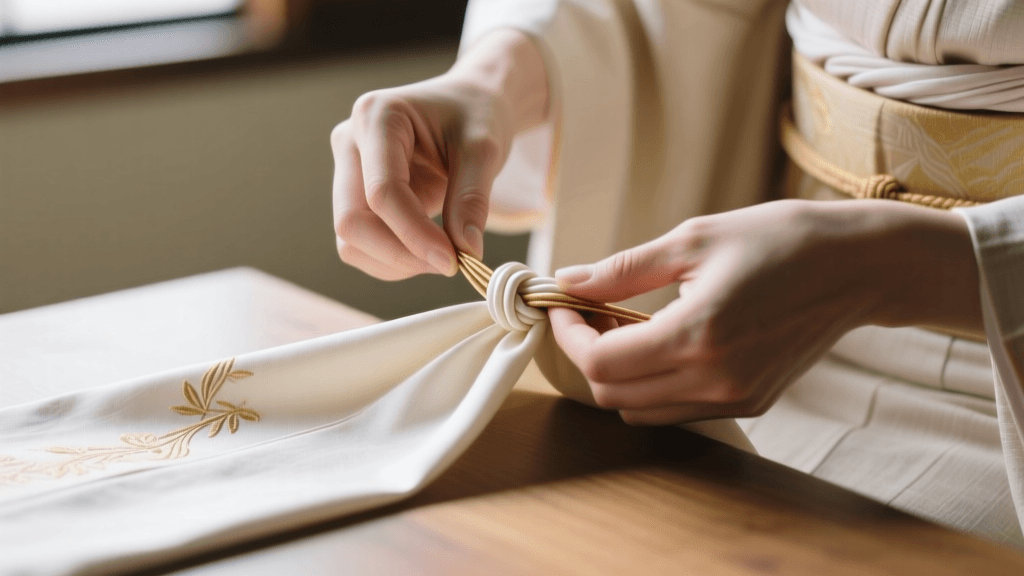
Always tie the front himo first, crossing them at the back and bringing them to the front to tie a secure square knot. Next, insert the koshi-ita (back plate) into your belt (obi), take the back himo, cross them at the front, and tie them using the specific knot required by your discipline. In martial arts, the knot is tucked in to prevent grabbing; in the tea ceremony, the knot is displayed neatly but kept flat.
Care, Washing, and Storage
Proper maintenance extends the life of your hakama and shows respect for the tradition. Indigo-dyed cotton requires special attention: for the first three washes, use only cold water with a cup of white vinegar to set the dye and prevent bleeding. Never use harsh detergents or bleach. Tetron and polyester hakama can be machine washed on a gentle, cold cycle and hung to dry. Silk tea ceremony hakama must be dry-cleaned or gently spot-cleaned with a damp silk-safe cloth.
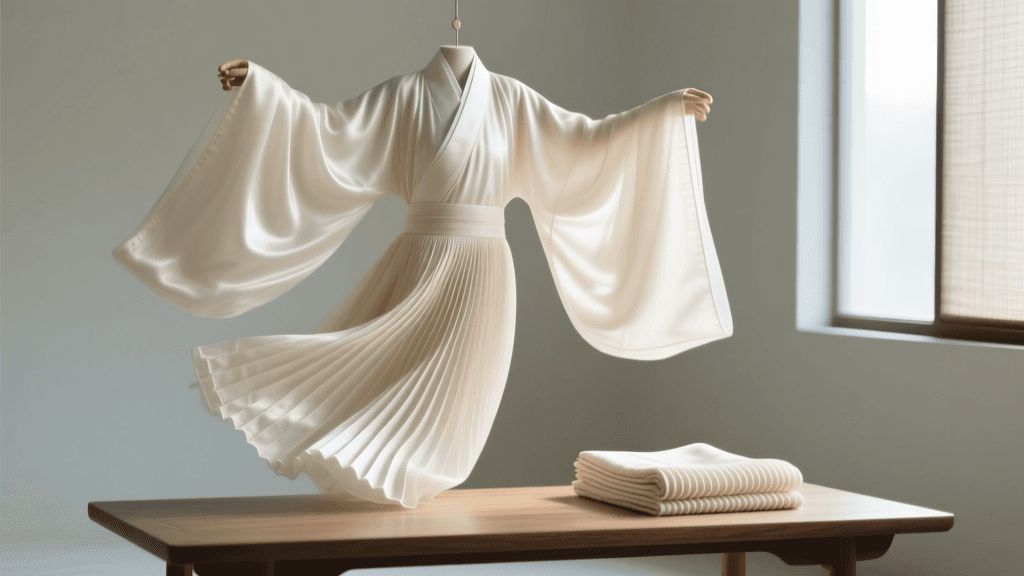
Folding the hakama is a meditative practice in itself. You must carefully align the seven pleats, ensuring the front and back folds match perfectly, before folding the garment into a neat rectangle and securing it with the himo. Storing the hakama flat or hanging it in a breathable cotton garment bag will prevent permanent creasing and protect the delicate silk or cotton fibers from moisture and moths.
'The hakama is not merely a piece of clothing; it is a physical manifestation of the wearer's mindset. How you tie it, how you move in it, and how you fold it away reflects your inner discipline and respect for the path you have chosen.'
Conclusion
Whether you are gripping a shinai in a Kendo dojo, executing a flawless throw in Aikido, or whisking matcha in a quiet tea room, the hakama serves as a vital link to Japan's rich cultural heritage. By understanding the distinct material requirements, fitting nuances, and etiquette of both martial arts and tea ceremony garments, practitioners can honor the traditions they study while ensuring their attire supports their physical and spiritual endeavors.