Kimono vs Hanbok vs Cheongsam: 2026 Comparison Guide
The Enduring Evolution of East Asian Dress in 2026
The landscape of East Asian traditional fashion has undergone a remarkable renaissance in 2026. No longer confined strictly to weddings, tea ceremonies, or coming-of-age celebrations, the kimono, hanbok, and cheongsam have been reimagined by a new generation of designers and wearers who value heritage craftsmanship alongside modern practicality. At The Garment Atlas, we frequently receive questions about the structural, cultural, and stylistic differences between these three iconic garments. Whether you are looking to commission a bespoke piece for a formal gala, integrate a modernized version into your daily capsule wardrobe, or simply understand the rich textile history of East Asia, this comprehensive 2026 comparison guide will illuminate the distinct characteristics of Japan’s kimono, Korea’s hanbok, and China’s cheongsam.
The Kimono: Linear Elegance and Structured Layers
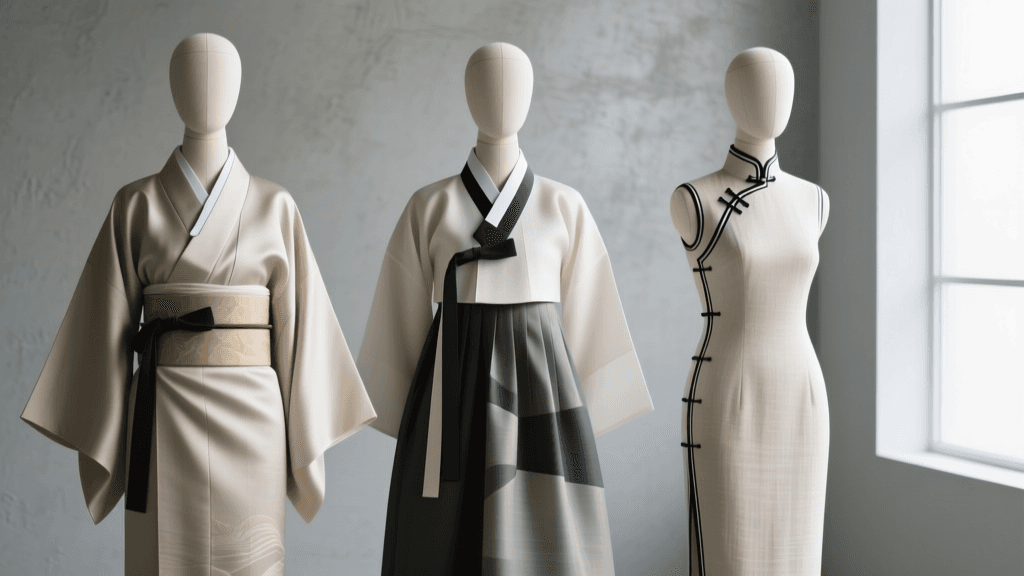
The Japanese kimono is globally recognized for its T-shaped, straight-lined construction. Unlike Western tailoring, which relies on darts and curved seams to follow the contours of the body, the kimono is constructed from straight bolts of fabric (tanmono) with minimal cutting. This zero-waste approach to pattern-making has seen a massive resurgence in 2026 as the sustainable fashion movement prioritizes textile conservation.
As noted by the Encyclopedia Britannica, the kimono's fundamental structure has remained remarkably consistent for centuries, yet the materials and styling have evolved. In 2026, the most significant innovation in kimono wear is the widespread adoption of advanced washable silk alternatives and bio-engineered fibers that mimic the drape of traditional chirimen (crepe silk) without the need for specialized dry cleaning. Brands like Chiso have introduced eco-conscious lines that retain the prestige of Yuzen dyeing while offering machine-washable practicality for everyday wear.
The silhouette is defined not by the garment's fit, but by the obi (sash) and the layering beneath it. The straight seams create a cylindrical, elongated profile that is universally flattering. Modern styling in 2026 frequently pairs a vintage or modernized haori (kimono jacket) with high-waisted wide-leg trousers, bridging the gap between traditional Japanese aesthetics and contemporary streetwear.
The Hanbok: Volumetric Grace and Curved Seams
In stark contrast to the linear kimono, the Korean hanbok is defined by its curved lines, vibrant colors, and volumetric silhouettes. The traditional women’s hanbok consists of the jeogori (a short, cropped jacket) and the chima (a full, bell-shaped wrap skirt). The men’s hanbok pairs the jeogori with baji (roomy, tied trousers). The beauty of the hanbok lies in its architectural volume and the way the fabric moves with the wearer.
According to cultural historians at Britannica, the hanbok's design reflects a deep connection to nature and traditional Korean philosophy, with the curved lines of the baerae (the bottom curve of the jeogori's sleeves) mimicking the gentle slopes of traditional Korean hanok roofs. In 2026, the 'Gaeryang Hanbok' (modernized hanbok) movement has fully matured. Contemporary designers are utilizing sustainable hemp blends, recycled polyesters, and smart-textiles that adjust to body temperature, making the hanbok a viable option for year-round office wear and casual outings.
The modern 2026 hanbok often features a slightly elongated jeogori for modesty and convenience, paired with an A-line chima that drops from the bust rather than the traditional high-waist tie. This structural tweak allows for easier movement and seamless integration with modern footwear, from sleek loafers to minimalist sneakers.
The Cheongsam: Sculpted Silhouettes and Bespoke Tailoring
The cheongsam, also widely known as the qipao, represents the pinnacle of form-fitting, sculpted tailoring in East Asian dress. Originating in the 1920s in Shanghai as a symbol of modern femininity and liberation, the cheongsam is characterized by its high mandarin collar, asymmetric diagonal opening, and intricate pankou (frog buttons). Unlike the kimono’s hidden ties or the hanbok’s wrap skirts, the cheongsam relies on precise, bespoke tailoring to flatter the wearer's natural curves.
The Metropolitan Museum of Art’s Asian Art Department highlights the intricate textile traditions and tailoring evolution of Chinese dress, noting how the qipao absorbed Western darting techniques in the mid-20th century to achieve its iconic skin-tight silhouette. In 2026, bespoke cheongsam tailoring has been revolutionized by 3D body scanning technology. Master tailors in Shanghai, Hong Kong, and Singapore now use micro-millimeter scanning to place darts and gussets with mathematical perfection, eliminating the pulling and gaping that plagued poorly fitted, mass-produced versions of the past.
For 2026, the trend leans toward 'modular cheongsams'—garments featuring detachable collars, adjustable side slits, and stretch-silk blends that accommodate a dynamic lifestyle. It is increasingly common to see the cheongsam styled as a sophisticated tunic over tailored cigarette pants or as a sleek midi-dress for corporate boardrooms and evening galas alike.
2026 Comparison Matrix: Silhouette, Cost, and Construction
To help you navigate your next sartorial investment, we have compiled a comprehensive comparison of these three garments based on 2026 market data, construction methods, and styling applications.
| Feature | Kimono (Japan) | Hanbok (Korea) | Cheongsam / Qipao (China) |
|---|---|---|---|
| Primary Silhouette | Linear, cylindrical, T-shaped | Volumetric, bell-shaped, curved | Form-fitting, sculpted, darted |
| Construction Method | Straight seams, zero-waste cutting | Curved sleeves, gathered skirts | Western-style darts, gussets, side slits |
| Primary Fastening | Obi (sash) and hidden ties (koshihimo) | Wrap ties, ribbon bows (goreum) | Frog buttons (pankou), hidden side zippers |
| 2026 Avg. Bespoke Cost | $2,500 - $5,000+ (Silk) | $1,200 - $2,800 (Traditional Silk) | $1,500 - $4,000 (Custom Tailored) |
| 2026 Modern RTW Cost | $300 - $800 (Washable blends) | $150 - $450 (Gaeryang styles) | $250 - $900 (Stretch-silk blends) |
| Best Modern Occasion | Tea ceremonies, galas, layered streetwear | Festivals, weddings, modern office wear | Corporate events, cocktail parties, formal dining |
Modern Sourcing and 2026 Pricing Realities
Sourcing authentic, high-quality traditional garments requires navigating a market that is currently split between heritage artisans and modern fast-fashion replicas. In 2026, the most reliable way to acquire a genuine kimono is through established dealers in Kyoto or Tokyo's Nihonbashi district, or via certified online heritage platforms that provide provenance for vintage silk pieces. For the hanbok, Seoul's Bukchon Hanok Village remains the epicenter for bespoke traditional tailoring, while the Dongdaemun Design Plaza hosts the vanguard of modern Gaeryang Hanbok designers.
For the cheongsam, the gold standard remains the master tailors of Hong Kong and Shanghai. However, due to rising labor costs and a shortage of master artisans capable of hand-rolling pankou buttons, the price of a fully bespoke, hand-finished qipao has risen by approximately 18% since 2024. Buyers looking for investment pieces should expect to pay a premium for hand-embroidered Suzhou silk and custom-dyed brocades.
Care, Maintenance, and Smart Storage
The preservation of these garments has been vastly improved by 2026's smart-home technology. Traditional silks are highly susceptible to humidity fluctuations and light damage. Today, collectors and enthusiasts utilize smart, climate-controlled wardrobe modules that maintain a constant 50% humidity and block UV degradation. For cleaning, the shift away from harsh chemical dry-cleaning has led to the rise of ultrasonic textile cleaning services, which use high-frequency sound waves and biodegradable solvents to lift stains from delicate Yuzen dyes and gold-leaf embroidery without damaging the fibers.
Whether you are drawn to the structured, meditative layers of the kimono, the sweeping, joyful volume of the hanbok, or the sleek, empowering lines of the cheongsam, understanding their unique constructions is the first step toward wearing them with confidence and respect. In 2026, these garments are not merely relics of the past; they are living, breathing components of a global wardrobe that honors history while boldly stepping into the future.