Kimono vs Hanbok vs Cheongsam: 2026 Sourcing and Styling Guide
The Renaissance of Asian Traditional Garments in 2026
The global appreciation for traditional Asian garments has evolved far beyond mere costume or ceremonial wear. In 2026, the kimono, hanbok, and cheongsam (qipao) are experiencing a renaissance, driven by a renewed interest in slow fashion, heritage craftsmanship, and sustainable textiles. For collectors, fashion enthusiasts, and cultural historians, understanding the distinct construction, silhouette, and modern styling potential of these three iconic garments is essential.
While they share a foundation in Asian sartorial history, the Japanese kimono, Korean hanbok, and Chinese cheongsam represent vastly different approaches to the human form, fabric manipulation, and social expression. This comprehensive guide breaks down the unique characteristics of each garment, offering actionable advice on sourcing authentic pieces, understanding 2026 market pricing, and integrating them into a contemporary wardrobe.
The Kimono: Japan's Linear Masterpiece
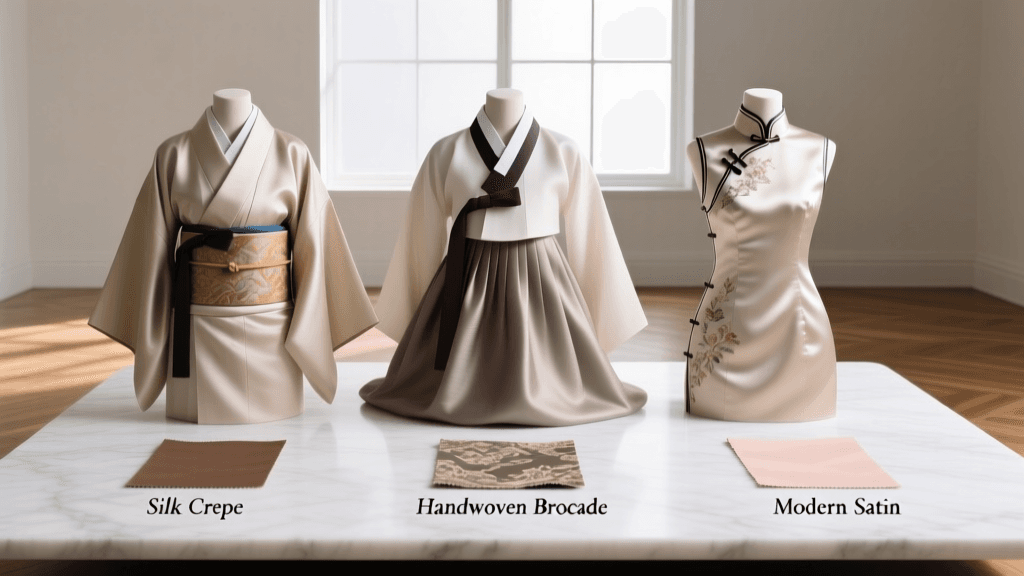
The word 'kimono' translates simply to 'thing to wear,' yet its construction is a marvel of geometric precision. Unlike Western tailoring, which cuts fabric to follow the curves of the body, the kimono is constructed from straight bolts of fabric called tanmono. This results in the iconic T-shape, where the garment hangs linearly, concealing the body's natural contours while providing a canvas for extraordinary textile art.
Construction and Textiles
A traditional kimono is made from approximately 36-centimeter-wide fabric strips, sewn together with straight seams. The aesthetic focus is entirely on the surface design and the obi (the wide sash). According to the Metropolitan Museum of Art, the kimono's flat structure allows it to be easily folded, stored, and even disassembled for cleaning or re-dyeing. In 2026, premium kimono textiles feature revitalized yuzen (resist dyeing) techniques and sustainable Nishijin-ori brocades woven with recycled metallic threads.
2026 Pricing and Sourcing
- Vintage Market (Kyoto/Tokyo): Authentic, pre-owned silk kimono in excellent condition range from $150 to $600. Vintage haori (jackets) are highly sought after, starting at $80.
- Modern Bespoke: A newly commissioned, hand-painted silk kimono with a matching brocade obi from a Kyoto atelier will cost between $4,500 and $12,000 in 2026.
- Where to Buy: For vintage, reputable online exporters like Kimono Yamato or specialized Tokyo-based auction houses offer authenticated pieces with detailed flaw reports.
Modern Styling
The most prominent 2026 styling trend involves the haori. Rather than full traditional kitsuke (the complex art of dressing in a kimono), fashion-forward individuals are pairing vintage silk haori with tailored denim, crisp white button-downs, and minimalist leather boots. This juxtaposes the intricate Japanese textile art with utilitarian Western basics, creating a striking, culturally respectful fusion.
The Hanbok: Korea's Voluminous Grace
The Korean hanbok is defined by its dynamic silhouette: a snug, structured top contrasting with a dramatically voluminous bottom. This design philosophy creates a sense of flowing movement and elegant grace, historically allowing the wearer to sit comfortably on the floor while maintaining a regal posture.
Construction and Textiles
The women's hanbok consists of the jeogori (a short jacket with long, curved sleeves) and the chima (a high-waisted, full wrap skirt). The visual anchor of the jeogori is the goreum, the long ribbon tied at the chest, and the dongjeong, a crisp white detachable collar that frames the face. As noted by Encyclopedia Britannica, the hanbok's vibrant colors and patterns historically signaled the wearer's social status and marital situation. Today, 2026 textile innovations include lightweight, crush-resistant organza and vegan peace-silk that hold the chima's bell shape without the need for heavy, uncomfortable petticoats.
2026 Pricing and Sourcing
- Modern Daily Hanbok (Seoul): Brands specializing in 'daily hanbok' (simplified, machine-washable versions) price their sets between $180 and $450.
- Bespoke Ceremonial Hanbok: A fully custom, traditional silk wedding or ceremonial hanbok from a master artisan in the Bukchon Hanok Village ranges from $1,200 to $3,500.
- Where to Buy: Seoul's Dongdaemun Design Plaza (DDP) houses flagship stores for modern hanbok designers. Online, platforms like Etsy feature independent Korean designers shipping globally, but buyers must verify the origin of the silk.
Modern Styling
The 'modern hanbok' movement has fully matured by 2026. The contemporary chima is often tailored to midi-length, making it practical for office environments and urban commuting. Stylists recommend pairing a minimalist, solid-color jeogori with wide-leg trousers instead of a skirt for a sharp, androgynous look that honors Korean heritage while embracing modern gender-fluid fashion.
The Cheongsam (Qipao): China's Tailored Sophistication
Unlike the linear kimono or the voluminous hanbok, the cheongsam (widely known in the West as the qipao) is celebrated for its form-fitting silhouette. Originating in the 1920s in Shanghai, it represents a fascinating intersection of traditional Manchu dress and Western tailoring techniques, designed to celebrate the natural curves of the body.
Construction and Textiles
The hallmarks of the cheongsam are the panyu (intricate knotted frog closures), the stiff mandarin collar, and the daring side slits that allow for movement. The construction requires master-level tailoring, utilizing darts and precise bias cutting to mold the fabric to the wearer's body. According to cultural historians referenced by Encyclopedia Britannica, the qipao evolved from a loose, modest garment into the sleek, iconic symbol of modern femininity. In 2026, Shanghai tailors are utilizing 3D body-scanning technology to achieve flawless bespoke fits, employing stretch-silk blends and sustainable bamboo brocades.
2026 Pricing and Sourcing
- Ready-to-Wear (Hong Kong/Shanghai): High-quality, off-the-rack cheongsams from heritage brands like Shanghai Tang or Blancore start at $400 and can reach $1,500.
- Bespoke Tailoring: A custom-made cheongsam from a master tailor on Shanghai's Changle Road, including premium silk brocade and hand-knotted frog buttons, costs between $800 and $2,500 in 2026.
- Where to Buy: For authentic bespoke pieces, traveling to Shanghai or Hong Kong remains the gold standard. However, specialized boutiques in London, New York, and Paris now employ master tailors trained in the traditional Shanghai method.
Modern Styling
In 2026, the cheongsam is frequently deconstructed for daily wear. Sleeveless, midi-length qipaos in matte cotton or linen are worn as sophisticated summer dresses, while heavy winter velvet versions are styled with sheer black turtlenecks underneath and knee-high leather boots. The key to modern styling is avoiding overly ornate, shiny brocades unless attending a formal evening event; matte fabrics and subtle geometric prints translate best to the boardroom or a gallery opening.
Comparative Analysis: Silhouette, Care, and Occasion
To help collectors and buyers navigate their choices, the following table outlines the core differences between these three garments as of the 2026 market.
| Feature | Kimono (Japan) | Hanbok (Korea) | Cheongsam (China) |
|---|---|---|---|
| Primary Silhouette | Linear, T-shaped, cylindrical | Voluminous bottom, structured top | Form-fitting, tailored, side slits |
| Fastening Method | Obi sash (no buttons) | Goreum (tied ribbon) | Panyu (knotted frog closures) |
| Best 2026 Occasion | Cultural events, layered outerwear | Festivals, weddings, daily modern wear | Formal dinners, business chic, evening |
| Average Bespoke Cost | $4,500 - $12,000 | $1,200 - $3,500 | $800 - $2,500 |
| Maintenance & Care | Professional spot cleaning, air out | Dry clean silk; machine wash modern | Strictly dry clean; store flat or padded |
Actionable Advice for Sourcing and Measuring in 2026
Whether you are investing in a vintage kimono or commissioning a bespoke cheongsam, precise knowledge is your best tool against the proliferation of fast-fashion, culturally appropriated knockoffs that flood e-commerce platforms.
1. Verify the Textile Origin
Authenticity lies in the fabric. For kimono, look for the tanmono width (approx. 36cm); if the fabric panels are wider, it is likely a modern, non-traditional reproduction. For hanbok, genuine traditional silk has a distinct, slightly stiff rustle, whereas cheap polyester replicas feel overly slippery and lack structural integrity. For the cheongsam, examine the frog closures (panyu); on authentic garments, these are meticulously hand-wired and knotted from the same fabric as the dress, not glued or machine-stitched on.
2. Master the Measurements
Western sizing is largely irrelevant in traditional Asian garments.
- Kimono: The critical measurement is the yuki (center back to wrist). A kimono's length can be adjusted by folding at the waist, but the sleeve span must closely match your arm span.
- Hanbok: The chima is universally sized by waist, as it ties above the bust. The jeogori requires precise shoulder and sleeve measurements, as it must sit perfectly on the collarbone.
- Cheongsam: Requires a minimum of 12 distinct measurements, including the high bust, under bust, high hip, low hip, and the exact distance from the collarbone to the desired slit height.
3. Ethical Sourcing and Preservation
The 2026 market heavily favors sustainability. When purchasing vintage kimono, you are participating in a circular economy, rescuing incredible mid-century artistry from landfills. When buying new, seek out ateliers that utilize peace silk (where the moth is allowed to emerge from the cocoon) and natural plant dyes like indigo and madder root. Store all silk garments in breathable, unbleached cotton bags, away from direct sunlight, and never hang a heavy kimono or cheongsam on a wire hanger, as the weight of the silk will distort the shoulders over time.
Investing in traditional Asian garments is not merely about acquiring clothing; it is about becoming a custodian of living history. The meticulous craftsmanship of a hand-tied hanbok goreum or a perfectly aligned cheongsam brocade pattern represents centuries of cultural evolution, preserved in silk and thread.
By understanding the distinct architectural differences between the kimono, hanbok, and cheongsam, buyers in 2026 can make informed, respectful, and deeply personal additions to their wardrobes, ensuring these magnificent traditions continue to thrive on the global stage.