Kimono vs Hanbok vs Cheongsam: 2026 Formal Wear Guide
The Enduring Elegance of Asian Formal Wear in 2026
As global fashion continues to embrace cultural heritage, the year 2026 has seen a massive resurgence in the demand for traditional Asian garments for formal events, weddings, and galas. Among the most iconic and highly sought-after pieces are the Japanese kimono, the Korean hanbok, and the Chinese cheongsam (also known as the qipao). While all three garments serve as profound expressions of cultural identity, their construction, silhouettes, and styling requirements differ vastly. For collectors, brides, and formal event attendees in 2026, understanding these nuances is essential for making informed purchasing and styling decisions.
In this comprehensive guide, we compare the kimono, hanbok, and cheongsam across critical metrics including silhouette, fabric technology, bespoke tailoring costs, and modern styling applications. Whether you are attending a high-society gala in Shanghai, a traditional wedding in Seoul, or a tea ceremony in Kyoto, this analysis will help you choose the perfect garment for your 2026 calendar.
The Kimono: Japan's T-Shaped Masterpiece
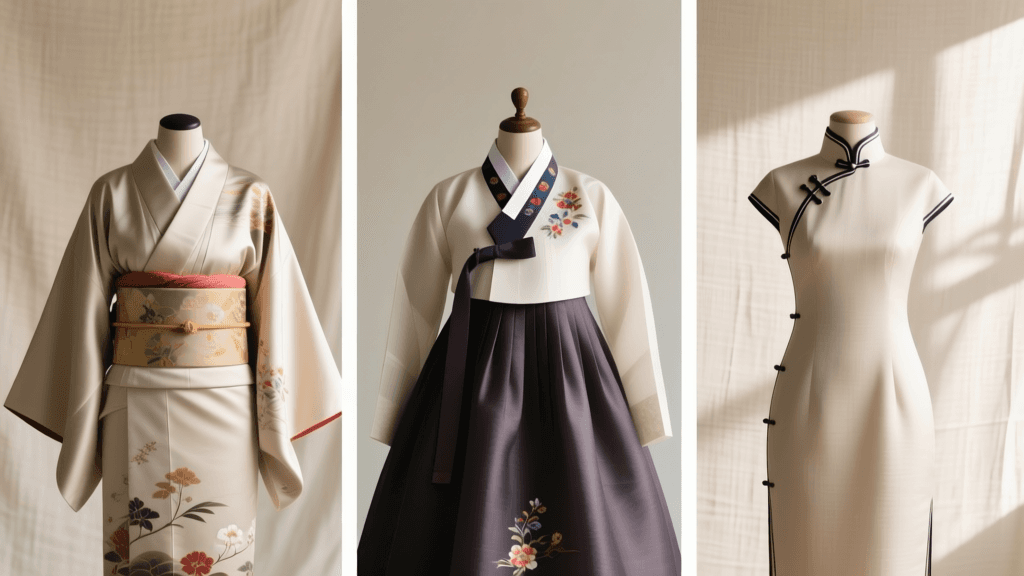
The kimono is arguably the most structurally complex of the three garments. Characterized by its T-shaped, straight-line construction, the kimono relies entirely on the art of folding and wrapping rather than tailoring to the body's curves. According to the Victoria and Albert Museum, the kimono's flat pattern cutting is a masterclass in zero-waste textile design, a principle that has heavily influenced sustainable fashion movements in 2026.
Formality and 2026 Silhouettes
For formal events, the choice of kimono is strictly dictated by the wearer's marital status and the event's prestige. Unmarried women typically wear the furisode, characterized by long, swinging sleeves that can measure up to 114 centimeters in length. Married women opt for the kurotomesode (black with patterns only below the waist) or iro-tomesode (colored with similar hem patterns). In 2026, we are seeing a major trend toward upcycled vintage silks, where master artisans in Kyoto are reweaving damaged antique Nishijin-ori brocades into modern, lightweight formal kimono that are easier to wear for extended periods.
Bespoke Costs and Dressing Time
The true cost of a formal kimono extends beyond the garment itself. A bespoke silk furisode in 2026 ranges from $4,500 to $12,000, depending on the complexity of the hand-painted Yuzen dye work. However, the hidden cost lies in the accessories: the obi (sash), obijime (cord), zori (sandals), and specialized undergarments (nagajuban). Furthermore, dressing in a formal kimono requires a professional kitsuke (dressing) service, which takes approximately 45 to 60 minutes and costs around $150 to $250 per session in major metropolitan areas.
The Hanbok: Korea's Voluminous Grace
The traditional Korean hanbok is celebrated for its vibrant colors, elegant curves, and voluminous silhouette. Comprising the jeogori (short jacket) and the chima (full, bell-shaped skirt) for women, the hanbok is designed to obscure the natural lines of the body, creating a flowing, ethereal movement. As noted by Encyclopædia Britannica, the hanbok's structural integrity relies on the use of natural, unstructured fabrics that allow for dynamic movement and exceptional comfort.
Modern Adaptations and Fabric Innovations
While traditional formal hanbok, such as the hwalot (bridal robe) or wonsam (court ceremonial dress), remain highly elaborate, the 2026 formal event scene is dominated by modernized formal hanbok. Designers are utilizing ultra-lightweight Myeongju silk and incorporating subtle metallic threading that catches the light during evening galas. The saekdong (color-striped) sleeves, once reserved for children's festive wear, have been reimagined in muted, pastel palettes for adult formalwear, offering a contemporary nod to historical roots.
2026 Pricing and Accessibility
Compared to the kimono, the hanbok is significantly more accessible in terms of both price and wearability. A high-end, bespoke formal hanbok crafted from premium domestic silk typically costs between $1,200 and $3,500 in 2026. Because the hanbok is secured with a simple goreum (ribbon tie) and lacks the restrictive wrapping of a kimono, wearers can dress themselves in under ten minutes, eliminating the need for professional dressing assistants.
The Cheongsam (Qipao): China's Sculpted Elegance
In stark contrast to the voluminous hanbok and the wrapped kimono, the Chinese cheongsam (qipao) is renowned for its body-hugging, sculpted silhouette. Originating in the 1920s and evolving through decades of sartorial refinement, the modern cheongsam features a high Mandarin collar, an asymmetric front opening secured by intricate pankou (knotted buttons), and strategic side slits. Britannica's guide to the Qipao highlights how the garment perfectly bridges the gap between traditional Chinese tailoring and Western structural darts, creating a uniquely flattering fit.
Tailoring and 2026 Fabric Trends
The cheongsam is entirely unforgiving of poor tailoring. In 2026, the most coveted formal cheongsams are crafted from Xiangyunsha, a rare, mud-dyed silk from Guangdong province known for its leather-like texture, cooling properties, and deep, earthy hues. Because the garment relies on precise darting to contour the bust, waist, and hips, bespoke tailoring is mandatory for formal events. Master tailors in Shanghai and Hong Kong now utilize 3D body scanning technology to ensure millimeter-perfect fits, seamlessly integrating traditional hand-stitching with modern precision.
Bespoke Costs and Styling
A bespoke formal cheongsam made from authentic Xiangyunsha silk or intricate Shu brocade ranges from $2,000 to $6,000 in 2026. The styling is inherently minimalist; because the garment's patterns and tailoring are so commanding, heavy jewelry is often avoided. Instead, wearers opt for jade pendants, pearl drop earrings, and sleek, low-bun hairstyles to maintain the garment's sophisticated vertical lines.
Head-to-Head Comparison Chart
To help you make an informed decision for your next formal engagement, we have compiled a comprehensive comparison of the three garments based on 2026 market data and styling metrics.
| Feature | Kimono (Japan) | Hanbok (Korea) | Cheongsam / Qipao (China) |
|---|---|---|---|
| Primary Silhouette | T-shaped, straight, wrapped | Bell-shaped, voluminous, flowing | Body-hugging, sculpted, tailored |
| Fastening Method | Obi sash, ties, clips | Goreum (front ribbon tie) | Pankou (knotted fabric buttons) |
| Dressing Time | 45 - 60 minutes (requires pro) | 5 - 10 minutes (self-dress) | 5 - 15 minutes (self-dress) |
| 2026 Bespoke Cost | $4,500 - $12,000+ | $1,200 - $3,500 | $2,000 - $6,000 |
| Best Formal Event | Tea ceremonies, traditional weddings | Chuseok, weddings, cultural galas | Evening galas, banquets, red carpets |
| Climate Comfort | Heavy (layered), best for cool weather | Breathable, excellent for all seasons | Lightweight, ideal for warm climates |
Practical Buying and Sourcing Advice for 2026
If you are planning to invest in any of these traditional garments this year, understanding the sourcing landscape is crucial. The global supply chain for premium heritage silks has tightened in 2026, making early commissioning essential.
Commissioning a Kimono
For authentic formal kimono, bypass commercial export sites and work directly with established ateliers in Kyoto's Nishijin district or Tokyo's Nihonbashi. Expect a lead time of six to nine months for bespoke weaving and Yuzen dyeing. If you are on a stricter timeline, the 2026 vintage market is thriving; certified vintage dealers offer fully restored Showa-era formal kimono that meet modern hygiene and structural standards at a fraction of the bespoke cost.
Ordering a Hanbok
The hanbok market is highly digitized. Brands like Leesle and Sonjjang offer exceptional modern-formal hybrid pieces that can be ordered online with custom measurements. For traditional court-level formalwear, visiting a master artisan in the Bukchon Hanok Village in Seoul is highly recommended. Ensure you request myeongju (raw silk) or high-grade ramie for the best structural drape and longevity.
Tailoring a Cheongsam
Never purchase a formal cheongsam off-the-rack. The magic of the qipao lies in its bespoke fit. When consulting a tailor in 2026, bring the exact undergarments and shoes you plan to wear, as the hem length and bust darting are calculated down to the millimeter. Ask your tailor about the guixiang (returning to the hometown) technique, a modern 2026 tailoring trend that incorporates hidden stretch panels in the side seams, allowing for greater mobility during long banquet dinners without compromising the sleek exterior silhouette.
Final Thoughts on Cultural Formalwear
The kimono, hanbok, and cheongsam are far more than mere clothing; they are living archives of Asian artistry, philosophy, and social history. As we move through 2026, the integration of sustainable silk farming, 3D-assisted tailoring, and modern styling adaptations ensures that these garments will remain relevant and breathtaking for generations to come. Whether you choose the architectural wrap of the kimono, the ethereal flow of the hanbok, or the sculpted grace of the cheongsam, you are investing in a masterpiece of global heritage.