Kimono vs Hanbok vs Cheongsam: 2026 Fit & Style Guide
East Asia’s Sartorial Icons: Navigating Traditional Garments in 2026
As global fashion continues to draw profound inspiration from heritage textiles, the kimono, hanbok, and cheongsam remain three of the most recognizable and culturally significant garments in the world. However, wearing these iconic pieces in 2026 requires more than just an appreciation for their history; it demands an understanding of their distinct structural differences, modern styling adaptations, and precise fitting requirements. Whether you are attending a formal tea ceremony in Kyoto, a Chuseok celebration in Seoul, or a high-society wedding in Shanghai, choosing the right traditional garment involves navigating unique silhouettes, specialized undergarments, and evolving textile innovations.
In recent years, the intersection of heritage craftsmanship and modern technology has transformed how these garments are sourced, tailored, and worn. From AI-assisted bespoke tailoring for the cheongsam to sustainable, upcycled silk markets for the kimono, the landscape of East Asian traditional dress is vibrant and continually evolving. According to the Victoria and Albert Museum's Asian textile archives, contemporary designers are increasingly blending historical motifs with eco-conscious fabrics, making these garments more accessible and wearable for daily life than they have been in decades.
This comprehensive guide compares the Japanese kimono, Korean hanbok, and Chinese cheongsam (qipao), providing actionable advice on fit, 2026 pricing, fabric care, and cultural etiquette to help you wear these masterpieces with confidence and respect.
The Kimono: Structured Elegance and the Art of Folding
2026 Silhouette and Construction
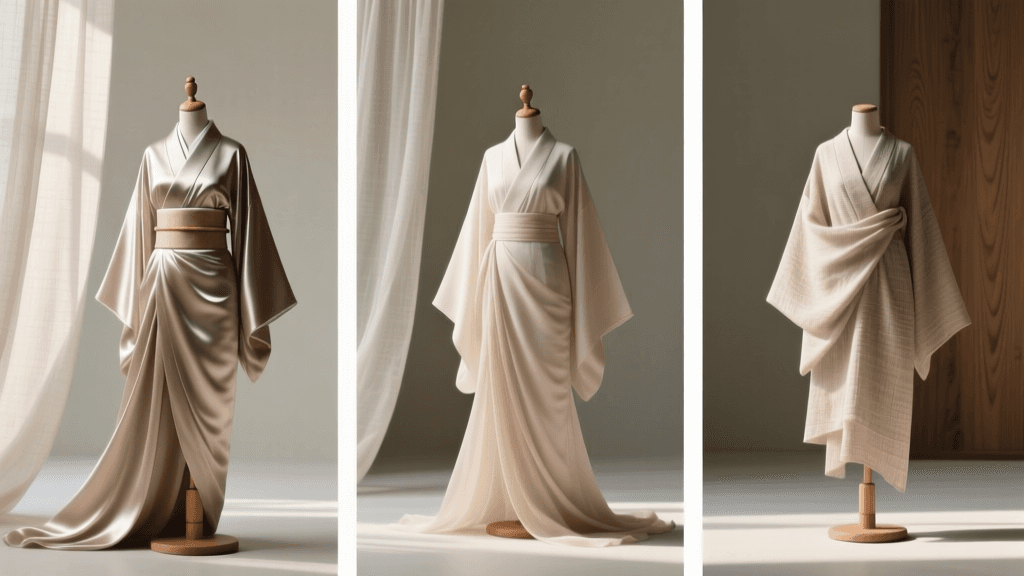
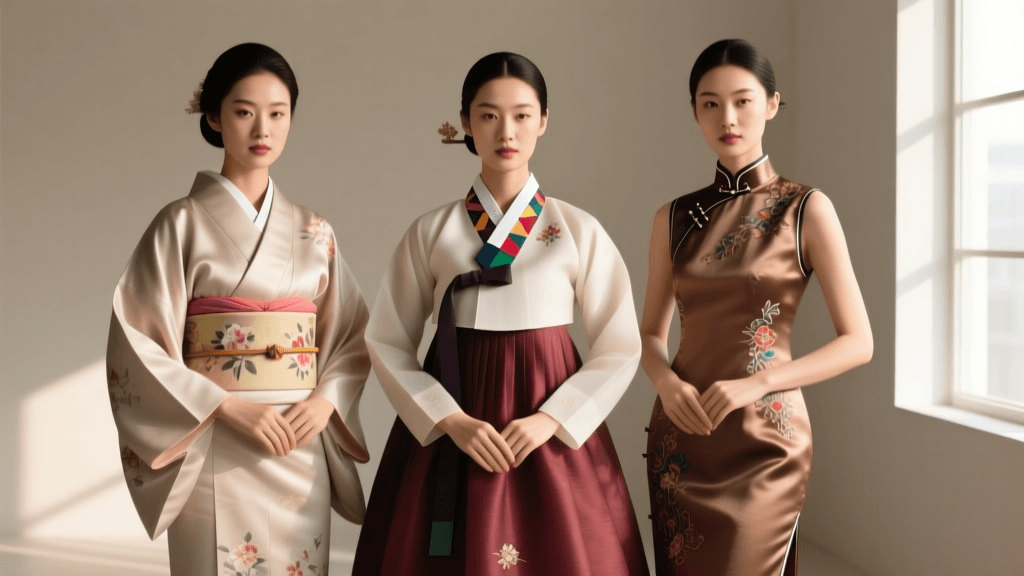
The Japanese kimono is defined by its T-shaped, straight-seamed construction. Unlike Western garments that are cut to follow the curves of the body, the kimono is a flat, rectangular canvas that relies on precise folding and wrapping to create its silhouette. In 2026, the most prominent trend in kimono styling is the 'neo-vintage' movement, where younger generations in Tokyo are mixing Showa-era vintage silks with contemporary, minimalist obi (sashes) made from sustainable hemp or recycled polyester blends.
The garment is always wrapped left over right (right over left is strictly reserved for dressing the deceased). The neckline is kept relatively tight at the nape, while the back is pulled down slightly to expose the neck, a traditional point of elegance in Japanese aesthetics.
Sizing, Measurements, and the Ohashori
Kimono sizing is notoriously complex for beginners because the garment is not tailored to the wearer's width, but rather to their height. The standard width of a kimono bolt (tanmono) is roughly 36 centimeters, meaning the garment wraps around the body with a specific overlap. If the wearer is wider, custom panels or specialized wrapping techniques are required.
The most critical adjustment is the ohashori—the horizontal fold at the waist that allows a long kimono to be adjusted to the wearer's exact height. In 2026, many rental shops and modern tailors offer 'pre-folded' or 'two-piece' kimonos for tourists and busy professionals, which eliminate the need for complex waist folding while maintaining the traditional aesthetic.
- Height Measurement: The ideal kimono length is your exact height plus 10-15 centimeters to allow for the ohashori fold.
- Hip Consideration: Wearers with wider hips must ensure the front panels overlap sufficiently to prevent the undergarments from showing when walking.
2026 Pricing and Sourcing
Sourcing a kimono in 2026 ranges from highly affordable vintage markets to luxury bespoke commissions. A high-quality, vintage silk komon (everyday patterned kimono) can be found in Tokyo's Shimokitazawa district for between 5,000 and 15,000 JPY ($35 - $100 USD). Conversely, a brand-new, custom-woven silk kimono with hand-painted yuzen dyeing from a master artisan in Kyoto will easily exceed 500,000 JPY ($3,400 USD), not including the obi and accessories.
The Hanbok: Voluminous Grace and Modern Adaptation
2026 Silhouette and Construction
The Korean hanbok is celebrated for its vibrant colors, flowing lines, and voluminous silhouette. For women, the traditional ensemble consists of the jeogori (a short, cropped jacket) and the chima (a full, high-waisted wrap skirt). For men, it comprises the jeogori and baji (roomy, tie-waist trousers). The beauty of the hanbok lies in its fluidity; the garments do not cling to the body but instead create a bell-like shape that moves gracefully with the wearer.
According to Korea.net's cultural heritage portal, the 'Saenghwal Hanbok' (daily life hanbok) movement has reached new heights in 2026. Modern iterations feature shorter, more practical skirts, machine-washable cotton-linen blends, and subtle, muted pastel palettes that integrate seamlessly into contemporary office and streetwear environments in Seoul.
Sizing and the Goreum Tie
Unlike the kimono, the hanbok is relatively forgiving in terms of precise body measurements, thanks to its adjustable tie systems. The chima is secured high on the chest, just below the collarbone, using long ribbons. The jeogori is fastened with the goreum, a long, elegant ribbon tie that serves both a functional and decorative purpose.
- Chest and Waist: Because the skirt sits above the natural waist, traditional bust and waist measurements are less critical. The primary measurement needed is the chest circumference and the shoulder-to-wrist length for the jeogori sleeves.
- Length: Traditional chima grazes the floor, but 2026 modern hanbok styles frequently feature midi-length skirts that end at the calf for ease of movement on public transit.
2026 Pricing and Sourcing
Renting a traditional hanbok near Seoul's Gyeongbokgung Palace remains a popular tourist activity, costing around 20,000 to 30,000 KRW ($15 - $22 USD) for a few hours. For those looking to purchase, a custom-tailored modern Saenghwal Hanbok made from premium domestic ramie or silk blends typically costs between 150,000 and 350,000 KRW ($110 - $260 USD). High-end ceremonial hanbok, featuring intricate gold-leaf (geumbak) stamping, can cost upwards of 1,500,000 KRW ($1,100 USD).
The Cheongsam (Qipao): Sculpted Lines and Bespoke Precision
2026 Silhouette and Construction
Originating in 1920s Shanghai, the cheongsam (or qipao) is the epitome of tailored elegance. Characterized by its form-fitting silhouette, high mandarin collar, asymmetrical opening, and intricate frog button closures (pankou), the cheongsam is designed to celebrate the natural curves of the body. In 2026, the 'daily qipao' trend has popularized garments with lower, more discreet side slits, hidden side zippers for ease of wear, and breathable crepe de chine fabrics that drape beautifully without restricting movement.
As documented in the Metropolitan Museum of Art's Asian Art collection, the evolution of the qipao reflects a century of cross-cultural exchange, blending Manchu heritage with Western tailoring techniques. Today, avant-garde designers are incorporating 3D-printed floral motifs and lab-grown spider silk blends to push the boundaries of traditional qipao construction.
Measurements and the Bespoke Process
Because the cheongsam is meant to fit like a second skin, off-the-rack sizing is rarely ideal. A proper qipao requires a meticulous bespoke measuring process. In 2026, many high-end tailors in Shanghai and Hong Kong utilize AI-assisted 3D body scanning to capture over 40 distinct micro-measurements, ensuring the garment accommodates the wearer's posture, shoulder slope, and natural movement.
- Crucial Measurements: Bust, natural waist, hips, hollow-to-hem (collarbone to desired hemline), and the precise circumference of the neck for the mandarin collar.
- The Dart System: Unlike the flat kimono, the cheongsam relies on complex bust and waist darts to sculpt the fabric to the body. A master tailor will conduct at least two fitting sessions to adjust these darts for a flawless finish.
2026 Pricing and Sourcing
Ready-to-wear, mass-produced qipaos made from synthetic brocades can be found on e-commerce platforms for 300 to 800 CNY ($40 - $110 USD). However, a true bespoke cheongsam, hand-stitched by a master tailor using premium Xiangyunsha (gambiered silk) or heavy mulberry silk, starts at around 5,000 CNY ($700 USD) and can exceed 30,000 CNY ($4,200 USD) for elaborate, hand-embroidered ceremonial pieces.
Comprehensive Comparison Chart (2026 Data)
| Feature | Kimono (Japan) | Hanbok (Korea) | Cheongsam / Qipao (China) |
|---|---|---|---|
| Silhouette | T-shaped, cylindrical, relies on folding | Voluminous, bell-shaped, high-waisted | Form-fitting, sculpted, curve-accentuating |
| Primary Fastening | Obi (wide sash) and ties | Goreum (ribbon tie) and skirt ties | Frog buttons (pankou) and hidden zippers |
| 2026 Trend Fabric | Upcycled vintage silk, washable poly-blends | Cotton-linen blends, matte organza | Gambiered silk (Xiangyunsha), stretch crepe |
| Ideal Event | Tea ceremonies, weddings, coming-of-age | Chuseok, Seollal, palace visits, weddings | Banquets, formal dinners, cocktail events |
| Avg. Bespoke Cost | $3,000 - $8,000+ USD | $800 - $2,500 USD | $700 - $4,500+ USD |
Undergarments, Footwear, and Styling Etiquette
Wearing traditional Asian garments correctly requires specialized undergarments that are often overlooked by international buyers. For the kimono, the juban (under-kimono) and hadajuban (innermost shirt) are essential to protect the expensive outer silk from sweat and oils. In 2026, moisture-wicking, antibacterial synthetic jubans are the standard for summer wear. Footwear consists of tabi (split-toe socks) and zori sandals, with the formality of the zori dictated by the thickness of the sole and the material of the straps.
For the hanbok, the traditional silhouette requires volume. Women wear a sokchima (slip skirt) or specialized petticoats to puff out the outer chima, ensuring the iconic bell shape is maintained. Men wear baeja (vests) or durumagi (overcoats) in cooler months. Traditional kkotsin (flower shoes) or modern leather loafers are worn, as traditional hanbok shoes are flat and designed for heated indoor floors or palace courtyards.
The cheongsam demands seamless undergarments. Because the silk clings tightly to the body, visible panty lines or textured bras will ruin the sleek silhouette. In 2026, specialized qipao slips with built-in shaping and thigh guards to prevent chafing from the side slits are widely available. Footwear is highly versatile; while traditional embroidered cloth shoes are used for historical reenactments, modern wearers pair the cheongsam with elegant pumps, strappy heels, or even sleek, minimalist leather boots for a contemporary fusion look.
Conclusion
Navigating the world of East Asian traditional garments in 2026 is a rewarding journey into history, craftsmanship, and modern sartorial innovation. Whether you are drawn to the architectural wrapping of the kimono, the sweeping, romantic volumes of the hanbok, or the sleek, bespoke tailoring of the cheongsam, understanding the unique mechanics of each garment is the key to wearing them with authenticity and grace. By respecting the traditional foundations while embracing contemporary textile advancements, you can seamlessly integrate these iconic pieces into your modern wardrobe.