The Ultimate Guide to Kimono for Every Body Type and Gender
The Myth of the 'One-Size' Kimono
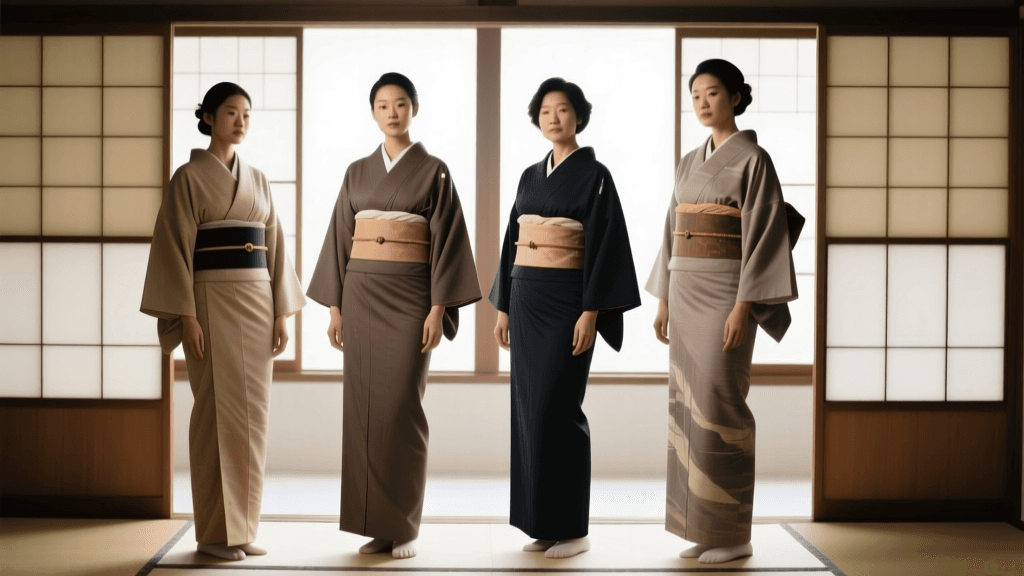
For many international visitors and modern fashion enthusiasts, the traditional Japanese kimono seems like an exclusive garment, reserved only for those who fit a very specific, slender, and average-height demographic. However, this is a modern misconception. Historically, kimono were crafted from a single bolt of fabric known as a tanmono. Because the garment is constructed using straight lines and minimal cutting, it is inherently adjustable. According to the Metropolitan Museum of Art, the kimono's T-shape structure was designed to be wrapped and folded, allowing a single garment to theoretically fit multiple generations of a family. Today, the global kimono community is reclaiming that versatility, proving that this iconic garment can beautifully flatter every body type and gender expression.
Decoding Kimono Measurements for Your Body
Unlike Western clothing, which relies on standardized S/M/L sizing based on bust, waist, and hip measurements, kimono sizing is based on the dimensions of the fabric and the wearer's height and arm span. Understanding these three key measurements is crucial for finding your perfect fit:
- Yuki (Sleeve Length): Measured from the center of the back of the neck, across the shoulder, and down to the wrist. This ensures the sleeves fall gracefully without pulling at the shoulders.
- Mihaba (Body Width): The combined width of the front and back panels. This dictates how much overlap (okumi) you will have at the front of the body.
- Mitake (Total Length): Crucial for women's kimono, as it dictates the depth of the ohashori (the waist fold).
Foundation Garments: The Secret to a Perfect Fit
Before addressing the outer layers, one must address the foundation. The silhouette of a kimono is traditionally cylindrical, designed to smooth out curves rather than accentuate them. For curvy or plus-size individuals, modern kimono shapewear is a game-changer. Brands like Sugata and Wacoal produce specialized bustiers and waist cinchers that flatten the bust and smooth the hip line, allowing the silk to drape without pulling. For a traditional approach, a sarashi (a long cotton cloth wrapped tightly around the chest) and a koshimaki (a waist wrap) provide excellent structural support and protect the expensive outer silk from sweat and body oils.
Styling for Diverse Body Types
Petite Frames (Under 150 cm / 4'11")
For petite individuals, the standard mitake will result in an excessively thick ohashori, which can look bulky and feel uncomfortable around the waist. Actionable Advice: When renting, request a hitoe (unlined) kimono or a lighter synthetic blend, as these fold more neatly and create less bulk. If buying, look for vintage kimono labeled as S-size. If altering, have a tailor perform a kata-tsume (shoulder tuck) rather than simply hemming the bottom. This preserves the garment's structural balance and keeps the patterns aligned. Expect tailoring costs for a kata-tsume to range from $40 to $80 USD.
Plus-Size and Curvy Figures (Over 85 kg / 187 lbs)
The standard women's tanmono measures roughly 36 centimeters in width. This often fails to provide adequate overlap at the front for larger busts or hips. A minimum overlap of 15 cm is required for modesty, warmth, and structural integrity. Actionable Advice: Seek out hiroi-haba (wide-width) tanmono, which measure 40 to 45 cm across. For immediate needs, use a deep V-neck hadajuban (under-kimono) to elongate the neck and draw the eye vertically. When tying the obi, opt for a Taiko musubi (drum knot) at the back, which creates a flattering, elongated silhouette and provides excellent lumbar support. Custom wide-width tailoring typically ranges from $400 to $1,200 USD, depending on the silk quality and weaving complexity.
Tall Individuals (Over 170 cm / 5'7")
Those with taller statures often struggle with the ohashori. Traditionally, a woman's kimono must have a visible waist fold. If the garment is too short, the fold disappears, exposing the legs and breaking traditional etiquette. Actionable Advice: Embrace the modern "ankle-length" styling, which is increasingly accepted in contemporary fashion circles and among the Japanese Textile Study Group's modern adaptation initiatives. Alternatively, source vintage tanmono from the early Showa era, when fabric bolts were occasionally woven longer, or commission a modern artisan for a custom length. When renting, always call ahead, as standard rental fleets rarely stock garments with a mitake over 135 cm.
Breaking the Binary: Gender-Inclusive Kimono Fashion
The binary of otokomono (men's) and onnamono (women's) is deeply ingrained in modern dress, yet contemporary fashion is blurring these lines. The Victoria and Albert Museum notes that historically, layers, colors, and motifs denoted social status, age, and season rather than strict gender binaries, particularly during the Heian period.
- Masculine Styling: Men's kimono are worn straight down to the ankle with no ohashori. The sleeves are shorter and mostly attached to the body. To achieve a masculine silhouette, use a kaku-obi (stiff, narrow sash) and tie it in a simple, flat kai-no-kuchi knot.
- Feminine Styling: Characterized by the ohashori, long flowing sleeves (furisode or tomesode), and softer, wider fukuro-obi tied in elaborate bows.
- Gender-Neutral & Androgynous: A rising trend in Tokyo's Harajuku district and Kyoto's vintage markets involves mixing these codes. Try pairing a subdued, dark komon (everyday patterned kimono) with a vibrant, feminine obi, or wear a traditional men's hakama over a brightly colored, feminine juban (undergarment) with a slightly lowered collar.
Comparison Chart: Body Types & Tailoring Adjustments
| Body Profile | Recommended Style | Key Adjustment Technique | Est. Alteration Cost (USD) |
|---|---|---|---|
| Petite (Under 150cm) | Hitoe or lighter silks | Kata-tsume (shoulder tuck) | $40 - $80 |
| Plus-Size (Over 85kg) | Hiroi-haba (Wide-width) Tanmono | Custom panel weaving & Sarashi wrap | $400 - $1,200 |
| Tall (Over 170cm) | Modern Ankle-Length or Showa Vintage | Ohashori omission or custom length | $150 - $300 |
| Androgynous | Mixed Otokomono/Onnamono | Kaku-obi with vibrant Juban | N/A (Styling only) |
Footwear and Tabi Sizing for Larger Feet
An often-overlooked hurdle for tall individuals and those with wider feet is footwear. Standard rental tabi (split-toe socks) and zori (sandals) usually max out at 25-27 cm (US Men's 7-9 / Women's 8-10). If your feet are larger, you will likely experience discomfort and overhang, which can ruin the experience and damage the footwear. Actionable Advice: Purchase your own large-size tabi online before your trip. Brands like SouSou in Kyoto offer stretch tabi up to 29 cm. For larger sizes, specialized online retailers like Tabio or dedicated tabi manufacturers on Rakuten can accommodate up to 32 cm. For the sandals, look for adjustable hanao (thongs) or opt for modern, Western-style slip-on zori which offer wider bases.
Practical Guide: Renting vs. Buying for Non-Standard Sizes
If you are visiting Japan and wish to experience kimono without the investment of custom tailoring, specialized rental shops are your best resource. While standard shops in Asakusa (Tokyo) or Higashiyama (Kyoto) may struggle with sizes outside the Japanese average, several premium shops cater specifically to international and diverse body types.
- Yumeyakata (Kyoto): Renowned for its massive inventory, Yumeyakata stocks kimono that can accommodate up to 150 kg (330 lbs) and heights over 180 cm. Expect to pay a premium of around ¥7,000 to ¥10,000 ($48 - $68 USD) for plus-size or tall packages.
- Okamoto (Kyoto/Tokyo): Offers excellent tall-size options and is highly accommodating for masculine and gender-neutral styling requests.
- Timing: For sizes outside the standard Japanese 9-11 (M-L) range, you must book at least 2 to 3 weeks in advance. This allows the shop to pull specific wide-width or extra-long garments from their off-site archives.
Ultimately, the kimono is a living, breathing garment. By understanding the mechanics of the tanmono, utilizing modern foundation garments, and embracing gender-inclusive styling, anyone can wear this masterpiece of Asian tradition with confidence, dignity, and unparalleled elegance.