Complete Kimono Formality Guide 2026: TPO Rules & Types
Introduction to Kimono Formality and TPO in 2026
Navigating the world of Japanese traditional garments requires more than just an eye for beautiful textiles; it demands a deep understanding of formality. In 2026, as global appreciation for Japanese sartorial heritage continues to grow, international collectors, expatriates, and cultural enthusiasts are increasingly adopting the kimono for various events. However, wearing the wrong garment to a specific event can be seen as a significant cultural faux pas. The guiding principle for kimono selection is TPO: Time, Place, and Occasion. This comprehensive guide breaks down the strict hierarchy of Japanese traditional garment types, ensuring you select the perfect attire for any event in 2026.
The Hierarchy of Women's Traditional Garments
Women's kimono formality is dictated by a combination of factors: the base color, the presence and number of family crests (kamon), the placement and style of the dyed or woven patterns, and the sleeve length. Understanding these nuances is critical for proper TPO adherence.
Kurotomesode: The Pinnacle of Formality
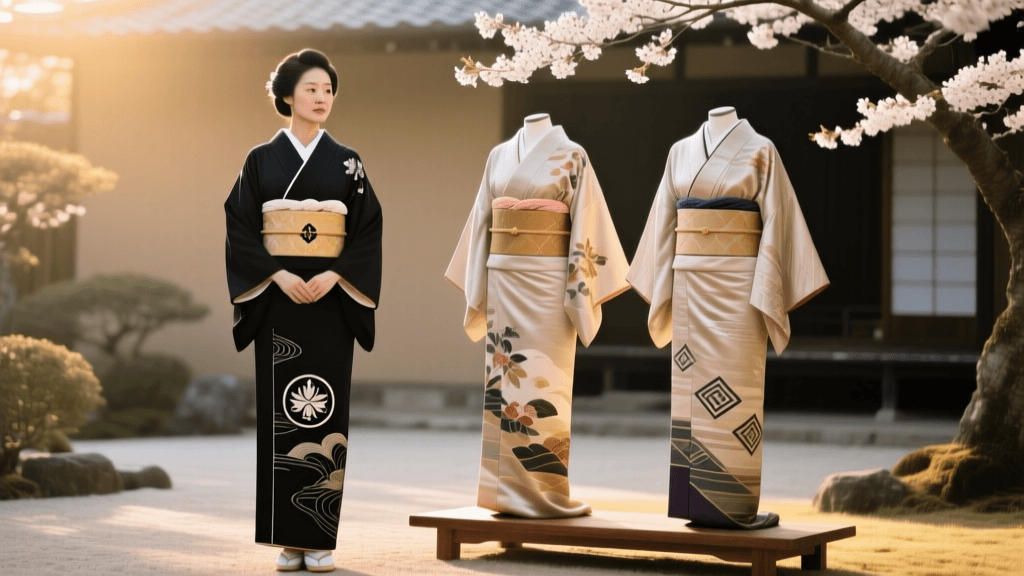
The kurotomesode is the most formal kimono for married women. It is always black and features exactly five family crests (itsutsu-mon) placed on the back, chest, and sleeves. The defining characteristic is that the intricate patterns—often featuring auspicious motifs like cranes, pine trees, or flowing water—are located exclusively below the obi (sash). In 2026, kurotomesode remain the mandatory attire for the mothers of the bride and groom at traditional Japanese weddings.
Irotomesode: Colored Formal Elegance
Similar in layout to the kurotomesode, the irotomesode features a solid colored background (such as deep navy, emerald, or plum) rather than black. It can bear one, three, or five crests. It is worn by married women or older unmarried women who are close relatives of the bride or groom, but not the mothers. The number of crests directly correlates to the formality of the wedding or ceremonial event.
Furisode: The Unmarried Woman's Showpiece
Recognizable by their dramatically long, swinging sleeves (ranging from 85cm to 114cm), furisode are the most formal garments for young, unmarried women. They are entirely covered in vibrant, continuous patterns. In 2026, furisode remain the standard for Seijin Shiki (Coming of Age Day) and are frequently worn by unmarried sisters or friends attending weddings as guests.
Houmongi: The Versatile Semi-Formal 'Visiting Wear'
The houmongi is a highly versatile semi-formal kimono suitable for both married and unmarried women. Its defining feature is the eba-moyo technique, where the pattern is dyed to flow continuously across the seams when the garment is laid flat. It typically features one to three crests. Houmongi are the go-to choice for attending tea ceremonies, gallery openings, graduation ceremonies, and wedding receptions as a guest.
Tsukesage: Subtle and Refined
A step below the houmongi, the tsukesage features patterns that are dyed or embroidered onto the fabric before it is cut, meaning the designs do not cross the seams. It usually has one crest on the back. It is perfect for smart-casual gatherings, upscale dining, and informal tea gatherings where a full houmongi might feel overly ostentatious.
Komon and Edo Komon: Everyday and Smart Casual
Komon translates to 'fine pattern' and refers to kimono with repeating, all-over designs. These are casual garments meant for city walking, casual dining, and shopping. A highly prized sub-category is Edo Komon, which features micro-patterns so fine they appear solid from a distance. When paired with a formal obi and bearing a single crest, an Edo Komon can be elevated to semi-formal status, a popular styling hack among modern kimono enthusiasts in 2026.
Men's Kimono Formality
While men's kimono appear more subdued, their formality rules are equally strict. The ultimate formal attire for men is the Montsuki Haori Hakama. This ensemble consists of a solid black kimono bearing five white family crests, paired with a matching black haori (jacket) and a stiff, striped silk hakama (pleated trousers). This is worn for weddings, formal award ceremonies, and highly traditional tea ceremonies. For smart-casual events, men opt for Omeshi (crepe silk) or Tsumugi (slubbed silk) kimono in earthy tones, paired with a softer, uncrested haori.
2026 Kimono Formality Comparison Chart
| Garment Type | Formality Level | Kamon (Crests) | Pattern Placement | Best 2026 Occasions |
|---|---|---|---|---|
| Kurotomesode | Ultra-Formal | 5 | Below Obi Only | Weddings (Mothers) |
| Furisode | Ultra-Formal | 0 | All Over (Long Sleeves) | Coming of Age, Weddings (Guests) |
| Irotomesode | Formal | 1, 3, or 5 | Below Obi Only | Weddings (Close Relatives) |
| Houmongi | Semi-Formal | 1 or 3 | Continuous across seams | Tea Ceremonies, Galas, Parties |
| Tsukesage | Smart Casual | 1 | Separated by seams | Upscale Dining, Exhibitions |
| Komon | Casual | 0 | Repeating all-over | Shopping, Casual Outings |
The Role of Textile Techniques in Formality
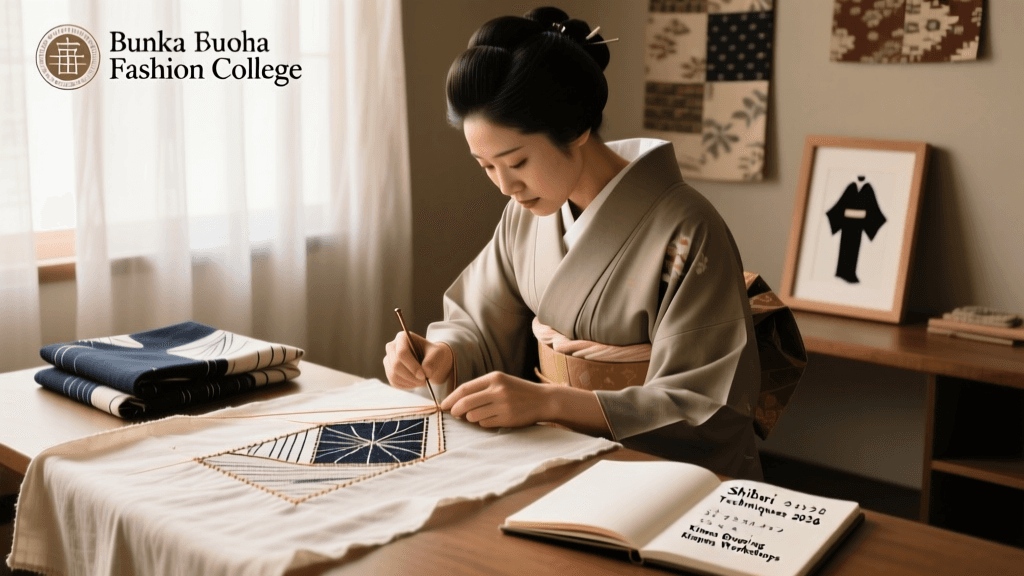
Understanding how a kimono is made is just as important as its visual layout. The techniques used to dye and weave the silk heavily influence both the garment's formality and its market value in 2026. According to historical archives maintained by The Metropolitan Museum of Art, the evolution of kimono decoration shifted from woven patterns to elaborate surface dyeing during the Edo period, a legacy that dictates modern formality.
For formal garments like houmongi and furisode, Yuzen dyeing is the gold standard. This resist-dyeing technique allows for painterly, highly detailed motifs. Conversely, woven textiles like Nishijin-ori are often used for the obi rather than the kimono itself. Interestingly, Tsumugi (pongee silk) is woven from pre-dyed threads and is highly valued by collectors for its artisanal complexity. As noted by UNESCO Intangible Cultural Heritage, techniques like Yuki-tsumugi require immense skill, yet because the fabric was historically associated with commoners, tsumugi kimono remain strictly casual in the TPO hierarchy, regardless of their astronomical price tags.
Selecting the Right Obi and Accessories
A kimono is only as formal as its obi. The structural evolution of the obi, as documented by the Victoria and Albert Museum, transformed it from a simple tie into a massive, decorative centerpiece. For ultra-formal and formal kimono (kurotomesode, furisode, houmongi), you must wear a Fukuro Obi or the extremely heavy and rare Maru Obi. These are woven with gold and silver threads and tied in complex, voluminous knots like the taiko musubi or fukura-suzume.
For semi-formal and casual wear, the Nagoya Obi is the standard. Pre-folded and stitched for easier tying, it is perfect for tsukesage and komon. Footwear follows the same rules: formal events demand zori (flat, brocade-covered sandals) with pristine white tabi (split-toe socks). Casual outings permit geta (wooden clogs) and colored or patterned tabi.
2026 Market Trends, Sourcing, and Care
The 2026 market for traditional Japanese garments is robust, blending heritage craftsmanship with modern sustainability. Bespoke, newly tailored houmongi from Kyoto artisans can easily exceed $5,000 USD, reflecting the scarcity of master Yuzen dyers. Consequently, the vintage and upcycled kimono market has exploded. Online platforms and physical stores in Tokyo's Asakusa and Kyoto's Gion districts now utilize AI-driven sizing tools to help international buyers find perfectly proportioned vintage pieces.
Regardless of where you source your garments, proper care is non-negotiable. Silk kimono must never be washed at home. They require specialized Japanese dry cleaning known as maru-arai. For storage, garments should be folded along their seam lines using acid-free tatou paper and stored in kiri-bako (paulownia wood boxes), which naturally regulate humidity and repel insects, ensuring your investment lasts for generations.
Conclusion
Mastering kimono formality is a rewarding journey into the heart of Japanese culture. By respecting the TPO rules and understanding the nuanced differences between a kurotomesode, a houmongi, and a komon, you honor the artisans who create these masterpieces. Whether you are attending a high-stakes formal ceremony or enjoying a casual spring stroll in 2026, the right garment will ensure you are dressed with elegance, respect, and cultural authenticity.