Top Japanese Fashion School Textile Workshops For 2026
The Renaissance of Traditional Japanese Textiles in 2026
As the global fashion industry pivots aggressively toward sustainability, zero-waste pattern making, and artisanal craftsmanship, traditional Japanese garment techniques have moved from niche historical studies to the forefront of contemporary fashion education. In 2026, prestigious institutions across Japan are offering unprecedented access to their textile workshops, blending centuries-old craftsmanship with cutting-edge digital learning environments. Whether you are an aspiring couturier, a sustainable fashion advocate, or a dedicated hobbyist, the 2026 academic calendar offers a wealth of opportunities to master Sashiko, Shibori, Yuzen, and traditional kimono draping.
According to Japan's Ministry of Economy, Trade and Industry (METI), the integration of traditional craft products into modern global supply chains has seen a 34% increase in educational enrollment since 2024. This surge is driven by a new generation of designers who recognize that techniques like Boro (mending) and natural indigo fermentation are not merely aesthetic choices, but vital methodologies for circular fashion. Today, we explore the most authoritative Japanese fashion school workshops and online learning programs available this year.
Top In-Person and Hybrid Workshops in Tokyo and Kyoto
Bunka Fashion College: Sashiko and Boro Masterclasses
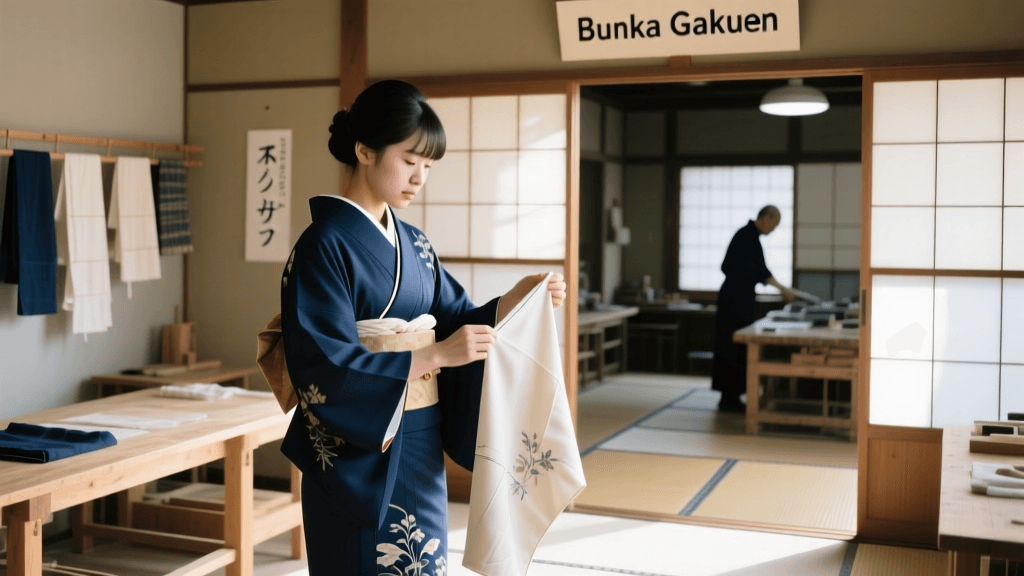
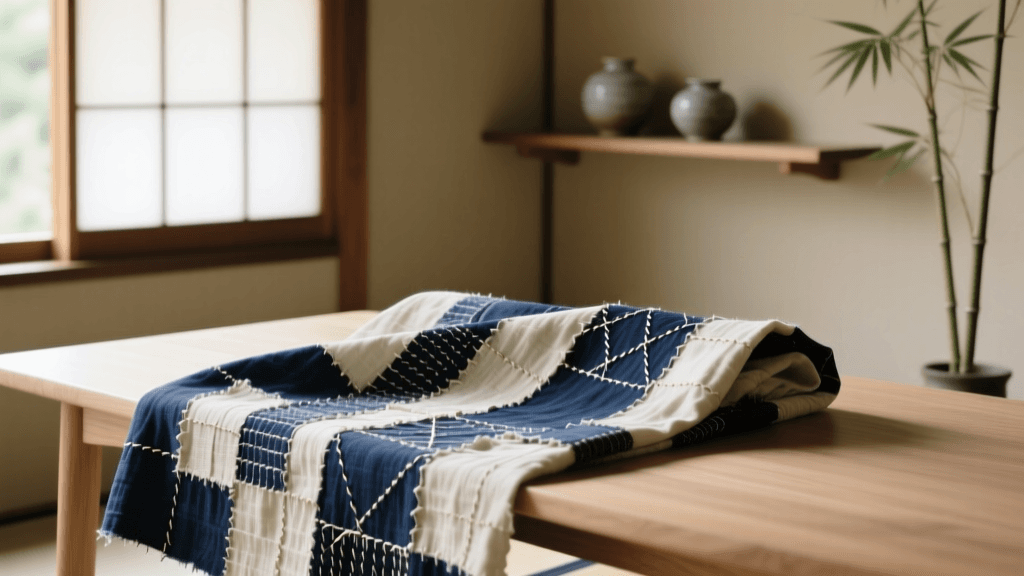
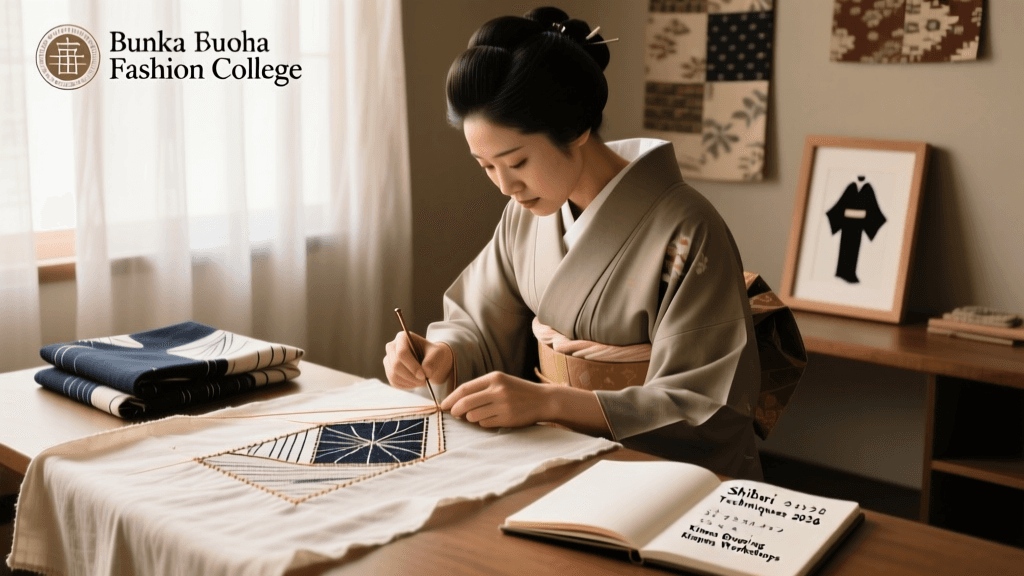
Bunka Fashion College in Shinjuku, Tokyo, remains the undisputed titan of Japanese fashion education. For their 2026 spring and autumn cohorts, Bunka has introduced a specialized six-week hybrid module focused exclusively on Sashiko (decorative reinforcement stitching) and Boro (patchwork mending). The in-person sessions take place in Bunka's newly renovated heritage textile lab, where students work with vintage 19th-century hemp and cotton garments sourced from Tohoku region archives.
The curriculum covers the mathematical precision of hitomezashi (single-stitch) patterns and the complex, overlapping geometries of kugurzashi. For international students unable to relocate to Tokyo for the full duration, Bunka's 2026 hybrid model allows participants to complete the theoretical and pattern-drafting phases online via their proprietary 3D garment simulation software, before arriving in Japan for a two-week intensive physical stitching practicum. Tuition for the 2026 hybrid track is set at $1,200 USD, which includes a comprehensive materials kit featuring authentic Olympus sashiko threads and custom-forged needles.
Kyoto Seika University: Natural Indigo and Shibori Intensive
Located in the cultural heart of Japan, Kyoto Seika University offers a rigorous four-week in-person immersion into the chemistry and artistry of Shibori (shaped-resist dyeing) and natural indigo fermentation. The 2026 syllabus places a heavy emphasis on the environmental science of the sukumo (fermented indigo leaves) vat. Students learn to manage the alkaline pH levels and bacterial health of the dye vat, a skill that is increasingly sought after by eco-conscious denim and textile brands worldwide.
Workshops cover the meticulous binding techniques of kanoko (fawn-spot), the rapid hooking of miura, and the dramatic pole-wrapping of arashi. Because the physical manipulation of wet, heavy textiles is difficult to replicate virtually, Kyoto Seika mandates full in-person attendance for this module. The 2026 tuition is $1,800 USD, reflecting the high cost of maintaining organic indigo vats and the small class sizes (capped at 12 students) to ensure personalized mentorship from master dyers.
Esmod Japon: Virtual Reality Kimono Draping
Esmod Japon has revolutionized the study of traditional garment construction with their 2026 Virtual Reality (VR) Draping Workshop. Understanding the complex, non-Euclidean geometry of the kimono and the precise folding techniques of the obi (sash) traditionally requires years of physical practice and access to expensive silk garments. Esmod's new VR lab allows remote students to manipulate digital twins of heavy silk brocades and lightweight summer ro (leno weave) fabrics in a zero-gravity digital space.
Students use haptic feedback gloves to 'feel' the tension of the fabric as they learn the otsuka knot and the formal fukura-suzume (sparrow) obi ties. This three-week online course costs $850 USD and requires students to possess a compatible VR headset, though Esmod offers a hardware rental subsidy for enrolled participants.
2026 Workshop Comparison Chart
| Institution | Format | Focus Area | 2026 Tuition (USD) | Duration |
|---|---|---|---|---|
| Bunka Fashion College | Hybrid (Online + Tokyo) | Sashiko & Boro Mending | $1,200 | 6 Weeks |
| Kyoto Seika University | In-Person (Kyoto) | Shibori & Indigo Chemistry | $1,800 | 4 Weeks |
| Esmod Japon | Online VR Lab | Kimono & Obi Draping | $850 | 3 Weeks |
| Tama Art University | Online Live-Stream | Yuzen Paste-Resist Painting | $600 | 4 Weeks |
Online Learning and Asynchronous Platforms
For those who require flexible scheduling, several Japanese institutions have partnered with global educational platforms to offer asynchronous courses in traditional textile arts. In 2026, the most highly rated program is the 'Mastering Japanese Textile Heritage' specialization offered through a consortium of Tokyo-based art universities. This fully online program utilizes ultra-high-definition macro videography, allowing students to observe the exact angle and tension of a master weaver's shuttle or a Yuzen painter's brush.
The Victoria and Albert Museum's Asian collections frequently collaborates with these Japanese institutions to provide digital access to their vast archives of Edo-period garments. Students in the 2026 online cohorts are granted exclusive digital access to the V&A's high-resolution textile scans, enabling them to reverse-engineer historical weaving patterns and dye resist techniques directly from their home studios. This integration of museum archives with active fashion school curricula represents a massive leap forward in accessible, high-level historical research for independent designers.
Essential 2026 Toolkits for Remote Learners
Enrolling in an online or hybrid workshop requires the right physical tools. Japanese fashion schools have standardized their remote learning kits for 2026 to ensure all students, regardless of geography, are working with authentic materials. If you are preparing for a distance-learning module, you should acquire the following:
- Sashiko Needles (Sashiko-bari): Unlike standard sewing needles, these are long, rigid, and feature exceptionally sharp points to pierce multiple layers of heavy cotton. The 2026 recommendation from Bunka instructors is the Tulip Hiroshima set, specifically the 45mm and 50mm lengths, retailing for approximately $28 USD.
- Indigo Vat Starter Kit: For online Shibori students, maintaining a chemical vat at home is a common assignment. The 'Ai no Yakata' organic sukumo starter kit ($65 USD) includes pre-fermented indigo, calcium hydroxide, and wood ash lye, along a digital pH meter calibrated specifically for textile dyeing.
- Rice Paste (Nori) for Yuzen: Tama Art University's online Yuzen course requires students to practice applying resist paste. The 2026 approved synthetic alternative, which mimics traditional glutinous rice paste but resists molding during international shipping, is the 'Kakishibu Pro-Resist' formula ($32 USD per liter).
- Hera (Bamboo Spatulas): Used for applying paste and folding fabric. A set of five varying widths, essential for both Yuzen painting and Shibori binding, can be sourced from Kyoto-based craft exporters for around $15 USD.
Career Applications: From the Classroom to the Global Runway
The skills acquired in these 2026 workshops are not merely academic; they are highly commercially viable. The global luxury market has seen a massive resurgence in visible mending and artisanal dyeing. Brands like Issey Miyake, Yohji Yamamoto, and emerging sustainable labels are actively recruiting graduates who possess a deep, technical understanding of traditional Japanese garment construction.
Furthermore, the rise of 'slow fashion' micro-brands has allowed independent artisans to monetize these skills directly. A designer who has completed the Kyoto Seika indigo intensive can command premium prices for small-batch, naturally dyed denim and linen collections. The Boro techniques taught at Bunka are frequently applied to high-end streetwear upcycling, transforming deadstock vintage workwear into luxury collector's items that retail for thousands of dollars.
Conclusion
The landscape of Japanese fashion education in 2026 is more accessible, technologically advanced, and globally integrated than ever before. Whether you are binding fabric in a Kyoto indigo vat, manipulating digital silk in a Tokyo VR lab, or stitching Sashiko patterns in your home studio, these workshops offer a profound connection to Asian traditions while equipping you with the sustainable methodologies required for the future of fashion. By investing in these specialized programs, designers do more than learn a craft; they become custodians of a living, breathing textile heritage that continues to shape the global aesthetic.