2026 Japanese Kimono Formality Guide: Komon to Kurotomesode
Introduction to Kimono Formality in 2026
The Japanese kimono is far more than a simple T-shaped robe; it is a complex, highly codified system of visual communication. As we navigate the global fashion landscape of 2026, there has been a remarkable resurgence in wearing traditional Japanese garments, driven by a widespread appreciation for artisanal craftsmanship, cultural heritage, and sustainable, slow fashion. However, for both seasoned collectors and newcomers, understanding the strict hierarchy of kimono formality remains absolutely essential. Wearing the wrong garment type to a specific event can be considered a major faux pas in Japanese society.
This comprehensive guide decodes the primary formal and semi-formal garment types—Komon, Houmongi, and Kurotomesode. We will provide you with the exact specifications, styling rules, seasonal considerations, and 2026 market insights needed to build an authentic, respectful, and stylish traditional wardrobe.
The Hierarchy of Japanese Garment Types
The formality of a kimono is determined by several intersecting factors: the base color, the placement and scale of the pattern, the specific dyeing technique used, and the number of kamon (family crests) adorning the silk. According to the Metropolitan Museum of Art, the evolution of these garments reflects centuries of shifting social classes and sumptuary laws, which still dictate modern dress codes today.
Komon (Everyday Elegance)
The Komon translates literally to 'small pattern.' These are casual, everyday kimonos characterized by a repeating motif that covers the entire garment uniformly. The pattern direction is consistent, meaning it does not matter which way the fabric is cut or draped. Because the design is repetitive and lacks a singular focal point, it sits at the bottom of the formality ladder.
- Crests (Kamon): Zero or one.
- Occasions: Casual outings, shopping, theater visits, informal dining, or attending a casual tea gathering.
- 2026 Styling Note: A highly prized subcategory is the Edo Komon. Originating in the Edo period, these feature micro-patterns that appear solid from a distance but reveal intricate geometric or nature-inspired motifs up close. In 2026, contemporary artisans in Tokyo are utilizing eco-friendly, plant-based dyes to create Edo Komon pieces that heavily appeal to environmentally conscious buyers looking for subtle luxury.
Houmongi (The Versatile Semi-Formal)
The Houmongi, or 'visiting wear,' is the ultimate versatile semi-formal garment. Its defining characteristic is the eba technique, where the pattern is dyed across the seams so that when the kimono is laid flat and opened up, the design forms a single, continuous, expansive picture, much like a canvas painting.
- Crests (Kamon): One to three.
- Occasions: Weddings (as a guest), formal tea ceremonies, graduation ceremonies, upscale gallery openings, and formal parties.
- The Eba Technique: Creating a Houmongi requires immense skill and time. The fabric is temporarily basted together, the design is sketched across the seams, and then the garment is entirely taken apart for the dyeing process. This ensures flawless pattern matching when reassembled. As noted by the Victoria and Albert Museum, this seamless visual flow is a hallmark of high-status Japanese dress and represents the pinnacle of the dyer's art.
Kurotomesode (The Pinnacle of Formality)
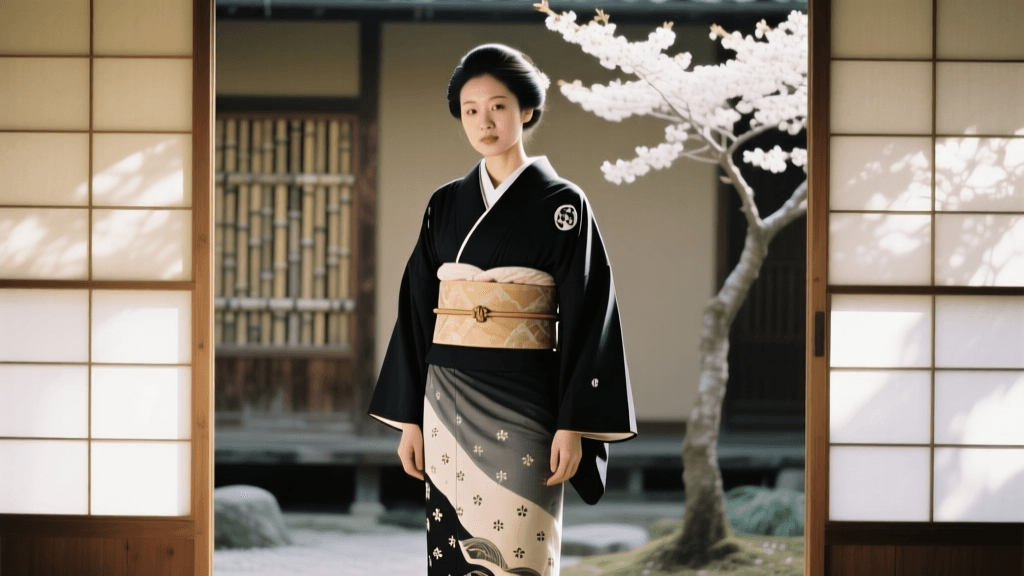
The Kurotomesode is the most formal kimono strictly reserved for married women. 'Kuro' means black, and 'tomesode' refers to the fastened or shortened sleeves, which contrast sharply with the long, swinging sleeves (furisode) worn by unmarried women.
- Design: The base fabric is entirely, deeply dyed black. Elaborate, highly auspicious patterns (such as cranes, pine trees, bamboo, or flowing water) are restricted exclusively to the lower half of the garment, below where the obi sash will sit.
- Crests (Kamon): Exactly five (three on the back, two on the front collarbones). These are typically dyed in white.
- Occasions: Attending the weddings of close relatives, most notably worn by the mother of the bride or the mother of the groom.
Seasonal Motifs and the Rule of Anticipation
In Japanese tradition, wearing the correct seasonal motif is just as important as the garment's formality. In 2026, the traditional rule of 'anticipation' remains strictly observed among knowledgeable dressers. This means you should wear motifs slightly before the season peaks, rather than during or after. For example, cherry blossom (sakura) motifs are worn in late March to anticipate the bloom, but wearing them in mid-April when the petals are falling is considered bad luck and a stylistic error. Similarly, autumn maple leaves (momiji) are introduced in late summer to anticipate the cooling air.
2026 Fabric Innovations and Market Pricing
While traditional silk (kinu) remains the undisputed gold standard for formal events, the 2026 market has seen a massive influx of high-performance, washable alternatives. Below is a comparison of current fabric choices for formal garments, including average market pricing for new, artisan-crafted pieces in 2026.
| Fabric Type | Characteristics & 2026 Innovations | Best For | Est. 2026 Price (USD) |
|---|---|---|---|
| Traditional Silk (Kinu) | Hand-dyed, luxurious drape, requires professional cleaning. Highly breathable. | Kurotomesode, High-end Houmongi | $2,500 - $8,000+ |
| Washable Silk Blends | Treated with 2026 nano-coating technology to resist water spots and allow gentle home washing. | Komon, Everyday Houmongi | $800 - $1,800 |
| Recycled PET Polyesters | Eco-friendly, vibrant digital printing, highly durable, but less breathable in summer. | Casual Komon, Yukata, Practice wear | $150 - $450 |
Essential Layering: Juban, Obi, and Accessories
A kimono is never worn directly against the skin, nor is it a single piece of clothing. The complete ensemble requires precise layering to achieve the correct silhouette and maintain the garment's pristine condition.
The Undergarments
The Nagajuban is the under-kimono that protects the outer silk from sweat and body oils. In 2026, breathable, moisture-wicking synthetic blends are the standard for summer wear, while quilted cotton is used in winter. The Han-eri is the decorative collar attached to the nagajuban. For formal Houmongi or Kurotomesode, this must be pristine white silk or high-quality embroidered white fabric. A dirty or colored han-eri will instantly downgrade the formality of your outfit.
The Obi (Sash)
The obi is the wide sash that secures the kimono and acts as the centerpiece of the ensemble. The type of obi must match the formality of the kimono.
- Nagoya Obi: Pre-folded and easier to tie, suitable for Komon and casual outings. Often features playful or seasonal motifs.
- Fukuro Obi: A wide, fully patterned, highly formal sash. Mandatory for Houmongi and Kurotomesode. These are often woven with real gold and silver threads (kinkoma).
For formal events, the nijuudaiko (double drum) knot is the standard tie for married women, symbolizing longevity and good fortune. Unmarried women wearing formal furisode will opt for more elaborate, floral-inspired knots like the fukura-suzume.
Sourcing and Caring for Your Garments
According to Japan Guide, purchasing a kimono involves understanding both new artisan commissions and the vibrant vintage market. In 2026, vintage Houmongi from the 1980s and 1990s are highly sought after by international buyers for their bold, luxurious gold-leaf embroidery and heavy silk crepe (chirimen) textures, often available at a fraction of the cost of new commissions.
Care Instructions: Never wash a traditional silk kimono at home. Professional maru-arai (whole garment dry cleaning using specialized petroleum solvents) is required to preserve the dyes and the fabric's tension. For 2026 washable silks and polyesters, follow the manufacturer's cold-water hand-wash instructions meticulously, and always air dry in the shade to prevent UV fading.
Conclusion
Navigating the world of Japanese traditional garments requires a blend of historical knowledge and an eye for contemporary quality. Whether you are selecting a subtle Edo Komon for a day in Kyoto, a sweeping Houmongi for a formal tea ceremony, or a majestic Kurotomesode for a family wedding, understanding these formality levels ensures you honor the culture while expressing your personal elegance. As the global appreciation for these garments continues to grow in 2026, wearing the kimono remains a profound way to connect with centuries of Asian textile artistry.