Mastering Kimono Fabrics: Nishijin Weaving and Yuzen Dyeing Guide
The Foundation of Japanese Elegance: Understanding Kimono Textiles
The creation of a traditional Japanese kimono is a meticulous process that transforms raw silk into a wearable canvas of cultural heritage. Unlike Western tailoring, which relies on cutting and shaping fabric to fit the body, the kimono is constructed from straight, uncut panels of cloth. This means the artistry, weight, drape, and visual impact of the garment are entirely dependent on the textile itself. According to the Metropolitan Museum of Art, Japanese textile arts represent some of the most sophisticated weaving and dyeing techniques in global history, with regional specialties dictating the formality and seasonal appropriateness of the garment.
For collectors, enthusiasts, and those looking to commission or purchase authentic Japanese garments, understanding the distinction between woven and dyed fabrics is paramount. The two most prestigious techniques that dominate formal kimono craftsmanship are Nishijin-ori (brocade weaving) and Kyo-Yuzen (resist dyeing). Each requires years of apprenticeship to master and results in vastly different aesthetics, price points, and care requirements.
Nishijin-ori: The Pinnacle of Japanese Weaving
Originating in the Nishijin district of Kyoto, Nishijin-ori is a luxury brocade weaving technique characterized by its dense, multi-layered textiles and the integration of metallic threads. The process is incredibly labor-intensive, often requiring up to twenty distinct specialized steps, from silk thread preparation and dyeing to the operation of complex Jacquard looms. As highlighted by the Japan National Tourism Organization, the Nishijin Textile Center remains the beating heart of this industry, preserving techniques that date back over 1,200 years.
Nishijin fabrics are typically used for highly formal garments, such as the uchikake (wedding over-robe), kurotomesode (married women's formal kimono), and luxurious obi (sashes). A hallmark of authentic Nishijin-ori is the use of kinran (gold leaf thread) and ginran (silver leaf thread), which are created by applying lacquer and precious metal leaf to paper, then cutting it into microscopic strips and wrapping it around silk cores. Because the pattern is woven directly into the fabric, Nishijin textiles are heavy, structured, and reversible, offering a subtle, sophisticated elegance that catches the light dynamically.
Kyo-Yuzen: The Masterpiece of Resist Dyeing
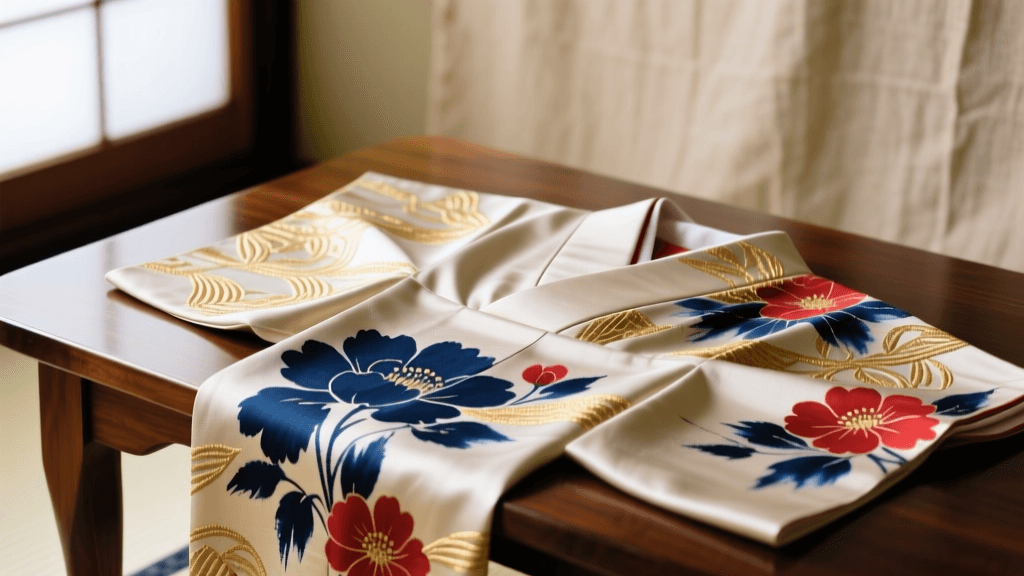
While Nishijin-ori focuses on structural weaving, Kyo-Yuzen is the undisputed king of surface design and dyeing. Developed in the late 17th century by Miyazaki Yuzensai, this technique allows artisans to paint intricate, multi-colored pictorial designs directly onto silk, free from the geometric constraints of a loom. The Victoria and Albert Museum notes that Yuzen dyeing revolutionized Japanese fashion by allowing for sweeping, continuous motifs that flow across the seams of the kimono panels.
The traditional tegaki (hand-painted) Yuzen process involves applying a water-resistant rice paste (itome-nori) to outline the design. Once the paste dries, artisans hand-paint the interior of the outlines with specialized dyes using fine brushes. After steaming to set the colors, the background is dyed, and the paste is washed away in cold water, revealing crisp, pristine lines. Yuzen fabrics are lighter and softer than Nishijin brocades, making them the preferred choice for furisode (unmarried women's formal kimono) and homongi (visiting wear), where vibrant, sprawling motifs of nature, seasons, and poetry are desired.
Fabric Comparison Chart: Weaving vs. Dyeing Techniques
When selecting a kimono or commissioning a piece, it is vital to match the fabric technique to the intended use, budget, and maintenance capabilities. The following table compares the primary characteristics of Japan's most revered kimono textiles.
| Fabric / Technique | Primary Method | Best Used For | Avg. Commission Cost (USD) | Weight & Drape |
|---|---|---|---|---|
| Nishijin-ori | Brocade Weaving | Wedding Uchikake, Formal Obi | $4,000 - $15,000+ | Heavy, Structured, Stiff |
| Kyo-Yuzen | Resist Dyeing | Furisode, Homongi, Tomesode | $2,500 - $10,000 | Medium, Fluid, Soft |
| Edo-Komon | Micro-Stencil Dyeing | Edo-Komon, Komon, Tea Ceremony | $1,200 - $4,000 | Lightweight, Matte, Crisp |
| Yuki-Tsumugi | Pongee Weaving (Spun Silk) | Casual Wear, Everyday Elegance | $2,000 - $8,000 | Medium, Textured, Warm |
| Ro / Sha | Leno / Gauze Weaving | Summer Kimono (Natsugi) | $800 - $3,000 | Ultra-light, Sheer, Breathable |
Practical Guide to Buying and Commissioning Kimono Fabrics
Understanding the Tanmono (Fabric Bolt)
Kimonos are not bought off the rack in standard sizes; they are constructed from a tanmono, a standard bolt of fabric. If you are commissioning a kimono or buying fabric for a bespoke tailor, you must understand these measurements. A standard women's tanmono is approximately 36 centimeters (14.2 inches) wide and 12 to 13 meters (39 to 42 feet) long. This specific width dictates the maximum hip and shoulder span of the finished garment. For individuals requiring larger dimensions, artisans must weave a custom hiro-haba (wide-width) tanmono, which can increase the base material cost by 20% to 30% and add months to the production timeline.
Cost Breakdown and Commissioning Timelines
Commissioning a new, handcrafted kimono is an investment in slow fashion. The process is highly fragmented; a single Yuzen kimono may pass through the hands of a designer, a paste-maker, a colorist, a background dyer, and a tailor.
- Timeline: Expect a minimum of 6 to 12 months for a standard Kyo-Yuzen commission. Nishijin-ori obi sashes, which require custom loom programming and metallic thread preparation, can take 8 to 14 months.
- Base Fabric Costs: High-grade heavy silk crepe (chirimen) or smooth silk (habutae) blanks typically cost between $300 and $800 before any dyeing or weaving begins.
- Tailoring (Osaiho): The actual sewing of the kimono panels by a licensed artisan adds $300 to $600 to the final price. This includes hidden stitches that allow the garment to be entirely taken apart for cleaning and re-sewn.
Seasonal Fabric Variations: Chirimen, Ro, and Sha
Japanese fashion is deeply tied to the seasons, and the fabric weave changes accordingly to ensure comfort and visual harmony. Chirimen (crepe) is the most common fabric for spring and autumn kimono. It is woven with highly twisted weft threads that alternate direction, creating a pebbled texture that resists wrinkling and provides a beautiful, matte drape. During the humid Japanese summer (July and August), wearers transition to Ro and Sha. These are specialized gauze and leno weaves that create intentional gaps in the fabric, making the kimono sheer, breathable, and incredibly light. Pairing a sheer Ro kimono with a lightweight, woven rattan or bamboo obi is a hallmark of sophisticated summer dressing.
Caring for Handcrafted Silk Kimono
The longevity of Nishijin and Yuzen textiles depends entirely on proper maintenance. Because kimono are constructed with straight seams, they can be completely unpicked, washed, and re-stretched in a traditional process called maru-arai or arai-hari. However, this is costly (around $200-$300) and time-consuming. For routine care, always air out your kimono in a shaded, well-ventilated area for 24 hours after wearing. Never hang heavy Nishijin brocade on standard hangers; the weight of the wet or stressed silk will distort the shoulders. Instead, fold the garment along its natural seam lines and store it flat in a breathable tatoushi (acid-free paper envelope) with natural camphor or cedar to deter pests. By respecting the craftsmanship and adhering to traditional care methods, these masterpieces of Asian textile heritage can easily survive for generations.