Kimono Extreme Weather Guide 2026: Rain, Snow & Heat Adaptations
Introduction: The Climate Reality of 2026
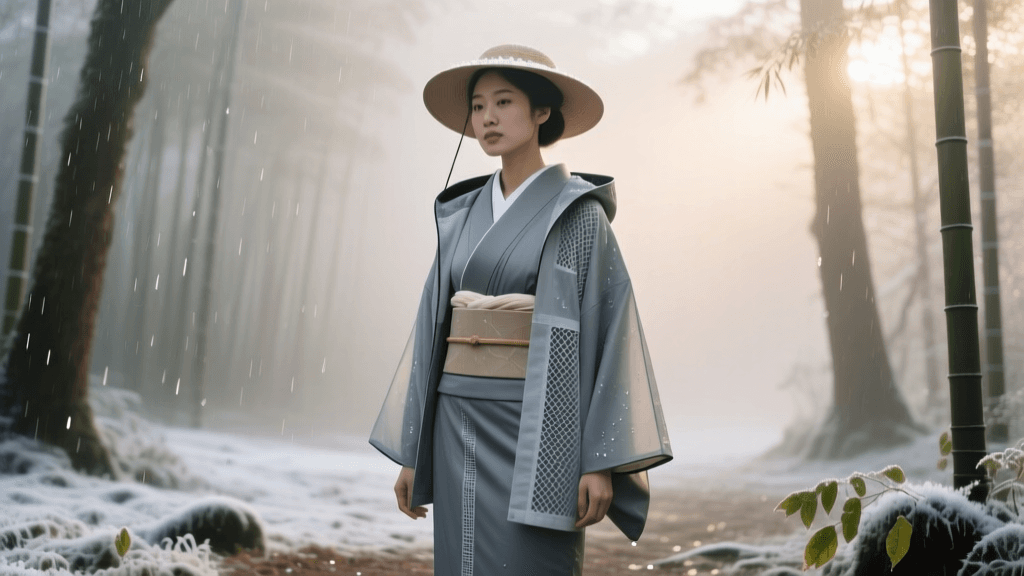
The global resurgence of traditional Japanese garments has collided with a harsh meteorological reality. As we navigate the climate landscape of 2026, kimono wearers—from daily practitioners in Kyoto to international fashion enthusiasts attending summer festivals—are facing unprecedented environmental challenges. According to data from the Japan Meteorological Agency, the frequency of localized 'guerrilla' rainstorms, extreme summer heatwaves, and sudden, heavy winter snowfalls has necessitated a complete rethinking of how we approach traditional dress. Wearing a kimono is no longer just an exercise in aesthetic grace and cultural preservation; it is an act of tactical adaptation. In this comprehensive 2026 guide, we explore the intersection of heritage textiles and cutting-edge weather survival gear, ensuring your silk, hemp, and wool garments remain pristine while you stay comfortable in the most unforgiving conditions.
Beating the Summer Heat: Kimono Cooling Adaptations
The Japanese summer is notoriously oppressive, characterized by suffocating humidity and soaring temperatures. Historically, the transition to summer kimono (natsu-mono) was strictly dictated by the lunar calendar, but the intense heatwaves of 2026 require a more aggressive approach to thermoregulation. The foundation of summer kimono dressing lies in the textile. Garments woven using the ro (leno weave) and sha (gauze) techniques feature intentional gaps in the warp and weft threads, allowing for maximum air circulation. However, relying on outer fabric alone is no longer sufficient.
Modern kimono stylists are heavily integrating advanced innerwear. The juban (under-kimono) and hadajuban (undershirt) have been revolutionized by contact-cooling technology. Leading Japanese textile manufacturers have introduced 2026 innerwear lines infused with xylitol and menthol-derived microcapsules that actively absorb body heat and provide a sustained cooling sensation upon contact with sweat. When selecting a cooling juban, look for garments with a high Q-max value (the standard measure of contact coolness), ideally above 0.35, paired with moisture-wicking mesh panels along the back and underarms.
Furthermore, the choice of koshihimo (tying sashes) has evolved. Traditional silk or cotton sashes can trap heat and cause skin irritation when damp. In 2026, the market standard has shifted toward breathable, perforated elastic sashes made from recycled marine plastics that provide secure tension without suffocating the skin. For casual wear, the yukata remains the ultimate heat-beater, with modern hemp-cotton blends offering superior moisture absorption compared to standard cotton, drying rapidly even in stagnant, humid air.
Navigating Monsoon Rains: Waterproofing Your Silk
Sudden, torrential downpours can spell disaster for a multi-thousand-dollar silk kimono. While the traditional amagappa (a woven straw or oiled paper raincoat) and janome (bullseye-patterned umbrella) offer beautiful historical aesthetics, they are impractical for navigating the crowded, wind-swept streets of modern metropolises. The primary vulnerability of the kimono in wet weather is the hem, which easily absorbs puddle splash-back and mud.
To combat this, the 2026 kimono wardrobe relies on the shigure-zori (rain thong sandals). Unlike standard zori with woven rush or fabric uppers, shigure-zori feature waterproof vinyl or treated leather uppers and elevated, slip-resistant rubber soles. These provide crucial clearance between the hem and the wet pavement. To protect the feet, silicone tabi covers or fully waterproof rubber tabi boots with the traditional split-toe design are essential.
For the garment itself, the application of advanced nano-sprays has become a non-negotiable step in rainy-season preparation. Unlike the heavy, stiffening silicone sprays of the past, the latest fluorocarbon-free hydrophobic treatments introduced in early 2026 bond at the molecular level with silk and wool fibers. These sprays create a microscopic lotus-leaf effect, causing water to bead up and roll off without altering the drape, breathability, or natural luster of the textile. As highlighted by the conservation experts at the Victoria and Albert Museum, preserving the structural integrity of historical garments requires avoiding harsh chemical barriers, making these modern, breathable nano-coatings the preferred choice for both museum archivists and private collectors.
Braving the Snow: Insulation and Traction
Winter in regions like Hokkaido, Niigata, and even the mountainous outskirts of Tokyo presents a dual threat: freezing temperatures and treacherous, ice-covered terrain. The kimono silhouette, with its open sleeves and wrap-front design, is inherently drafty. Defeating the cold requires mastering the art of invisible layering.
The base layer begins with a heat-retaining nagajuban (long under-kimono). In 2026, aerogel-infused linings—a technology adapted from aerospace engineering—have been integrated into high-end winter nagajuban. Aerogel provides exceptional thermal insulation while remaining paper-thin, ensuring that the bulky layering does not distort the clean, cylindrical lines of the outer kimono. Over the kimono, a michiyuki (a traditional, often three-crested overcoat) or a heavy wool haori (jacket) is worn. Modern haori designed for extreme cold now feature hidden, windproof inner membranes and magnetic closures at the neck to prevent the icy drafts that typically infiltrate the V-shaped collar opening.
Footwear in the snow requires specialized traction. Standard wooden geta become lethal on ice. The solution is the yuki-geta (snow clog), which features metal spikes or vulcanized rubber grips embedded in the wooden base. For deep snow, knee-high, waterproof tabi boots lined with Thinsulate or recycled wool fleece are paired with traditional kyahan (leggings) to seal the gap between the boot and the kimono hem, preventing snow from entering and melting against the skin.
Protecting the Obi: Humidity and Temperature Swings
The obi (sash) is frequently the most valuable and structurally complex component of the kimono ensemble. In 2026, extreme humidity swings pose a severe threat to traditional silk brocades and delicate gold-leaf kinkaku threads. When exposed to heavy moisture, silk fibers expand, leading to permanent creasing and the delamination of metallic threads. To combat this, modern kimono dressers have adopted bamboo-charcoal-infused obi-ita (sash stiffening boards). Unlike the rigid plastic or cardboard boards of the past, these 2026 composite boards actively absorb ambient moisture trapped between the layers of the sash, preserving the crispness of the otaiko (drum knot) throughout a humid summer day.
Furthermore, the structural integrity of the obi-jime (the decorative cord used to secure the sash) has been revolutionized. Leading textile artisans in Kyoto have begun weaving obi-jime with shape-memory polymer cores. These advanced cords maintain their exact tension and knot security whether the wearer is transitioning from an air-conditioned 18°C interior to a sweltering 35°C street, preventing the dangerous loosening that can cause an expensive fukuro obi to slip or unravel in public.
2026 Weather Adaptation Comparison Matrix
| Weather Condition | Traditional Solution | 2026 Modern Innovation | Essential Accessory |
|---|---|---|---|
| Extreme Heat | Ro and Sha silk weaves | Xylitol-infused contact-cooling juban | UV-blocking wagasa (paper umbrella) |
| Monsoon Rain | Amagappa (straw raincoat) | Fluorocarbon-free nano-spray protectants | Shigure-zori (rain sandals) |
| Heavy Snow | Layered wool haori | Aerogel-lined nagajuban under-kimono | Yuki-geta (spiked snow clogs) |
| Humidity Swings | Cardboard obi-ita boards | Bamboo-charcoal moisture-wicking boards | Shape-memory obi-jime cords |
Essential Gear Checklist for 2026
- Pre-Treatment: Apply hydrophobic nano-spray to the lower 30cm of your kimono hem at least 24 hours before stepping out in the rain.
- Innerwear Selection: Check the Q-max rating on your summer juban; discard any innerwear that has lost its contact-cooling efficacy after repeated washing.
- Footwear Traction: Inspect the rubber grips or metal spikes on your yuki-geta before the first snowfall; replace worn attachments immediately to prevent slips.
- Emergency Kit: Carry a microfiber drying cloth and a portable, battery-operated cooling fan in your kinchaku (drawstring bag) during summer festivals.
Conclusion: Tradition Meets Resilience
The evolution of kimono styling in 2026 proves that traditional garments are not fragile relics confined to climate-controlled tea rooms. By embracing a synthesis of ancestral wisdom—such as the airy ro weaves and elevated geta—and modern material science, wearers can confidently step into any storm, heatwave, or blizzard. The true beauty of the kimono lies in its enduring adaptability, a testament to a culture that has always found harmony with the shifting moods of nature. For further insights into the intersection of Asian heritage and modern design, explore the extensive archives at Asia Society Arts & Culture, which continues to document how traditional aesthetics thrive in the contemporary world.