Kimono Weather Adaptations 2026: Rain, Snow & Heat Tips
Navigating the Elements: The Kimono in 2026
The traditional Japanese kimono is a masterpiece of textile art, deeply intertwined with the changing seasons. However, as global climate patterns shift, wearing this elegant garment requires modern adaptations. According to the Japan Meteorological Agency, recent years have seen an increase in extreme weather events, from torrential summer downpours to unprecedented winter snowfalls and prolonged heatwaves. For kimono enthusiasts and cultural practitioners in 2026, mastering the art of weather adaptation is no longer just a matter of comfort—it is essential for preserving the garment and ensuring personal safety.
Whether you are attending a summer matsuri (festival), navigating the rainy season (tsuyu), or walking through snowy winter landscapes, the intersection of traditional wisdom and 2026 textile technology offers brilliant solutions. As noted by the Japan National Tourism Organization, the global revival of kimono wearing has spurred a new market for functional, weather-resistant accessories that honor historical aesthetics while providing modern utility.
Surviving the 2026 Summer Heatwaves
Summer in Japan and many parts of the world has become increasingly unforgiving. Wearing multiple layers of silk in high humidity and temperatures exceeding 35°C (95°F) requires strategic planning. The traditional approach relies on specific seasonal weaves, but 2026 has introduced advanced cooling undergarments that revolutionize summer kimono wear.
Traditional Fabrics: Ro and Sha
For formal and semi-formal summer wear, the choice of fabric is paramount. Ro (a silk gauze with a distinct leno weave) and sha (a lighter, more open silk mesh) are the traditional standards for July and August. These fabrics allow air to circulate freely against the skin. According to The Metropolitan Museum of Art, the intricate twisting of threads in these weaves has been perfected over centuries to create sheer, breathable textiles that maintain structural elegance. In 2026, weavers in Kyoto have begun blending traditional silk with ultra-fine, moisture-wicking synthetic filaments to enhance the cooling properties of ro without sacrificing the garment's authentic drape.
Modern Cooling Tech: The 2026 Juban
The juban (under-kimono) is the layer closest to the skin. In 2026, the market is dominated by 'smart-fabric' juban made with Q-max 0.3+ contact-cooling yarns. These garments actively pull heat away from the body upon contact. When paired with a breathable mesh koshihimo (the sash used to tie the kimono), the oppressive heat of a traditional waist tie is eliminated. Furthermore, modern hadajuban (innermost undershirt) now feature integrated UV-blocking and sweat-wicking panels, protecting the delicate silk of the outer kimono from perspiration damage.
Navigating Monsoons and Sudden Downpours
The rainy season and sudden typhoons pose a significant threat to silk garments. Water spots can permanently stain vintage textiles, and muddy streets can ruin the hem of a kimono in seconds. Adapting to wet weather requires a combination of protective outerwear and specialized footwear.
Raincoats and Hem Management
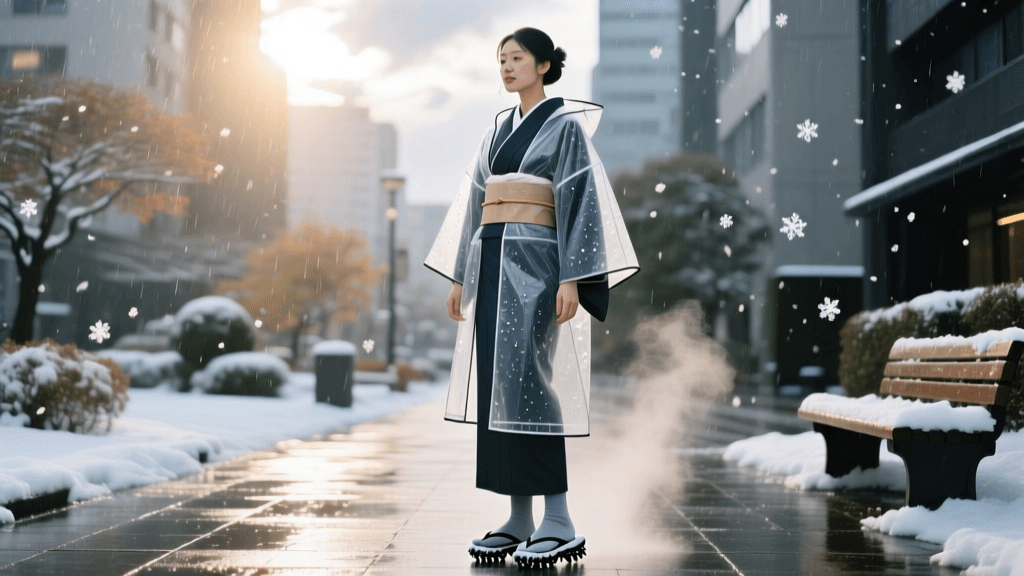
Traditionally, a michiyuki (a tailored kimono coat) or a simple kappa (raincoat) was worn to protect the garment. Today, 2026 raincoats for kimono are crafted from advanced translucent, hydrophobic polymers. These modern coats repel heavy rain, dry in minutes, and allow the beautiful patterns of the kimono underneath to remain visible. For the hem, practitioners use a technique called karusan tucking, or they utilize a hidden kohimo (a small, absorbent microfiber towel designed to look like a traditional cotton cloth) to secure the hem higher off the ground when walking through puddles.
Footwear: Shigure Geta and Silicone Covers
Wooden geta (clogs) can become slippery and waterlogged in heavy rain. The traditional solution is the shigure geta, which features a removable lacquered wooden or leather cover over the toe thong area. However, the most popular innovation in 2026 is the silicone ame-ashi (rain cover). These stretchable, waterproof silicone sleeves slip entirely over traditional zori or geta, providing excellent grip on wet asphalt and complete water protection. They are easily rolled up and stored in a handbag when the rain stops.
Braving Winter Snow and Freezing Winds
Winter kimono wear is an exercise in elegant layering. The challenge lies in keeping the extremities warm without adding bulk that disrupts the kimono's cylindrical silhouette. Snow and freezing winds require specialized outer layers and insulated footwear.
Layering: Haori and Muffler Stoles
The haori (hip-length jacket) is the primary outer layer for winter. In 2026, many winter haori are lined with lightweight, thermal-reflective materials similar to those used in high-end alpine gear. To protect the neck from biting winds without ruining the V-shaped collar of the kimono, specialized 'kimono mufflers' have become essential. These are narrow, insulated stoles that wrap securely around the neck and tuck neatly into the obi (sash), providing warmth without adding bulk to the shoulders.
Insulated Footwear and Thermal Tabi
Cold seeps up from the ground, making foot insulation critical. Traditional split-toe tabi socks are now available with Thinsulate or merino wool linings for 2026 winter collections. For outdoor events, zori sandals are swapped for setta (leather-soled sandals) or specialized winter boots designed with a split-toe interior to accommodate tabi. Additionally, disposable or rechargeable toe warmers (kairo) are strategically placed on the top of the toes inside the tabi to maintain circulation during long outdoor ceremonies.
2026 Kimono Weather Gear Comparison Chart
To help you prepare your wardrobe, here is a comprehensive comparison of essential weather-adaptation gear available in 2026.
| Item | Target Weather | 2026 Material / Technology | Est. Price (USD) |
|---|---|---|---|
| Smart-Fabric Juban | Extreme Heat | Q-max 0.3+ cooling yarn, moisture-wicking | $65 - $120 |
| Mesh Koshihimo | Extreme Heat | Breathable 3D spacer fabric | $15 - $25 |
| Translucent Raincoat | Heavy Rain | Hydrophobic TPU polymer, seam-sealed | $80 - $150 |
| Silicone Ame-ashi | Heavy Rain / Mud | Stretch silicone with anti-slip grip | $20 - $35 |
| Thermal Haori Liner | Snow / Freezing | Reflective thermal fleece, snap-in | $50 - $90 |
| Insulated Tabi | Snow / Freezing | Merino wool blend, Thinsulate lining | $45 - $75 |
Preserving Tradition in a Changing Climate
The evolution of kimono wear in 2026 proves that traditional garments are not static relics of the past; they are living, adaptable forms of cultural expression. By embracing modern textile innovations alongside time-honored layering techniques, wearers can continue to celebrate Asian traditions regardless of what the skies bring. Whether you are utilizing a contact-cooling juban to survive a sweltering August tea ceremony, or slipping on silicone ame-ashi to navigate a sudden spring shower, these adaptations ensure that the elegance of the kimono endures through every season and every storm.