Kimono Extreme Weather Guide 2026: Rain, Snow & Heat
As global climate patterns continue to shift in 2026, wearing traditional Japanese clothing requires a thoughtful blend of historical knowledge and modern textile innovation. The kimono is often mistakenly viewed by outsiders as a static, fragile garment reserved only for pristine, climate-controlled indoor ceremonies. In reality, the kimono is a dynamic, highly adaptable clothing system that has evolved over centuries to withstand Japan's notoriously diverse and extreme weather conditions. From the torrential downpours of the early summer rainy season to the heavy snows of Hokkaido and the sweltering, humid heatwaves of urban Tokyo, traditional Japanese dress offers brilliant solutions for environmental adaptation.
According to the Japan Meteorological Agency, recent years have seen an increase in the frequency of extreme weather events, including localized heavy rains and prolonged summer heatwaves. For modern kimono wearers, tea ceremony practitioners, and cultural enthusiasts navigating 2026, understanding how to protect both the garment and the wearer is essential. This comprehensive guide explores the most effective strategies, traditional layers, and cutting-edge 2026 textile adaptations for wearing kimono in rain, snow, and extreme heat.
Navigating the Tsuyu and Typhoons: Kimono in the Rain
Water is the natural enemy of vintage silk. A single drop of rain can cause permanent water spots, known as mizu-jimi, by disrupting the sizing and dyes within the fabric. However, the Japanese have long developed specialized outerwear and footwear to navigate the tsuyu (rainy season) and sudden typhoon showers without sacrificing elegance.
Traditional Raincoats: Michiyuki and Amagappa
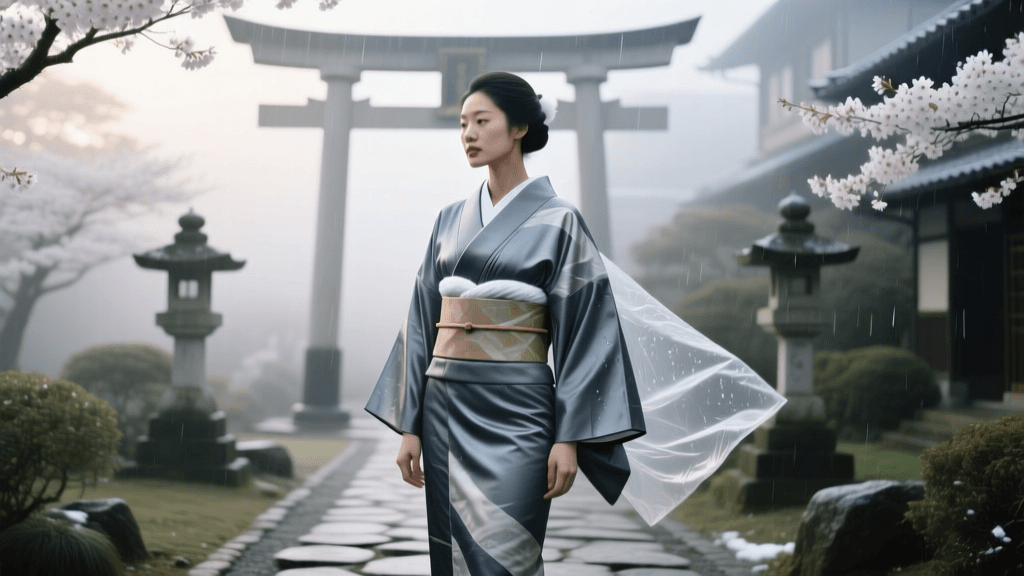
The first line of defense against rain is the outer coat. The michiyuki is a three-quarter-length coat characterized by a distinctive square neckline and snap fasteners. In 2026, modern michiyuki are frequently crafted from advanced polyester-silk blends treated with hydrophobic nano-coatings. These coatings cause water to bead up and roll off the fabric instantly, protecting the kimono underneath. For heavier downpours, the amagappa (a full-length raincoat) provides complete coverage from the shoulders to the ankles. Contemporary amagappa designs now incorporate breathable, waterproof membranes similar to those used in high-end outdoor gear, ensuring the wearer stays dry without overheating.
Footwear: Taka-ashi Geta and Waterproof Tabi
Puddles pose a significant threat to the hem of a kimono. To solve this, traditional wearers utilize taka-ashi geta, which are wooden clogs with exceptionally high teeth (sometimes reaching 10 to 15 centimeters in height). These elevated shoes keep the kimono hem safely above puddles and muddy streets. To protect the feet, modern 2026 innovations include silicone-coated tabi (split-toe socks) and waterproof stretch-fabric tabi covers that slip over traditional cotton socks, providing a complete seal against moisture while maintaining the traditional aesthetic.
The Shigure-gasa: Modernizing the Umbrella
While the traditional shigure-gasa (oiled paper umbrella) is a beautiful accessory, it is highly susceptible to wind damage. Today, kimono enthusiasts favor high-tension fiberglass umbrellas designed to mimic the aesthetic of wagasa (traditional bamboo and paper umbrellas) but engineered to withstand the severe wind gusts accompanying modern typhoons. These umbrellas feature deep canopies that protect the shoulders and upper sleeves of the kimono from wind-blown rain.
Winter Elegance: Beating the Snow and Cold
Wearing silk in freezing temperatures requires a mastery of layering. The kimono system is inherently modular, allowing wearers to add or remove layers to trap body heat effectively. As noted by the Victoria and Albert Museum, the historical layering of the kimono was originally designed not just for aesthetic color combinations, but for vital thermal regulation during harsh winters.
The Layering System: Juban, Hanten, and Haori
The foundation of winter warmth begins with the juban (undergarment). In 2026, thermal hadajuban (the innermost layer worn against the skin) are constructed from ultra-thin, heat-generating phase-change materials. These modern fabrics absorb body moisture and convert it into thermal energy, providing significant warmth without adding the bulk that would ruin the sleek, cylindrical silhouette of the kimono. Over the kimono, a haori (hip-length jacket) adds an extra layer of insulation. For severe cold, the hanten—a heavily padded, quilted jacket traditionally filled with cotton or silk floss—is worn. Modern hanten now utilize lightweight, high-loft synthetic insulations that mimic the warmth of traditional silk floss but are entirely moisture-resistant and machine washable.
Wool and Cashmere Kimono
While silk is the most famous kimono fabric, wool (seri) and cashmere blends are the standard for everyday winter wear. A 2026 trend in winter kimono fashion is the use of sustainably sourced, tightly woven merino wool that naturally repels light snow and retains heat even when damp. These wool kimono are often paired with heavy silk obi (sashes) lined with fleece to protect the lower back and kidneys from the biting wind.
Heated Tabi and Snow Grips
Cold feet are the primary complaint of winter kimono wearers. To combat this, 2026 has seen the widespread adoption of USB-rechargeable heated tabi. These socks feature flexible, ultra-thin micro-wiring woven directly into the toe and heel zones, providing hours of radiant heat. Furthermore, traditional zori (sandals) are fitted with removable micro-spiked rubber soles to provide essential traction on icy and snow-packed streets, preventing dangerous slips while preserving the formal look of the footwear.
Surviving the Scorching Summer: Heatwave Adaptations
Japan's summer heatwaves are notoriously oppressive, combining high temperatures with suffocating humidity. Wearing multiple layers of fabric in such conditions requires specialized sheer textiles and modern cooling technologies. The Metropolitan Museum of Art highlights how historical Japanese weavers developed complex, open-weave structures specifically to allow air circulation during the humid summer months, a tradition that continues to evolve today.
Ro, Sha, and Shijira-ori: The Science of Summer Weaves
From June to August, formal silk kimono are replaced by ro and sha. Ro features a leno weave where warp threads are twisted around each other, creating deliberate, structured gaps in the fabric that allow breezes to pass directly through to the skin. Sha is an even lighter, sheer gauze weave. For casual wear and summer festivals, shijira-ori (a type of cotton seersucker) is the gold standard. The fabric is woven with varying tensions, creating a puckered, textured surface. This texture ensures that the fabric only touches the skin at high points, creating microscopic air channels that wick away sweat and prevent the garment from clinging to the body.
2026 Cooling Innerwear and UV Protection
The most significant advancement in 2026 summer kimono wear is the integration of advanced cooling innerwear. Modern hadajuban are now woven with xylitol-infused yarns and high-capillary moisture-wicking fibers that actively pull sweat away from the body, lowering the skin's surface temperature by up to three degrees Celsius. Additionally, because sheer summer kimono offer little protection from the sun, 2026 textile manufacturers have developed UV-blocking sheer silks. These fabrics are treated with transparent ceramic nanoparticles that reflect harmful ultraviolet rays without altering the delicate, translucent drape of the ro or sha silk.
Strategic Accessories for Heat Management
Accessories play a vital role in summer survival. The sensu (folding fan) and uchiwa (rigid round fan) are not merely decorative; they are essential tools for manual air circulation. In 2026, it is also common to see kimono wearers utilizing traditional-looking parasols (higasa) crafted from modern UV-reflective silver linings, creating a portable shade canopy that drastically reduces the ambient temperature around the wearer's head and shoulders.
2026 Kimono Weather Adaptation Comparison Chart
| Weather Scenario | Primary Outer Layer | Footwear Strategy | Innerwear & Tech (2026) |
|---|---|---|---|
| Heavy Rain / Tsuyu | Hydrophobic Michiyuki or Amagappa | Taka-ashi Geta (high clogs) + Silicone Tabi covers | Moisture-wicking synthetic Juban to prevent sweat buildup under raincoats |
| Snow / Freezing | Wool Haori or Quilted Hanten | Zori with micro-spiked snow grips + Heated Tabi | Phase-change thermal Hadajuban + Fleece-lined Obi |
| Extreme Heatwave | Ro or Sha sheer silk, Shijira-ori cotton | Breathable woven bamboo Zori | Xylitol-infused cooling Hadajuban + UV-blocking sheer textiles |
Conclusion: Honoring Tradition Through Adaptation
The enduring beauty of the kimono lies not in its fragility, but in its remarkable resilience and adaptability. As we navigate the environmental realities of 2026, the intersection of centuries-old weaving techniques and modern textile science ensures that traditional Japanese dress remains a viable, comfortable, and elegant choice for any season. By understanding the specific functions of raincoats, thermal layering systems, and sheer summer weaves, wearers can confidently step outside in any weather, honoring the rich heritage of Asian traditions while embracing the innovations of the future.