Surviving Extreme Weather in Kimono: 2026 Rain, Snow and Heat Guide
Introduction: The Kimono Meets Modern Climate Extremes
The kimono is a masterpiece of Japanese textile art, renowned for its elegant silhouettes and deep cultural significance. However, as global climate patterns shift, wearing traditional Japanese garments in extreme weather has become a unique challenge. According to data from the Japan Meteorological Agency, Japan has experienced increasingly intense summer heatwaves, heavier monsoon downpours, and unpredictable winter snowstorms in recent years. For kimono enthusiasts, practitioners, and tourists navigating the country in 2026, adapting traditional dress to these harsh conditions is no longer optional; it is essential.
Historically, the kimono was designed with seasonal awareness in mind, utilizing specific fabrics, layering techniques, and motifs to reflect the time of year. Yet, the sheer intensity of modern weather extremes requires a blend of traditional wisdom and contemporary innovation. Whether you are attending a summer matsuri, navigating the rainy season, or walking through a snowy Kyoto garden, this comprehensive 2026 guide will equip you with the practical adaptations needed to protect both yourself and your precious garments.
Beating the Heat: Summer Kimono Adaptations
Japanese summers are notoriously hot and humid, often characterized by a suffocating 'mushi-atsui' (steamy heat) that can make wearing multiple layers of silk feel unbearable. The traditional response to summer heat involves transitioning to specific lightweight garments and breathable weaves, but 2026 has brought new technological aids to the forefront of kimono dressing (kitsuke).
Traditional Summer Fabrics: Ro and Sha
For formal and semi-formal summer wear, the kimono world relies on 'ro' (leno weave) and 'sha' (gauze). These fabrics feature intentional gaps in the weaving structure, allowing air to circulate directly against the skin. In 2026, master weavers in regions like Hachioji and Kiryu have refined these techniques to create ultra-lightweight silk blends that offer maximum breathability without sacrificing the structural integrity required for a crisp obi knot. For casual wear, the cotton 'yukata' remains the undisputed champion of summer festivals, with modern 2026 yukata lines featuring pre-treated cooling fibers that lower the fabric surface temperature upon contact with sweat.
Modern Cooling Integrations
The most significant evolution in summer kitsuke is the integration of modern cooling innerwear. While traditionalists once relied solely on a thin cotton 'hadajuban' (undergarment), contemporary dressers now utilize specialized mesh innerwear. Brands have released 2026 editions of kimono-specific cooling undershirts that feature moisture-wicking technology, UV protection, and strategic ventilation panels under the arms and along the back. Furthermore, the 'date-jime' (the wide under-belt used to secure the kimono before tying the obi) is now frequently made from breathable, anti-microbial mesh or even flexible silicone with ventilation holes, preventing the dreaded sweat buildup around the torso.
Essential Summer Accessories
- Sensu (Folding Fan): An absolute necessity. Carrying a sensu tucked into the obi allows for discreet, continuous air circulation.
- Uchiwa (Rigid Fan): Often used in casual settings or during festival dances to generate a stronger breeze.
- Cooling Wipes: Modern practitioners carry menthol-infused biodegradable wipes to dab the neck and wrists, providing instant relief without damaging the silk collar.
Navigating the Rain: Monsoon and Shower Survival
Rain is the natural enemy of silk. The 'tsuyu' (rainy season) in June and July, combined with sudden typhoon-related showers in late summer, poses a severe risk to traditional garments. Water spots can permanently stain silk, while mud splatters can ruin the hem of a prized kimono. Protecting your garment requires a combination of traditional outerwear, modern material science, and specific physical techniques.
Traditional Raincoats and Modern Alternatives
Historically, the 'do-chugake' (a traditional raincoat worn over the kimono) and the 'michiyuki' (a square-necked overcoat) were the primary defenses against rain. However, authentic silk raincoats are cumbersome and difficult to clean. In 2026, the market for synthetic, washable raincoats designed specifically to mimic the drape and aesthetic of traditional michiyuki has exploded. These modern garments are treated with advanced hydrophobic nano-coatings that cause water to bead up and roll off instantly. For those who prefer the authenticity of silk, professional kimono care services now offer post-wear silicone-based waterproofing sprays that provide a temporary, invisible shield against light drizzle.
The Art of Tsumami (Hem Lifting)
When caught in a sudden downpour without a raincoat, practitioners must rely on 'tsumami', the art of lifting the kimono hem. By gracefully pinching the front panels of the kimono skirt and lifting them a few inches above the ankles, the wearer prevents the hem from dragging through puddles and mud. This technique is secured by tucking the excess fabric into the obi or holding it discreetly with one hand while walking. In 2026, specialized magnetic hem-clips have been introduced to the market, allowing wearers to temporarily hitch up their hems in heavy rain without disrupting the overall silhouette or using their hands.
Footwear in Wet Conditions
Traditional 'zori' (sandals) and 'geta' (wooden clogs) are highly susceptible to water damage. The velvet or brocade straps (hanao) can stretch and stain when wet. Today, waterproof silicone zori covers are a staple in the kimono enthusiast's bag. These stretchable, transparent caps slip over the base of the zori, providing excellent traction on wet pavement while keeping the fabric dry. For heavy rain, modern 'ame-geta' (rain clogs) featuring rubberized bases and removable, washable synthetic straps remain the most practical, albeit less formal, choice.
Braving the Snow: Winter Layering Techniques
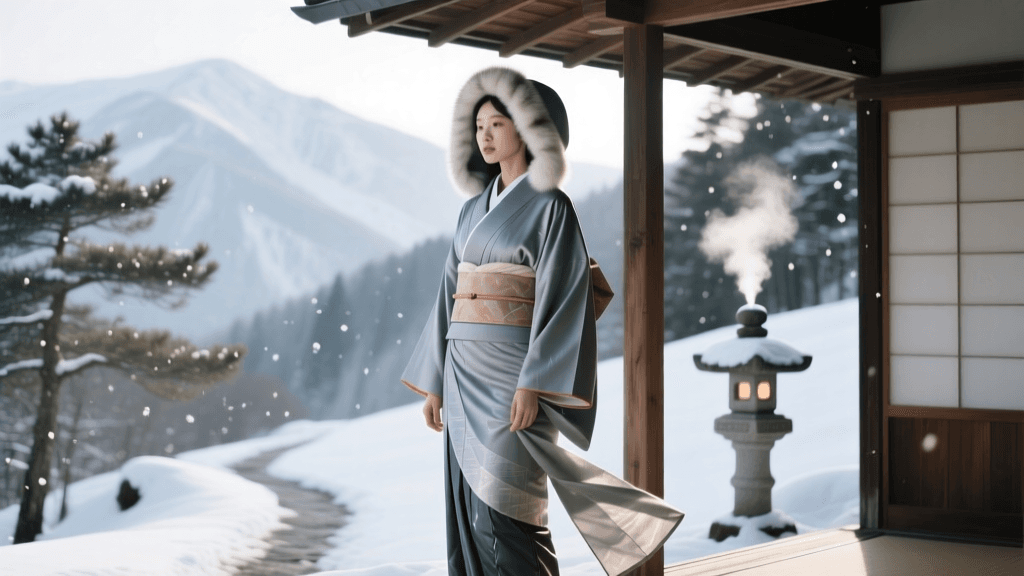
Winter in Japan, particularly in regions like Hokkaido or the mountainous areas of Honshu, brings freezing temperatures and heavy snow. The kimono, by design, is essentially a straight piece of fabric with no inherent insulation. Surviving the cold requires mastering the art of strategic layering and utilizing specialized winter outerwear, a topic extensively documented in the historical archives of institutions like the Victoria and Albert Museum, which notes the evolution of Japanese winter textiles over centuries.
Strategic Thermal Layering
The foundation of winter kitsuke is the 'nagajuban' (long undergarment). In 2026, it is common practice to wear a highly insulated, ultra-thin thermal base layer beneath the nagajuban. Modern thermal fabrics, engineered to trap body heat while remaining less than two millimeters thick, are cut specifically to kimono proportions, ensuring they do not peek out from the collar or sleeves. Additionally, 'haramaki' (thermal belly bands) are worn over the base layer to protect the core from freezing winds, providing crucial warmth without adding bulk that would make tying the obi difficult.
Winter Outerwear: Haori and Michiyuki
Over the kimono, a 'haori' (a hip- or thigh-length jacket) or a 'michiyuki' (a full-length overcoat) is essential. For extreme cold, these garments are lined with down insulation or traditional silk floss wadding. In recent years, ethical faux-fur stoles and collars have become immensely popular, draped over the shoulders or wrapped around the neck to protect the delicate silk collar of the kimono from both the cold and makeup transfer. When walking through deep snow, the wearer must again utilize the tsumami technique to lift the hem, often pairing their outfit with 'yukitake' (snow bamboo) patterned accessories to embrace the seasonal aesthetic.
Winter Footwear and Tabi
Standard cotton 'tabi' (split-toe socks) offer zero insulation against snow and ice. Winter adaptations include fleece-lined tabi and thermal tabi made from modern insulating blends. To protect the feet from snowmelt, practitioners wear 'shigure-zori', which are zori equipped with thick, waterproof vinyl or leather covers that enclose the entire foot, resembling a modern bootie while maintaining the traditional split-toe silhouette. The Japan National Tourism Organization frequently advises winter travelers to prioritize insulated, slip-resistant footwear, a rule that applies just as strictly to traditional dress.
2026 Extreme Weather Kimono Gear Comparison
To help you prepare your kitsuke wardrobe, refer to the comparison table below outlining the best traditional and modern solutions for various weather extremes.
| Weather Condition | Traditional Approach | 2026 Modern Adaptation | Essential Accessory |
|---|---|---|---|
| Extreme Heat | Ro/Sha silk weaves, cotton yukata | Moisture-wicking mesh innerwear, cooling date-jime | Sensu (folding fan) |
| Heavy Rain | Silk do-chugake, wooden ama-geta | Nano-coated synthetic raincoats, silicone zori covers | Magnetic hem-clips |
| Freezing Snow | Silk floss lined haori, layered juban | Ultra-thin thermal base layers, fleece-lined tabi | Faux-fur erimaki (stole) |
| High Humidity | Linen (asa) kimonos | Anti-microbial bamboo-blend undergarments | Cooling menthol wipes |
Conclusion: Embracing the Elements with Confidence
Wearing a kimono in extreme weather is a testament to the resilience and adaptability of Japanese fashion. While the fundamental structure of the garment has remained largely unchanged for centuries, the methods by which we protect and wear it have evolved dramatically. By combining the elegant, time-tested techniques of the past with the cutting-edge textile innovations of 2026, you can confidently navigate scorching summers, torrential rains, and freezing snowstorms. Understanding these adaptations not only preserves the beauty of your garments but also deepens your connection to the rich, living tradition of the kimono, proving that true elegance can weather any storm.