The Kimono Evolution: Heian Court to Edo Dynasty Fashion
Introduction: The Living Canvas of Japanese History
The kimono is globally recognized as the quintessential Japanese garment, a T-shaped, straight-lined robe that has transcended centuries of shifting dynasties, political upheavals, and cultural revolutions. However, the kimono as we know it today is not a static relic of a single era; it is the culmination of over a millennium of sartorial evolution. From the opulent, multi-layered ensembles of the Heian aristocracy to the subtly subversive street styles of the Edo period merchant class, Japanese traditional clothing offers a masterclass in how fashion reflects societal values, economic conditions, and technological advancements. For modern collectors, historians, and enthusiasts, understanding these historical periods is essential not only for appreciating the garment's cultural weight but also for accurately sourcing, sizing, and preserving authentic vintage textiles today.
The Heian Period (794–1185): The Art of Layering and Color
The Heian period marks the zenith of Japanese courtly elegance, an era where aesthetics and poetic sensibility dictated every aspect of aristocratic life. During this dynasty, the primary garment of the elite was not the modern kimono, but the jūnihitoe, a breathtakingly complex ensemble consisting of up to twelve layers of silk robes. According to the Victoria and Albert Museum, the Heian court placed immense importance on kasane no irome—the precise, seasonally appropriate layering of colors. The visible edges of the sleeves and hems were meticulously coordinated to reflect the changing seasons, such as the pale pinks and greens of spring cherry blossoms or the deep crimsons and golds of autumn maples.
Fashion during the Heian period was strictly codified by court rank and season. A misstep in color combination was considered a profound social faux pas, akin to a failure in poetic composition. The sheer volume and weight of the jūnihitoe restricted the physical movement of court women, reinforcing an ideal of secluded, gliding grace. While the jūnihitoe is rarely worn today outside of imperial coronations and highly specific Shinto ceremonies, its legacy survives in the modern kimono's emphasis on seasonal motifs and the layered coordination of the kimono, obi (sash), and obijime (decorative cord).
The Muromachi and Momoyama Periods: The Birth of the Modern Silhouette
As the power of the imperial court waned and the samurai class rose to prominence during the Kamakura and Muromachi periods, the cumbersome layers of the Heian era were abandoned for practicality. The kosode—originally a simple, small-sleeved undergarment worn beneath the grand court robes—emerged as the primary outer garment for both men and women. This transition marked the true genesis of the modern kimono silhouette.
During the subsequent Momoyama period (1568–1600), a time of brief but vibrant unity and immense wealth, the kosode became a canvas for bold, lavish expression. The development of advanced weaving techniques, heavily influenced by imported Chinese textiles and the elaborate costumes of Noh theater, led to the creation of karaori (Chinese-style weaving) and rich gold-leaf appliqué. Garments were characterized by large, dramatic motifs that spanned across the back and shoulders, reflecting the flamboyant, warlord-driven culture of the era.
The Edo Period (1603–1867): Sumptuary Laws and Subversive Street Style
The Edo period, governed by the Tokugawa shogunate, was an era of prolonged peace, strict social stratification, and booming urbanization. The merchant class (chōnin) accumulated vast wealth but were positioned at the bottom of the social hierarchy. To maintain class distinctions, the shogunate enacted strict sumptuary laws (ken'yakurei) that dictated what fabrics, colors, and patterns each class could wear. As noted by the Metropolitan Museum of Art, these laws inadvertently sparked a golden age of textile innovation and subversive fashion.
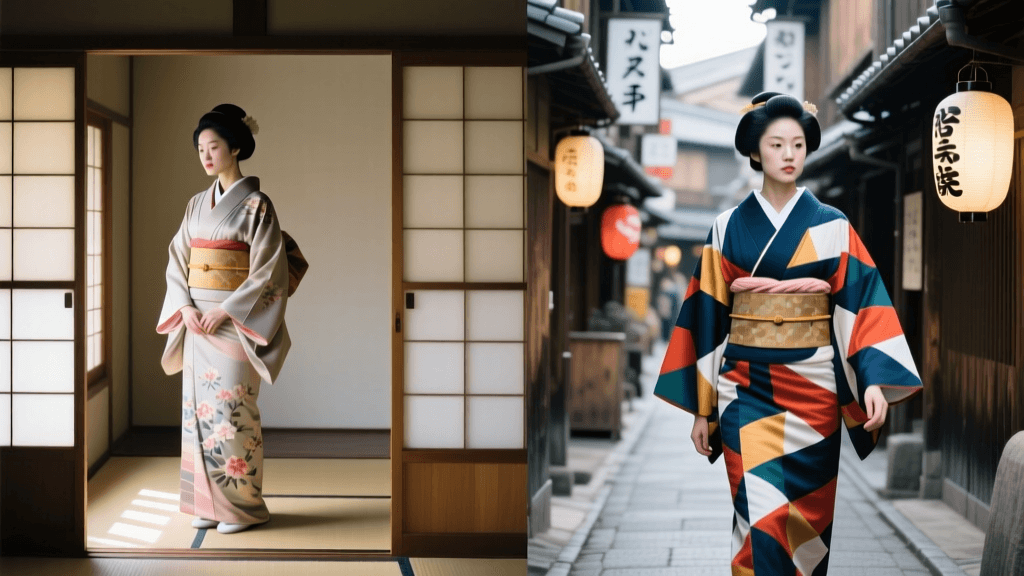
Forbidden from wearing ostentatious silks or bright colors in public, wealthy merchants developed the aesthetic of iki—a refined, understated elegance. A merchant might wear a somber, dark-striped cotton or silk kimono on the outside, but line it with the most exquisite, vibrantly dyed, and expensive silk imaginable. This 'hidden luxury' became a hallmark of Edo sophistication.
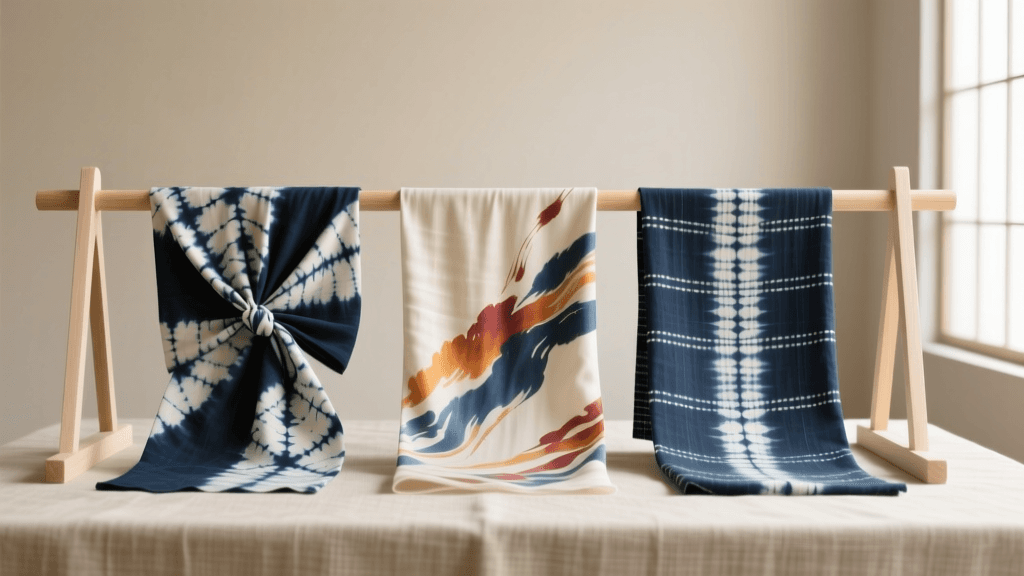
Furthermore, the Edo period saw the invention of yuzen resist-dyeing, a technique utilizing rice paste to create intricate, painterly, and multi-colored designs on silk, bypassing restrictions on woven brocades. It was also during this time that the obi transformed from a narrow, functional tie into a wide, highly decorative sash, with knots moving from the front to the back to accommodate the growing width and to display the elaborate textile artistry of the sash itself.
Comparison Chart: Kimono Evolution Across Dynasties
| Historical Period | Dominant Garment | Key Aesthetic & Technique | Primary Social Driver |
|---|---|---|---|
| Heian (794–1185) | Jūnihitoe (12-layer robe) | Kasane no irome (seasonal color layering) | Imperial court rank and poetic sensibility |
| Muromachi (1336–1573) | Kosode (outerwear) | Noh theater influence, bold woven motifs | Samurai practicality and Zen Buddhism |
| Momoyama (1568–1600) | Kosode with dramatic drape | Karaori weaving, gold-leaf appliqué | Warlord wealth and cultural flamboyance |
| Edo (1603–1867) | Modern Kimono & wide Obi | Yuzen dyeing, Iki (hidden luxury) | Merchant class wealth vs. Sumptuary laws |
Practical Guide: Sourcing and Wearing Vintage Edo & Meiji Kimono Today
For modern collectors and wearers, acquiring a vintage kimono—particularly those echoing the sophisticated aesthetics of the late Edo and subsequent Meiji/Taisho periods—requires an understanding of historical construction, precise measurements, and market dynamics. Unlike Western historical fashion, which is often relegated to museum archives, vintage Japanese garments remain a living, wearable tradition.
Sizing and Measurements: The Geometry of the Kimono
Historical kimono were not tailored to individual body shapes but were constructed from standard bolts of fabric (tanmono), typically 36 cm wide. Adjustments for height and girth were made during the dressing process, specifically through the ohashori (the waist fold). When buying vintage, you must look at two critical measurements:
- Mitake (Body Length): To calculate your ideal vintage kimono length, multiply your height by 0.6. For example, a person who is 165 cm tall requires a kimono with a back length (semitake) of approximately 99 cm. Vintage garments often range from 90 cm to 110 cm in length.
- Haba (Width): A standard historical kimono has a flat width of about 60 to 64 cm. When wrapped, this comfortably fits a hip measurement of up to 100 cm. If your hips exceed 100 cm, you will need to seek out modern, wide-width (hiro-haba) garments, as true Edo or Meiji antiques will not provide adequate overlap at the front.
- Yuki (Sleeve Length): Measured from the center back of the neck to the wrist. The formula is (Arm span / 2) + 2 cm. Standard vintage yuki is usually around 62-64 cm, which suits most average heights.
Sourcing Authentic Antiques: Timing and Locations
The best place to source authentic historical textiles is Kyoto, the heart of Japan's textile industry. For the most authentic experience and competitive pricing, time your visit with the monthly flea markets. The Toji Temple Flea Market (held on the 21st of every month) and the Kitano Tenmangu Market (held on the 25th) are premier destinations. Arrive at dawn (around 5:00 AM) for the first pick of estate-clearance silk. For high-end, verified Edo and Meiji period antiques, specialized antique dealers in the Shinmonzen district of Kyoto offer museum-quality pieces, though at a significant premium.
Budgeting: Costs of Acquisition and Preservation
Understanding the market value of historical garments is crucial. While a modern, mass-produced polyester kimono might cost $50, authentic antiques carry different price tags based on condition, technique, and era:
- Late Edo / Meiji Era Silk (1868–1912): Expect to pay between $150 and $500 USD for wearable condition pieces featuring hand-painted yuzen or intricate shibori (tie-dye). Pieces with heavy gold thread (surihaku) can exceed $1,500.
- Taisho / Early Showa Era (1912–1940s): Often featuring bold, Art Deco-influenced motifs, these are highly wearable and typically range from $80 to $250 USD at flea markets.
- Professional Cleaning (Arai-hari): Historical silk should never be dry-cleaned using Western chemicals. The traditional Japanese method involves unsewing the garment, washing the fabric panels in water, stretching them on wooden frames to dry, and re-sewing them. Budget between $150 and $250 USD for this service, and allow 4 to 8 weeks for completion.
'The preservation of Edo and Meiji period textiles is not merely about preventing moth damage; it is about maintaining the structural integrity of the silk fibers through traditional tension-stretching. A properly maintained antique kimono can easily outlive its modern counterparts.' — Conservation guidelines from the Kyoto National Museum.
Conclusion
The journey of the kimono from the Heian court's layered poetry to the Edo period's subversive street style is a testament to the resilience and adaptability of Japanese craftsmanship. By understanding the historical context, sumptuary laws, and technological innovations that shaped these garments, modern enthusiasts can do more than simply wear a piece of clothing; they can drape themselves in a living, breathing chapter of Asian history. Whether you are calculating the precise mitake for a Meiji-era yuzen silk or admiring the hidden luxury of an Edo merchant's lining, the kimono remains an unparalleled intersection of art, history, and fashion.