The Ultimate Guide to Kimono Care, Cleaning & Storage
The Lifelong Art of Kimono Preservation
Owning a traditional Japanese kimono is an investment in wearable art, cultural heritage, and meticulous craftsmanship. Whether you possess a vibrant silk furisode, a subdued wool komon, or a casual cotton yukata, proper maintenance is critical to ensuring the garment survives for generations. Unlike modern Western clothing designed for frequent machine washing and disposable lifecycles, kimono are constructed with longevity and eventual deconstruction in mind. However, the very materials that make them exquisite—natural dyes, delicate silk weaves, and intricate embroidery—also make them highly vulnerable to moisture, ultraviolet light, and biological pests.
Japan's notoriously humid summers pose a unique challenge for textile preservation, leading to the development of specialized care rituals like mushi-boshi (insect airing) and arai-hari (traditional washing). For modern collectors, vintage enthusiasts, and cultural practitioners worldwide, adapting these time-honored techniques to contemporary environments is essential. This comprehensive guide details the precise methods for cleaning, folding, and storing your kimono to protect both its structural integrity and its historical value.
Understanding Your Kimono Fabric
Before applying any cleaning or storage method, you must accurately identify the textile. The care regimen for a silk crepe (chirimen) differs vastly from that of a modern polyester blend.
- Silk (Kinu): The most prestigious and delicate fabric. Silk is highly susceptible to water spotting, UV degradation, and protein-eating pests like carpet beetles. It requires strict climate control and specialized cleaning.
- Cotton (Momen): Commonly used for yukata and everyday wear. Cotton is durable, breathable, and can generally withstand gentle hand or machine washing, though indigo-dyed cotton may bleed.
- Wool (Uru): Frequently used for modern casual kimono and haori jackets. Wool is warm and resists wrinkles but is a primary target for moth larvae.
- Synthetic (Polyester/Rayon): Modern washable kimono are increasingly popular for their affordability and ease of care, though they lack the breathability and drape of natural fibers.
How to Clean a Kimono Safely
Spot Cleaning Silk and Delicate Textiles
Never submerge a silk kimono in water. Water can cause the natural dyes to run and the fabric to shrink or warp irreparably. For minor stains, use a specialized silk spot cleaner or a dilute solution of mild, pH-neutral detergent (such as Orvus WA Paste) and distilled water. Gently dab the stain with a microfiber cloth, working from the outside of the stain inward to prevent spreading. Always test an inconspicuous area, such as the inside hem, before treating visible sections.
The Traditional Art of Arai-Hari
When a silk kimono requires a full cleaning, the traditional Japanese method is arai-hari. This intricate process involves completely unstitching the garment into its original flat rectangular panels (tanmono). The panels are then washed, stretched on wooden boards (shinshibari), and dried to restore the fabric's original tension and dimensions. Finally, the kimono is meticulously resewn by hand. Because this process requires master artisans, arai-hari is expensive—typically costing between $150 and $300 USD—and can take one to three months to complete. However, it is the only way to thoroughly clean and preserve an antique or high-value silk kimono without damaging its structure.
Washing Cotton Yukata and Synthetics
Cotton yukata and synthetic kimono can be washed at home. Turn the garment inside out, fold it loosely, and place it inside a large mesh laundry bag to protect the seams. Use cold water and a gentle, bleach-free detergent on a delicate cycle. Never use a tumble dryer; instead, reshape the garment while damp and hang it in a shaded, well-ventilated area. As noted by the Victoria and Albert Museum, silk and delicate natural fibers are highly susceptible to light damage, meaning even cotton dyed with natural pigments should be dried away from direct sunlight to prevent fading.
The Art of Folding: The Tatou Method
Kimono are never hung on standard hangers for long-term storage, as the weight of the fabric will distort the shoulders and stretch the delicate silk. Instead, they are folded using a precise geometric method known as tatou. When folded correctly, a kimono becomes a neat, flat rectangle measuring approximately 35 cm by 25 cm (14 x 10 inches), allowing it to be stacked evenly without placing stress on any single seam.
- Lay the kimono face down on a clean, dry surface.
- Fold one side of the body panel inward along the back seam.
- Fold the opposite side over, aligning the edges to create a long, narrow rectangle.
- Fold the sleeves back so they do not extend beyond the body's width.
- Fold the bottom hem up to meet the collar, then fold the garment in half or thirds depending on its length.
Always handle the fabric with clean, dry hands, and avoid pulling the seams. The goal is to trap air between the folds, which helps prevent hard creases from setting into the silk.
Proper Kimono Storage Solutions
Choosing the Right Storage Materials
Never store a kimono in plastic bags or plastic bins. Plastic traps moisture and off-gasses chemicals that can yellow silk and degrade fibers over time. The Canadian Conservation Institute strongly recommends avoiding plastic enclosures for historic textiles, advocating instead for breathable, acid-free environments.
Wrap each folded kimono in tatoushi—traditional Japanese storage paper made from 100% acid-free washi. This paper allows the textile to breathe while protecting it from dust, light, and sudden humidity shifts. A pack of high-quality tatoushi typically costs between $15 and $25 USD.
The Paulownia Tansu (Kiri Chest)
The gold standard for kimono storage is the tansu, a traditional Japanese chest crafted from Paulownia wood (kiri). Paulownia is lightweight, naturally resistant to insects, and possesses unique hygroscopic properties. When the ambient humidity rises, the wood swells, sealing the drawers and preventing moisture from reaching the textiles inside. When the air is dry, the wood contracts, allowing ventilation. While an authentic kiri tansu can cost anywhere from $500 to over $3,000 USD, it is a lifelong investment for serious collectors.
Climate Control and Pest Prevention
Ideally, kimono should be stored in an environment with a stable temperature of 18-20°C (65-68°F) and a relative humidity of 45-55%. To deter pests, place natural camphor blocks or untreated cedar wood pieces in the drawers. Avoid traditional mothballs containing naphthalene or paradichlorobenzene, as their chemical fumes can melt synthetic threads, tarnish metallic embroidery, and leave a pervasive, nearly impossible-to-remove odor.
Mushi-Boshi: The Annual Airing Ritual
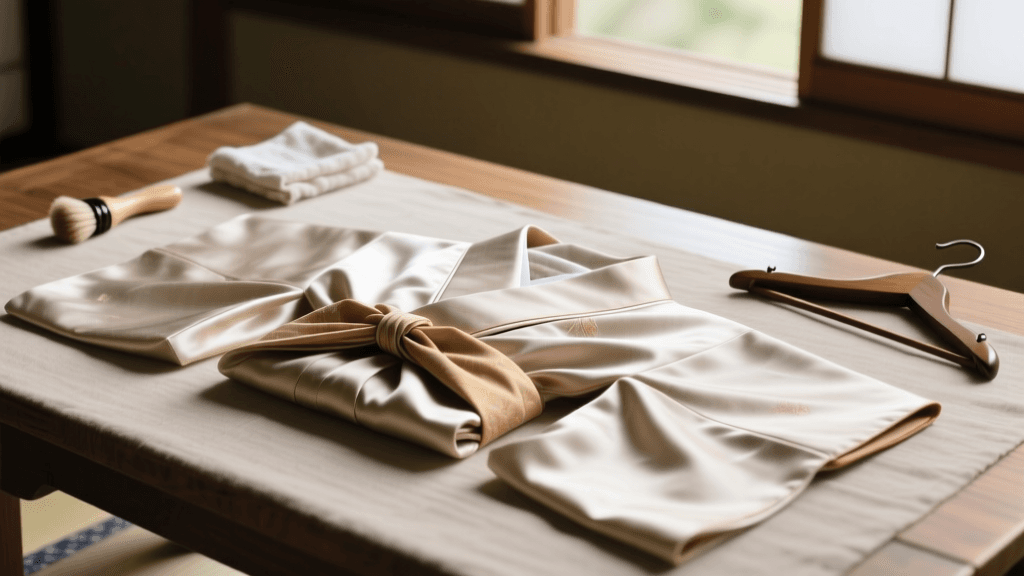
Twice a year—ideally in late autumn and late winter—kimono should undergo mushi-boshi (airing out). Remove the garments from their chests, unwrap them from their tatoushi, and lay them flat on clean sheets in a shaded, dry, and well-ventilated room for a few hours. This process allows trapped moisture to escape, prevents mold growth, and gives you the opportunity to inspect the textiles for early signs of foxing, insect damage, or dye transfer.
Kimono Care and Maintenance Comparison Chart
| Fabric Type | Cleaning Method | Storage Requirement | Pest Vulnerability | Airing Frequency |
|---|---|---|---|---|
| Silk (Kinu) | Spot clean / Professional Arai-Hari | Washi paper + Paulownia chest | High (Carpet beetles) | Every 6 months |
| Cotton (Momen) | Hand wash / Gentle machine wash | Washi paper + Wooden drawer | Low | Annually |
| Wool (Uru) | Dry clean / Professional press | Washi paper + Cedar blocks | High (Moths) | Every 6 months |
| Synthetic | Machine wash (cold, gentle) | Cotton bag / Breathable box | None | Annually |
Expert Insights on Textile Longevity
'A kimono is not merely a garment; it is a living archive of the artisan's hand. The threads hold the tension of the loom, and the dyes hold the memory of the season. To care for it is to participate in its ongoing creation.' — Traditional Kyoto Textile Artisan
According to the Smithsonian Museum Conservation Institute, the primary enemies of historic textiles are light, pests, and fluctuating environmental conditions. By mimicking the museum-grade storage protocols adapted for home use—such as utilizing acid-free barriers and maintaining strict climate boundaries—collectors can ensure their garments remain vibrant and structurally sound.
Conclusion
Caring for a kimono requires patience, respect for traditional methodologies, and an understanding of material science. While the rituals of tatou folding, tatoushi wrapping, and mushi-boshi airing may seem meticulous, they are the very practices that have allowed Japanese textiles to survive for centuries. Whether you are preserving a family heirloom or maintaining a rental collection, adhering to these specialized care guidelines will ensure your kimono continue to tell their stories for generations to come.