How Chinese TV Dramas Shape Modern Hanfu Fashion Trends
The 'Drama Effect' on Traditional Chinese Garments
In recent years, the global explosion of Chinese television dramas has done much more than entertain audiences; it has sparked a massive revival in traditional clothing. The 'Hanfu Movement,' which seeks to revive the historical dress of the Han Chinese, has been heavily catalyzed by the visual splendor of C-dramas. According to cultural reports from Sixth Tone, the Hanfu market has grown into a multi-billion-dollar industry, driven largely by young consumers who want to emulate the breathtaking aesthetics of their favorite on-screen protagonists.
Costume designers for hit shows like The Story of Minglan, The Untamed, and Nirvana in Fire meticulously research historical texts, paintings, and textile fragments to recreate garments from the Song, Ming, and Wei-Jin periods. However, translating these dramatic, screen-accurate costumes into wearable, everyday fashion requires a strategic approach. This guide will break down how Chinese TV dramas influence modern Hanfu trends and provide actionable advice on how to recreate these iconic looks for real-world wear, cosplay, and travel photography.
Decoding Iconic Genres: Xianxia vs. Historical Court
Chinese historical and fantasy dramas generally fall into two distinct visual categories, each dictating a different approach to fabric, silhouette, and styling.
Xianxia (Immortal Heroes): The Ethereal Aesthetic
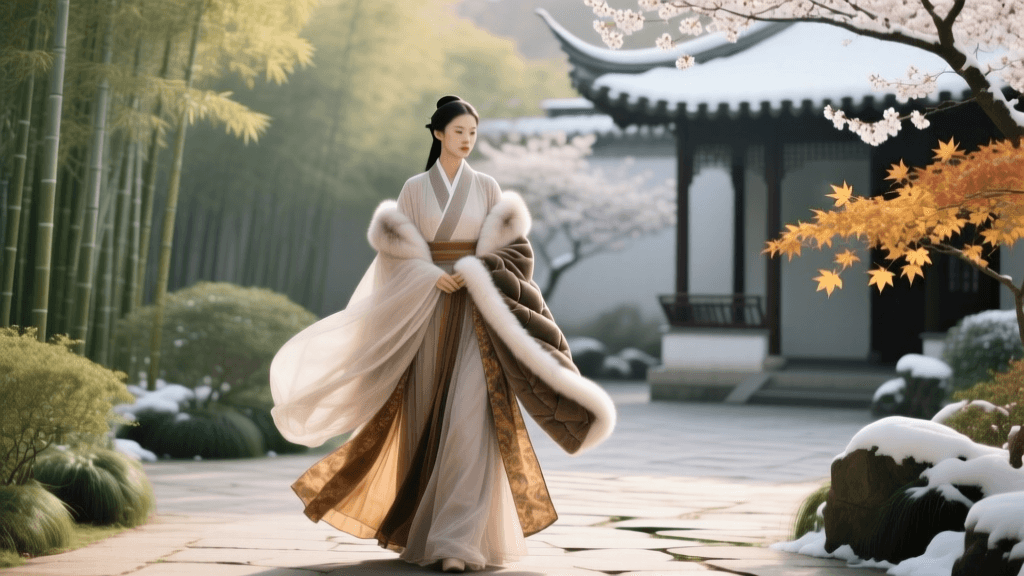
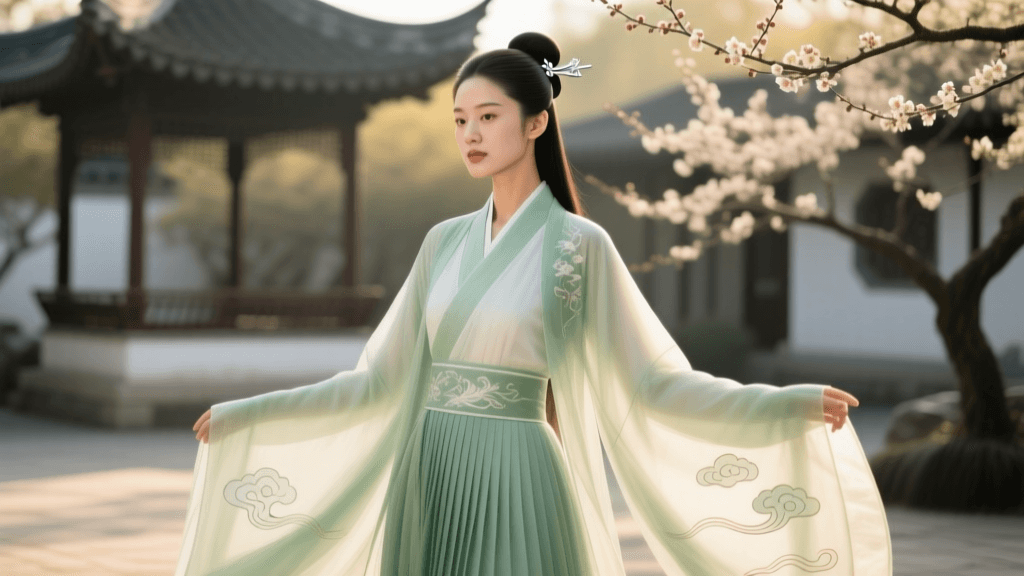
Shows like The Untamed (Chen Qing Ling) and Eternal Love popularized the 'Xianxia' aesthetic. This style is characterized by flowing, weightless fabrics, dramatic wide sleeves, and layered, asymmetrical collars. The goal on screen is to create a sense of movement and otherworldly grace, especially during martial arts wire-work sequences.
- Key Garments: Daxiushan (large-sleeved robes) and Guangxiu (wide-sleeve tops).
- Screen Fabrics: Multiple layers of silk organza, chiffon, and lightweight georgette to catch the wind.
- Everyday Adaptation: To wear Xianxia-inspired Hanfu without tripping over your sleeves, opt for a Jiaoling Ruqun (cross-collar top and skirt) with modified sleeve widths. While screen costumes often feature sleeve openings exceeding 80cm, an everyday adaptation should measure between 35cm and 45cm. Choose a cotton-linen blend or matte polyester chiffon for better drape and easier maintenance.
Historical Court & Wuxia: Grounded Elegance
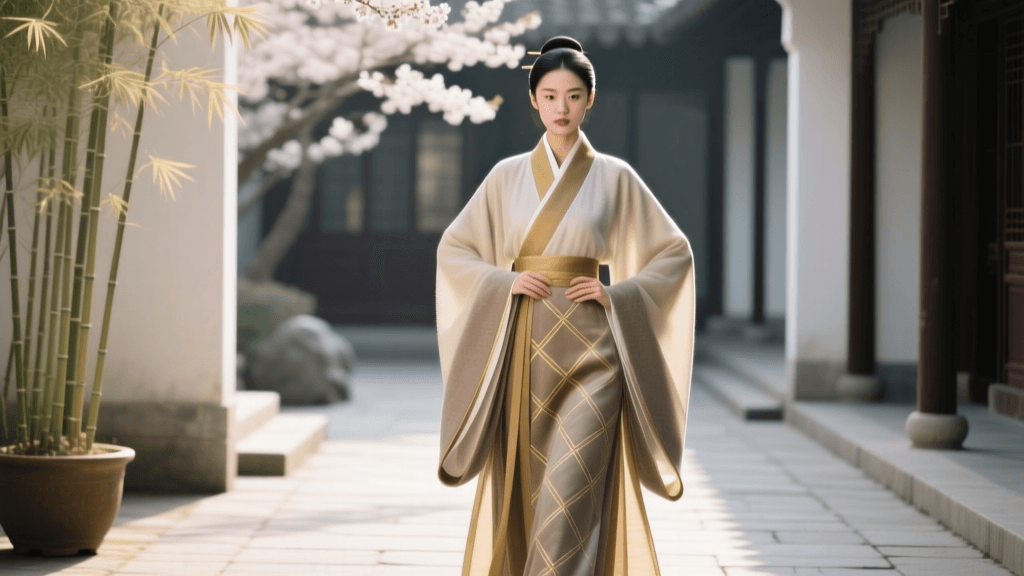
Conversely, historical court dramas such as The Story of Minglan (Song Dynasty) and Empresses in the Palace or Erta (Ming Dynasty focus) emphasize structure, modesty, and intricate textile weaves. The Ming Dynasty Aoqun (jacket and skirt) and the iconic Mamianqun (horse-face skirt) have become the undisputed champions of the modern Hanfu streetwear movement.
- Key Garments: Pipa-sleeve Ao (jackets with curved, tapered sleeves) and pleated Mamianqun.
- Screen Fabrics: Heavy brocades, damask, and jacquard weaves that reflect opulent court life.
- Everyday Adaptation: The Mamianqun is incredibly practical for modern life. For a drama-inspired look that works in an office or cafe setting, select a skirt with a 60cm to 70cm flat front panel and knife pleats on the sides. A standard everyday length is 100cm to 105cm (hitting just above the ankle), whereas screen-accurate dramatic skirts often measure 120cm or more, requiring traditional embroidered cloth shoes to avoid hem-drag.
Practical Guide: Recreating Screen Looks on a Budget
One of the biggest hurdles for drama fans is the cost and practicality of screen-accurate costumes. Television productions often spend thousands of dollars on a single hero garment, featuring hand-embroidered motifs and custom-woven silk. Fortunately, the modern Hanfu market offers tiered options for fans.
| Feature | Screen-Accurate Custom | High-End Brand Replica | Everyday Taobao Adaptation |
|---|---|---|---|
| Cost (USD) | $500 - $2,000+ | $150 - $300 | $30 - $70 |
| Fabric | 100% Mulberry Silk, Real Gold Thread | Silk Blends, High-Grade Jacquard | Polyester, Cotton-Linen |
| Sleeve Width | 80cm - 120cm (Dramatic) | 60cm - 80cm (Statement) | 35cm - 50cm (Practical) |
| Skirt Length | 120cm+ (Floor-sweeping) | 110cm (Ankle-length) | 95cm - 105cm (Mid-calf/Ankle) |
| Care | Dry Clean Only | Hand Wash / Delicate | Machine Washable |
Actionable Sourcing Tip: When shopping on platforms like Taobao or specialized international Hanfu retailers, search for terms like 'Minghuatang' or 'Shisanyu' for high-end, drama-adjacent quality. For budget-friendly, everyday adaptations, look for the keyword 'Gailiang' (改良), which translates to 'modified' or 'improved,' indicating that the garment has been tailored for modern convenience while retaining historical silhouettes.
Styling and Accessorizing Like a Protagonist
A C-drama costume is never complete without its intricate hair styling and accessories. As noted by BBC Culture, the visual impact of Hanfu on social media platforms like TikTok and Douyin relies heavily on the complete 'look,' including traditional headwear and makeup.
Hair Accessories: Zan, Buyao, and Guan
In historical dramas, a character's social status is often communicated through their hair accessories. To recreate this:
- The Buyao (步摇): Translating to 'step-sway,' these are hairpins with dangling ornaments. Screen versions are heavy, made of brass or jade, and can cause headaches after hours of wear. Practical advice: Purchase lightweight alloy or resin Buyao for conventions and photoshoots, and use a modern claw clip as a hidden base to distribute the weight.
- The Guan (冠): Male characters in Wuxia dramas often wear elaborate topknots secured by a Guan (crown/cap) and a hair stick (Zan). For everyday styling, a simple wooden or bamboo Zan paired with a half-up, half-down hairstyle captures the scholarly essence of shows like Word of Honor without the need for complex wig styling.
Drama-Inspired Makeup
Screen makeup for historical dramas emphasizes a porcelain base, elongated 'phoenix' eyeliner, and deep red or plum lip tints. A hallmark of Tang and Song dynasty screen adaptations is the Huadian (花钿), a decorative forehead motif. While screen actors use hand-painted makeup, modern enthusiasts can use cosmetic-grade gold leaf flakes or pre-cut velvet stickers to achieve this regal, drama-ready look in seconds.
The Cultural Impact and Future of Drama-Led Fashion
The synergy between the Chinese television industry and the Hanfu market is a prime example of soft power and cultural export. Streaming giants like iQIYI and Tencent frequently collaborate with Hanfu brands to release 'official drama merchandise,' allowing fans to purchase exact replicas of a protagonist's outfit immediately after a viral episode airs. This direct-to-consumer pipeline has transformed Hanfu from a niche historical hobby into a mainstream fashion movement.
Furthermore, the influence of C-dramas has expanded beyond China's borders. International fans are increasingly participating in Hanfu travel photography, wearing Ming dynasty Mamianqun in front of European palaces or Song dynasty Ruqun in Japanese gardens, creating a cross-cultural visual dialogue. The meticulous research done by drama costume departments has effectively created a global, visual textbook for traditional Asian garments.
Conclusion: Bringing the Screen to the Streets
Chinese TV dramas have undeniably redefined the modern perception of traditional Asian fashion, proving that historical garments can be both deeply meaningful and visually stunning. By understanding the distinction between screen-accurate theatricality and everyday practicality, fans can successfully translate the magic of Xianxia and historical court dramas into their own wardrobes. Whether you are investing in a silk-blend Mamianqun for a formal event or styling a modified cross-collar top with modern denim, the legacy of C-drama costume design continues to weave itself into the fabric of contemporary global fashion.