Reviving Kesi Silk Tapestry & Drawloom Weaving in 2026
Reviving Kesi Silk Tapestry and the Ancient Drawloom in 2026
The year 2026 marks a profound renaissance in traditional Asian textile arts, driven by a global demand for sustainable luxury and the booming Xin Zhongshi (new Chinese style) movement. At the forefront of this revival are the ancient Chinese techniques of Kesi (silk tapestry) and the intricate mechanics of the Song dynasty drawloom (Hualou). Once reserved exclusively for imperial dragon robes and sacred Buddhist sutras, these meticulous weaving methods are now being adapted by contemporary artisans and boutique studios worldwide. For textile enthusiasts, historians, and modern weavers, understanding the mechanics, sourcing, and studio setup of these traditional looms offers a direct thread to China’s rich sartorial heritage.
The Resurgence of Kesi Silk Tapestry
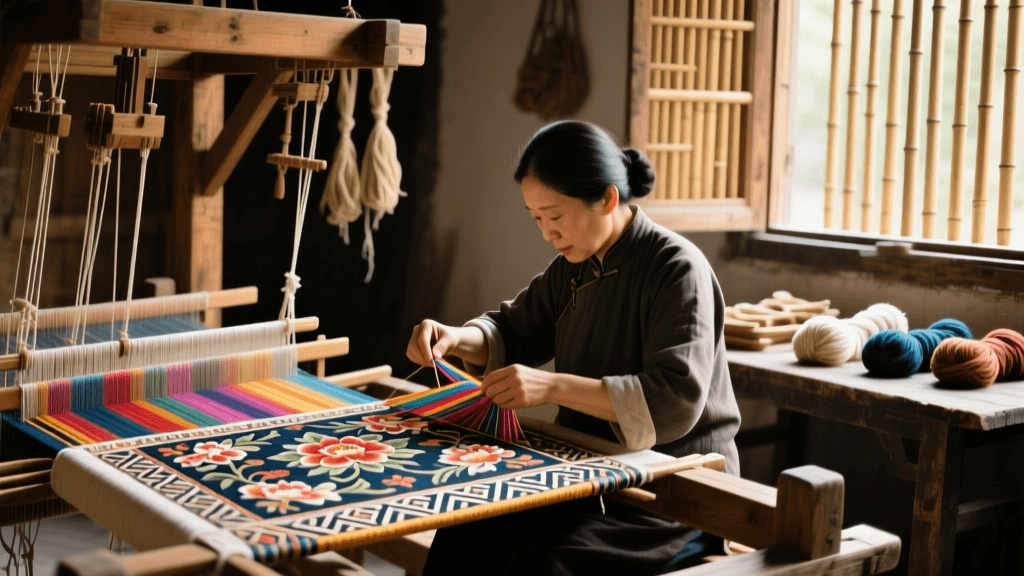
Kesi, which translates to 'cut silk,' is one of the most revered and time-consuming weaving techniques in Chinese history. Unlike continuous weft brocades, Kesi employs a slit-tapestry method where the weft threads are woven back and forth only in the areas where a specific color is needed. This creates tiny slits between color blocks, giving the fabric a carved, sculptural quality that looks identical on both sides.
According to the Metropolitan Museum of Art's Heilbrunn Timeline of Art History, Kesi reached its zenith during the Song Dynasty (960–1279 CE), where weavers essentially 'painted' with silk threads, replicating masterful landscape scrolls and calligraphy. In 2026, modern Kesi artisans are merging these ancient slit-tapestry techniques with contemporary fashion silhouettes. High-end ateliers in Suzhou and Hangzhou are now utilizing ethically sourced, unbleached mulberry silk to create Kesi panels for modern trench coats, structured corsets, and bespoke interior screens, commanding premium prices in the sustainable luxury market.
Anatomy of the Modernized Song Drawloom (Hualou)
To weave complex patterned silks like Yunjin (cloud brocade) or elaborate Kesi backgrounds, weavers historically relied on the Hualou, or drawloom. This massive, two-story wooden loom requires two operators: the weaver, who sits at the base managing the shuttle and beaters, and the 'drawboy' (or pattern harness operator), who sits atop the loom pulling the pattern cords to lift specific warp threads.
While the fundamental mechanics of the Hualou remain unchanged, 2026 has seen remarkable ergonomic and technological adaptations in artisan studios. Modern replicas of the Song drawloom now feature aerospace-grade aluminum pulleys hidden within traditional rosewood frames to reduce friction and physical strain. Furthermore, studios are utilizing AI-assisted pattern drafting software to calculate the exact cord-pulling sequences, which are then translated into physical jacquard-style harnesses for the drawboy. Despite these updates, the actual interlacing of the silk remains entirely manual, preserving the intangible cultural heritage recognized by global institutions.
Sustainable Silk Sourcing in 2026
The soul of any traditional Chinese textile is its silk. In 2026, the integration of blockchain traceability has revolutionized how weavers source their materials. Artisans can now scan a QR code on their silk skeins to verify the exact mulberry farm in Zhejiang province, the harvesting date, and the natural dyeing vats used. This transparency is crucial for weavers practicing authentic Kesi, as the tensile strength and luster of the silk dictate the final tapestry's longevity.
Below is a comparative guide to the silk specifications required for traditional Kesi versus standard continuous-weft brocade weaving.
| Parameter | Kesi Tapestry Silk | Standard Brocade Silk |
|---|---|---|
| Warp Thread | Highly twisted, degummed mulberry silk (20/22 denier) | Lightly twisted, gummed or semi-degummed silk |
| Weft Thread | Loosely twisted, thick, vibrant dyed silk (multiple plies) | Continuous weft, often interwoven with metallic threads |
| Tension Requirement | Extremely high and uniform warp tension | Moderate tension, adjusted per pattern block |
| Yield per Day | Approx. 2 to 5 square centimeters | Approx. 5 to 10 centimeters (length) |
Setting Up a Traditional Loom Studio in 2026
For dedicated weavers looking to establish a traditional Chinese weaving studio, the investment in authentic equipment is substantial but deeply rewarding. Sourcing a custom-built, authentic Hualou drawloom from master woodworkers in Nanjing currently costs between $8,500 and $14,000 USD in 2026, factoring in sustainable timber sourcing and international freight. For those focusing strictly on Kesi, a traditional flat tapestry loom (Pingji) is more accessible, ranging from $1,200 to $2,500 USD.
When configuring your studio space, environmental control is paramount. Silk is highly hygroscopic. The Smithsonian's National Museum of Asian Art notes that historical silk artifacts require strict humidity controls to prevent the protein fibers from becoming brittle. Modern studios must maintain a relative humidity of 50% to 55% and a temperature of around 68°F (20°C) to ensure the silk warp threads do not snap under the immense tension of the drawloom.
Natural Dyeing for the Modern Drawloom
The vibrant colors seen in ancient Kesi tapestries were derived entirely from nature, and the 2026 eco-conscious market has sparked a massive return to these botanical dyes. Artisans are moving away from synthetic acid dyes, opting instead for traditional Chinese dye plants like Indigofera tinctoria (indigo), Rubia cordifolia (madder root), and Sophora japonica (pagoda tree buds for brilliant yellows).
Preparing silk for these natural dyes requires a meticulous mordanting process using alum or iron-rich mud, ensuring the colors remain lightfast despite the friction of the drawloom's heddles. A single master dyer can spend weeks preparing the gradient silk skeins required for a single Kesi landscape motif, where the weft threads must transition seamlessly from deep indigo to pale moonlight blue. This dedication to botanical color palettes not only reduces the chemical runoff associated with modern textile production but also imbues the final garment with a subtle, organic depth that synthetic dyes simply cannot replicate.
Mastering the Shuttle and the Slit
The actual weaving process of Kesi requires profound patience and dexterity. The weaver uses small, boat-shaped shuttles, each loaded with a different colored weft thread. Unlike modern floor looms that use foot treadles to open the shed, the traditional Kesi loom relies on the weaver manually manipulating the warp threads with a bamboo comb and inserting the weft.
The defining technique is the 'slit' creation. When a color block ends, the weft is simply turned back around the adjacent warp thread, leaving a vertical slit. In 2026, contemporary textile artists are intentionally exaggerating these slits, using them as structural design elements in garments, allowing light to pass through the tapestry and creating dynamic, layered silhouettes that honor the ancient 'cut silk' nomenclature while pushing the boundaries of modern fashion.
Preserving the Heritage
As the Xin Zhongshi movement continues to dominate Asian fashion weeks in 2026, the appreciation for the grueling labor behind traditional looms has never been higher. Consumers and designers alike are recognizing that true luxury lies in the time, heritage, and human touch embedded in every centimeter of hand-woven silk. By investing in traditional drawlooms and mastering the Kesi technique, today's weavers are not merely replicating the past; they are actively preserving a living, breathing art form for the next generation of global textile connoisseurs.