The Haori Jacket: Japanese Outerwear in Global Pop Culture
The Haori's Journey from Edo to the World
The haori is a traditional Japanese hip- or thigh-length jacket, characterized by its wide sleeves, open front, and lack of overlapping lapels. Originally worn by samurai as a protective layer over armor during the Muromachi period (1336-1573), the garment evolved significantly during the Edo period (1603-1867). As sumptuary laws restricted the merchant class from wearing overtly luxurious clothing, the haori became a canvas for hidden opulence, with intricate, hand-painted linings concealed beneath modest exteriors. According to the Victoria and Albert Museum's Asian collections archive, this duality of modest exterior and lavish interior remains a hallmark of Japanese textile artistry.
Today, the haori has transcended its historical roots to become a global fashion phenomenon. Driven by the explosive international popularity of Japanese media, anime, and high-fashion streetwear, the haori is no longer confined to formal ceremonies or martial arts dojos. It has been reimagined by global pop culture icons, musicians, and avant-garde designers, cementing its place in the modern wardrobe.
The Haori in Anime, Cinema, and Music
Anime and the 'Cosplay Effect'
The global anime boom has been the single largest catalyst for the haori's modern resurgence. In hit series like Demon Slayer: Kimetsu no Yaiba, the protagonist Tanjiro Kamado wears a striking black-and-green ichimatsu (checkerboard) haori. This specific design has become so iconic that it is instantly recognizable worldwide, driving massive demand for both authentic replicas and modernized streetwear interpretations. Similarly, characters in Jujutsu Kaisen and Bleach frequently don haori-style outerwear, associating the garment with power, mystique, and kinetic movement.
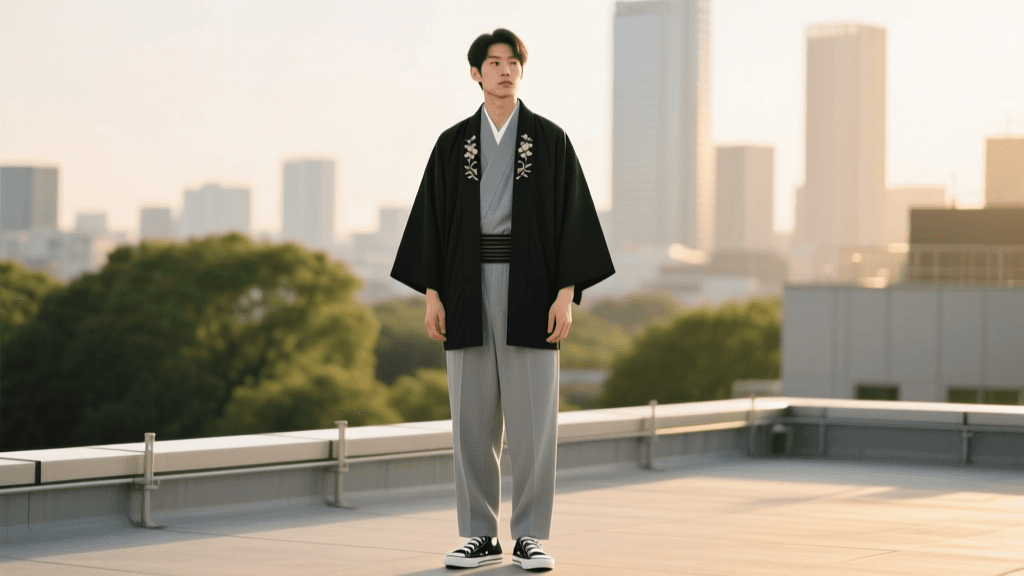
This 'cosplay effect' has bled into everyday fashion. Fans no longer reserve these garments for conventions; they integrate lightweight, cotton-blend haori jackets into their daily streetwear rotation, pairing them with graphic tees and sneakers. The The Japan Foundation frequently highlights how 'Cool Japan' media exports directly stimulate global interest in traditional crafts and garments, bridging the gap between 2D animation and 3D textile appreciation.
Hip-Hop and High Fashion
Beyond anime, the haori has been embraced by the global music and high-fashion industries. Hip-hop artists like A$AP Rocky and Pharrell Williams have frequently incorporated Japanese outerwear, including haori and sukajan (souvenir jackets), into their stage outfits, blending East Asian heritage with Western urban aesthetics. On the runway, designers like Yohji Yamamoto and Rei Kawakubo (Comme des Garçons) have long deconstructed the haori's silhouette, while brands like Kapital and Louis Vuitton have released luxury haori-inspired jackets featuring sashiko stitching and monogram prints, often retailing for upwards of $2,000.
Anatomy and Measurements: How to Buy a Haori
Whether you are sourcing a vintage silk piece from a Kyoto market or buying a modern cotton streetwear version online, understanding traditional Japanese measurements is crucial. Unlike Western clothing, which focuses on chest and shoulder width, Japanese garments are measured linearly.
Key Measurements for the Perfect Fit
- Mitake (Back Length): Measured from the base of the collar down the center back to the hem. For a modern streetwear look, men should look for 75 cm to 85 cm (29-33 inches), while women often prefer 65 cm to 75 cm (25-29 inches) for a cropped, boxy silhouette.
- Yuki (Sleeve Length): Measured from the center back of the neck, across the shoulder, and down to the wrist. A standard men's haori will have a yuki of 75-80 cm (29-31 inches), creating a relaxed, dropped-shoulder effect.
- Sodetake (Sleeve Depth): The vertical length of the sleeve opening. Traditional haori feature deep sleeves (often 45-50 cm or 18-20 inches) to accommodate the layers of a kimono underneath. Modern streetwear versions may have shallower sleeves (30-35 cm) for easier layering over hoodies.
- Mihaba (Body Width): Measured across the back from side seam to side seam. A comfortable modern fit requires a mihaba of at least 60 cm (24 inches) to allow the jacket to drape open naturally without pulling.
Comparison Chart: Sourcing Your Haori
The market for haori jackets is vast, ranging from antique textiles to mass-produced pop-culture merchandise. Below is a structured comparison to help you choose the right garment for your needs and budget.
| Category | Material | Price Range (USD) | Best For |
|---|---|---|---|
| Vintage / Antique | 100% Silk, Silk Crepe, Rinzu | $40 - $150 | Collectors, formal events, upcycling projects |
| Modern Streetwear | Cotton, Rayon, Polyester Blends | $60 - $180 | Daily wear, anime-inspired fashion, festivals |
| Designer / Luxury | Wool, Heavy Cotton, Sashiko | $400 - $2,500+ | High-fashion styling, luxury streetwear enthusiasts |
| Cosplay Replicas | Polyester, Spandex | $30 - $80 | Conventions, costume parties, themed photoshoots |
Actionable Styling Guide: Wearing Haori in Modern Streetwear
Integrating a traditional garment into a contemporary wardrobe requires an understanding of proportion and texture. The haori's boxy, open-front design makes it an exceptional layering piece, but it can easily overwhelm an outfit if not styled correctly.
Layering and Proportions
The golden rule of haori styling is contrast. Because the jacket is inherently loose and flowing, anchor your outfit with structured or fitted pieces underneath. For autumn and winter, layer a mid-weight silk or wool haori over a fitted black turtleneck and straight-leg selvedge denim. The high collar of the turtleneck frames the face and compensates for the haori's open neckline. In warmer months, a lightweight cotton haori worn over a plain, heavyweight white t-shirt and wide-leg trousers creates a relaxed, avant-garde silhouette reminiscent of Yohji Yamamoto's runway shows.
The Haori Himo and Modern Closures
Traditionally, the haori is secured using a haori himo—a decorative, braided cord tied into a specific knot. While authentic silk himo are beautiful, they can look overly costumey in a streetwear context. For a modern look, leave the haori completely open to allow the garment to flow with your movement, or use a minimalist metal lapel pin to secure the front panels subtly. If you prefer a closed look, swap the traditional cord for a simple, thick cotton shoelace or a leather cord tied in a basic square knot.
Footwear Pairings
While traditional zori or geta sandals are appropriate for formal kimono ensembles, they clash with modern streetwear. Instead, pair your haori with chunky sneakers (like New Balance 990s or Balenciaga Tracks) or minimalist leather boots. The juxtaposition of centuries-old Japanese tailoring with contemporary, tech-infused footwear is a staple of the Harajuku street style aesthetic.
Caring for Your Haori
Proper maintenance ensures your garment lasts for generations. If you own a vintage silk haori, never wash it at home; silk crepe will shrink and warp upon contact with water. Rely on professional dry cleaners who specialize in delicate textiles, and store the jacket flat or folded with acid-free tissue paper to prevent stress on the shoulder seams. According to the Metropolitan Museum of Art's Department of Asian Art, controlling humidity and avoiding direct sunlight are the most critical factors in preserving historic Japanese dyes and silk fibers. For modern cotton or polyester haori, machine washing on a cold, delicate cycle inside a mesh laundry bag is generally safe, followed by air-drying to maintain the fabric's structural integrity.
Conclusion
The haori is a testament to the enduring versatility of Japanese traditional clothing. From its origins as a samurai's battle layer to its current status as a global pop culture and streetwear icon, the jacket offers a unique blend of history, comfort, and striking aesthetics. By understanding its measurements, sourcing the right materials, and applying modern styling techniques, anyone can seamlessly weave this piece of Asian heritage into their contemporary wardrobe.