Keikogi and Chafuku: Japanese Martial Arts and Tea Uniforms
The Philosophy of Movement and Stillness
Japanese traditional clothing, or wafuku, is rarely designed for passive aesthetics alone. In the realms of traditional arts, the garment serves as a highly engineered interface between the human body and the discipline being practiced. Nowhere is this more evident than in the stark contrast between the uniforms of Japanese martial arts (Budo) and the attire worn for the traditional tea ceremony (Chado). While both disciplines demand immense physical control, mental fortitude, and respect for tradition, their sartorial requirements sit on opposite ends of the kinetic spectrum. Martial arts uniforms, primarily the keikogi and hakama, are built for dynamic expansion, impact resistance, and rapid movement. Conversely, tea ceremony attire, known collectively as chafuku, is tailored for grounded stillness, precise micro-movements, and harmonious integration into the serene architecture of the tearoom.
Anatomy of the Keikogi and Hakama
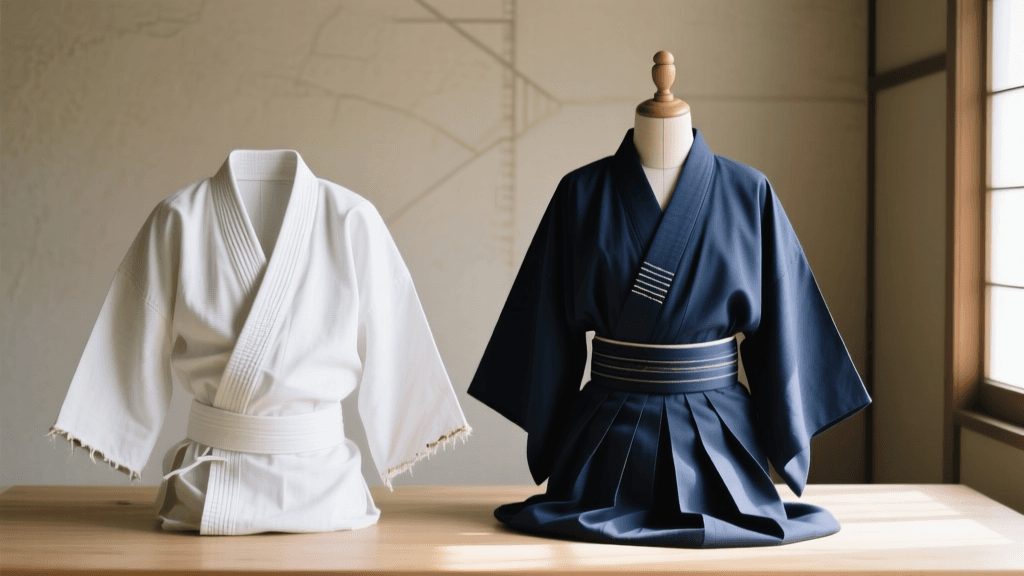
The standard martial arts uniform consists of the keikogi (training jacket) and, in disciplines like Kendo, Aikido, and Iaido, the hakama (pleated wide-leg trousers). These garments are marvels of functional textile engineering.
Fabric and Weave: Sashiko and Hishisashi
A high-quality keikogi is defined by its weave. The most iconic is sashiko (literally 'little stabs'), a rice-grain pattern that reinforces the cotton fabric, making it highly resistant to the gripping and pulling inherent in Judo and Aikido. The lower half of the jacket often features hishisashi (diamond) weave, which provides structural integrity while allowing for greater flexibility around the hips. According to guidelines observed by the All Japan Kendo Federation, the weight of the fabric is crucial: heavyweight judogi can exceed 750g to 1000g per square meter to withstand throwing, while kendo and aikido jackets utilize lighter, more breathable double-weave cotton to facilitate overhead strikes and fluid footwork.
The Hakama: Pleats and Practicality
The hakama worn in martial arts is typically dyed using deep synthetic or natural indigo (aizome). It features exactly seven pleats: five in the front and two in the back. These pleats are often said to represent the seven virtues of the samurai (such as justice, courage, and benevolence). The back of the hakama features a rigid trapezoidal board called the koshiita, which rests just above the obi (belt), enforcing an upright posture and protecting the lower spine during falls (ukemi). The front ties (himo) are significantly longer than the back ties, often measuring over 200cm, allowing the practitioner to wrap them securely around the waist and tie a specific, flat knot that will not cause injury if the practitioner falls on their back.
Chafuku: Dressing for the Tearoom
Entering the chashitsu (tearoom) requires a complete shift in physical awareness. The entrance, often a small square door called a nijiriguchi, forces guests and hosts alike to bow low and crawl inside, symbolizing humility and the shedding of worldly status. The attire for this environment, chafuku, must accommodate this humble entry while maintaining pristine elegance.
Sleeve Management and the Chawan
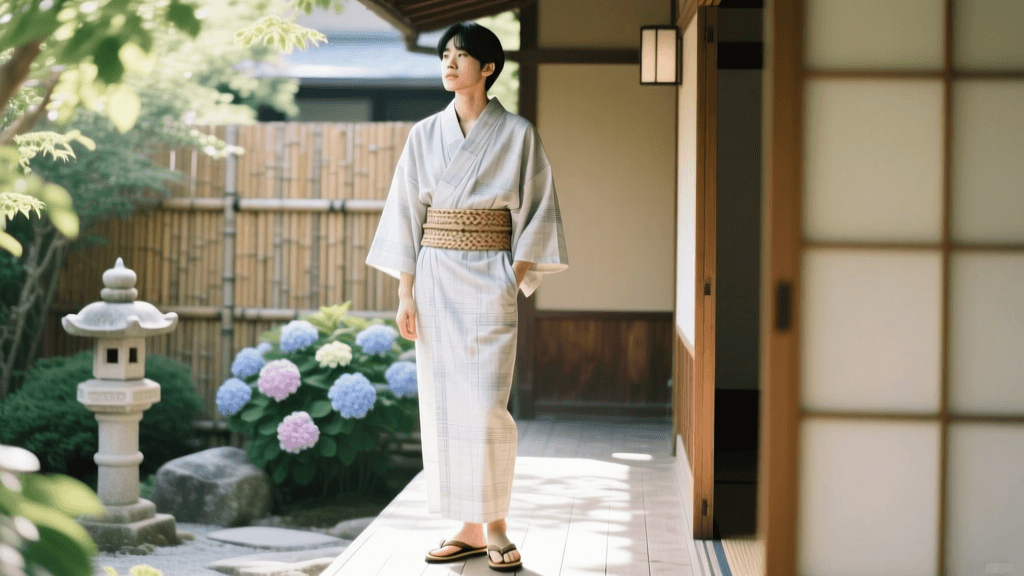
Unlike the flowing, dramatic sleeves of a furisode kimono worn at coming-of-age ceremonies, tea ceremony kimono prioritize restraint. Hosts and guests typically wear iromuji (solid-colored kimono with subtle woven crests) or Edo Komon (kimono featuring ultra-fine, micro-patterns that appear solid from a distance). The sleeves are deliberately tailored to be shorter and narrower. This is a vital functional adaptation: when the host whisks the matcha or the guest lifts the chawan (tea bowl), excessively long sleeves risk dipping into the tea or knocking over the delicate bamboo whisk (chasen). During the preparation of thick tea (koicha), the host will often use a specialized silk cord called a tasuki to tie back the sleeves, ensuring absolute cleanliness and focus.
Footwear: The Importance of White Tabi
Footwear in the tearoom is strictly regulated. Outdoor shoes and indoor slippers are removed before stepping onto the tatami mats. The only acceptable foot covering is the tabi—split-toe socks. For the tea ceremony, these must be pristine white cotton or silk, featuring a reinforced sole that allows the wearer to glide silently across the tatami without slipping. The Urasenke Foundation, one of the foremost authorities on tea ceremony etiquette, emphasizes that the stark white of the tabi contrasts beautifully with the natural, earthy tones of the tatami and the rustic ceramics, anchoring the visual harmony of the space.
Comparative Analysis: Budo vs. Chado Attire
To understand the distinct engineering of these garments, we must compare their core specifications. The following table outlines the primary differences between martial arts and tea ceremony uniforms.
| Feature | Martial Arts (Keikogi/Hakama) | Tea Ceremony (Chafuku) |
|---|---|---|
| Primary Fabric | Heavyweight cotton, Sashiko weave, Indigo dye | Silk, Tsumugi (pongee), Ro (summer gauze) |
| Sleeve Style | Short, tubular, reinforced at the armpit | Tomesode (shorter), secured with tasuki if needed |
| Lower Garment | Hakama (pleated, wide stance, koshiita board) | Kimono skirt with tailored hem, worn over nagajuban |
| Footwear | Barefoot (dojo) or split-toe jika-tabi (outdoor) | White split-toe tabi socks (strictly indoor tatami) |
| Posture Enforced | Wide, grounded stances, upright spine via koshiita | Seiza (kneeling), compact, forward-leaning grace |
Sourcing, Costs, and Wardrobe Investment
Building a wardrobe for either discipline requires an understanding of the market, which ranges from mass-produced beginner gear to artisanal masterworks.
- Beginner Martial Arts Gear: A standard cotton keikogi and polyester-blend hakama can be sourced for $60 to $120 USD. These are machine washable and ideal for the first two years of practice.
- Master-Level Martial Arts Gear: Hand-stitched, natural indigo-dyed Aizu cotton hakama and custom-fitted sashiko jackets from traditional Japanese ateliers (such as those in Iwate or Okayama prefectures) can cost between $400 and $1,500 USD. These garments mold to the body over decades of use.
- Tea Ceremony Kimono: A high-quality vintage or new iromuji silk kimono, complete with a tailored nagajuban (undergarment) and a formal fukuro obi (brocade belt), typically requires an investment of $300 to $800 USD. Summer ro (gauze) kimono require specialized weaving techniques and often command higher prices due to their seasonal exclusivity.
Care, Maintenance, and Storage
The maintenance of these garments reflects the ethos of their respective arts. Martial arts gear is subjected to sweat, friction, and occasional bleeding. Natural indigo hakama will leach dye for the first several washes; they must be hand-washed in cold water with a pH-neutral detergent and dried in the shade, as direct sunlight degrades the indigo molecule. The pleats must be carefully realigned and pressed with a cool iron while damp to maintain their razor-sharp edges.
Tea ceremony silks, however, demand a completely different approach. As noted by cultural experts at Japan Guide, the preservation of traditional textiles is paramount. Silk kimono should never be washed with water. Instead, they are aired out in the shade after use and spot-cleaned or professionally dry-cleaned by specialists who understand the delicate nature of silk dyes and gold-leaf crests. When storing chafuku, the kimono must be unfolded and refolded along its precise, original geometric seams, wrapped in acid-free tatou paper, and stored in a paulownia wood chest (tansu) which naturally regulates humidity and repels insects.
The garment does not make the master, but the master respects the garment. Whether gripping the hilt of a shinai or the rim of a raku tea bowl, the fabric worn is the silent partner in the pursuit of perfection.
Ultimately, whether you are stepping onto the wooden floorboards of a dojo or the woven rush of a tearoom, understanding the intricate design of your uniform elevates your practice. The keikogi and the chafuku are not mere costumes; they are the physical manifestation of Japanese philosophy, woven into every thread, pleat, and seam.