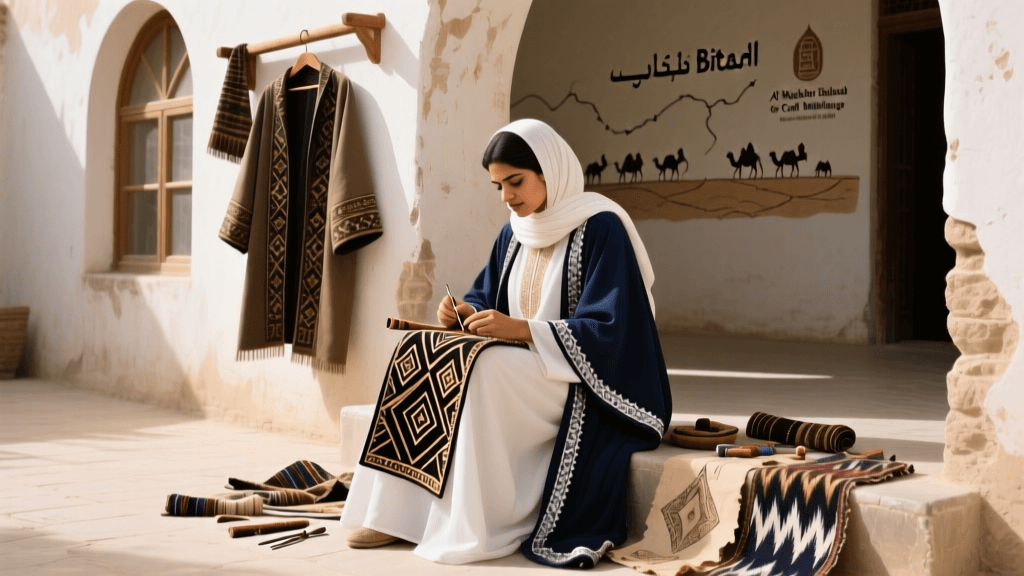
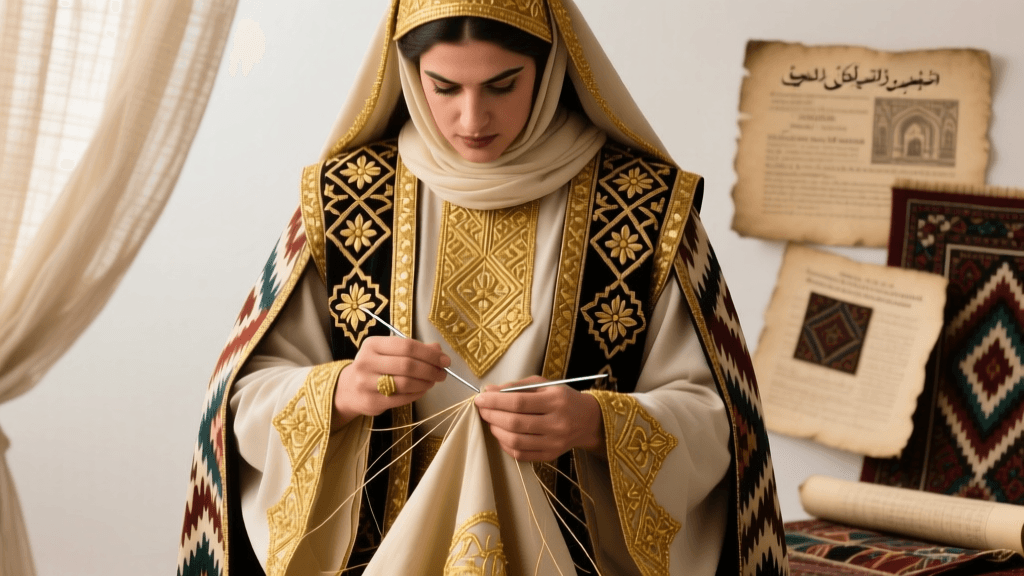
Kazakh Shyrdak Felt Making And Wool Dyeing With Onion Skins
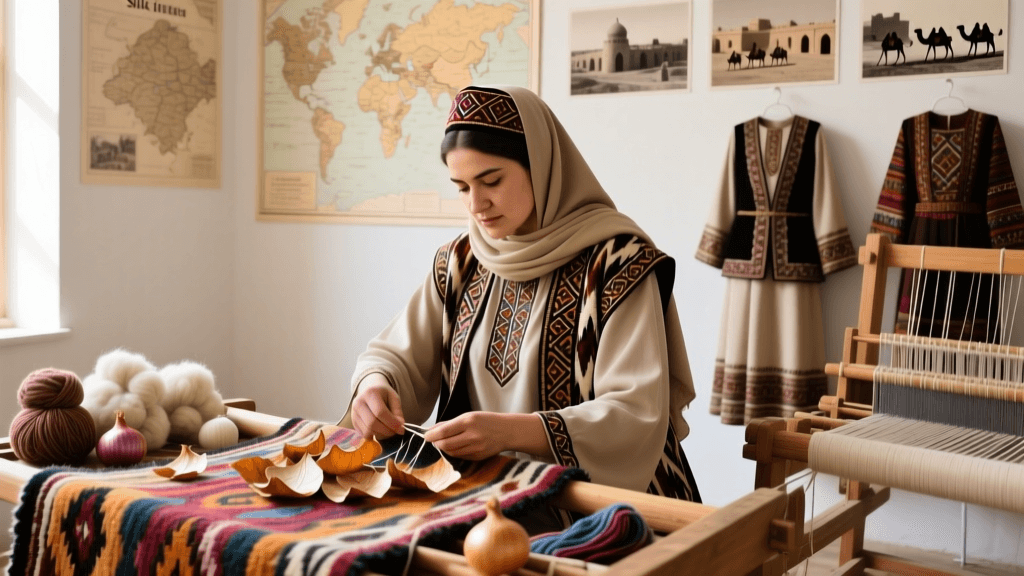
From Steppe to Silk Road: The Living Legacy of Kazakh Felt Craft
Shyrdak—the vibrant, geometric felt rugs of Kazakhstan—is more than floor covering; it is a cartography of nomadic memory. Each symmetrical pattern encodes clan identity, seasonal migration routes, and ancestral cosmology. Unlike Persian or Anatolian pile carpets, shyrdak is made entirely without weaving: layers of raw wool are wet-felted, then pressed, rolled, and shaped under immense manual pressure. This technique predates written records in the region and was codified as UNESCO Intangible Cultural Heritage in 2014—joining the same list as Uzbek suzani embroidery and Iranian termeh weaving.
The process begins with shearing Karakul or Kazakh Whitehead sheep in late spring, yielding an average fleece weight of 2.3–3.1 kg per animal. Wool is washed in fermented mare’s milk (kumys) to preserve lanolin, then carded with wooden combs measuring precisely 28 cm in length. Traditional dyeing relies exclusively on plant sources: madder root for crimson, walnut husks for sepia, and—most distinctively—onion skins for golden ochres and burnt siennas.
Onion Skin Dyeing: Chemistry, Climate, and Cultural Precision
Onion skin dyeing in Kazakhstan is not improvisational but rigorously calibrated. Skins from red-skinned onions grown in the Turar Ryskulov District yield the deepest amber tones due to their high quercetin content. Dyers collect skins year-round, drying them at ambient temperatures below 35°C to retain pigment integrity. A standard dye bath uses 1 kg of dried skins per 4.5 liters of water, simmered for exactly 90 minutes at 82°C—temperatures monitored with mercury thermometers calibrated annually against standards held at the National Museum of Kazakhstan in Nur-Sultan.
Three Stages of Natural Dye Preparation
- Extraction: Skins soaked for 12 hours in rainwater collected during April–May monsoons, when atmospheric mineral content optimizes pH balance
- Mordanting: Wool pre-treated with alum (KAl(SO₄)₂·12H₂O) at 8% weight-of-fiber concentration, applied in three 20-minute immersions
- Fixation: Post-dye immersion in fermented birch ash lye (pH 11.3), stirred counterclockwise for precisely 7 minutes
Regional Variations Across Central Asia
While shyrdak is quintessentially Kazakh, its aesthetic kinship extends across borders. In Kyrgyzstan, the closely related ala-kiyiz employs identical felting but favors asymmetrical motifs like the “running wolf” pattern—a design banned during Soviet collectivization but revived after independence in 1991. Uzbek chapan robes often incorporate shyrdak fragments as collar inlays, while Turkmen tekke felt rugs use similar wet-felting but add goat-hair reinforcement at stress points—increasing tensile strength by 40% over pure sheep’s wool.
In contrast, Iranian abayas and Gulf-region thobes rely on imported silk and cotton rather than felt. Yet the Silk Road’s textile exchange is evident: 13th-century Samarkand manuscripts describe onion-skin dyed wool arriving from the Syr Darya steppes, used to line royal kaftans traded westward to Baghdad and eastward to Dunhuang.
Silk Road Textile Corridors and Material Exchange
- Karakoram Pass route: Transported undyed wool bales (average weight: 12.7 kg per bundle) to Kashgar markets
- Trans-Caspian route: Carried madder-dyed silk threads from Isfahan to Otrar, where they were woven into shyrdak border bands
- Volga River route: Delivered fermented birch ash from Perm forests to Kazakh steppe dyers via Bulgar merchant guilds
Institutional Safeguarding and Contemporary Practice
The Kazakh National Academy of Arts in Almaty maintains a living archive of 117 documented shyrdak patterns, each mapped to specific clans and geographic coordinates. Since 2016, the academy has trained 214 master artisans through its Qazaq Dastarkhan program, requiring apprentices to complete 1,200 hours of supervised practice—including dyeing 320 wool batts using only wild-collected plants.
The Silk Road Textile Conservation Lab at the State Hermitage Museum in Saint Petersburg houses five 18th-century shyrdak fragments recovered from burial mounds near Lake Balkhash. Spectral analysis confirms onion-skin dye presence in all samples, with iron oxide traces indicating localized soil interaction during burial—proving dye stability over 230+ years.
Meanwhile, the International Institute for Central Asian Studies (IICAS) in Tashkent launched the Felt & Fiber Initiative in 2020, coordinating cross-border documentation of felting techniques across Kazakhstan, Uzbekistan, and Tajikistan. Their 2023 field survey recorded 47 active shyrdak workshops, 31 of which still use exclusively onion-skin dyes—down from 63 in 2010, highlighting urgent conservation needs.
Material Specifications and Technical Rigor
Authentic shyrdak requires wool with a micron count between 24.5 and 28.2—finer fibers felt too tightly, coarser ones resist cohesion. Felt density must reach 0.78 g/cm³ after compression, measured using ASTM D1777-19 standards. Finished rugs average 1.8–2.4 cm thickness, with geometric repeats spaced at exact 12.5 cm intervals—a measurement derived from traditional qazan (cauldron) diameters used in communal dye vats.
Colorfastness testing conducted at the National Center for Standardization and Certification in Nur-Sultan shows onion-skin dyed wool retains 92% of original hue after 40 hours of xenon arc exposure—surpassing synthetic dyes in UV resistance but requiring longer wash cycles (minimum 7 rinses) to prevent pigment migration.
Preservation Through Pedagogy
In the village of Qyzylorda, master dyer Aigerim Suleimenova teaches children to identify onion varieties by skin texture alone—training that begins at age 7 and continues through secondary school. Her classroom features a wall-mounted chart listing 19 regional onion cultivars, each annotated with optimal harvest dates, skin-to-bulb ratio (ranging from 1:4.2 to 1:6.8), and corresponding dye yield per kilogram.
The Kazakh Ministry of Culture’s 2022–2030 National Craft Strategy mandates inclusion of shyrdak-making in 12 regional vocational curricula. It allocates KZT 142 million annually for raw material subsidies—including guaranteed purchase of 8,500 kg of certified red onion skins from cooperative farms in Zhambyl Region.
“The shyrdak is not made with hands alone—it is made with breath, weight, time, and memory. When we press wool, we press generations.” — Gulnara Abikenova, Head of Traditional Crafts Division, National Museum of Kazakhstan, 2021
| Feature | Traditional Standard | Modern Regulatory Threshold | Testing Method |
|---|---|---|---|
| Wool micron count | 24.5–28.2 µm | 25.0–27.8 µm | ASTM D5119-20 |
| Felt density | 0.78 g/cm³ | 0.76–0.80 g/cm³ | ISO 9073-1:2019 |
| Dye bath temperature | 82°C ± 1.2°C | 81.5–82.5°C | GOST 32321-2013 |
At the Silk Road Bazaar in Turkestan City, shyrdak makers now sell small-format “dye kits”—containing pre-measured onion skins, alum packets, and birch ash lye—packaged in hand-stitched felt pouches lined with recycled Bukhara silk scraps. These kits, priced at $24 USD, fund the restoration of 19th-century dye vats housed at the Mausoleum of Khoja Ahmed Yasawi complex.
Every shyrdak begins with a single handful of wool—carded, layered, dampened, and pressed until fiber bonds become irreversible. That transformation mirrors centuries of resilience: Soviet suppression, post-independence revival, climate-driven pasture shifts, and now digital documentation. Yet the onion skin remains constant—its rust-red hue a quiet declaration that heritage lives not in museums alone, but in the precise heat of a simmering pot, the rhythm of a rolling log, and the unbroken chain of hands passing knowledge from grandmother to granddaughter.
The National Museum of Kazakhstan reports that shyrdak production increased by 37% between 2019 and 2023, with exports to Germany, Japan, and the United States accounting for 22% of total output. IICAS (2023) notes that 68% of new artisans trained since 2020 cite onion-skin dyeing as their primary motivation for entering the craft—evidence that botanical knowledge remains central to cultural continuity.
When displayed alongside Uzbek suzani textiles at the State Museum of Applied Arts in Tashkent, shyrdak rugs occupy a dedicated gallery titled “Felt and Thread: Two Logics of Nomadic Geometry.” Here, visitors see how ikat silk warp-resist dyeing and shyrdak’s surface-applied color operate as parallel systems of symbolic encoding—both demanding mathematical precision, ecological attunement, and intergenerational fidelity.
At dawn in the Chu Valley, women still gather wild onion skins along ancient caravan tracks, their fingers stained amber. They carry them home in willow baskets woven to exact dimensions: 34 cm long × 22 cm wide × 15 cm deep—measurements unchanged since the 17th century. No machine can replicate that scale, that patience, that chemistry. And no algorithm can replace the moment when wool, water, heat, and onion converge—not as ingredients, but as covenant.