Authentic Katan Silk vs Kora Organza Banarasi Saris: 2026 Guide
The Evolution of Banarasi Textiles in 2026
When it comes to Indian bridal wear and heritage textiles, the Banarasi sari remains an undisputed icon. However, as we navigate the fashion landscape of 2026, modern brides and textile collectors are moving beyond generic 'silk' categorizations to demand precise knowledge about yarn types, weaving techniques, and drape mechanics. Among the most sought-after and frequently debated textiles in the current market are Katan silk and Kora organza (often referred to as Kora silk). While both originate from the historic looms of Varanasi and carry the prestigious Geographical Indication (GI) tag, their structural properties, visual aesthetics, and functional uses are vastly different.
Understanding the nuances between these two fabrics is no longer just a concern for master weavers; it is essential for anyone investing in luxury Asian traditional garments. In 2026, with the rise of sustainable fashion and a renewed appreciation for handloom transparency, knowing exactly what you are draping is paramount. This comprehensive guide breaks down the textile science, market pricing, and styling applications of Katan silk versus Kora organza Banarasi saris.
Deep Dive: Katan Silk (The Classic Pure Twisted Silk)
Katan is the foundational fabric of the Banarasi weaving tradition. The term 'Katan' refers to the specific preparation of the silk yarn. In this process, two or more pure silk filaments are twisted together in opposite directions to create a single, strong, and highly durable thread. This twisting technique gives Katan silk its signature firm texture, subtle sheen, and remarkable resilience.
Because the Katan base is relatively dense and sturdy, it serves as the perfect canvas for the heavy, intricate jala (jacquard) weaving that Banaras is famous for. Master weavers can pack a Katan sari with dense jangla (wild creeping vine) motifs, heavy bel (creeper) borders, and elaborate kalga (mango/paisley) pallus without compromising the structural integrity of the garment.
In 2026, authentic handloom Katan silk remains a premium investment. The market has seen a shift toward 'heirloom' Katan pieces, where buyers prioritize pure, unadulterated silk and real silver-gold tested zari over mass-produced power-loom imitations. A genuine handwoven Katan silk sari typically weighs between 600 to 900 grams, offering a regal, structured drape that holds its pleats impeccably throughout long ceremonial events.
Deep Dive: Kora Organza (The Translucent Silk with a Twist)
Kora organza, while also woven in Varanasi, offers a completely different sensory and visual experience. The magic of Kora lies in its yarn preparation. Unlike Katan, the silk yarn used for Kora organza is not heavily twisted, nor is it fully degummed. The natural sericin (silk gum) is left partially intact on the filament, which grants the fabric its characteristic crispness, stiffness, and translucent, glass-like sheen.
Historically, organza was considered too stiff for traditional Indian draping. However, the 2026 Banarasi textile renaissance has seen weavers masterfully blend Kora silk with softer silk yarns in the weft, or use advanced electronic jacquard looms to create breathtaking, lightweight masterpieces. The stiffness of Kora organza means it does not drape or cling to the body like Katan; instead, it creates dramatic, sculptural silhouettes and voluminous pleats.
Designers in 2026 heavily favor Kora organza for its modern, ethereal aesthetic. The translucent base allows for striking contrast play, where heavy metallic zari motifs appear to float on a gossamer background. It is particularly popular for daytime weddings, summer receptions, and contemporary fusion styling, offering a breathable alternative to the heavier Katan silks.
Head-to-Head Comparison: Katan vs. Kora Organza
To help you make an informed purchasing decision, here is a detailed comparison of the two textiles based on 2026 market standards and textile science.
| Feature | Katan Silk | Kora Organza (Kora Silk) |
|---|---|---|
| Yarn Preparation | Two or more silk yarns tightly twisted together. | Single silk yarn, partially degummed (sericin retained). |
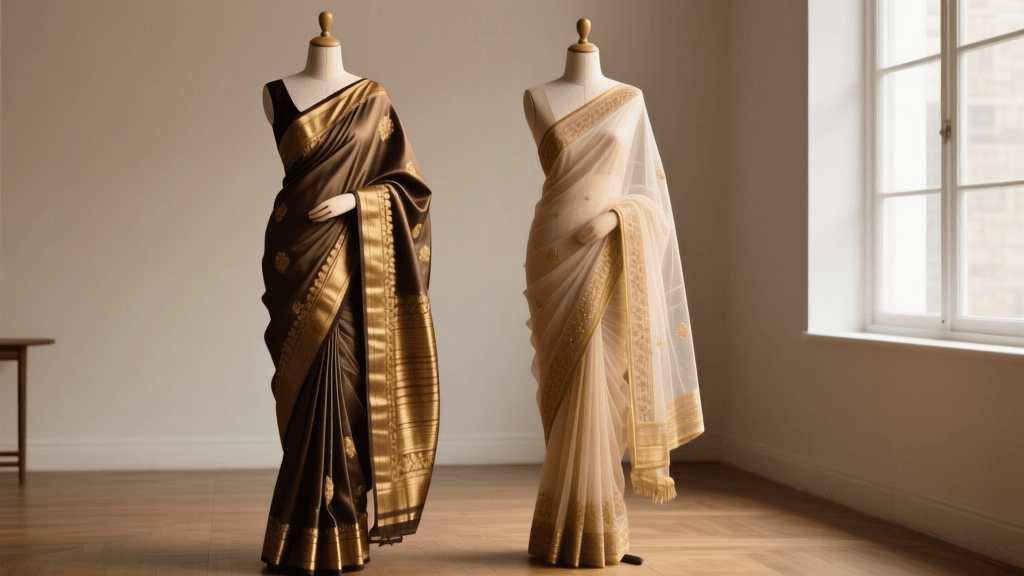
| Texture & Drape | Soft, smooth, heavy, and fluid. Clings elegantly. | Crisp, stiff, lightweight, and translucent. Sculptural drape. |
| Weight (Average) | 600g – 900g (Heavy) | 350g – 550g (Lightweight) |
| Zari Capacity | High. Supports dense, all-over heavy zari brocade work. | Medium. Best with spaced-out motifs to maintain fabric balance. |
| 2026 Price Range (INR) | ₹25,000 – ₹1,50,000+ | ₹15,000 – ₹80,000 |
| 2026 Price Range (USD) | $300 – $1,800+ | $180 – $950 |
| Best Climate/Season | Winter, Autumn, Air-conditioned indoor venues. | Summer, Spring, Outdoor daytime events. |
Actionable Buying Guide for 2026 Brides and Collectors
Navigating the Banarasi market requires a keen eye, especially with the proliferation of power-loom replicas and synthetic blends. Follow these actionable steps to ensure you are purchasing authentic handloom textiles in 2026.
1. Verify the GI Tag and Digital Traceability
The Geographical Indication (GI) tag is your first line of defense. According to the official Indian GI registry, 'Banaras Brocades and Sarees' are protected intellectual property. In 2026, authentic handloom pieces are increasingly equipped with scannable QR codes linked to the weaver's cooperative. Always ask the retailer to scan the QR code, which should reveal the loom location, weaver details, and yarn composition. If a seller cannot provide GI certification or traceability data, walk away.
2. The Light and Touch Test
Hold the sari up to a strong light source. Authentic Kora organza will allow light to pass through evenly, revealing the intricate interlocking of the warp and weft threads. Katan silk will block most light but will show a rich, uneven, natural luster. Run your fingers across the zari work; handwoven zari will feel slightly raised and textured, whereas power-loom printed or glued zari will feel unnaturally flat and smooth.
3. Understand 'Tested Zari' vs. Pure Zari
In 2026, pure gold and silver zari is exceptionally rare and can push the price of a Katan sari well past ₹3,00,000 ($3,600+). Most premium handloom saris today use 'tested zari'—a high-quality copper wire electroplated with pure silver and gold. It offers the same visual brilliance and longevity as pure zari but at a fraction of the cost. Always ask for a written breakdown of the zari composition on your purchase receipt.
Sustainable and Ethical Sourcing in 2026
The modern consumer is deeply concerned with the ethical footprint of their garments. Organizations like the Craft Council of India have been instrumental in promoting fair wages and sustainable practices among Varanasi weavers. When shopping, look for cooperatives that guarantee fair-trade wages and utilize eco-friendly, azo-free dyes. Additionally, 2026 has seen a surge in 'Ahimsa Silk' (peace silk) Banarasi saris, where the silk is harvested only after the moth has naturally emerged from the cocoon. While Ahimsa Katan has a slightly slubbier texture than conventional silk, it is highly prized by eco-conscious brides.
Styling Katan vs. Kora Organza in 2026
The way you style these two fabrics should reflect their inherent structural properties.
- Styling Katan Silk: Because Katan is heavy and fluid, it pairs beautifully with traditional, heavy jewelry like Polki, Kundan, or antique Temple jewelry. Opt for a structured silk blouse with intricate zardosi embroidery to match the opulence of the sari. The classic Nivi drape works best to showcase the heavy pallu and border.
- Styling Kora Organza: Lean into the modern, ethereal vibe of Kora. Pair it with contemporary jewelry, such as uncut diamonds, pearls, or minimalist gold statement pieces. Blouses made of contrasting velvet, raw silk, or even sheer net with 3D floral appliqués are highly trending in 2026. For a modern twist, many brides are converting Kora organza saris into pre-draped gowns or lehenga-style drapes, taking advantage of the fabric's natural volume and stiffness.
Garment Care and Storage for Delicate Silks
Proper maintenance is crucial to preserving the lifespan of your Banarasi investments. Never wash Katan or Kora organza at home. In 2026, eco-friendly dry cleaning services that use silicone-based or liquid CO2 solvents are widely available and highly recommended, as they prevent the harsh chemical degradation caused by traditional perc (perchloroethylene) dry cleaning.
For storage, never use plastic covers, which trap moisture and cause the silk to rot or the zari to tarnish. Wrap your saris in unbleached, pure cotton muslin cloth. Store them in a cool, dark wooden wardrobe, and place natural cedar blocks or dried neem leaves in the corners to repel silverfish and moths without introducing toxic chemical odors into the delicate silk fibers. Refold the saris every three to six months to prevent permanent crease lines and fiber breakage along the folds.
Final Thoughts
Choosing between Katan silk and Kora organza is not about finding the 'better' fabric, but rather selecting the right textile for your specific aesthetic, climatic, and functional needs. Katan silk offers the timeless, heavy, and regal tradition that has defined Indian bridal wear for centuries. Kora organza provides a breath of fresh air, offering a lightweight, sculptural, and contemporary canvas that appeals to the modern fashion sensibility. By understanding the textile science, verifying authenticity through GI tags, and practicing mindful garment care, you ensure that your Banarasi sari remains a breathtaking heirloom for generations to come.