Kanjivaram vs Banarasi Silk: 2026 Bridal Fabric Guide
The 2026 Renaissance of Heritage Bridal Silks
As we navigate the bridal fashion landscape of 2026, a profound and deliberate shift has occurred in South Asian wedding wardrobes. Modern brides are increasingly stepping away from mass-produced, synthetic-heavy lehengas and pre-stitched gowns, turning instead toward the profound heritage of authentic handloom silks. At the forefront of this textile renaissance are two undisputed titans of the Asian weaving tradition: Kanjivaram (Kanchipuram) silk from the deep south and Banarasi brocade from the northern plains. Understanding the distinct fabric choices, structural integrity, and aesthetic nuances of these two textiles is essential for any bride, collector, or textile enthusiast making investment purchases this year.
Heritage textiles are no longer viewed merely as garments; they are recognized as wearable archives of cultural memory and masterclasses in structural engineering. According to the Victoria and Albert Museum's South Asian textile archives, the preservation and contemporary revival of these ancient weaving techniques represent a critical intersection of art, history, and sustainable fashion. In 2026, the demand for pure, unadulterated silk fibers and authentic metallic zari has reached a decade high, driven by a desire for sustainability, longevity, and generational heirloom value.
Kanjivaram Silk: The Heavyweight Champion of the South
Originating from the town of Kanchipuram in Tamil Nadu, Kanjivaram silk is renowned for its structural weight, vibrant color blocking, and exceptional durability. The foundation of a true Kanjivaram saree lies in its use of pure mulberry silk. In 2026, master weavers are predominantly utilizing a three-ply silk thread for the warp (the longitudinal yarns) and a two-ply thread for the weft (the transverse yarns). This specific ply configuration results in a fabric that is remarkably dense, lustrous, and capable of holding heavy metallic embellishments without tearing or warping.
The Korvai and Petni Techniques
What truly sets Kanjivaram fabric apart from other Asian silks is its unique construction method. The body of the saree and the border are often woven separately and then interlocked together using a technique known as Korvai. This interlocking weft joint is so strong that even if the saree tears, the border will remain attached. Furthermore, the Petni technique is used to attach the contrasting pallu (the loose end of the saree) to the body. This requires immense mathematical precision on the pit loom, as the weaver must seamlessly transition the warp threads from one color to another. The resulting fabric has a distinct, slightly raised ridge at the color joints, which is a hallmark of authenticity and a highly sought-after textural detail in 2026 bridal trousseaus.
Banarasi Brocade: The Regal Weave of the North
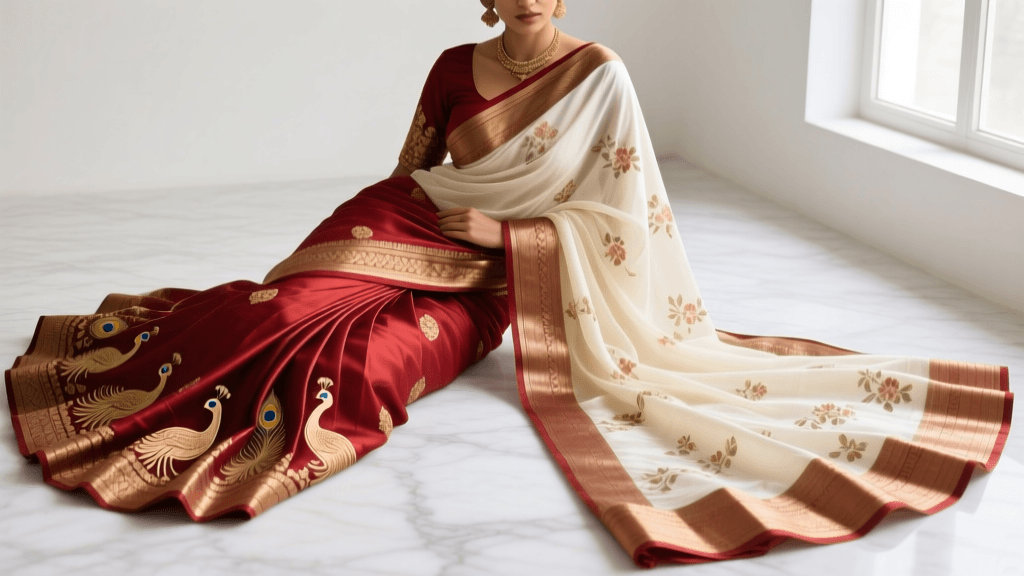
While Kanjivaram relies on color-blocking and heavy geometric or temple borders, Banarasi silk from Varanasi is celebrated for its intricate, all-over brocade patterns and Mughal-inspired motifs. The primary fabric used for premium Banarasi sarees is Katan silk—a plain-woven fabric made by twisting together two or more silk filaments, giving it a sturdier, more textured feel than standard mulberry silk. In 2026, we are also seeing a massive surge in the popularity of Banarasi woven on Kora silk (organza) and Tissue silk, which offer a lighter, more ethereal drape for daytime and summer wedding ceremonies.
Jangla, Tanchoi, and Jamdani Weaves
The magic of Banarasi fabric lies in its supplementary weft weaving. Artisans use traditional jacquard looms or intricate pit looms to weave supplementary silk or metallic threads over and under the base fabric, creating raised, embossed patterns. The Jangla weave features sprawling, wild vegetal motifs and is considered the most time-consuming and luxurious of all Banarasi weaves. Conversely, the Tanchoi weave incorporates multiple colored wefts to create a satin-like finish where the motifs are woven seamlessly into the fabric without any loose threads on the reverse side. Curators at the Metropolitan Museum of Art's Asian Art department frequently highlight the Tanchoi technique as a pinnacle of cross-cultural textile exchange, originally brought to India by Chinese traders and perfected by Gujarati and Banarasi weavers.
Head-to-Head: Kanjivaram vs. Banarasi Textile Comparison
Choosing between these two magnificent fabrics requires an understanding of how they behave, drape, and suit different climates and body types. Below is a comprehensive comparison of their textile properties for the 2026 bridal season.
| Textile Feature | Kanjivaram Silk | Banarasi Silk (Katan) |
|---|---|---|
| Base Fiber | 3-ply Mulberry Silk | Twisted Katan Silk Filaments |
| Weight & Drape | Heavy, stiff, holds pleats rigidly | Medium-heavy, fluid, drapes softly |
| Surface Texture | Smooth with pronounced ribbed ridges | Textured, embossed brocade motifs |
| Reverse Side | Clean, but shows color-block transitions | Often features floating supplementary wefts |
| Climate Suitability | Best for cooler, air-conditioned environments | Versatile; Kora/Tissue variants for summer |
| 2026 Bridal Price Range | $800 - $4,500+ USD | $600 - $3,800+ USD |
Understanding Zari: Real Gold vs. Tested Alternatives in 2026
No discussion of Asian traditional silk is complete without addressing zari—the metallic thread that gives these garments their iconic shimmer. Historically, zari was made by wrapping a flattened strip of real gold around a core of pure silk or silver. Today, the economics of precious metals have shifted the market dramatically. In 2026, the Ministry of Textiles in India continues to strictly regulate the Geographical Indication (GI) tags for both Kanjivaram and Banarasi sarees, mandating specific thresholds for metal content to qualify as 'Pure Zari'.
For brides seeking investment-grade heirlooms, Pure Zari (which contains a silver core electroplated with gold) remains the gold standard. It offers a muted, sophisticated, and warm glow that deepens beautifully with age. However, the market in 2026 is dominated by high-quality Tested Zari (copper or synthetic core with metallic coloring) and Half-Fine Zari. Modern tested zari has improved vastly in its resistance to tarnishing, making it a practical, lightweight, and budget-friendly choice for brides who want the visual impact of heavy brocade without the physical weight or the exorbitant cost of precious metals.
Expert Care and Storage for Heritage Silks
Silk is a natural protein fiber, structurally similar to human hair. It is highly susceptible to environmental damage, protein degradation, and chemical burns if not stored correctly. To ensure your 2026 bridal silks survive to become future heirlooms, adhere to the following textile conservation protocols:
- Ditch the Plastic: Never store silk in plastic bags or PVC covers. Plastic traps moisture and emits gases that can yellow the silk and degrade the zari. Always use unbleached, pure cotton muslin cloth for wrapping.
- Avoid Naphthalene: Traditional mothballs contain naphthalene or paradichlorobenzene, which can cause severe yellowing and irreversible chemical burns to silk fibers and metallic threads. Opt for natural alternatives like cedar blocks, dried neem leaves, or lavender sachets.
- The Refolding Rule: Silk will permanently crease and eventually tear along fold lines if left undisturbed for years. Every three to four months, unwrap your sarees, refold them along different lines, and let them air out in a shaded, well-ventilated room away from direct sunlight.
- Professional Dry Cleaning: While mild, pH-neutral reetha (soapnut) solutions can be used for gentle spot cleaning, heavy bridal silks with pure zari should only be dry-cleaned by specialists who understand heritage textiles. Inform the cleaner about the presence of real zari, as harsh chemical solvents can strip the gold plating.
Styling Heritage Silks for Modern 2026 Ceremonies
The way these fabrics are styled has evolved significantly. In 2026, the trend is 'quiet luxury' and structural minimalism. For Kanjivaram silks, brides are pairing heavily bordered, dark-hued sarees with stark, unembellished blouses made of raw silk or matte velvet, allowing the intricate Korvai borders to take center stage. The stiff drape of Kanjivaram is being utilized in architectural pleating styles, creating sharp, sculptural silhouettes that photograph beautifully.
Conversely, Banarasi Katan silk is being draped in fluid, modern styles, often pre-pleated or tailored into lehenga skirts and cape-saree hybrids. The all-over Jangla motifs provide a rich canvas that requires minimal jewelry. A matte-finish Banarasi tissue silk saree in pastel hues, paired with uncut diamond (Polki) jewelry, represents the pinnacle of 2026 South Asian bridal aesthetics. By understanding the fundamental differences in the weave, weight, and structural behavior of these fabrics, you can make a deeply informed, culturally resonant, and visually stunning choice for your most important celebrations.