Kyoto Yuzen Kimono Dyeing Workshops 2026: Costs & Guide
The Renaissance of Slow Fashion: Kyoto's 2026 Workshop Boom
The global shift towards slow fashion, heritage preservation, and artisanal craftsmanship has reached a definitive pinnacle in 2026. For textile enthusiasts and fashion historians, there is no greater pilgrimage than participating in traditional Asian garment-making seminars. Among the most coveted experiences are the Kyo-Yuzen kimono dyeing workshops in Kyoto, Japan. These immersive masterclasses offer a rare, hands-on opportunity to learn the meticulous art of Japanese resist dyeing directly from certified artisans.
In 2026, Kyoto's textile ateliers have expanded their international outreach, integrating advanced translation technology and structured, multi-day seminars that cater to both novices and advanced textile artists. Whether you are looking to dye your own silk haori or simply understand the profound chemistry and artistry behind Japan's most iconic garments, this guide covers everything you need to know about booking, costs, and techniques for the current year.
Understanding Kyo-Yuzen: The Art of Resist Dyeing
Before stepping into a studio, it is essential to understand the heritage you are engaging with. Yuzen dyeing is a traditional Japanese resist-dyeing technique used primarily on silk to create the elaborate, multi-colored pictorial designs found on formal kimono. Originating in the 17th century, the method uses a rice-paste resist to outline designs, preventing dyes from bleeding into one another and allowing for painterly, highly detailed motifs.
Unlike tie-dye or batik, Kyo-Yuzen (the Kyoto-specific regional variant) is renowned for its refined color palette, subtle gradients, and the use of gold and silver leaf accents. The Japanese government strictly protects these methods under the Traditional Crafts of Japan designation, ensuring that the workshops you attend in 2026 are taught using authentic, historically accurate materials and processes.
Top 3 Kyoto Yuzen Masterclasses for 2026
Choosing the right seminar depends on your skill level, budget, and the specific garment you wish to create. Below are the top-rated ateliers offering structured learning experiences this year.
1. Marumasu-Nishimuraya: The Heritage Purist
Located near the Nishijin textile district, Marumasu-Nishimuraya is legendary for its uncompromising dedication to traditional Kyo-Yuzen. In 2026, they offer a signature 3-Day Intensive Kimono Panel Course. Students work on a full-width bolt of Tango chirimen (silk crepe) and learn the complete pipeline from sketching to steaming.
- Best For: Serious textile students and advanced hobbyists.
- 2026 Cost: ¥85,000 (approx. $570 USD) for the 3-day seminar, including all silk and natural dyes.
- Highlight: Participants learn the rare technique of applying genuine gold leaf (kinkaku) to their finished designs.
2. Some-Zome Takahashi: The Modern Innovator
For those interested in how traditional garments adapt to contemporary wardrobes, Some-Zome Takahashi offers a unique Kata-Yuzen (stencil dyeing) workshop. Instead of freehand piping, students carve their own mulberry paper stencils and use them to dye modern silhouettes, such as haori jackets and wide-leg hakama pants.
- Best For: Fashion design students and intermediate crafters.
- 2026 Cost: ¥42,000 for a 2-day weekend masterclass.
- Highlight: The studio provides AR (Augmented Reality) tablets in 2026, allowing students to visualize their stencil patterns on a 3D garment model before committing to the dye.
3. Kyoto Textile Heritage Institute: The Comprehensive Seminar
This government-subsidized institute offers the most accessible entry point for beginners. Their half-day 'Introduction to Itome-nori' (rice paste application) focuses purely on the resist-outlining phase. While you won't finish a full kimono, you will master the foundational skill that defines the craft.
- Best For: Beginners, tourists, and casual learners.
- 2026 Cost: ¥12,500 for a 4-hour morning session.
- Highlight: Small class sizes (maximum 6 students) ensure the master artisan can physically guide your hand as you pipe the rice paste.
2026 Workshop Comparison Chart
| Atelier Name | Primary Technique | Duration | 2026 Cost (JPY) | Skill Level |
|---|---|---|---|---|
| Marumasu-Nishimuraya | Freehand Kyo-Yuzen | 3 Days (18 Hours) | ¥85,000 | Advanced |
| Some-Zome Takahashi | Kata-Yuzen (Stencil) | 2 Days (12 Hours) | ¥42,000 | Intermediate |
| Kyoto Textile Heritage | Itome-nori (Resist) | 4 Hours | ¥12,500 | Beginner |
Step-by-Step: What to Expect in a Yuzen Seminar
If you enroll in a comprehensive multi-day masterclass, your curriculum will follow the strict chronological order of traditional garment production. Here is the standard progression you will experience:
Step 1: Shita-e (Underdrawing)
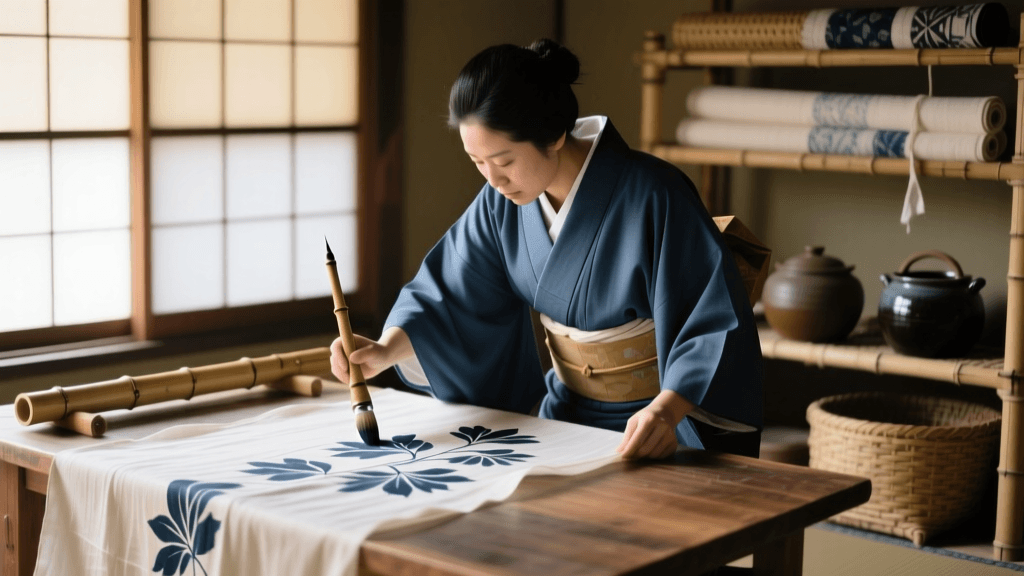
Using a brush and dayflower ink (aobana), you will sketch your design directly onto the stretched silk. The magic of dayflower ink is that it is water-soluble and completely vanishes during the final washing stage, leaving no trace on the finished garment.
Step 2: Itome-nori (Resist Piping)
This is the most physically demanding step. Using a specialized metal-tipped cone, you will pipe a thick, glutinous rice paste over your ink lines. The paste must be perfectly uniform; if it is too thin, the dye will bleed through and ruin the crisp edges of your motif.
Step 3: Iro-zashi (Color Application)
Once the resist paste is dry, the dyeing begins. Artisans use small brushes to paint synthetic and natural dyes within the resist boundaries. In 2026, many studios offer a hybrid palette, combining traditional botanical dyes (like safflower red and indigo) with highly stable, light-fast modern pigments for areas requiring intense vibrancy.
Step 4: Ji-ire and Mizumoto (Background Dyeing and Washing)
After the motifs are set with steam, the entire background of the fabric is dyed. Finally, the silk is taken to the river—or in modern studios, a specialized water-washing tank—to scrub away the rice paste and dayflower ink, revealing the pristine, multi-colored design beneath.
'The rice paste is not just a barrier; it is the skeleton of the design. Without a strong skeleton, the colors have no discipline.' — Master Artisan Kenjiro Sato, Kyoto Textile Heritage Institute.
Practical Logistics: Booking, Costs, and 2026 Travel Tips
Attending a traditional garment-making seminar in Kyoto requires careful planning. The global surge in heritage tourism means that spots for the 2026 spring and autumn seasons are highly competitive.
Booking Windows and Portals
Most premier ateliers open their booking calendars exactly six months in advance. For the highly sought-after cherry blossom season (late March to early April) workshops, you must secure your spot by September of the previous year. Bookings are now centralized through the official Kyoto Artisan Portal, which accepts international credit cards and offers real-time availability.
Language and Accessibility
Historically, the language barrier was a significant hurdle for international students learning complex chemical and artistic terminology. However, as of 2026, the Kyoto Tourism Board provides subsidized AI-translation earpieces to all registered traditional craft workshops. These devices offer real-time, nuanced translation of technical textile terms, ensuring you understand the exact viscosity requirements for your rice paste or the specific steaming times for different silk weights.
Material Sourcing and Post-Workshop Care
Multi-day seminars include the cost of your silk bolt, but if you wish to purchase additional yardage to continue practicing at home, you must source the correct fabric. Look for Tango chirimen (a heavily textured silk crepe from the Tango region) which holds dye beautifully and hides minor stitching imperfections. When caring for your finished, hand-dyed garment, never use commercial dry cleaning. The harsh chemicals will strip the natural dyes and degrade the silk fibers. Instead, rely on specialized heritage garment cleaners who use organic, pH-neutral solvents, or gently spot-clean with distilled water and a silk-safe detergent.
Conclusion
Participating in a Kyo-Yuzen workshop in 2026 is more than just a crafting class; it is an immersion into a centuries-old philosophy of patience, precision, and respect for natural materials. Whether you spend four hours learning the meditative art of resist piping or dedicate three days to painting a sprawling landscape across a silk kimono panel, the skills and perspective you gain will forever change how you view, wear, and value traditional Asian garments.