Kanjeevaram vs Mulmul Sari: Ceremonial & Everyday 2026
The Duality of the South Asian Sari in 2026
In the diverse tapestry of Asian traditional garments, the Indian sari stands out for its remarkable versatility. As we navigate the fashion landscape of 2026, the sari continues to evolve, yet it remains firmly rooted in its dual identity: the opulent, heavy ceremonial drape and the breezy, utilitarian everyday garment. For modern enthusiasts, collectors, and wearers, understanding the stark contrasts between these two extremes is essential for building a functional and culturally respectful wardrobe. Two textiles perfectly encapsulate this spectrum: the ceremonial Kanjeevaram silk and the everyday Mulmul cotton.
This comprehensive guide explores the construction, styling, maintenance, and market realities of Kanjeevaram and Mulmul saris in 2026, helping you make informed decisions whether you are preparing for a grand wedding or curating a sustainable daily workwear rotation.
The Ceremonial Standard: Kanjeevaram Silk Saris
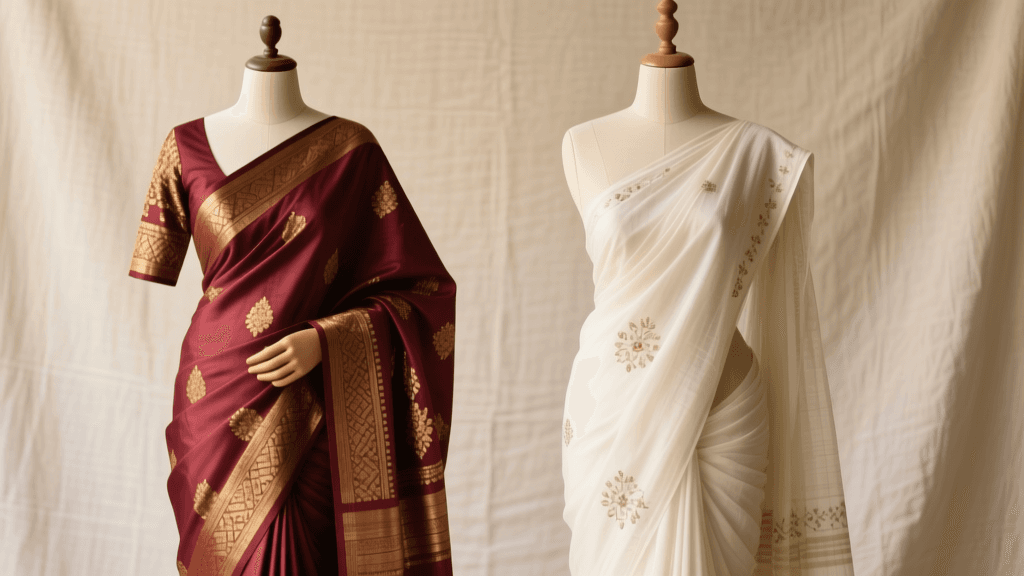
Originating from Kanchipuram in Tamil Nadu, the Kanjeevaram (or Kanchipuram) sari is the undisputed heavyweight champion of South Asian ceremonial wear. Woven from pure mulberry silk, these garments are renowned for their vibrant colors, intricate motifs, and signature heavy gold borders.
The Korvai Weaving Technique
The true hallmark of an authentic Kanjeevaram is the korvai technique. Unlike printed or embroidered fabrics, the border and the body of a Kanjeevaram sari are woven separately and then interlocked together with incredible precision. This interlocking weft ensures that even if the sari tears, the border will not detach. In 2026, master weavers continue to use traditional pit looms, though modern ergonomic adaptations have been introduced to support the aging artisan community.
Zari and Material Composition
Traditional Kanjeevarams utilize pure zari—a silk thread twisted with flattened silver wire and dipped in pure gold. However, with the skyrocketing price of precious metals in 2026, tested half-fine zari (a blend of silver and copper with gold plating) has become the standard for mid-tier ceremonial pieces, reserving pure zari exclusively for heirloom bridal trousseaus. A pure zari Kanjeevaram can weigh anywhere from 1.5 to 3 kilograms, giving it a majestic, structured drape that commands attention.
2026 Market Pricing
Investing in a Kanjeevaram is a significant financial commitment. In the current 2026 market, a high-quality half-fine zari Kanjeevaram starts around $400 to $600 USD. Pure zari bridal masterpieces, featuring complex mythological motifs and double-warp silk, easily range from $2,500 to over $8,000 USD, reflecting the intense labor and raw material costs.
The Everyday Essential: Mulmul Cotton Saris
On the opposite end of the spectrum lies Mulmul (also known as muslin), a fabric that defines everyday comfort in South Asian wardrobes. Historically revered as 'woven wind,' Mulmul is an ultra-fine, lightweight cotton that offers unparalleled breathability, making it the premier choice for daily wear, office environments, and sweltering summer months.
From Loom to Block Print
While plain Mulmul is a staple, the 2026 everyday sari market is dominated by artisanal surface design techniques applied to this delicate base. Hand-block printing traditions like Ajrakh from Gujarat and Bagru from Rajasthan have seen a massive resurgence. Artisans use carved wooden blocks and natural, plant-based dyes (such as indigo, madder root, and pomegranate) to stamp intricate geometric and floral patterns onto the Mulmul. This results in a garment that is not only visually stunning but also hypoallergenic and eco-friendly.
Drape and Comfort
Unlike the stiff, structured fall of a Kanjeevaram, a Mulmul sari is fluid and forgiving. It weighs a mere 300 to 500 grams and clings softly to the body's contours. The fabric's slight transparency and matte finish give it an understated elegance that aligns perfectly with the 2026 minimalist aesthetic.
2026 Market Pricing
Mulmul saris are highly accessible, though prices vary based on the complexity of the artisanal work. A basic mill-made printed Mulmul sari can be found for $20 to $40 USD. However, authentic, hand-block printed Mulmul saris crafted by rural artisan cooperatives typically range from $80 to $200 USD, ensuring fair wages for the craftspeople while remaining affordable for the everyday consumer.
Direct Comparison: Kanjeevaram vs. Mulmul
To visualize the distinct roles these two garments play in a modern wardrobe, refer to the comparison chart below:
| Feature | Kanjeevaram Silk (Ceremonial) | Mulmul Cotton (Everyday) |
|---|---|---|
| Primary Occasion | Weddings, festivals, religious ceremonies | Office wear, casual outings, summer daily wear |
| Fabric Weight | Heavy (1.5 kg - 3.0 kg) | Ultra-light (300g - 500g) |
| Drape & Stiffness | Structured, stiff, holds heavy pleats | Fluid, soft, requires starch for crisp pleats |
| 2026 Avg. Price | $400 - $8,000+ USD | $40 - $200 USD |
| Cleaning Method | Professional dry clean only | Gentle hand wash or delicate machine cycle |
| Blouse Pairing | Heavy brocade, velvet, or matching silk | Crisp cotton, linen, or contemporary crop tops |
2026 Styling Trends: Bridging the Gap
The way we style traditional garments has shifted dramatically. In 2026, the rigid rules of sari draping have relaxed, allowing for personal expression and functional adaptation.
Styling the Ceremonial Kanjeevaram
For weddings and grand galas, the traditional Nivi drape remains popular, but the blouse has become the focal point of innovation. In 2026, architectural blouses with exaggerated sleeves, corset-inspired boning, and deep-V necklines are frequently paired with heirloom Kanjeevarams to create a striking juxtaposition of ancient weave and modern silhouette. Additionally, pre-draped Kanjeevaram concepts—where the pleats are permanently stitched onto an underskirt—have become a staple for bridesmaids who need the grandeur of silk without the hassle of draping 9 yards of heavy fabric on the dance floor.
Styling the Everyday Mulmul
Mulmul saris in 2026 are the ultimate canvas for fusion wear. The 'sari-gown' drape, where the pallu is wrapped like a Grecian toga and belted at the waist, is a favorite for corporate environments. Furthermore, pairing a delicate, indigo-block-printed Mulmul sari with a crisp, oversized white linen shirt instead of a traditional blouse has become a hallmark of the modern, sustainable fashion enthusiast. For footwear, while ceremonial Kanjeevarams demand embellished heels or traditional juttis, Mulmul saris are now routinely styled with clean, minimalist white sneakers for the daily commute.
Care, Maintenance, and Storage
Proper care is vital to preserving the integrity of both textiles, though their maintenance routines could not be more different.
Kanjeevaram Care
Never wash a pure Kanjeevaram sari at home. The water will strip the natural sericin from the silk and tarnish the zari. Always rely on a trusted professional dry cleaner who specializes in ethnic wear. When storing, avoid wire hangers, which will distort the heavy fabric's shoulder line. Instead, fold the sari with acid-free tissue paper to prevent hard creases, wrap it in an unbleached muslin cloth, and store it in a cedar wood chest to naturally repel moths. Refold the sari every three months to prevent the silk fibers from breaking along the crease lines.
Mulmul Care
Mulmul thrives on regular washing but requires a gentle touch. Hand wash the sari in cold water using a pH-neutral liquid detergent. Avoid harsh scrubbing, which can distort the delicate block prints. To maintain the crispness of the pleats, a light application of liquid spray starch before ironing is highly recommended. Unlike silk, Mulmul benefits from occasional sun-drying, which naturally bleaches and brightens white cotton bases and eliminates bacteria. Store Mulmul saris rolled or loosely folded in a breathable cotton drawer.
Sourcing and Authenticity in 2026
With the rise of power-loom replicas and synthetic blends, verifying the authenticity of your garments is more important than ever. When shopping for a Kanjeevaram, always look for the Silk Mark and the Geographical Indication (GI) tag, which certifies that the sari was woven in the Kanchipuram region using traditional methods. According to the India's Handloom Mark portal, the official Handloom Mark is a crucial certification for consumers looking to guarantee that their cotton and silk purchases are genuinely handwoven, directly supporting the artisan economy rather than mass-market textile mills.
For those interested in the historical context and evolution of these textiles, institutions like the Victoria and Albert Museum's Asian Collections offer extensive digital archives. These resources are invaluable for buyers and collectors who wish to study historical motifs, natural dyeing techniques, and regional draping styles before making significant investments in ceremonial wear.
Sustainability and the Future Outlook
As the global fashion industry faces intense scrutiny regarding its environmental footprint in 2026, both Kanjeevaram and Mulmul offer compelling sustainability narratives. Kanjeevaram silk is the antithesis of fast fashion; it is a 'buy-it-for-life' garment designed to be passed down through generations, inherently reducing textile waste. Meanwhile, the Mulmul sector has seen a massive pivot toward organic cotton farming and the revival of natural, non-toxic dyes, significantly reducing the water pollution associated with synthetic textile manufacturing.
Whether you are investing in a magnificent, gold-laden Kanjeevaram for your wedding day or curating a capsule wardrobe of breathable, hand-blocked Mulmul saris for the office, understanding the profound differences between these two textiles allows you to honor Asian traditions while dressing intelligently for the modern world.