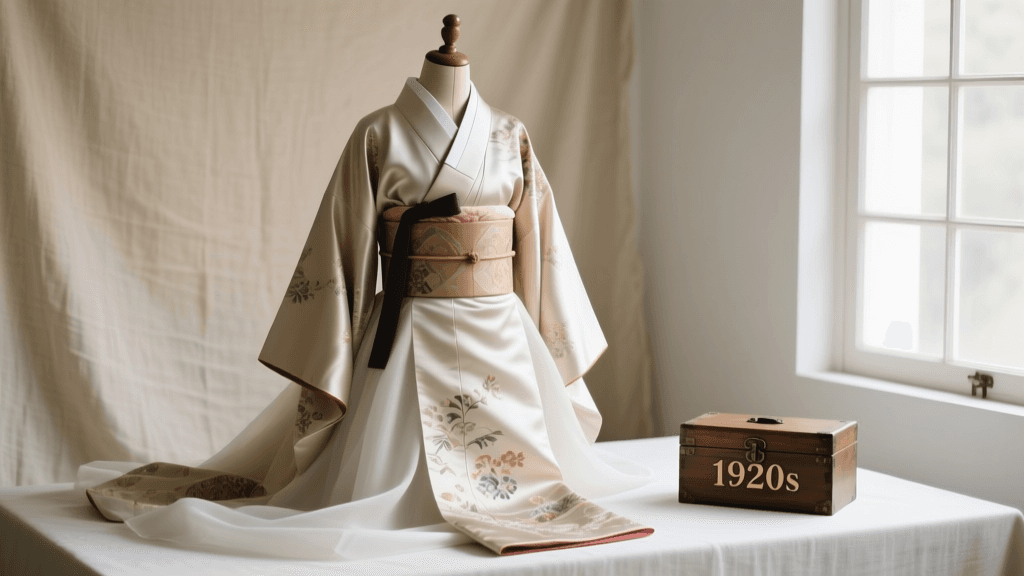
Kimono Travel Packing Guide 2026: Transport & Care
The Resurgence of Kimono Travel in 2026
Traveling with traditional Japanese garments requires a delicate balance between preserving centuries-old sartorial customs and navigating the fast-paced reality of 2026 global transit. Whether you are a practitioner of traditional arts, a collector of vintage silk, or a modern enthusiast integrating Japanese fashion into your international wardrobe, transporting a kimono safely is a specialized skill. The year 2026 has seen a massive resurgence in heritage tourism and international cultural exchanges, meaning more travelers are bringing their own garments abroad or purchasing authentic pieces in Kyoto to take home.
Unlike Western formalwear, which is often hung in rigid garment bags, the kimono is inherently designed to be folded. Its straight-line construction and lack of tailored curves make it uniquely suited for compact packing, provided you understand the structural mechanics of the garment. This comprehensive guide covers the essential techniques, modern gear, and logistical strategies for traveling with your kimono, ensuring it arrives at your destination in pristine, ready-to-wear condition.
The Hondatami Fold: Your First Line of Defense
The foundation of kimono transport is the hondatami (main fold), also known as the tatami fold. This is the traditional, universally accepted method for storing and transporting kimono. When executed correctly, the hondatami fold protects the most vulnerable parts of the garment—the collar, the sleeve hems, and the delicate silk crests (mon)—while distributing the fabric's weight evenly to prevent permanent creasing.
Step-by-Step Hondatami for Transit
- Preparation: Lay the kimono face down on a clean, dry, and completely flat surface. Ensure your hands are free of oils or lotions.
- Fold the Front Panels: Fold the right front panel (okumi) back along its natural seam. Then, fold the left front panel over to meet the right edge, aligning the seams perfectly.
- Secure the Sleeves: Fold the left sleeve back over the body of the kimono. Next, fold the right sleeve underneath the body. This creates a long, uniform rectangle.
- The Collar Fold: Gently fold the collar back and down. The collar is the most structurally complex part of the kimono; never crush it.
- The Tri-Fold: Fold the bottom hem up towards the collar, stopping just short of the shoulder line. Then, fold the collar section down over the hem. The final packet should measure approximately 35cm x 25cm x 5cm.
Once folded, the kimono should be wrapped in a tatoushi (a traditional paper or unbleached cotton wrapping cloth). In 2026, archival-grade, acid-free cotton muslin wrappers are the gold standard for travelers, as they allow the silk to breathe while protecting it from friction and light exposure.
Essential 2026 Packing Gear for Silk and Synthetics
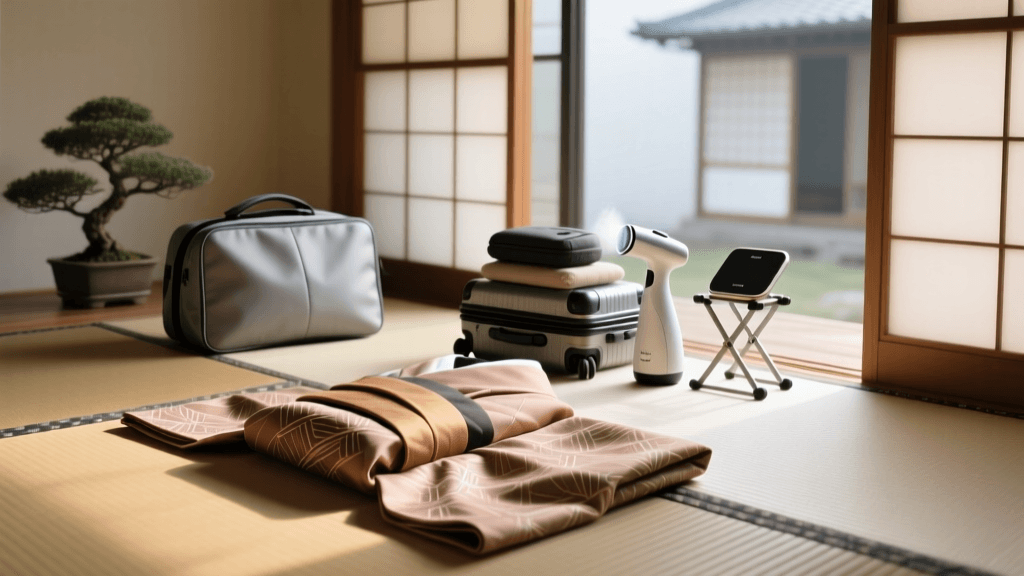
To protect your investment in 2026, you need more than a standard suitcase. The modern kimono traveler relies on a combination of heritage techniques and contemporary materials science.
- Acid-Free Tatoushi Wrappers: Avoid plastic dry-cleaning bags, which trap moisture and off-gas chemicals that degrade silk proteins. Use unbleached, acid-free cotton or specialized Japanese washi paper wrappers.
- Hard-Shell Polycarbonate Carriers: Soft luggage is easily crushed in overhead bins. A rigid, carry-on compliant hard-shell suitcase (measuring exactly 55cm x 40cm x 20cm to meet strict 2026 international airline standards) provides a crush-proof vault for your folded garments.
- Silica Gel Desiccant Sheets: Japanese summers are notoriously humid, and airplane cargo holds can experience wild temperature fluctuations. Place flat, non-spill silica gel sheets between your tatoushi wrappers to regulate micro-climate humidity and prevent mold (kabi).
- Portable Travel Steamer: A dual-voltage, 2026-model compact steamer with a silk-safe ceramic plate is mandatory. Look for models that offer continuous steam without spitting water, which can leave permanent water spots on chirimen (crepe) silk.
Navigating Transit: Shinkansen, Flights, and Takuhaibin
Moving through transit hubs with delicate textiles requires strategic planning. If you are traveling domestically within Japan, the Shinkansen (bullet train) is highly efficient, but luggage space is strictly regulated.
For the Tokaido and Sanyo Shinkansen lines, passengers with oversized luggage must reserve specific seats with baggage compartments. However, a properly packed kimono in a standard carry-on easily fits in the overhead bins of the latest N700S series trains. To avoid hauling your garment bags through crowded stations, utilize Japan's legendary luggage forwarding service. According to the Japan National Tourism Organization, using Takuhaibin (luggage forwarding) allows you to send your hard-shell cases directly from your hotel to your next destination or the airport. As of 2026, sending a standard-sized suitcase via Yamato Transport costs approximately 2,500 to 3,000 JPY, a small price to pay to keep your kimono secure and your hands free.
When flying internationally, always carry your most valuable or vintage kimono in the cabin. Checked luggage is subjected to extreme cold and pressure changes in the cargo hold, which can make silk fibers brittle. If you must check your garments, wrap the hard-shell suitcase in a protective plastic film at the airport to prevent scuffs and water damage on the tarmac.
On-the-Go Wrinkle Removal and Climate Control
Even with a perfect hondatami fold, minor creases may form along the fold lines during long-haul flights. Never use a traditional iron directly on a kimono, as the direct heat and pressure will flatten the three-dimensional weave of the silk and cause irreversible shine.
Upon arriving at your accommodation, immediately unwrap the kimono and hang it on a specialized, wide-shouldered kimono hanger (emono). Allow the garment to breathe in a well-ventilated room for 12 to 24 hours; the natural weight of the silk will often pull out minor fold lines. For stubborn creases, use your portable travel steamer. Hold the steamer at least 10 centimeters away from the fabric, allowing the vapor to penetrate the fibers without touching the silk. As highlighted by the Victoria and Albert Museum's extensive kimono archives, silk is highly susceptible to water spotting and heat damage, making indirect steam the only safe method for on-the-go wrinkle release.
If you are traveling during the Japanese rainy season (tsuyu) in June and July, be hyper-vigilant about moisture. Keep your kimono in its hard-shell case with fresh desiccant sheets when not in use, and never leave it hanging near an open window where ambient humidity can cause the fabric to stretch and the seams to pucker.
Comparison Chart: Kimono Packing Methods for Travel
Choosing the right packing method depends on your travel itinerary, the value of the garment, and your available luggage space. Below is a comparison of the three most common methods utilized by travelers in 2026.
| Packing Method | Best Use Case | Pros | Cons |
|---|---|---|---|
| Hondatami (Traditional Fold) | Long-haul flights, vintage silk, limited luggage space. | Maximizes space; protects structural seams; culturally authentic. | Requires practice to master; may leave light fold lines requiring steaming. |
| Rolling (Maki) | Synthetic or casual cotton yukata, short trips. | Prevents hard creases; very fast to execute. | Bulky; can distort delicate silk weaves; not recommended for formal wear. |
| Hanging (Garment Bag) | Driving trips, immediate event attendance upon arrival. | Zero fold lines; ready to wear immediately. | Requires massive luggage space; high risk of crushing if bag is compressed. |
Preserving the Garment on the Road
Traveling with a kimono in 2026 is a deeply rewarding experience that connects you to a living, breathing textile tradition. By respecting the architecture of the garment through the hondatami fold, investing in archival-quality packing materials, and leveraging modern logistics like Takuhaibin, you can transport your Japanese fashion pieces anywhere in the world. Remember that a kimono is not merely clothing; it is a canvas of artistry, weaving, and dyeing that requires mindful stewardship. Treat your garments with care on the road, and they will continue to tell their vibrant stories for generations to come.